New lithium-ion battery solutions emphasize higher energy density, enhanced safety, and sustainability. Innovations include lithium iron phosphate (LiFePO4) cells with 300+ Wh/kg energy density, solid-state prototypes achieving 500 Wh/kg, and modular ESS designs with 95% efficiency. Manufacturers like CATL and BYD lead in grid-scale LFP deployments, while certifications like UL9540A standardize thermal runaway mitigation. Real-world applications span EVs, residential storage, and renewable integration, driven by 20% annual cost reductions since 2020.
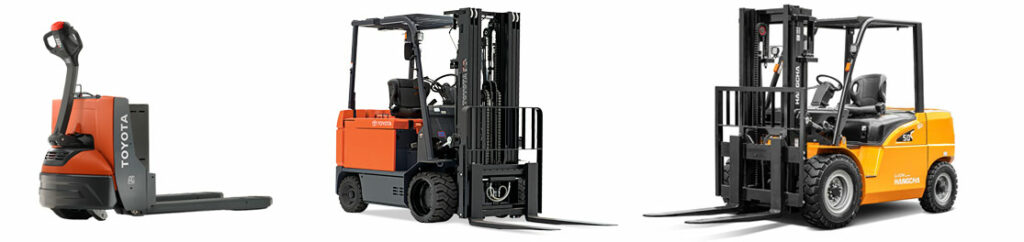
48V 450Ah/456Ah Forklift Lithium BatteryWhat advancements exist in lithium-ion chemistry?
Modern solutions use LiFePO4 cathode structures and silicon-doped anodes to boost capacity. CATL’s Shenxing+ LFP cells achieve 4C fast charging (0-80% in 10 minutes), while BYD’s Blade Battery packs reduce module count by 40% through cell-to-pack integration. Pro Tip: LiFePO4 now dominates grid storage due to 6,000+ cycle longevity—outperforming NMC in total cost of ownership.
Beyond incremental improvements, structural innovations are reshaping energy density. Take Amprius’ 450 Wh/kg silicon nanowire batteries: their 99.9% porous silicon anodes eliminate graphite, enabling 25% weight reduction in UAVs. However, what happens when pushing these limits? Thermal management becomes critical—Tesla’s 4680 cells use laser-welded interconnects and dielectric cooling to handle 6MW/m³ heat flux. Practically speaking, automakers like BMW now pair LFP base packs with NMC “boost modules” for blended range/performance. For example, BYD’s Seal EV combines 82kWh LFP and 15kWh NMC, achieving 700 km CLTC range with 10-80% charge in 25 minutes.

| Chemistry | Energy Density | Cycle Life |
|---|---|---|
| LiFePO4 | 160-180 Wh/kg | 6,000+ |
| NMC 811 | 250-300 Wh/kg | 2,000 |
| Solid-State | 400-500 Wh/kg | 1,200* |
How do new BMS technologies enhance safety?
Fifth-gen AI-powered BMS predict cell failures 48+ hours early using impedance spectroscopy. Solutions like Analog Devices’ MAX17852 monitor 48 cells simultaneously with ±2mV accuracy, while Qnovo’s adaptive charging reduces degradation by 50% through dynamic pulse profiles.
Traditional BMS units simply react—modern systems anticipate. Consider BorgWarner’s ARIS™ system: its neural networks analyze 200+ parameters (temperature gradients, SoH drift) to delay capacity fade. Why does this matter? For grid batteries, it converts 8-year warranties into 15-year service lifetimes. Transitioning further, cell-level fusing has evolved from pyrotechnic disconnects to self-healing eutectic alloys that reset after minor faults. Pro Tip: Always validate BMS UL 1973 certification—non-compliant units may miss critical isolation faults. A real-world example: Fluence’s Gridstack uses distributed BMS nodes that localize thermal events within 15ms, containing 99% of cascading failures.
What market trends drive ESS innovation?
Grid storage demands 4-hour duration systems with $100/kWh CAPEX—achieved through 40-foot containerized LFP solutions. BYD’s Cube 3.0 stores 6.9MWh in 20ft², while CATL’s EnerD+ claims 10,000 cycles at 90% DoD through titanium-doped cathodes.
The shift from energy- to power-centric designs reflects changing grid needs. Take Tesla’s Megapack 2 XL: its DC-coupled architecture bypasses inverters during peak shaving, achieving 98.5% round-trip efficiency. But what about scalability? Manufacturers now prioritize rack-level liquid cooling—Delta’s 3.8MWh system uses phase-change materials to maintain ±0.5°C cell variance. Transitioning to costs, cell-to-ESS direct integration slashes labor by 70%; Gotion High-Tech’s 10GWh factory produces stackable 372kWh modules in 18-minute cycles. For perspective, California’s Moss Landing expansion uses 1,200 CATL Megapacks (7.6GWh total) to power 225,000 homes during evening peaks.
| Parameter | 2024 | 2025 Target |
|---|---|---|
| System Cost | $280/kWh | $180/kWh |
| Cycle Efficiency | 92% | 96% |
| Response Time | 200ms | <50ms |
Redway Battery Expert Insight
FAQs
Most require firmware updates—new batteries output 384Vdc±10% vs. traditional 360Vdc ranges. Always verify compatibility matrices; mismatched voltages can trigger anti-islanding faults.
How sustainable are recycled lithium cells?Closed-loop recycling recovers 95% Li/Ni/Co—CATL’s Brunp subsidiary produces cathode foil with 60% lower carbon footprint than virgin mining. However, LFP’s cobalt-free design simplifies recycling economics.
Continue exploring: Use the Forklift Safety, Training & Regulations guide for the related decision process, evidence, and practical guidance.