
Redway battery guides
Forklift Batteries
Start with the equipment and duty cycle. This hub routes buyers from compatibility through energy, charging, safety, maintenance and OEM validation.
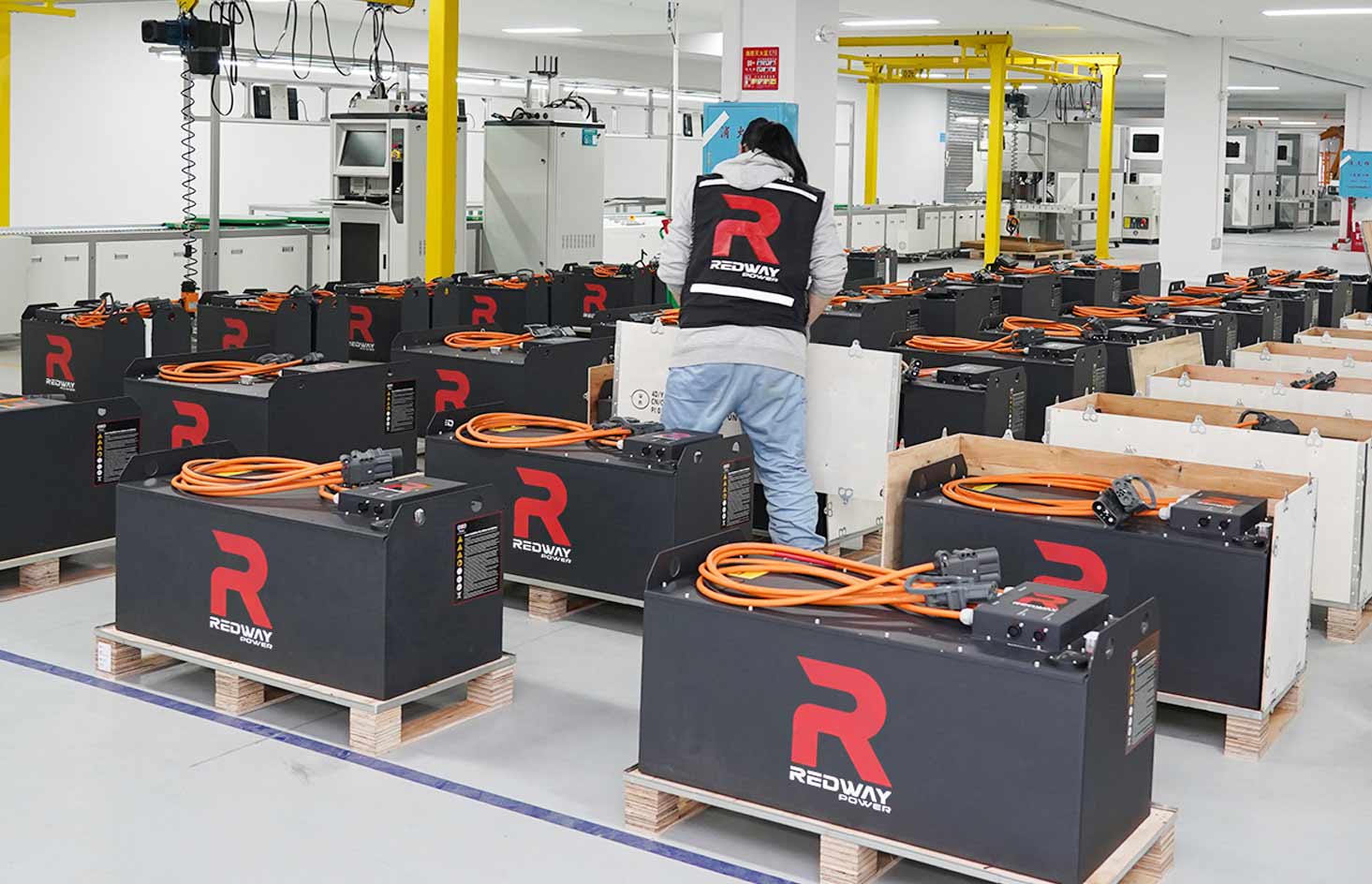
Before you choose
A forklift battery must suit both the truck and the shift. Start with the approved voltage, battery compartment and weight requirements, then compare usable energy, peak demand and the time available for charging. This guide connects those decisions with maintenance, replacement and fleet procurement.
The equipment, battery and charger have to be approved as one operating system. Nominal voltage establishes compatibility, usable energy covers the working period, and continuous plus peak current keep the machine moving under its hardest load. Dimensions, terminal position, cable reach and restraint determine whether those electrical ratings can be installed safely. The charger then has to replenish the used energy inside the real downtime available, without creating excessive heat or an avoidable queue.
Forklift battery specification checklist
| Decision | What to establish |
|---|---|
| Truck compatibility | Model, approved voltage, compartment, connector and battery weight requirements. |
| Working duty | Payload, travel, lifting, accessories, temperature and number of shifts. |
| Energy and current | Usable energy, continuous current, peak demand and reserve assumptions. |
| Charging access | Charger profile, connection, available downtime and charging locations. |
| Procurement | Installation scope, validation records, service support and total ownership cost. |
Selection & compatibility
Battery replacement begins with compatibility. The truck model, compartment, connectors, communication and required battery mass can narrow the choice before chemistry or purchase price. Compare conversion requirements alongside the existing installation.
Choosing Forklift Batteries
This page separates compatibility, energy, charging and ownership cost.
Read Choosing Forklift Batteries →Forklift Battery Chemistry
Compare LiFePO4 and lead-acid through usable energy, maintenance, charging and fleet utilisation.
Read Forklift Battery Chemistry →Forklift Battery Replacement & Conversion
Confirm voltage, compartment, ballast, charger, connector and communication before installation.
Read Forklift Battery Replacement & Conversion →Forklift Battery OEM & Procurement
Supplier capability matters only when the pack, documentation and warranty process meet the written program.
Read Forklift Battery OEM & Procurement →Selected articles
Explore the complete topic
- Top LiFePO4 Forklift Battery Suppliers Ranked
- How Can You Access and Maintain the Battery on a Toyota Forklift?
- What Are Forklift Jib Attachments and How Do They Work?
- Can Forklifts Tip Over? Understanding Risks and Prevention
- How To Perform Battery Cleaning For Forklift Batteries?
- How To Get A Forklift License Or Certification?
- How to Read and Understand a Forklift Data Plate?
- Why Is Proper Airflow Crucial for Electric Forklift Battery Rooms?
- Which Chinese Electric Forklift Brands Dominate Global Production?
- What Battery Sizes Match Each Forklift Type?
- What Makes the Hyster H8XD-EC6 and H11XD-ECD9 Ideal for Empty Container Handling?
- What Are 3 Wheel Electric Forklift Trucks Used For?
- What Are The Features Of New Space Saving Hyster Fortens?
- Forklift Brands, Models & Battery Fitment
- Forklift Battery Repair, Reconditioning & Cells
- Pallet Jack, Reach Truck & Warehouse Batteries
- Lithium vs Lead-Acid Forklift Batteries
- Forklift Battery Cost, Financing & TCO
- Forklift Battery Parts, Connectors & Accessories
- Forklift Models, Specifications & Technical Guides
- Cold Storage & Temperature-Controlled Forklift Batteries
- Forklift BMS, Fleet Monitoring & Telematics
- Forklift Battery Brands, OEM & Suppliers
- Forklift Energy Solutions & Electrification
- Forklift Battery Rooms, Ventilation & Compliance
- Forklift Battery Handling & Changing Equipment
- Forklift Battery Life, Cycles & Replacement
- Industrial Forklift Applications & Operations
- Forklift Battery Selection & Buying Reference
- Forklift Equipment & Operations Reference
- Contact
Capacity & shift planning
Capacity planning connects travel, lifting and accessories with the working day. Compare usable energy and current capability as well as amp-hours, then check whether the charging window supports the planned shifts.
Forklift Battery Voltage & Capacity
Size usable energy and current from the equipment and its hardest normal work.
Read Forklift Battery Voltage & Capacity →Forklift Battery Runtime & Shift Planning
Model travel, lifting, idle time, temperature and charging access before setting the energy target.
Read Forklift Battery Runtime & Shift Planning →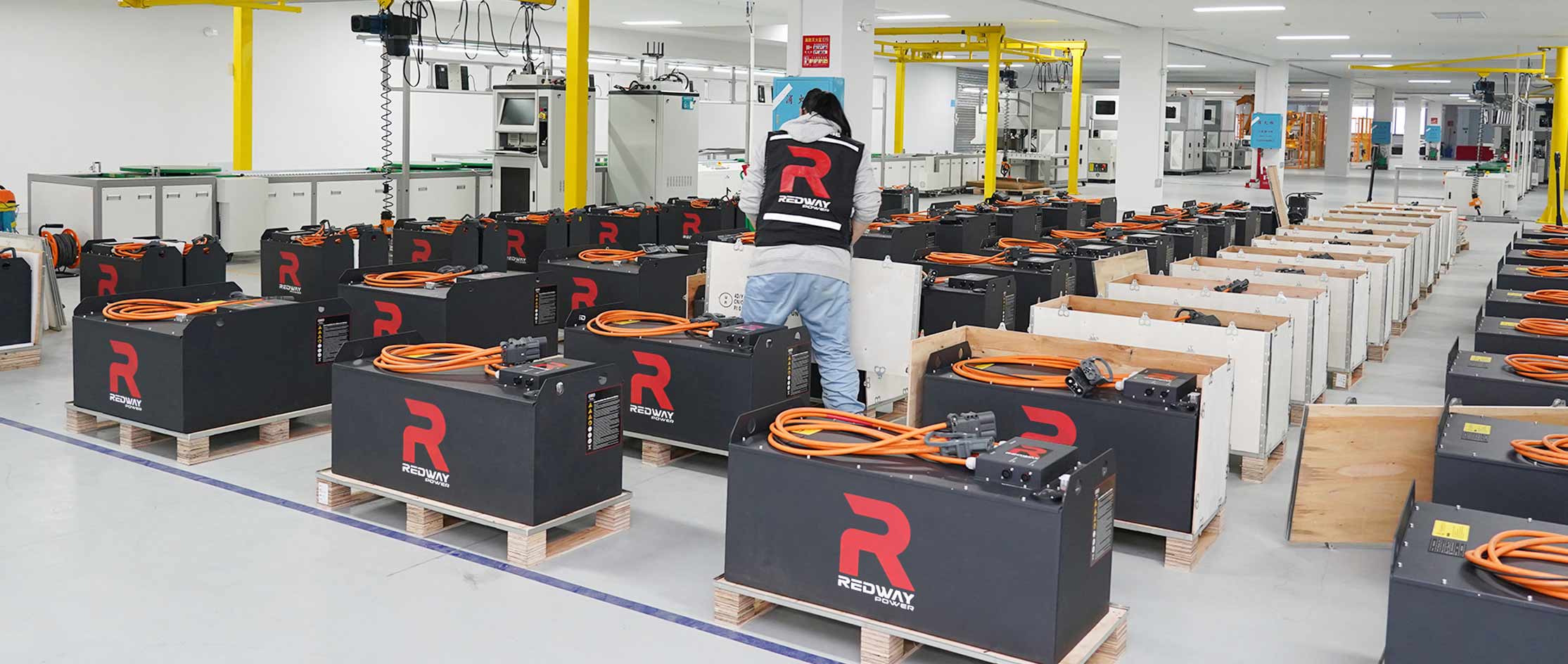
Build the battery around the operating system
Voltage, usable energy, peak current, fit, charging and validation must describe the same equipment and work schedule.
A useful specification keeps every decision connected
Fleet decisions should be tested against the hardest normal day rather than a catalogue average. Record payload, grades, travel distance, lifting time, accessories, temperature and idle periods. For a replacement program, include the oldest equipment still expected to remain in service. For an OEM program, add communications, compliance markets, enclosure protection, production tests and warranty handling. These details turn a headline capacity into an acceptance plan that both buyer and supplier can verify.
Total cost should use the same system boundary. Include usable energy, charging losses, planned maintenance, unplanned downtime, service labour, spare-battery requirements, freight, commissioning and expected replacement cycles. A higher initial price can be the lower-cost result when it removes watering, battery exchanges or charging-room congestion; a lower price can remain rational when utilisation is light and the existing infrastructure already fits. The correct answer comes from the operating model, not from chemistry alone.
Charging & maintenance
Charging and service belong in the operating plan. Separate chemistry-specific maintenance tasks, verify charger compatibility and retain inspection and fault records so a battery problem can be investigated against a known baseline.
Forklift Battery Charging
Match charger power, connector, communication and opportunity-charging rules to the shift plan.
Read Forklift Battery Charging →Forklift Battery Maintenance
Separate lead-acid watering and corrosion work from lithium connection, charger and diagnostic checks.
Read Forklift Battery Maintenance →Forklift Battery Safety
Build inspection, PPE, isolation and incident response around the pack and work area.
Read Forklift Battery Safety →Selected articles
Explore the complete topic
- How to Understand Forklift Battery State of Charge: A Complete Guide
- How to Troubleshoot and Replace Toyota Forklift Batteries?
- Forklift Fast & Opportunity Charging
- Lead-Acid Forklift Battery Watering & Care
- Forklift Battery Recycling, Disposal & Sustainability
- Forklift Safety, Training & Regulations
- Forklift Charging Systems & Troubleshooting
- Forklift Maintenance & Service Reference
Common questions
Forklift Batteries FAQ
What should be checked first for Forklift Batteries?
Start with the equipment, duty cycle and electrical limits. Voltage, current, dimensions, charging window and environment eliminate unsuitable options before price or brand comparisons begin.
How should an OEM validate Forklift Batteries?
Freeze the specification, test sample packs in the hardest normal operating condition and record charge, discharge, temperature, communications and mechanical fit before production approval.
Does LiFePO4 always replace lead-acid directly?
No. Chemistry can improve usable energy and maintenance, but charger profile, BMS current, cable sizing, compartment fit, ballast and communications still require system-level confirmation.
What information should be sent for a quotation?
Send equipment model, voltage, compartment dimensions, continuous and peak current, shift or route, charging access, temperature, compliance markets and annual volume.
