A golf cart maker’s dealer network asks for UL 2580 documentation on the lithium packs. The compliance engineer needs to explain what the standard actually tests, what it leaves out, and which other documents dealers may also need.
UL 2580 is a safety standard for batteries used in electric vehicles. In general it subjects a battery to electrical abuse tests such as overcharge, short circuit and over-discharge, mechanical tests such as vibration and impact, and environmental tests such as thermal cycling, and it looks at the protective controls. It does not rate capacity, range or cycle life, and it does not cover transport or the vehicle as a whole. Ask which model was tested and whose name is on the report.
What the standard looks at
- Electrical abuse. How the battery behaves under overcharge, external short circuit, over-discharge and similar faults.
- Mechanical. Vibration, shock or impact, and similar stresses a vehicle battery can see.
- Environmental. Temperature cycling and other conditions, depending on the test plan.
- Protective controls. Whether the BMS and other safeguards keep the battery within safe limits.
What it does not cover
- Capacity, range, cycle life and performance claims.
- Transport testing; that is UN 38.3; see our UN 38.3 and SDS article.
- The vehicle’s own safety rules and road-use requirements.
- Installation and charger choice in each cart.
Depending on the vehicle class and market, buyers may also refer to other standards for light electric vehicles, so confirm which one your dealers mean.
Redway’s approach
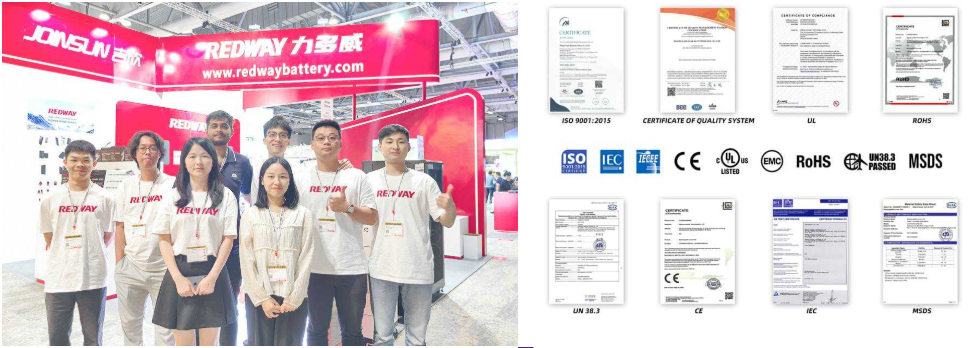
Redway’s batteries are designed and tested to UL-related standards (for example UL 2580 for EV batteries). The test report is typically issued in the customer’s name, and scope is confirmed at quotation. Redway holds relevant qualifications and certifications for its batteries; details are available from sales on request. Our UL 2580 vs UL 1973 article covers the forklift side, and Redway’s compliance documentation page gives background.
Risk limits
This is a general explanation, not a compliance opinion. Confirm applicable standards with your market’s authorities, your dealers and a qualified adviser.
Additional perspectives
Give dealers a one-page note on what the report covers and what it does not. It stops the same questions coming back.
Redway Tech Editorial Team – Compliance engineer perspective
Customers ask about safety and range in the same breath. Keep the safety report and the specification sheet separate.
Redway Tech Editorial Team – Dealer perspective
Tell us early which standard your market expects. Test planning takes time and depends on the final design.
Redway Tech Editorial Team – Supplier engineer perspective
Specifications are taken from Redway product pages as of October 2026. Where a figure isn’t published, this article says so. Confirm current specifications for your model with Redway before ordering. This article is general guidance, not a site-specific engineering assessment.
Related products
- 48V 100Ah LiFePO4 Lithium Golf Cart Battery OEM (BMS 200A)
- 48V 150Ah LiFePO4 Lithium Golf Cart Battery Factory
- 48V 160Ah LiFePO4 Lithium Golf Cart Battery Manufacturer (BMS 200A)
- 72V 100Ah LiFePO4 Lithium Golf Cart Battery Factory
- 48V 100Ah Lithium Golf Cart Battery OEM Factory
Related topics
- Battery Certification, Compliance & Documentation
- Golf Cart Battery Safety & Protection
- Golf Cart & LSV Laws, Licensing and Road Use
- Golf Cart Battery Brands, OEM & Suppliers
- Battery Manufacturing & Quality Control
- Golf Cart BMS, Monitoring & State of Charge
- Lithium Mining, Regulation & Transport
- 48V Golf Cart Battery Systems
- Quality Management
- About Redway
Continue learning
Golf Cart Batteries
Related reading