
Redway battery guides
LiFePO4 & Lithium Battery Technology
Understand LiFePO4 chemistry, compare alternatives and verify pack performance. This hub routes LiFePO4 fundamentals, chemistry comparisons, performance and future cell technology.
The system at a glance
- ChemistryCell characteristics
- Pack designProtection and integration
- ApplicationDuty cycle and charging
A decision framework · verify the actual product specification.
Before you choose
Battery chemistry is one part of an application decision. LiFePO4 and other technologies should be compared using the same loads, environmental conditions, usable-energy assumptions and charging requirements. Cell-level characteristics also need to be checked at module and pack level.
Start with cell chemistry and the complete voltage window. LiFePO4 cells use a stable phosphate cathode and typically operate around a 3.2V nominal value, but pack design depends on series count and the manufacturer’s minimum and maximum cell limits. Confirm charge termination, discharge cut-off, balancing and temperature restrictions. Nominal voltage alone does not define compatibility with a charger, inverter, motor controller or existing lead-acid system.
How to compare battery technology claims
| Decision | What to establish |
|---|---|
| Application fit | Voltage, load, dimensions, environment and charging requirements. |
| Comparison basis | The same duty, reserve, temperature and end-of-life assumptions. |
| Test evidence | Reported conditions, usable energy and measured output. |
| Pack design | Cell configuration, protection, connections and enclosure. |
| Lifecycle | Approved charging, monitoring, service and replacement arrangements. |
LiFePO4 fundamentals
Start with the equipment's requirements, then compare chemistry and cell format. A chemistry name alone does not define the complete pack's current capability, enclosure, protection or compatibility.
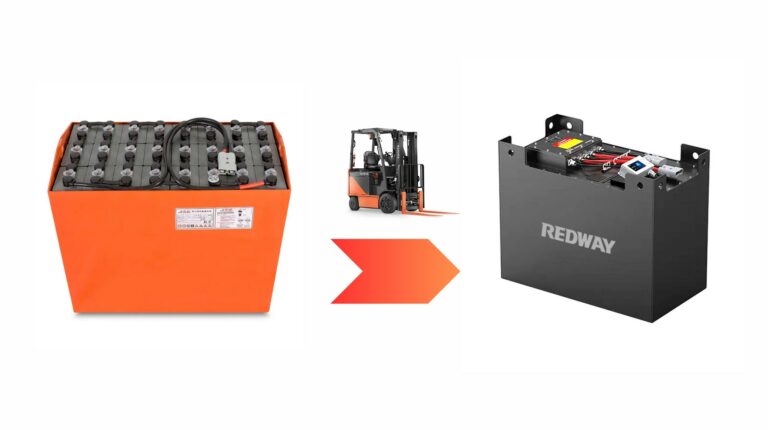 Decision guide
LiFePO4 vs Other Battery Chemistries
Compare LiFePO4 with NMC, lead-acid, AGM, sodium-ion and emerging chemistries by safety, power, energy, charging, temperature, life and total cost.
Decision guideLithium Cells, Formats & Future Technology
Connect cylindrical, prismatic and pouch formats with manufacturing, pack integration, recycling and the technology changes shaping future lithium batteries.
Selected articleWhat is LiFePO4 Technology?
Selected articleHow Does LiFePO4 Chemistry Work?
Lithium battery knowledge is useful when it changes a design
Compare usable performance instead of one headline rating. Energy density, power, cycle life, safety and cost trade against each other. Use the same voltage, load, runtime, temperature, depth of discharge and end-of-life criteria for every chemistry. LiFePO4 often exposes more usable capacity and longer cycle life than lead-acid, while other lithium chemistries may offer higher gravimetric energy. The correct choice follows the application rather than a universal ranking.
Protect cells through coordinated pack design. A BMS monitors cell voltage, current and temperature, but fuses, contactors, wiring, enclosure, charger and system controls remain essential. Cell matching, busbar design, compression where required and thermal paths affect current sharing and long-term reliability. Define credible faults and verify that protection isolates them safely without using emergency cut-offs as routine operating controls.
Measure cycle life under the real duty. Published cycle life depends on depth of discharge, charge voltage, current, temperature and the capacity threshold used to define end of life. Calendar ageing continues even when the battery is idle. Record energy throughput, cell spread, temperature and recharge behavior against a commissioning baseline. This distinguishes normal ageing from imbalance, poor connections, inaccurate state-of-charge estimation or an incompatible charger.
Evaluate new cell formats through integration evidence. Cylindrical, prismatic and pouch cells change mechanical support, thermal paths, assembly automation, service strategy and fault containment. Emerging chemistries and solid-state claims must be judged through production maturity, validated safety, supply availability, certification and field data. A laboratory advantage becomes useful only when the complete pack can be manufactured, controlled and supported at the required scale.
Keep assumptions beside the result
Record the voltage window, load profile, temperature, usable capacity, charging limits and reserve used in every comparison. Add real measurements after commissioning so later tests use the same baseline. A number without its test condition is not a reliable specification.
Recheck the model whenever the equipment, duty cycle, charger, wiring or environment changes. Document the reason for the change and the evidence that confirms safe, useful performance.
Turn general advice into an application decision
Use battery fundamentals to eliminate incompatible options first, then compare lifetime value. Confirm the system can deliver peak power, daily energy and recharge within the available time while staying inside temperature and protection limits.
Ask suppliers for test conditions, drawings, protection settings, compliance evidence and warranty exclusions. Clear evidence is more valuable than a higher isolated rating because it shows how the battery behaves inside the real system.
Connect ratings to real operating duty
The best battery is compatible, measurable, serviceable and correctly charged.
Explore the complete topic
- LTO vs LiFePO4 Battery: A Comprehensive Comparison and FAQs
- A LiFePO4 battery vs lithium ion polymer battery
- What is better than a LiFePO4 battery?
- The Benefits of Upgrading to a 5kw LiFePO4 Battery
- Can I just replace my lead acid battery with lithium ion?
- Nickel-Metal Hydride vs Lithium Ion AA Batteries: Which Is Better?
- Lithium Ion Battery vs Alkaline: Which is Better?
- What Are the Differences Between LiFePO4 and Lead Acid Batteries?
- Revolutionary Cathode Design for Solid-State Lithium Batteries: Enhancing Energy Density and Longevity
- Transforming Robotics with High Energy Density Lithium-Ion Batteries
- Can I leave alkaline batteries in cold temperature?
- What future trends and innovations can we expect in the realm of lithium 21700 battery technology?
- Which battery is better, 21700 or 18650?
- 18650, 21700 & 26650 Lithium Cell Formats
- Lithium vs Alkaline, AGM & Lead-Acid Batteries
- Solid-State, Sodium-Ion & Next-Generation Batteries
- Lithium Battery Brands, Manufacturers & Reviews
- Lithium Deep-Cycle Battery Conversion
- LiFePO4 Temperature, Storage & Heating
- Lithium Cell Chemistry, Manufacturing & Components
- Contact
Chemistry comparisons
Read performance claims beside their test conditions. Usable energy, power, charging behaviour and service-life figures only support a fair comparison when load, temperature and operating limits are understood.
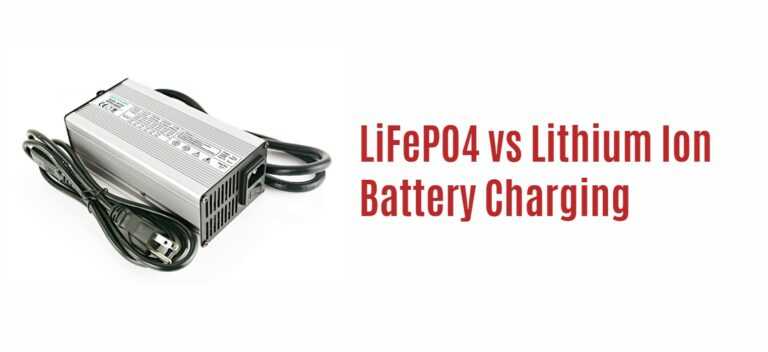
Keep cell evidence connected to pack performance
Record cell supplier, lot, capacity and resistance matching, BMS revision, mechanical build and end-of-line results for every pack configuration. Compare field voltage spread, temperature, energy throughput and protective events with the approved baseline. Traceability helps distinguish a cell issue from assembly, firmware, charging or application conditions.
When cells or components change, repeat the risk review and the tests affected by voltage, current, thermal behavior, communication and mechanical fit. A substitute with the same headline rating may require different limits or invalidate prior evidence. Controlled validation keeps technology updates from becoming unmeasured production experiments.
Performance & cell life
Connect cell evidence with the assembled system. BMS behaviour, charging controls, connections and service procedures influence how a chemistry performs through the battery's actual operating life.
Selected articleHow to Maximize LiFePO4 Battery Cycle Life?
Selected articleWhy do batteries degrade?
Explore the complete topic
Common questions
LiFePO4 & Lithium Battery Technology FAQ
What should be checked first in LiFePO4 & Lithium Battery Technology?
Start with the equipment voltage window, continuous and surge power, required usable energy, temperature, charging source, dimensions and service conditions.
Why are amp-hours not enough to compare batteries?
Amp-hours omit voltage. Multiply nominal voltage by amp-hours for watt-hours, then adjust for usable depth of discharge, efficiency, temperature and ageing.
What most affects battery lifespan?
Temperature, depth of discharge, charge voltage, charge rate, time at extreme state of charge, load current and storage conditions all influence life.
How should battery condition be tested?
Combine visual and connection inspection with voltage, current, temperature, load behavior and measured delivered capacity against a known baseline.
Can every battery use the same storage and recycling process?
No. Follow chemistry-specific manufacturer instructions and local transport, fire-safety and recycling rules.