
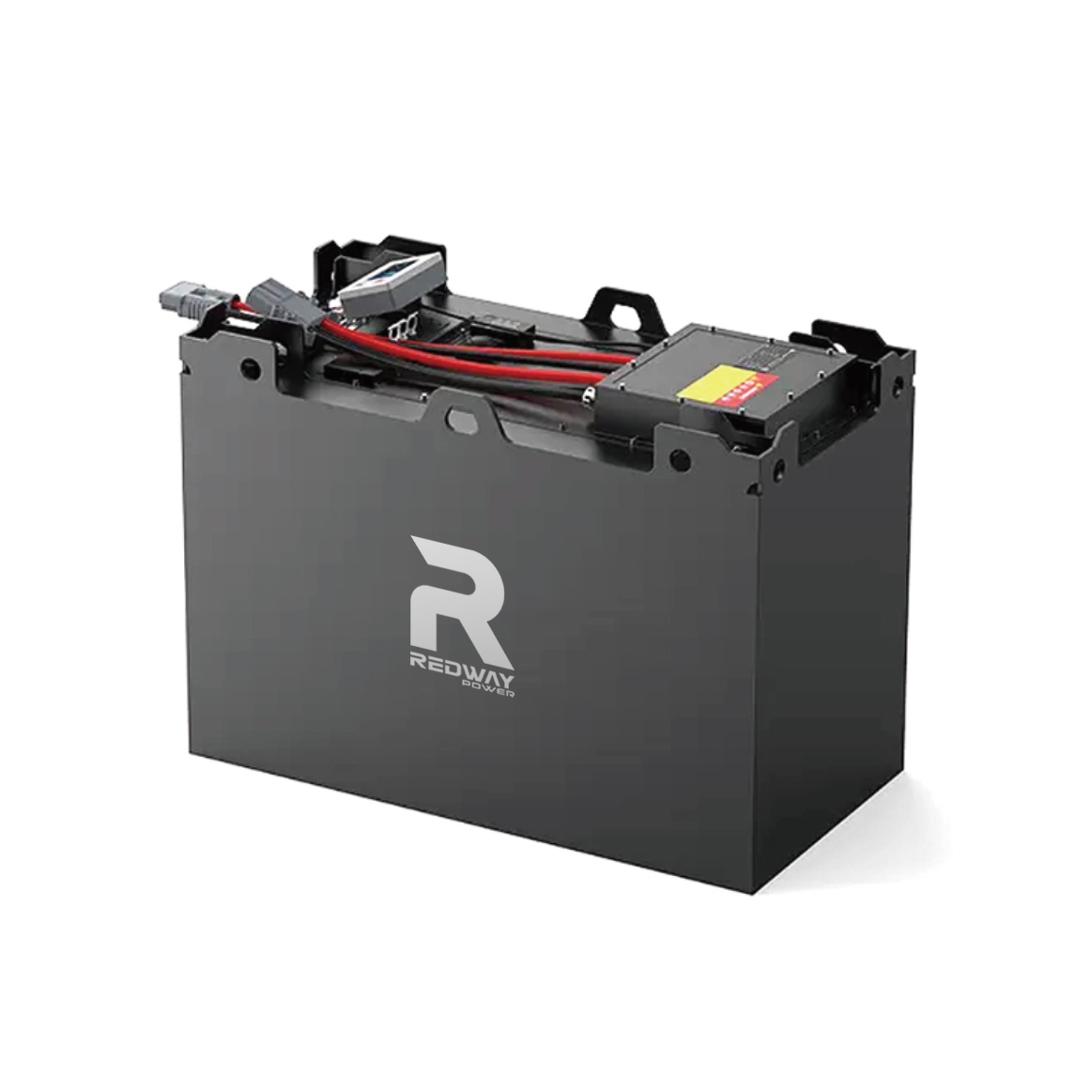
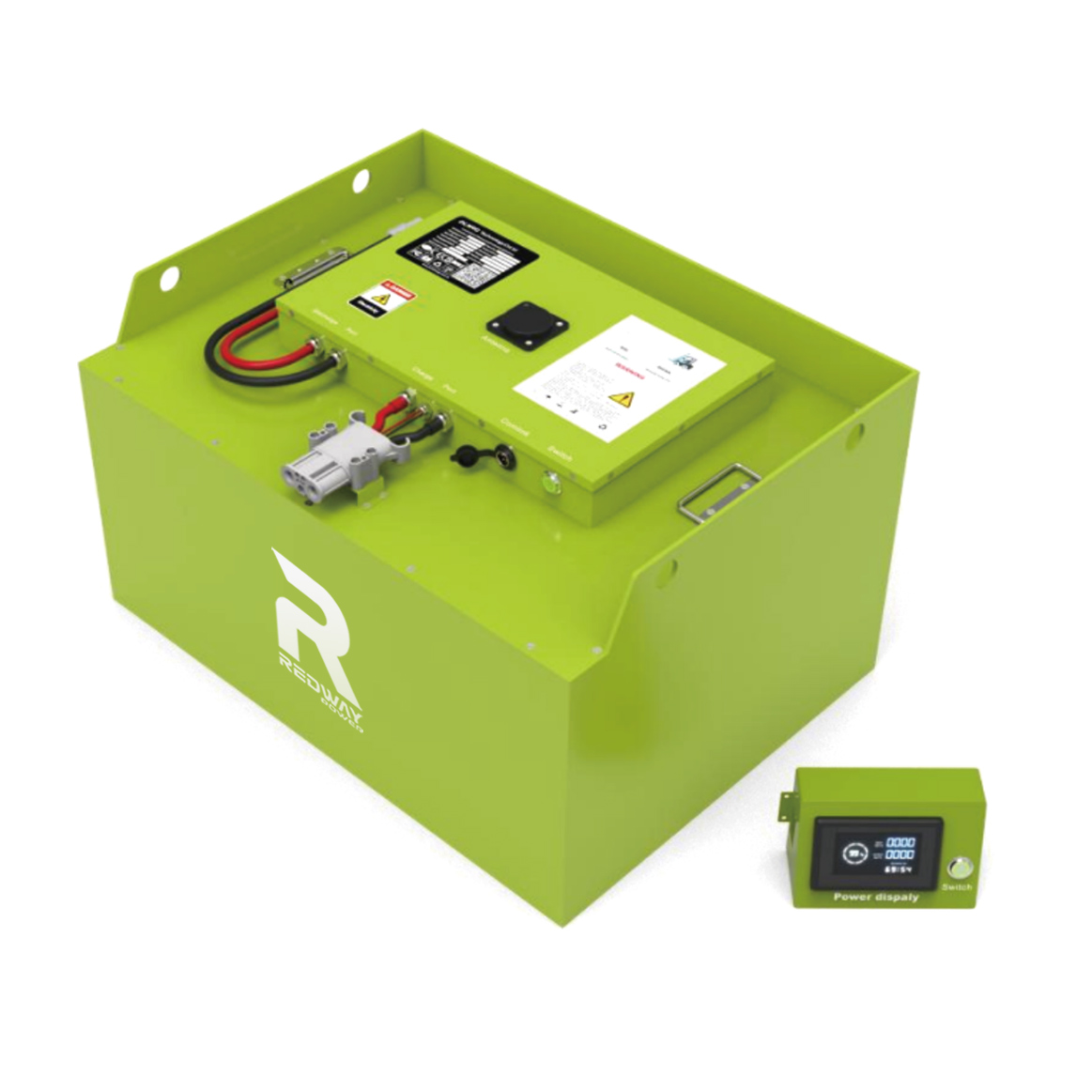
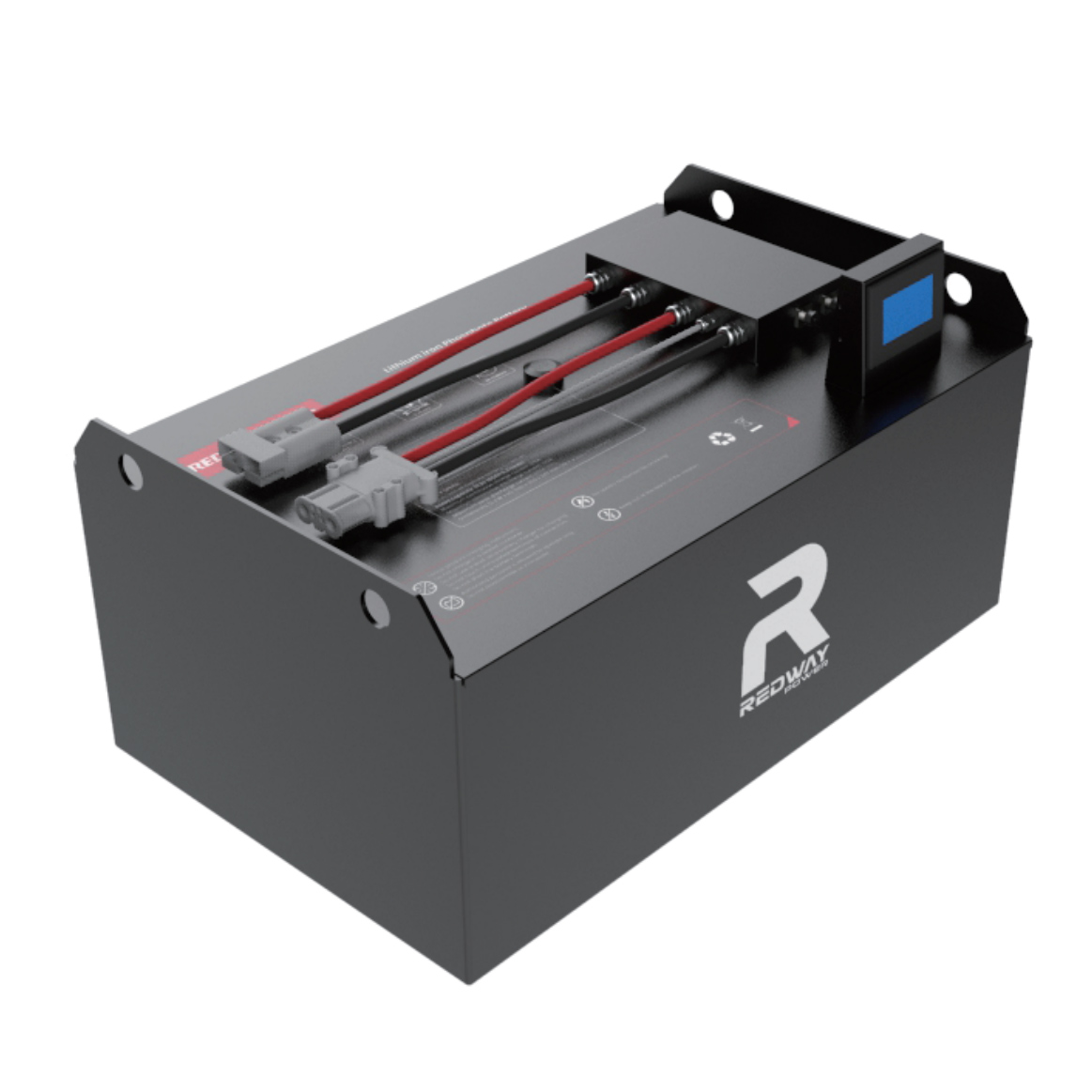
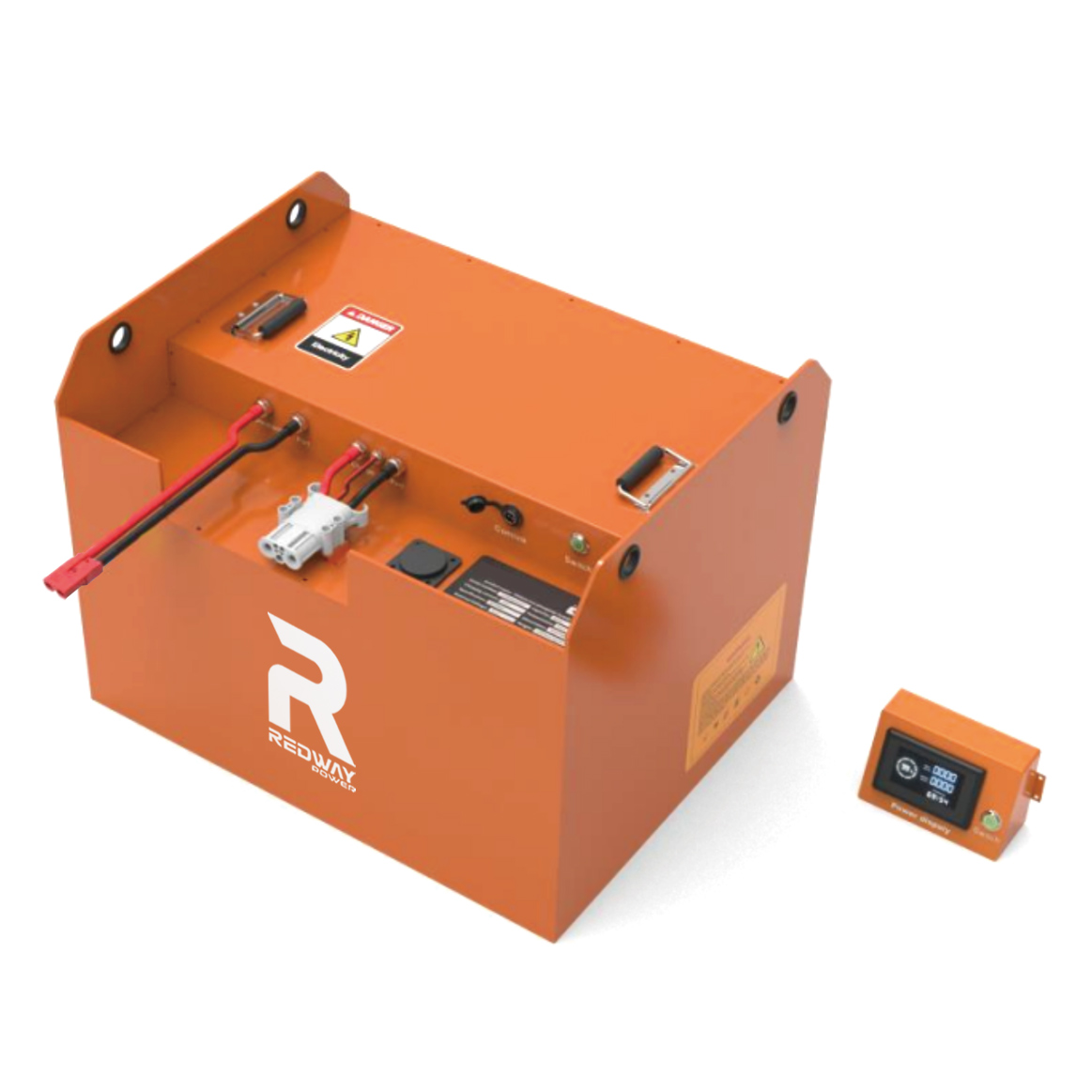
Forklift battery guides and answers
How to choose, charge and keep a lithium forklift pack alive — the full article set behind this page.
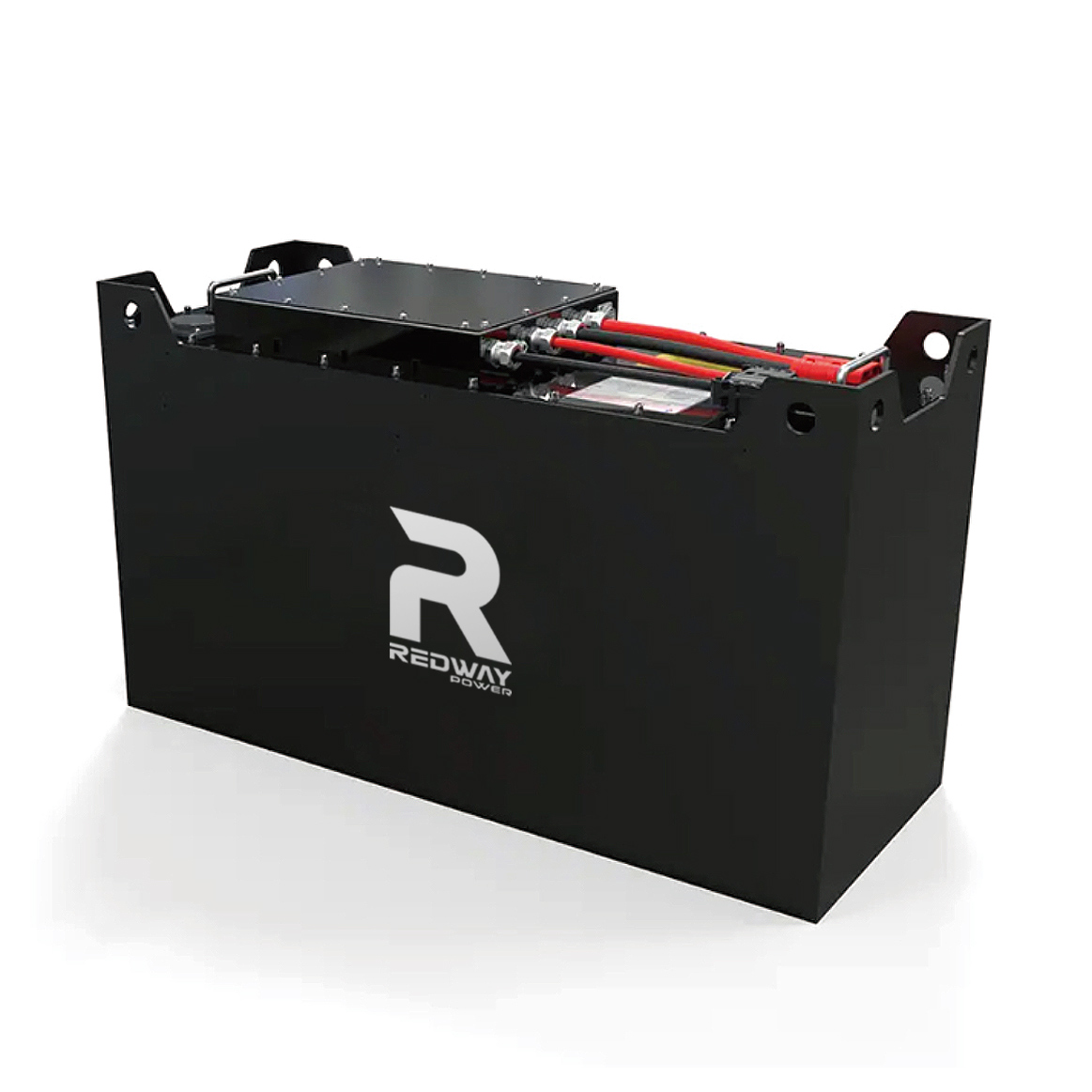
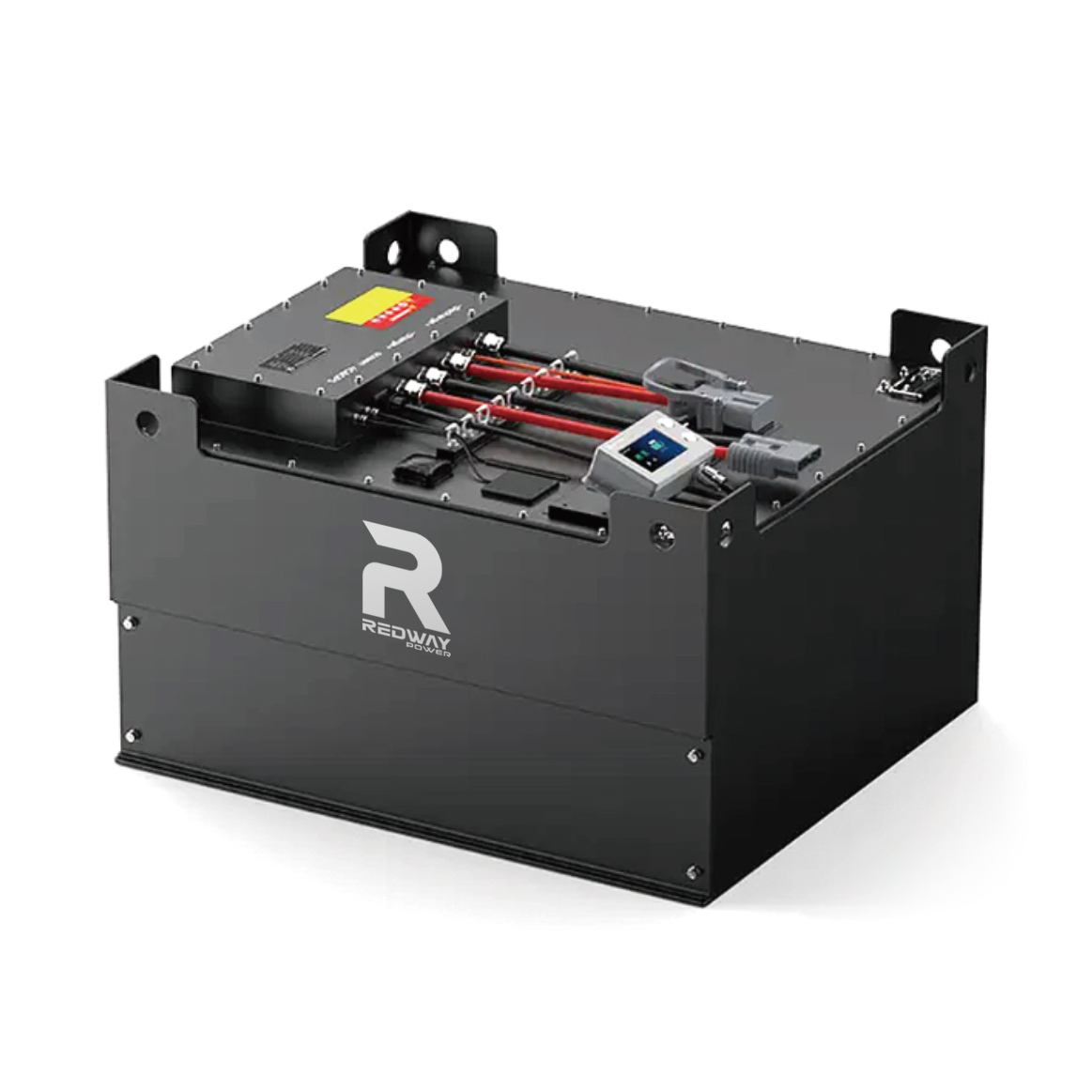
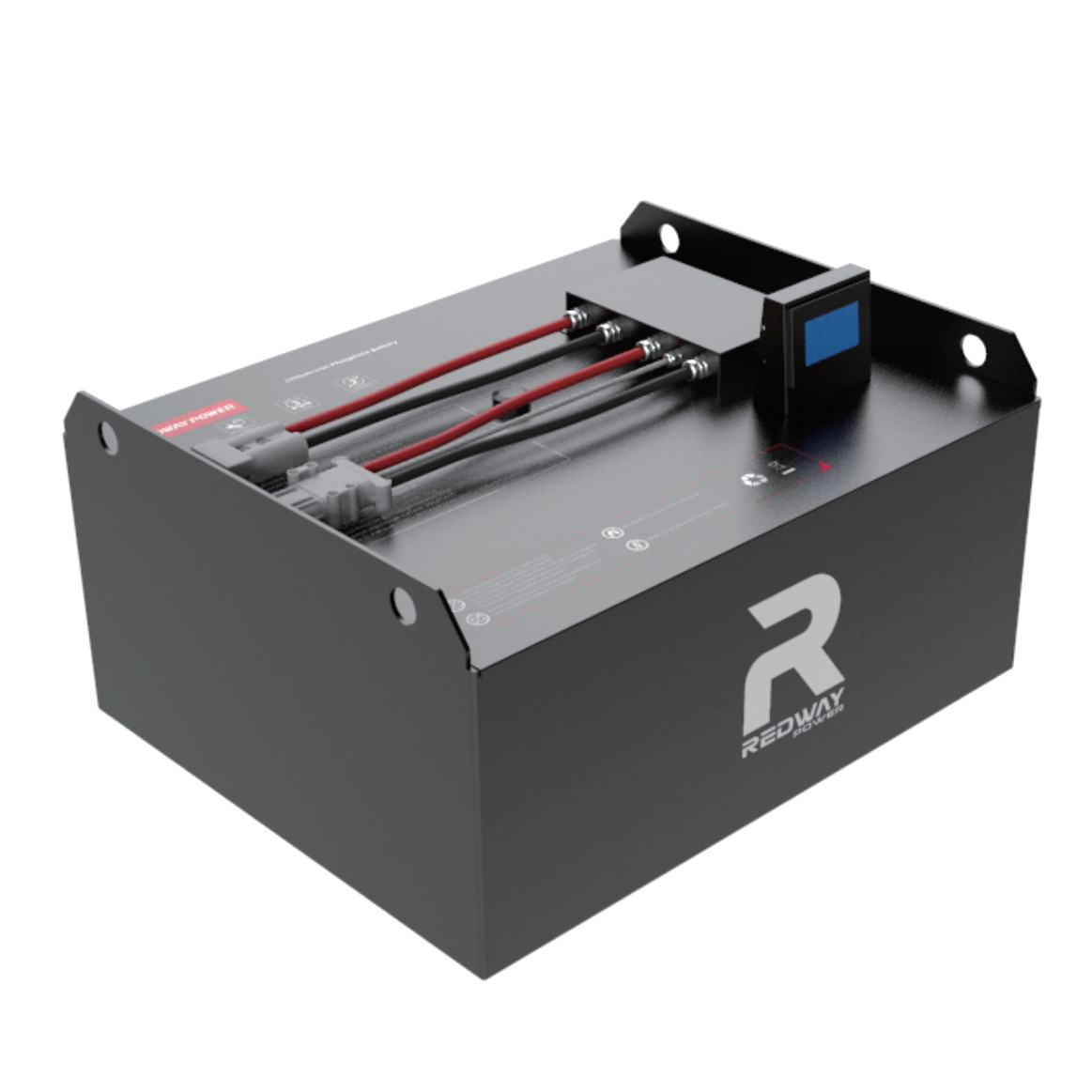
This page is the guide for forklift batteries. The material below answers the two decisions that come up before anything else: choosing the pack (voltage, capacity, weight, brand fit and payback) and running it (charging station, opportunity charging, maintenance, safety and lifespan). Each section links to the articles that go deeper; the complete lists live in the two sub-guides.
Choose the pack
Voltage and capacity follow the truck and the shift
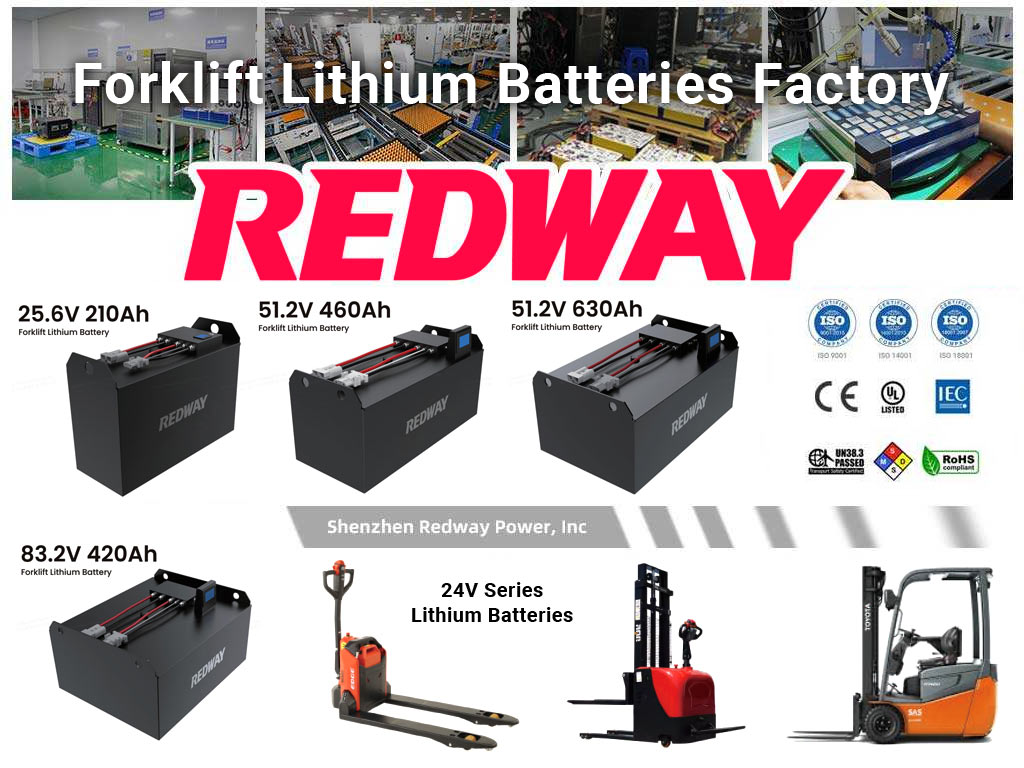
Match the truck's voltage first — 24V, 36V, 48V or 80V — then size amp-hours to a full shift. If the operation runs around the clock, size for opportunity charging instead of a spare-pack swap.
- Comprehensive Guide to the Redway 48V 450Ah/456Ah Forklift Lithium Battery
- Comprehensive Guide to 48V 600Ah/608Ah Forklift Lithium Batteries by Redway Battery
- Comprehensive Guide to 38.4V / 36V Forklift Lithium Batteries by Redway Battery
- Comprehensive Guide to Redway 24V 560Ah/550Ah/500Ah Forklift Lithium Batteries
- How to Choose a 48V Lithium-Ion Forklift Battery for Hyster Used Lift Trucks: A China-Driven Guide?
- How to Choose a 48V Lithium Battery for Forklifts from a Chinese Manufacturer
Weight is a specification, not a detail
Lithium packs weigh about a third of the lead-acid block they replace. That is payload recovered on most trucks, and a ballast question on the rest.
Cost is measured per operating hour
The payback on lithium comes from removing watering, equalising and pack swaps, so compare total cost per hour over eight to ten years rather than purchase price.
Run and maintain it
Build the charging station before the battery arrives
Charger, stand, ventilation and power layout are one decision. Charging stations fail in practice because they were placed where nobody wants to walk.
- What Are Industrial Forklift Chargers And Battery Chargers
- What Are Forklift Battery Charger Stands Used For
- What Are Industrial Charging Systems For Forklifts
- How To Set Up A Forklift Battery Charging Station
- What Is The ACT Quantum Forklift Charger
Opportunity charging replaces the spare pack
Lithium tolerates partial charging. That is what removes the second battery from the fleet — as long as the charger, the BMS and the duty cycle agree.
- What Is Forklift Battery Charging Process
- How To Charge A Forklift Battery
- What Is A Fast Charger For Forklift Batteries
- How Does Opportunity Charging Work For Lithium Forklifts
What actually ends a pack early
Heat, the wrong charge profile and mismatched chargers account for most premature failures. Keep the check sheet short but real: connectors, BMS fault log, ventilation, and heater function on cold-storage packs.
Forklift battery questions
The five that come up in almost every fleet conversation.
What voltage battery does my forklift need?
It is fixed by the truck, not by preference: most warehouse trucks use 24V, 36V or 48V, and larger counterbalance or container-handling trucks use 80V. The pack voltage must match the truck controller exactly; capacity (Ah) is what you size to the shift.
Can I replace a lead-acid forklift battery with lithium without changing the truck?
Usually yes, but three things have to line up: the bay dimensions and connector, the weight envelope (lithium is roughly a third of the lead-acid weight, so some trucks need ballast), and the charger, which must be lithium-specific. Trucks that pass those checks are a drop-in replacement.
How long does a LiFePO4 forklift battery last?
Expect 3,000–6,000 charge cycles at 80% depth of discharge, which is typically eight to ten years in a single-shift operation. Heat, sustained partial charging with the wrong profile, and oversized fast charging are the three things that shorten it fastest.
Do lithium forklift batteries need opportunity charging?
Not in the lead-acid sense. Lithium tolerates partial charging, so you can top up during breaks instead of swapping packs — but the charger and BMS settings must support it, and the charging station has to sit on the truck route to be used.
What maintenance does a lithium forklift battery need?
No watering, no equalising, no specific-gravity checks. What remains is connector inspection, keeping the charging area ventilated, watching the BMS fault log, and checking heater or coolant function on cold-storage packs.
Where to go next
Adjacent guides and the index of the whole set.
More in this series
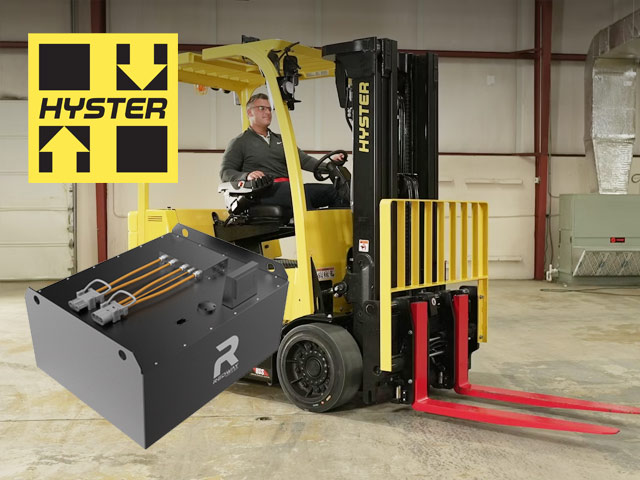
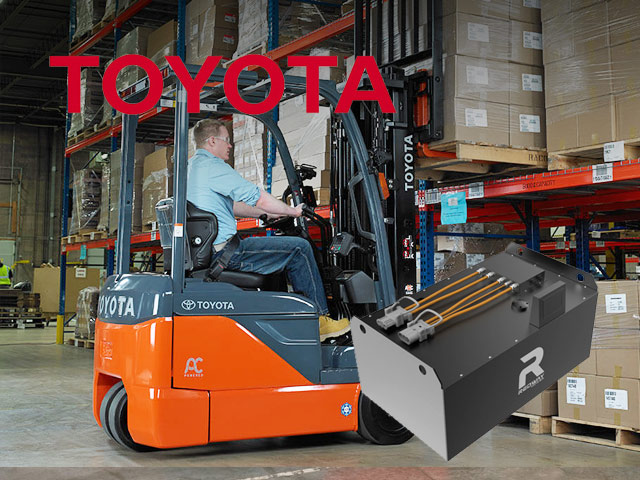
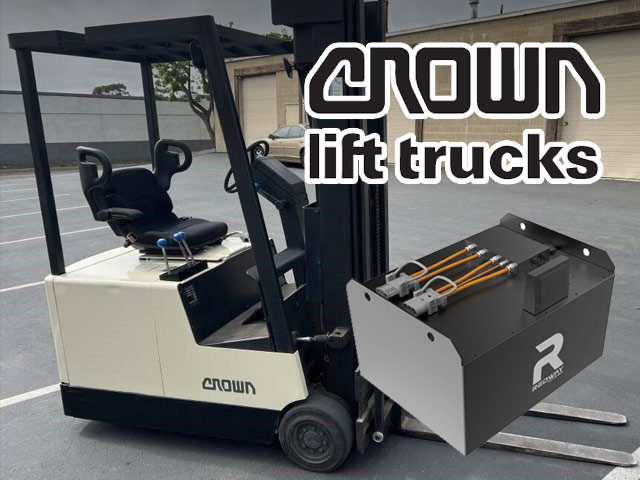
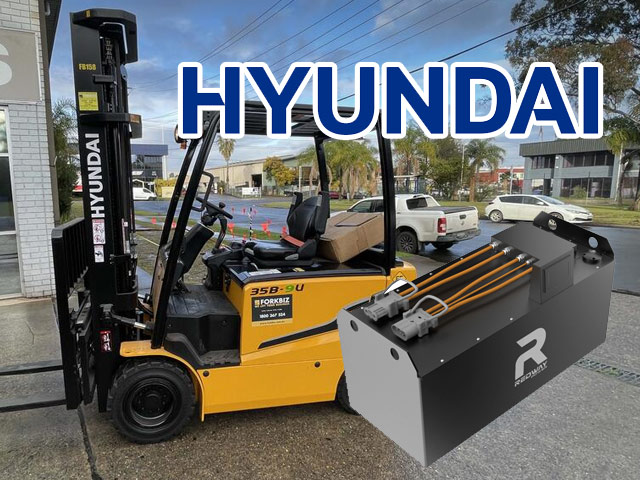
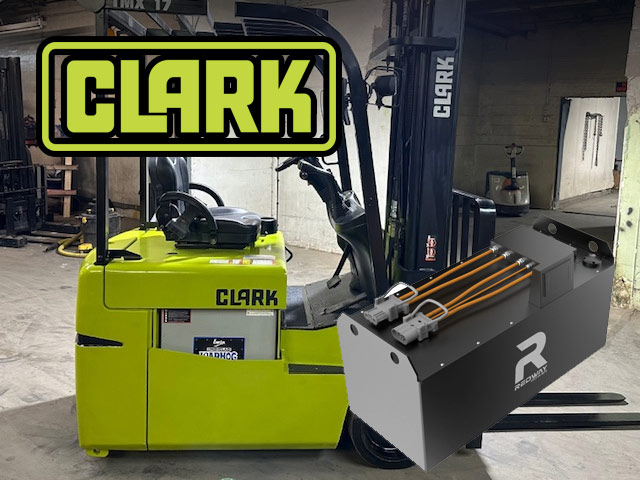
Forklift battery brands & model fit — Toyota, Hyster, Yale, Crown, Raymond, Clark and Jungheinrich bay and connector detail.
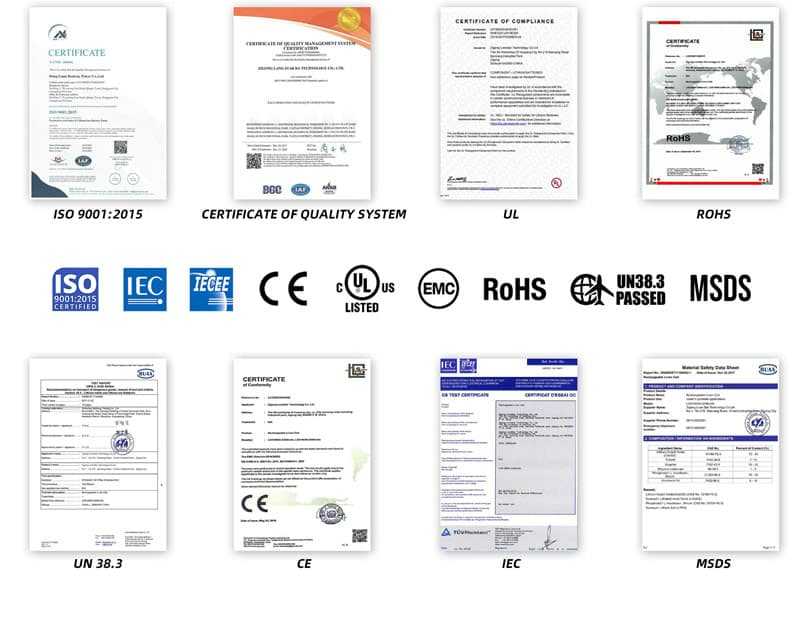
Forklift battery safety & compliance — ventilation, DC hazards, UN 38.3 shipping and certifications.
Send the truck list
Give us the truck models, shift pattern and battery bay dimensions, and we will come back with the voltage, capacity and weight envelope for each.
Forklift battery guides and answers
How to choose, charge and keep a lithium forklift pack alive — the full article set behind this page.
This page is the guide for forklift batteries. The material below answers the two decisions that come up before anything else: choosing the pack (voltage, capacity, weight, brand fit and payback) and running it (charging station, opportunity charging, maintenance, safety and lifespan). Each section links to the articles that go deeper; the complete lists live in the two sub-guides.
Choose the pack
Voltage and capacity follow the truck and the shift
Match the truck's voltage first — 24V, 36V, 48V or 80V — then size amp-hours to a full shift. If the operation runs around the clock, size for opportunity charging instead of a spare-pack swap.
- Comprehensive Guide to the Redway 48V 450Ah/456Ah Forklift Lithium Battery
- Comprehensive Guide to 48V 600Ah/608Ah Forklift Lithium Batteries by Redway Battery
- Comprehensive Guide to 38.4V / 36V Forklift Lithium Batteries by Redway Battery
- Comprehensive Guide to Redway 24V 560Ah/550Ah/500Ah Forklift Lithium Batteries
- How to Choose a 48V Lithium-Ion Forklift Battery for Hyster Used Lift Trucks: A China-Driven Guide?
- How to Choose a 48V Lithium Battery for Forklifts from a Chinese Manufacturer
Weight is a specification, not a detail
Lithium packs weigh about a third of the lead-acid block they replace. That is payload recovered on most trucks, and a ballast question on the rest.
Cost is measured per operating hour
The payback on lithium comes from removing watering, equalising and pack swaps, so compare total cost per hour over eight to ten years rather than purchase price.
Run and maintain it
Build the charging station before the battery arrives
Charger, stand, ventilation and power layout are one decision. Charging stations fail in practice because they were placed where nobody wants to walk.
- What Are Industrial Forklift Chargers And Battery Chargers
- What Are Forklift Battery Charger Stands Used For
- What Are Industrial Charging Systems For Forklifts
- How To Set Up A Forklift Battery Charging Station
- What Is The ACT Quantum Forklift Charger
Opportunity charging replaces the spare pack
Lithium tolerates partial charging. That is what removes the second battery from the fleet — as long as the charger, the BMS and the duty cycle agree.
- What Is Forklift Battery Charging Process
- How To Charge A Forklift Battery
- What Is A Fast Charger For Forklift Batteries
- How Does Opportunity Charging Work For Lithium Forklifts
What actually ends a pack early
Heat, the wrong charge profile and mismatched chargers account for most premature failures. Keep the check sheet short but real: connectors, BMS fault log, ventilation, and heater function on cold-storage packs.
Forklift battery questions
The five that come up in almost every fleet conversation.
What voltage battery does my forklift need?
It is fixed by the truck, not by preference: most warehouse trucks use 24V, 36V or 48V, and larger counterbalance or container-handling trucks use 80V. The pack voltage must match the truck controller exactly; capacity (Ah) is what you size to the shift.
Can I replace a lead-acid forklift battery with lithium without changing the truck?
Usually yes, but three things have to line up: the bay dimensions and connector, the weight envelope (lithium is roughly a third of the lead-acid weight, so some trucks need ballast), and the charger, which must be lithium-specific. Trucks that pass those checks are a drop-in replacement.
How long does a LiFePO4 forklift battery last?
Expect 3,000–6,000 charge cycles at 80% depth of discharge, which is typically eight to ten years in a single-shift operation. Heat, sustained partial charging with the wrong profile, and oversized fast charging are the three things that shorten it fastest.
Do lithium forklift batteries need opportunity charging?
Not in the lead-acid sense. Lithium tolerates partial charging, so you can top up during breaks instead of swapping packs — but the charger and BMS settings must support it, and the charging station has to sit on the truck route to be used.
What maintenance does a lithium forklift battery need?
No watering, no equalising, no specific-gravity checks. What remains is connector inspection, keeping the charging area ventilated, watching the BMS fault log, and checking heater or coolant function on cold-storage packs.
Where to go next
Adjacent guides and the index of the whole set.
More in this series
Forklift battery brands & model fit — Toyota, Hyster, Yale, Crown, Raymond, Clark and Jungheinrich bay and connector detail.
Forklift battery safety & compliance — ventilation, DC hazards, UN 38.3 shipping and certifications.
Send the truck list
Give us the truck models, shift pattern and battery bay dimensions, and we will come back with the voltage, capacity and weight envelope for each.
Forklift battery guides and answers
How to choose, charge and keep a lithium forklift pack alive — the full article set behind this page.
This page is the guide for forklift batteries. The material below answers the two decisions that come up before anything else: choosing the pack (voltage, capacity, weight, brand fit and payback) and running it (charging station, opportunity charging, maintenance, safety and lifespan). Each section links to the articles that go deeper; the complete lists live in the two sub-guides.
Choose the pack
Voltage and capacity follow the truck and the shift
Match the truck's voltage first — 24V, 36V, 48V or 80V — then size amp-hours to a full shift. If the operation runs around the clock, size for opportunity charging instead of a spare-pack swap.
- Comprehensive Guide to the Redway 48V 450Ah/456Ah Forklift Lithium Battery
- Comprehensive Guide to 48V 600Ah/608Ah Forklift Lithium Batteries by Redway Battery
- Comprehensive Guide to 38.4V / 36V Forklift Lithium Batteries by Redway Battery
- Comprehensive Guide to Redway 24V 560Ah/550Ah/500Ah Forklift Lithium Batteries
- How to Choose a 48V Lithium-Ion Forklift Battery for Hyster Used Lift Trucks: A China-Driven Guide?
- How to Choose a 48V Lithium Battery for Forklifts from a Chinese Manufacturer
Weight is a specification, not a detail
Lithium packs weigh about a third of the lead-acid block they replace. That is payload recovered on most trucks, and a ballast question on the rest.
Cost is measured per operating hour
The payback on lithium comes from removing watering, equalising and pack swaps, so compare total cost per hour over eight to ten years rather than purchase price.
Run and maintain it
Build the charging station before the battery arrives
Charger, stand, ventilation and power layout are one decision. Charging stations fail in practice because they were placed where nobody wants to walk.
- What Are Industrial Forklift Chargers And Battery Chargers
- What Are Forklift Battery Charger Stands Used For
- What Are Industrial Charging Systems For Forklifts
- How To Set Up A Forklift Battery Charging Station
- What Is The ACT Quantum Forklift Charger
Opportunity charging replaces the spare pack
Lithium tolerates partial charging. That is what removes the second battery from the fleet — as long as the charger, the BMS and the duty cycle agree.
- What Is Forklift Battery Charging Process
- How To Charge A Forklift Battery
- What Is A Fast Charger For Forklift Batteries
- How Does Opportunity Charging Work For Lithium Forklifts
What actually ends a pack early
Heat, the wrong charge profile and mismatched chargers account for most premature failures. Keep the check sheet short but real: connectors, BMS fault log, ventilation, and heater function on cold-storage packs.
Forklift battery questions
The five that come up in almost every fleet conversation.
What voltage battery does my forklift need?
It is fixed by the truck, not by preference: most warehouse trucks use 24V, 36V or 48V, and larger counterbalance or container-handling trucks use 80V. The pack voltage must match the truck controller exactly; capacity (Ah) is what you size to the shift.
Can I replace a lead-acid forklift battery with lithium without changing the truck?
Usually yes, but three things have to line up: the bay dimensions and connector, the weight envelope (lithium is roughly a third of the lead-acid weight, so some trucks need ballast), and the charger, which must be lithium-specific. Trucks that pass those checks are a drop-in replacement.
How long does a LiFePO4 forklift battery last?
Expect 3,000–6,000 charge cycles at 80% depth of discharge, which is typically eight to ten years in a single-shift operation. Heat, sustained partial charging with the wrong profile, and oversized fast charging are the three things that shorten it fastest.
Do lithium forklift batteries need opportunity charging?
Not in the lead-acid sense. Lithium tolerates partial charging, so you can top up during breaks instead of swapping packs — but the charger and BMS settings must support it, and the charging station has to sit on the truck route to be used.
What maintenance does a lithium forklift battery need?
No watering, no equalising, no specific-gravity checks. What remains is connector inspection, keeping the charging area ventilated, watching the BMS fault log, and checking heater or coolant function on cold-storage packs.
Where to go next
Adjacent guides and the index of the whole set.
More in this series
Forklift battery brands & model fit — Toyota, Hyster, Yale, Crown, Raymond, Clark and Jungheinrich bay and connector detail.
Forklift battery safety & compliance — ventilation, DC hazards, UN 38.3 shipping and certifications.
Send the truck list
Give us the truck models, shift pattern and battery bay dimensions, and we will come back with the voltage, capacity and weight envelope for each.
