A forklift maker’s engineer is reviewing a supplier for 51.2V lithium packs built from 16 LiFePO4 cells in series, often with several cells in parallel. The engineer wants to understand why cell matching matters and what evidence to ask for.
In a 16-series pack, the weakest cell group limits the whole pack: it reaches empty or full first, and the BMS stops the pack there. Matching cells by capacity, internal resistance and voltage, and from the same production batch, keeps groups close so the pack uses more of its capacity and balances less. Ask the supplier how cells are graded and matched, what limits are used, and whether records link each pack serial to its cell batch.
Why matching matters in 16S
- Weakest group rules. Usable capacity is set by the group that hits its limit first.
- Spread grows. Small differences widen with cycling and temperature differences inside the pack.
- Balancing has limits. The BMS can correct small voltage differences, but not a cell with much lower capacity.
What factories sort by
- Capacity, measured on incoming or sampled cells.
- Internal resistance.
- Open-circuit voltage and its change during rest, which can reveal self-discharge.
- Production batch, so cells in one pack share a history.
Evidence to ask for
- The supplier’s grading and matching procedure and limits.
- Records linking pack serial to cell batch; see our traceability article.
- End-of-line cell group voltages for a sample pack.
- Incoming cell checks; see our incoming inspection article.
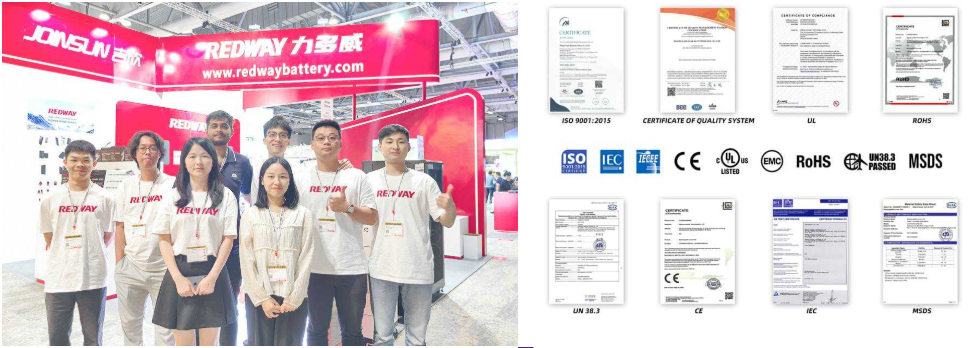
Our cell imbalance article explains what to do when a pack in service shows imbalance. Redway’s packs list about 4000 cycles. The factory operates under ISO 9001/14001 management systems, and the certificate is available on request. Redway’s cell matching guide gives background.
Risk limits
Grading limits differ by supplier and cell type, so this article gives no pass values. Do not open packs to measure cells; ask the supplier for records. This article is general guidance for engineers.
Additional perspectives
Ask for the cell group voltages at the end of line for a few serials. Tight, consistent readings say a lot about the process.
Redway Tech Editorial Team – OEM engineer perspective
We keep batch records for traceability. With a pack serial we can show where its cells came from.
Redway Tech Editorial Team – Supplier quality perspective
Log group voltages at commissioning. When a pack drifts later, you have a baseline to compare.
Redway Tech Editorial Team – Service technician perspective
Specifications are taken from Redway product pages as of October 2026. Where a figure isn’t published, this article says so. Confirm current specifications for your model with Redway before ordering. This article is general guidance, not a site-specific engineering assessment.
Related products
- 48V 600Ah 630Ah Forklift Lithium Battery
- 48V 600Ah 608Ah Forklift Lithium Battery
- 48V 460Ah 450Ah Forklift Lithium Battery
- 48V 560Ah 550Ah Forklift Lithium Battery
- 48V 500Ah Forklift Lithium Battery
Related topics
- Cell Matching & Quality
- Lithium Cell Chemistry, Manufacturing & Components
- Battery Manufacturing & Quality Control
- Quality Management
- Battery Supplier Audits & Production Capacity
- Forklift BMS, Fleet Monitoring & Telematics
- Forklift Battery Repair, Reconditioning & Cells
- 48V Forklift Battery Systems
- Advanced Manufacturing
- About Redway
Continue learning
Forklift Batteries
Related reading