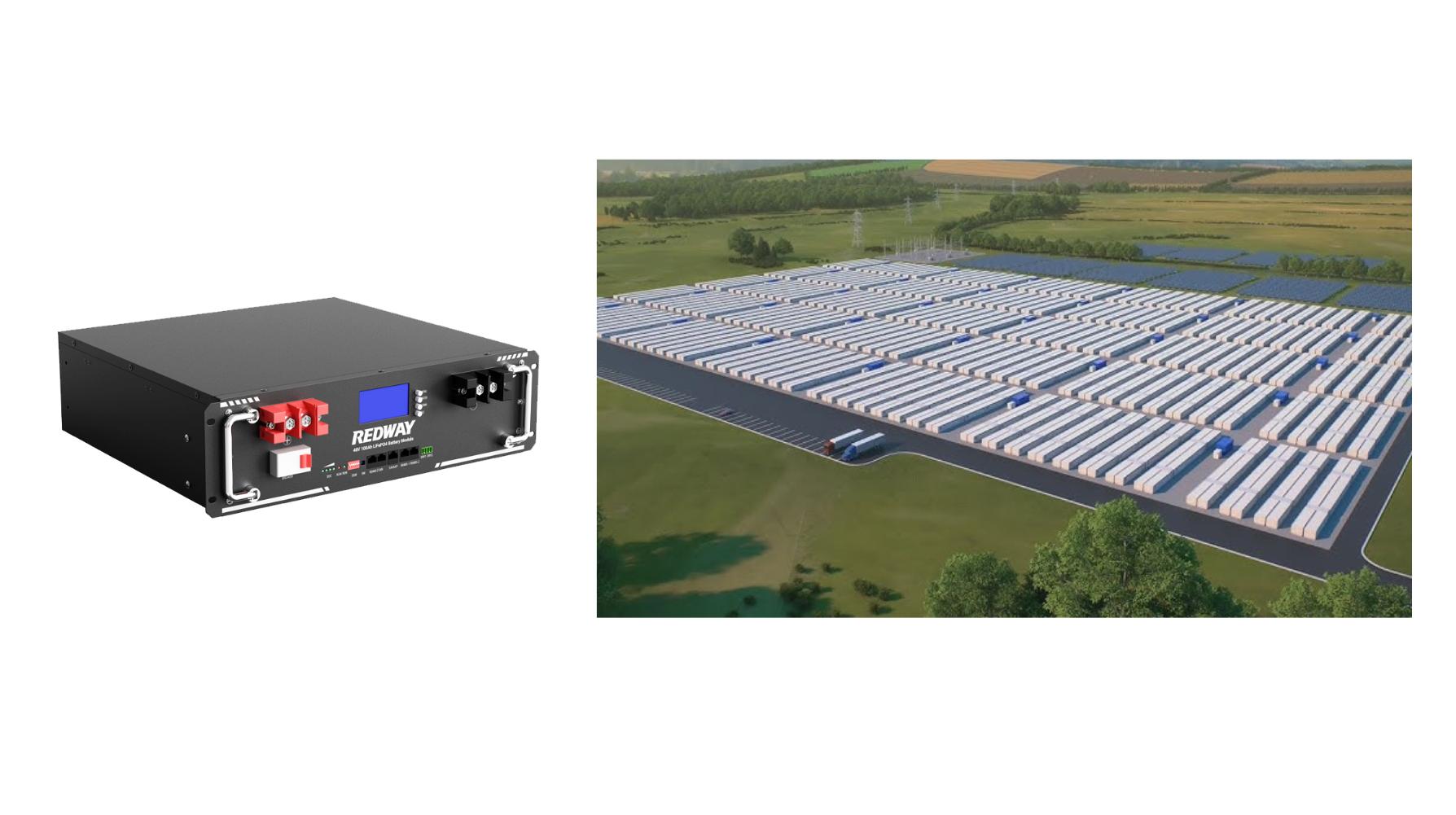
A battery farm—more formally a battery energy storage system (BESS)—is a site containing many battery modules, power-conversion equipment, controls, protection and often transformers. It stores electricity and returns it later to balance the grid, support renewables, manage peaks and provide fast frequency or voltage services.
Last updated:
What equipment is in a battery farm?
| Component | Function |
|---|---|
| Battery cells, modules and racks | Store DC energy |
| Battery management system | Monitors cells and enforces operating limits |
| Power conversion system | Converts between DC batteries and AC grid power |
| Energy management system | Schedules charge/discharge and grid services |
| Thermal and fire-safety systems | Control temperature, detect faults and mitigate incidents |
| Transformer/switchgear | Connects safely at the required grid voltage |
What does a battery farm do for the grid?
Applications include renewable-energy shifting, peak shaving, capacity support, frequency regulation, voltage support, congestion relief, backup and black-start assistance where designed. Power in MW shows how fast the site can charge or discharge; energy in MWh shows how long it can sustain that output. A 100MW/400MWh system is nominally a four-hour system at full power.
What determines safety and useful life?
Cell chemistry, system design, site separation, ventilation, thermal-runaway detection, emergency response, software controls and maintenance all matter. Capacity fades with calendar time, temperature and cycling. Project evaluation should include round-trip efficiency, degradation, augmentation, warranty throughput, interconnection limits and end-of-life recycling.
How Do Battery Farms Store Renewable Energy?
Battery farms use electrochemical cells (typically lithium-ion) to store energy. During periods of high renewable generation, excess electricity charges the batteries. When demand rises or generation drops, inverters convert stored DC power back to AC for grid distribution. Modern systems achieve 80-95% round-trip efficiency, making them critical for balancing intermittent renewables.
Why Are Battery Farms Essential for Grid Stability?
Battery farms provide frequency regulation, voltage support, and black-start capabilities. They respond within milliseconds to grid fluctuations, unlike traditional plants (30+ seconds). For example, Australia’s Hornsdale Power Reserve reduced grid stabilization costs by 90% using Tesla Megapacks, demonstrating their role in preventing outages and integrating renewables.
What Technologies Power Modern Battery Farms?
Dominant technologies include lithium-ion (LFP and NMC), flow batteries (vanadium redox), and emerging solid-state systems. Lithium-ion dominates due to high energy density (250-300 Wh/kg), while flow batteries excel in long-duration storage (4-12 hours). CATL’s 6.25 MWh grid-scale LFP battery exemplifies cost-effective solutions at $100/kWh, competitive with gas peaker plants.
Where Are the Largest Battery Farms Located?
Top installations include:
1. Moss Landing (California): 3,200 MWh (Vistra)
2. Hornsdale (Australia): 450 MWh (Tesla)
3. Dalian (China): 800 MWh flow battery (Rongke Power)
4. East Midlands (UK): 1,300 MWh (Sembcorp)
These sites prioritize regions with high renewable penetration and aging grid infrastructure needing stability upgrades.
How Do Battery Farms Reduce Carbon Emissions?
By storing surplus renewables instead of curtailing generation, battery farms prevent 2.5-3 million metric tons of CO2 annually per GW deployed. A 2023 NREL study showed pairing 100 MW solar with 60 MWh storage cuts emissions by 84% vs. gas peakers. Recycling programs (e.g., Redwood Materials) also recover 95%+ battery materials, minimizing lifecycle impacts.
What Are the Challenges in Scaling Battery Farms?
Key hurdles include:
– Supply chain bottlenecks (lithium prices rose 400% in 2021-22)
– Fire risks (0.1% failure rate in Li-ion systems)
– Regulatory delays (2-5 years for permits)
– Thermal management needs (cooling consumes 5-15% of stored energy)
Solutions like AI-driven battery management and non-flammable electrolytes (e.g., Amionx SAFE®) are addressing these issues.
Expert Views
“Battery farms are the linchpin of decarbonization. Our 2025 projections show 1.2 TW global storage capacity will enable 80% renewable grids. Hybrid systems combining lithium-ion for power and flow batteries for energy are the next frontier,” says Dr. Elena Torres, Redway’s Chief Energy Strategist. “Policy must incentivize co-location with renewables to minimize transmission losses.”
Conclusion
Battery farms transform renewable energy from intermittent to dispatchable, providing grid resilience and accelerating fossil fuel displacement. With 228% growth projected in 2023-2030 (BloombergNEF), these systems are critical for achieving net-zero targets. Ongoing advances in battery chemistry and AI optimization will further enhance their economic and environmental viability.
FAQ
What is a battery farm?
It is a grid-scale battery energy storage site with batteries, inverters, controls, protection and grid-connection equipment.
Do solar farms use batteries?
Some do. Batteries can shift solar energy to later hours and provide grid services, but many solar projects operate without storage.
What is the difference between MW and MWh?
MW is power—the rate of delivery—while MWh is stored energy and helps determine duration.
How long does a battery farm last?
Project life varies by chemistry, temperature, cycling, maintenance and augmentation; evaluate the specific warranty and degradation model.