A maker of golf carts and low-speed vehicles sells through distributors in several regions. Each distributor asks for a different list of battery documents, and the OEM’s compliance team wants to understand what they usually mean and prepare one organised set.
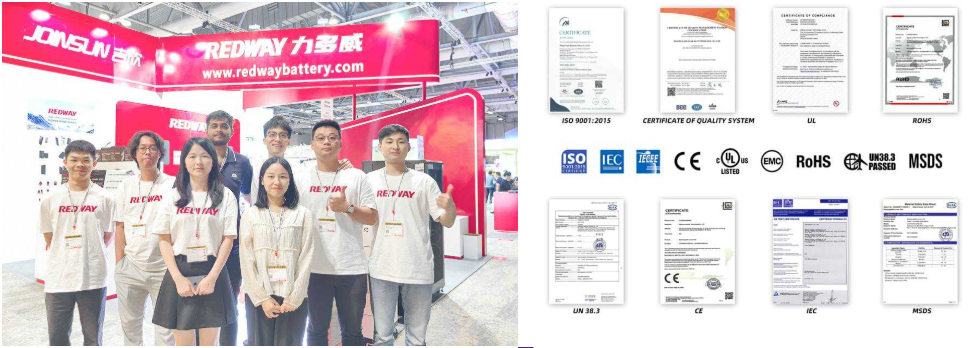
Most requests fall into a few groups: transport documents (the UN 38.3 test summary and SDS), a pack-level safety test report to the standard the market or customer expects, market-specific declarations and labels, and the factory’s quality system certificate. Vehicle-level rules for LSVs belong to the vehicle maker. Build a document pack per battery model, note which market each item serves, and confirm scope with the battery supplier at quotation.
The usual groups of documents
- Transport. UN 38.3 test summary and SDS; see our UN 38.3 and SDS article.
- Pack safety. A safety test report for the battery model; our UL 2580 article explains one common reference.
- Market declarations. Region-specific declarations, labels and battery markings, which can change as regulations update.
- Factory system. Quality and environmental management certificates.
- Product file. Data sheet, manual, label artwork and charger pairing.
Vehicle versus battery
LSVs and road-going carts must meet vehicle rules in each market, and the vehicle maker is responsible for those. The battery documents support that work but do not replace it; Redway’s LSV and road use page gives background.
Organising the set
- One folder per battery model and revision.
- A table listing each document, its level (cell, pack or factory), date and markets.
- A process to update the set when the design changes; see our cell or pack article.
Redway holds relevant qualifications and certifications for its batteries; details are available from sales on request. Redway’s batteries are designed and tested to UL-related standards; the report is typically issued in the customer’s name, and scope is confirmed at quotation. The factory operates under ISO 9001/14001 management systems, and the certificate is available on request. OEM custom orders have no MOQ by default (1 piece), although some specific products carry a 10-piece minimum, so confirm for your model.
Risk limits
Requirements vary by market and change over time. This article is general guidance for OEM compliance teams, not a compliance opinion; confirm with a qualified adviser.
Additional perspectives
Ask each distributor for its list in writing. Many lists overlap once you map them to the same groups.
Redway Tech Editorial Team – OEM compliance lead perspective
Send us the document table with the first shipment. Our customers ask before they ask about price.
Redway Tech Editorial Team – Distributor perspective
Tell us your target markets at quotation. We can plan testing and labels for the final design.
Redway Tech Editorial Team – Supplier engineer perspective
Specifications are taken from Redway product pages as of October 2026. Where a figure isn’t published, this article says so. Confirm current specifications for your model with Redway before ordering. This article is general guidance, not a site-specific engineering assessment.
Related products
- 48V 100Ah Lithium Golf Cart Battery OEM Factory
- 48V 100Ah LiFePO4 Lithium Golf Cart Battery OEM (BMS 200A)
- 48V 150Ah LiFePO4 Lithium Golf Cart Battery Factory
- 72V 100Ah LiFePO4 Lithium Golf Cart Battery Factory
- 48V 160Ah LiFePO4 Lithium Golf Cart Battery Manufacturer (BMS 200A)
Related topics
- Golf Cart & LSV Laws, Licensing and Road Use
- Battery Certification, Compliance & Documentation
- Golf Cart Battery Brands, OEM & Suppliers
- Battery OEM Customization & Engineering
- Lithium Mining, Regulation & Transport
- Golf Cart Battery Safety & Protection
- Quality Management
- LiFePO4 Batteries OEM
- Golf Cart Models & Battery Fitment
- 48V Golf Cart Battery Systems
Continue learning
Golf Cart Batteries
Related reading