A dealer’s logistics coordinator is preparing a first sea shipment of lithium golf cart batteries. The forwarder sends a document checklist and asks for the UN 38.3 report and an SDS. The coordinator wants to know what each document is and who issues it.
Expect seven documents: the UN 38.3 test summary (from the battery manufacturer), a safety data sheet (SDS), a dangerous-goods transport document or declaration, a container packing certificate for sea freight, a commercial invoice, a packing list, and the bill of lading. The UN 38.3 summary and SDS come from the factory; the declaration and packing certificate come from whoever packs and ships the cargo. Names, models and weights must match on every document.
What each document does
- UN 38.3 test summary. Proves the battery type passed the transport tests in section 38.3 of the UN Manual of Tests and Criteria. Manufacturers and distributors must make the summary available. It names the manufacturer, test laboratory, report number, date, model numbers, mass, watt-hour rating and the tests passed (IATA guidance lists the required fields).
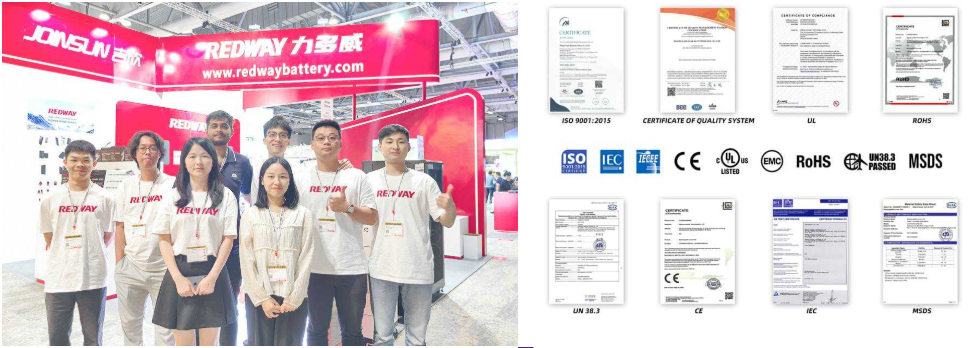
- Safety data sheet. A 16-section GHS-format document on hazards, handling, storage, fire-fighting and transport. Redway’s product pages list UN38.3 and MSDS among the documents for golf cart packs; ask for the SDS for your exact model.
- Dangerous-goods declaration. Lithium-ion batteries above 100 Wh ship as UN3480, Class 9. A Redway 51.2V 105Ah pack is rated at 5.37 kWh, so it is fully regulated.
- Container packing certificate. Under IMDG Code section 5.4.2, the party packing the container certifies that it was clean and fit, packages were inspected and secured, and the container was marked and placarded.
- Commercial invoice and packing list. Seller, buyer, model names, quantities, weights and Incoterm, consistent with the declaration.
- Bill of lading. Issued by the carrier; the dangerous-goods details must match the declaration.
Before the pallet leaves
Ask the factory for the UN 38.3 summary and SDS at order stage, not at the port. Check that the model name on both matches the model on your purchase order. Redway’s compliance documentation guide and import and shipping page give more background; our container loading article covers packing.
A simple document file
Create one folder per shipment with the same file names each time: the UN 38.3 summary, SDS, declaration, packing certificate, invoice, packing list and bill of lading. Check dates and model names across all of them before the cargo moves. A consistent file makes later audits, insurance claims and customs questions much quicker to answer.
Risk limits
Requirements vary by destination, carrier and the edition of the regulations in force. Your forwarder and customs broker confirm the exact set for your route. This article summarises public rules and is not a compliance opinion.
Additional perspectives
Send the forwarder the draft document set a week before cargo-ready date and ask them to check it against the carrier’s dangerous-goods rules. Late corrections to a declaration can cost a vessel slot, so correct names and weights before booking.
Redway Tech Editorial Team – Logistics perspective
Your broker needs the invoice, packing list and the dangerous-goods papers to agree with each other and will confirm the tariff classification for your country. Keep scans of the UN 38.3 summary and SDS with the entry file for audits.
Redway Tech Editorial Team – Customs and import perspective
Check that the UN 38.3 summary covers the model you are importing. A summary for a different model, or one that lacks a report number or date, should be queried before shipment. Ask whether the factory’s test reports are available under your company name where your market requires it.
Redway Tech Editorial Team – Compliance perspective
Specifications are taken from Redway product pages as of October 2026. Where a figure isn’t published, this article says so. Confirm current specifications for your model with Redway before ordering. This article is general guidance, not a site-specific engineering assessment.
Related products
- 48V 100Ah LiFePO4 Lithium Golf Cart Battery OEM (BMS 200A)
- 48V 100Ah Lithium Golf Cart Battery OEM Factory
- 48V 150Ah LiFePO4 Lithium Golf Cart Battery Factory
- 48V 160Ah LiFePO4 Lithium Golf Cart Battery Manufacturer (BMS 200A)
- 36V 100Ah LiFePO4 Lithium Golf Cart Battery Factory
Related topics
- Battery Certification, Compliance & Documentation
- Battery Import, Shipping & Warranty Support
- Lithium Mining, Regulation & Transport
- Battery Wholesale, Pricing & Logistics
- Golf Cart Fleet & Commercial Battery Systems
- 48V Golf Cart Battery Systems
- Golf Cart Battery Safety & Protection
- Golf Cart Dealers & Vehicle Buying
- Battery Manufacturing & Quality Control
- Quality Management
Continue learning
Golf Cart Batteries
Related reading