
A golf cart brand is qualifying a new pack supplier. Its quality engineer wants to know what checks the factory performs on cells when they arrive, and which records to ask for during the audit.
Ask how cells are received, checked and released before assembly. A good process records the cell lot and supplier documents, inspects cells visually, measures voltage and internal resistance, tests capacity on a sample or on all cells depending on the plan, and groups cells with similar values before they go into a pack. Ask to see the procedure and a recent record, not just a description. Redway can explain its incoming inspection process during an audit or factory visit.
Checks to ask about
- Receiving records. Supplier, cell model, lot number, date and the supplier’s test documents.
- Visual inspection. Dents, swelling, leaks, damaged terminals or wrappers.
- Voltage and internal resistance. Measured on each cell and compared with limits from the specification.
- Capacity. Checked on a sample or on all cells, depending on the factory’s plan and the product.
- Grading and matching. Cells with similar capacity, resistance and voltage are grouped for the same pack; see Redway’s cell matching guide.
- Storage and release. How cells are stored before use and how rejected cells are separated.
Records to request
Ask for the incoming inspection procedure, one completed record with real values, and how a cell lot links to the finished pack serial number. Our traceability article explains the chain, and our factory audit checklist covers the wider audit.
Linking to later tests
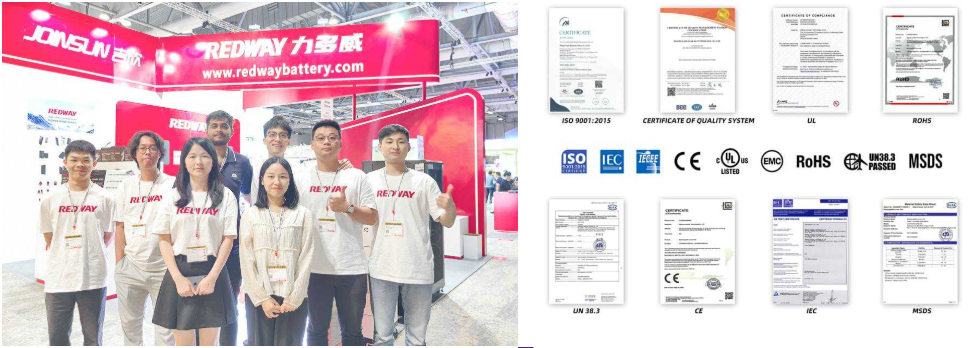
Incoming checks catch weak cells early, but they work with later steps: module tests, BMS checks and the final test before shipment, covered in our outgoing QC article. The factory operates under ISO 9001/14001 management systems, and the certificate is available on request.
Risk limits
Methods and limits vary by cell type and factory, and this article does not give pass values. Agree the inspection plan in your quality agreement. This article is general guidance for quality teams.
Additional perspectives
Ask the operator, not just the manager, to show how a cell is measured and recorded. The answer tells you whether the procedure is used every day.
Redway Tech Editorial Team – Quality engineer perspective
Put the incoming inspection plan in the quality agreement. It gives you a basis for questions if a field problem appears later.
Redway Tech Editorial Team – Procurement perspective
Grading matters as much as rejection. Cells that are all within limits but poorly matched can still cause imbalance in a pack.
Redway Tech Editorial Team – Factory engineer perspective
Specifications are taken from Redway product pages as of October 2026. Where a figure isn’t published, this article says so. Confirm current specifications for your model with Redway before ordering. This article is general guidance, not a site-specific engineering assessment.
Related products
- 48V 100Ah LiFePO4 Lithium Golf Cart Battery OEM (BMS 200A)
- 48V 100Ah Lithium Golf Cart Battery OEM Factory
- 48V 150Ah LiFePO4 Lithium Golf Cart Battery Factory
- 48V 160Ah LiFePO4 Lithium Golf Cart Battery Manufacturer (BMS 200A)
- 72V 100Ah LiFePO4 Lithium Golf Cart Battery Factory
Related topics
- Battery Manufacturing & Quality Control
- Cell Matching & Quality
- Quality Management
- Battery Supplier Audits & Production Capacity
- Lithium Cell Chemistry, Manufacturing & Components
- Advanced Manufacturing
- Redway Factory Views
- Golf Cart Battery Brands, OEM & Suppliers
- Golf Cart Battery Testing, Life & Replacement
- R&D Capability