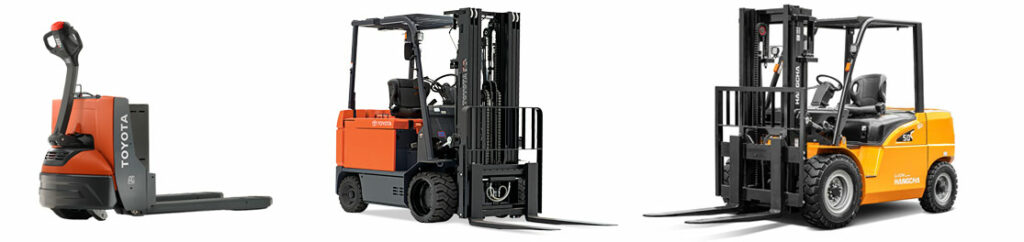
Toyota 3-wheel electric forklifts are compact material handling vehicles with a triangular wheel configuration for superior maneuverability in tight spaces. Powered by electric batteries, these units feature a single rear drive wheel and two front steering wheels, enabling sharp turns up to 180° in narrow aisles. Designed for indoor logistics and light industrial applications, they offer load capacities of 1.5–3 tons and lift heights up to 4.5 meters. Advanced models include three-stage mast systems and regenerative braking for energy efficiency.
How Much Do Different Forklift Batteries Weigh by Type?How do 3-wheel designs improve maneuverability?
The triangular wheelbase reduces turning radius by 30–40% versus 4-wheel models. The rear-wheel-drive system allows zero-radius pivoting, ideal for repositioning pallets in congested warehouses. Pro Tip: Avoid uneven surfaces—the narrow stability triangle increases tip-over risks on slopes >3°.
Beyond space efficiency, this configuration enables “spot turning” where the rear wheel rotates in place while front wheels redirect laterally. For example, in beverage distribution centers, operators can navigate 2.4-meter aisles without shuttle movements. However, reduced ground contact points mean lower lateral stability—always secure loads below 80% capacity when handling tall items.
What power systems do these forklifts use?
Toyota equips 3-wheel models with 48V or 80V lithium-ion batteries delivering 15–25 kW continuous power. The modular battery packs support 6–8 hours runtime and recharge via fast-charging stations in 1.5–2 hours. Pro Tip: Use opportunity charging during breaks to extend daily uptime by 18–22%.
Transitioning from lead-acid to LiFePO4 batteries has reduced weight by 150–200 kg while maintaining 1,500+ cycles. Advanced thermal management prevents performance drops in 0–40°C environments. For cold storage applications (-20°C), heated battery compartments maintain optimal electrolyte viscosity.
| Battery Type | Energy Density | Cycle Life |
|---|---|---|
| Lead-Acid | 30–40 Wh/kg | 500 cycles |
| LiFePO4 | 90–120 Wh/kg | 2,000 cycles |
What safety features are implemented?
Standard safety systems include automatic speed reduction during turns, load-sensing tilt prevention, and blue LED aisle lights. The OAC (Operational Awareness Control) system uses 6–8 sensors to detect pedestrians within 3 meters and applies progressive braking.
Practically speaking, the mast-integrated cameras eliminate blind spots when stacking goods at 4-meter heights. Did you know? Toyota’s SAS (Stability Action System) adjusts hydraulic pressure dynamically—if lateral G-forces exceed 0.35G during cornering, it automatically slows the forklift and centers the load.
What maintenance intervals apply?
Key components require service every 500–1,000 hours:
| Component | Service Action | Frequency |
|---|---|---|
| Battery | Terminal cleaning | 250h |
| Hydraulics | Filter replacement | 1,000h |
| Wheels | Bearing lubrication | 500h |
Beyond scheduled maintenance, daily pre-checks should verify brake function (stopping distance <2m at 5 km/h) and mast chain tension. For example, distribution centers using RFID-tagged forklifts achieve 92% compliance with maintenance schedules through automated alerts.
How do operating costs compare to IC models?
3-wheel electric models have 60–70% lower hourly costs than LPG equivalents. A typical 1.5-ton unit consumes 2.1–2.4 kWh per hour versus 1.3–1.6 liters of fuel for IC forklifts. At $0.12/kWh and $1.15/L, this translates to $0.25–0.29 vs $1.50–1.84 per hour.
But what about infrastructure? While electric models require $3,000–5,000 charging stations, they eliminate ventilation costs for indoor operations. Over 10 years, total ownership costs average $28,000–32,000 versus $45,000+ for diesel counterparts.
Redway Battery Expert Insight
FAQs
Limited to paved surfaces—their small wheels and low ground clearance (90–110mm) struggle with gravel or uneven yards. Use all-terrain models for mixed environments.
What’s the lifespan of the mast system?Triple-stage masts last 15,000–20,000 lift cycles with proper lubrication. Replace chain guides every 3,000 cycles to prevent side-roll incidents.
Continue exploring: Use the Forklift Energy Solutions & Electrification guide for the related decision process, evidence, and practical guidance.