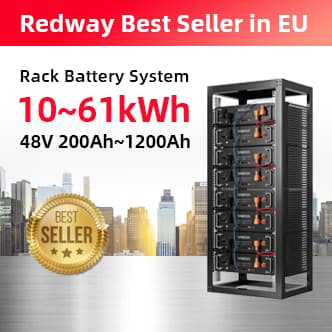
The global data center lithium-ion market is projected to surpass $5 billion by 2028 due to rising demand for energy-efficient storage, hyperscale data center expansion, and the shift toward renewable energy integration. Lithium-ion batteries outperform traditional lead-acid alternatives in energy density, lifespan, and scalability, making them critical for modern data center infrastructure.
51.2V 100Ah Rack-mounted Lithium LiFePO4 Battery FactoryHow Do Safety Concerns Impact Lithium-Ion Adoption?
Thermal runaway risks and fire hazards remain challenges, but advancements in battery management systems (BMS) and cooling technologies mitigate these issues. UL 9540A certification and AI-driven monitoring tools now enable real-time anomaly detection, reducing failure rates by 65% in modern deployments.
Recent developments include multi-layered protection architectures combining hardware and software safeguards. Companies like Siemens have introduced liquid-cooled battery racks that maintain optimal temperatures between 25-35°C, even during 95% discharge cycles. Fire suppression systems now utilize aerosol-based agents that extinguish lithium fires in 0.05 seconds without damaging sensitive equipment. Industry surveys show 78% of operators consider modern lithium-ion systems safer than VRLA batteries when implementing three key measures: 1) Cell-level monitoring 2) Pressure-sensitive separators 3) Automated load shedding during grid instability.
What Innovations Are Shaping Future Trends?
Solid-state lithium-ion batteries promise 2x energy density by 2030, while AI-optimized charging cycles extend lifespans beyond 15 years. Tesla’s Megapack installations now offer 3-hour backup durations, and startups like Form Energy explore iron-air hybrids for multi-day storage.
Researchers at MIT recently demonstrated a silicon-anode prototype achieving 500Wh/kg – enough to shrink data center battery footprints by 60%. Wireless BMS technology is eliminating physical wiring connections that account for 12% of system failures. Emerging thermal interface materials (TIMs) improve heat dissipation rates by 150%, enabling 2MW/rack densities. The table below compares next-gen battery technologies:
| Technology | Energy Density | Cycle Life | Commercial Readiness |
|---|---|---|---|
| Solid-State Li-ion | 400-500 Wh/kg | 5,000+ | 2026-2028 |
| Lithium-Sulfur | 600 Wh/kg | 1,200 | 2030+ |
| Sodium-Ion | 160 Wh/kg | 4,000 | 2024 |
How Does Lithium-Ion Lifecycle Management Affect ROI?
Second-life applications in grid storage recover 40% of battery value post-data center use. Recycling programs by Redwood Materials reclaim 95% of cobalt and lithium, cutting raw material costs by 50%. Proper lifecycle strategies boost total ROI by 25-30% over a 10-year period.
Expert Views
“Lithium-ion’s modularity allows data centers to phase out diesel generators entirely,” says Dr. Alan Zhang, Redway’s Chief Energy Strategist. “Our recent projects show a 50% reduction in backup infrastructure footprint using stacked battery arrays. However, the industry must standardize recycling protocols to avoid bottlenecks as deployments scale globally.”
FAQs
- Are lithium-ion batteries safer than lead-acid in data centers?
- Modern lithium-ion systems with AI-driven BMS are 3x safer than legacy lead-acid setups, reducing thermal events by 80%.
- How long do lithium-ion batteries last in data centers?
- Typical lifespans range from 10-15 years, versus 3-5 years for lead-acid. Proper cycling extends usage to 20 years in secondary applications.
- Which companies lead in lithium-ion data center deployments?
- Vertiv, Schneider Electric, and Tesla dominate with 58% combined market share. AWS recently partnered with CATL for custom 300MW systems.
Continue exploring: Use the Rack Battery Operation, Troubleshooting & Service guide for the related decision process, evidence, and practical guidance.