A buyer in North America receives two quotes for lithium forklift packs. One refers to UL 1973 and the other to UL 2580, and the buyer’s safety team asks which standard is meant for the traction battery in their trucks and what documents to request.
In general, UL 2580 is written for batteries used in electric vehicles and is the standard usually referenced for traction batteries in industrial trucks such as forklifts. UL 1973 covers batteries for stationary and motive auxiliary power, such as energy storage. The truck as a whole is assessed under its own standard. Ask which standard the supplier’s testing refers to, for which exact model, and who the report is issued to. Redway designs and tests to UL-related standards; the report is typically issued in the customer’s name, and scope is confirmed at quotation.
How the two standards differ
- UL 2580. Batteries for use in electric vehicles. It covers abuse and safety tests suited to batteries that power a vehicle, and it is commonly referenced for forklift traction packs.
- UL 1973. Batteries for stationary and motive auxiliary applications, for example energy storage and some rail uses. It is not usually the main reference for a forklift’s traction battery.
- Truck level. The forklift itself is evaluated under a standard for battery-powered industrial trucks, and the truck maker or a field evaluation decides whether a given battery is acceptable in that truck.
Questions to ask the supplier
- Which standard and edition does the testing refer to?
- Which exact model, voltage and capacity were tested?
- Who is named on the report, and is it a test report or a certification by a recognised body?
- Does the scope cover your truck application, or will a further evaluation be needed?
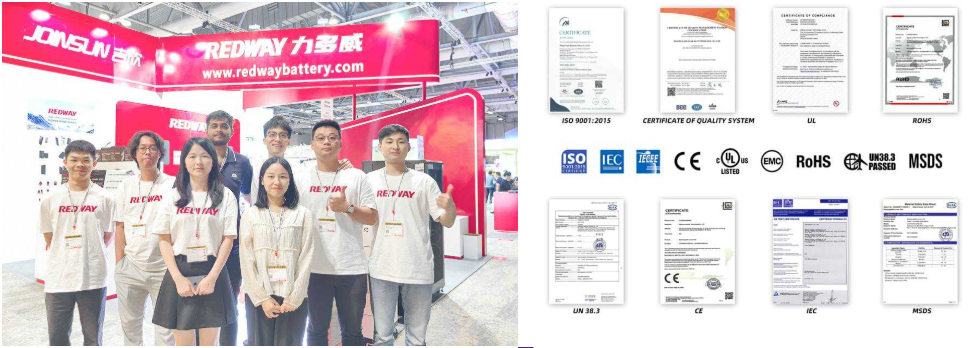
Redway’s batteries are designed and tested to UL-related standards (for example UL 2580 for EV batteries). The test report is typically issued in the customer’s name, and scope and applicable standards are confirmed at quotation. Redway holds relevant qualifications and certifications for its batteries; details are available from sales on request.
Fitting it into your project
Involve the truck maker or dealer early, because their acceptance matters as much as the battery’s testing. Our CE marking article covers the EU side, and Redway’s compliance documentation page gives background.
Risk limits
This is a general explanation, not a compliance opinion. Requirements depend on your market, the authority having jurisdiction and your insurer. Confirm the applicable standards with a qualified adviser and the truck maker.
Additional perspectives
Ask for the report itself, not just a logo on a data sheet. Check that the model on the report matches the model on your order.
Redway Tech Editorial Team – Safety manager perspective
Tell us early which battery you plan to fit. We can say whether the truck maker accepts it or whether an evaluation is needed.
Redway Tech Editorial Team – Truck dealer perspective
Write the required standard and the expected document into the purchase specification, so every quote is compared on the same basis.
Redway Tech Editorial Team – Procurement perspective
Specifications are taken from Redway product pages as of October 2026. Where a figure isn’t published, this article says so. Confirm current specifications for your model with Redway before ordering. This article is general guidance, not a site-specific engineering assessment.
Related products
- 48V 460Ah 450Ah Forklift Lithium Battery
- 48V 600Ah 630Ah Forklift Lithium Battery
- 48V 560Ah 550Ah Forklift Lithium Battery
- 80V 400Ah 420Ah Forklift Lithium Battery
- 48V 420Ah 400Ah Forklift Lithium Battery
Related topics
- Battery Certification, Compliance & Documentation
- Forklift Battery Safety
- Battery Manufacturing & Quality Control
- Quality Management
- Forklift Battery OEM & Procurement
- Forklift Safety, Training & Regulations
- Lithium vs Lead-Acid Forklift Batteries
- 48V Forklift Battery Systems
- About Redway
- Forklift Models, Specifications & Technical Guides
Continue learning
Forklift Batteries
Related reading