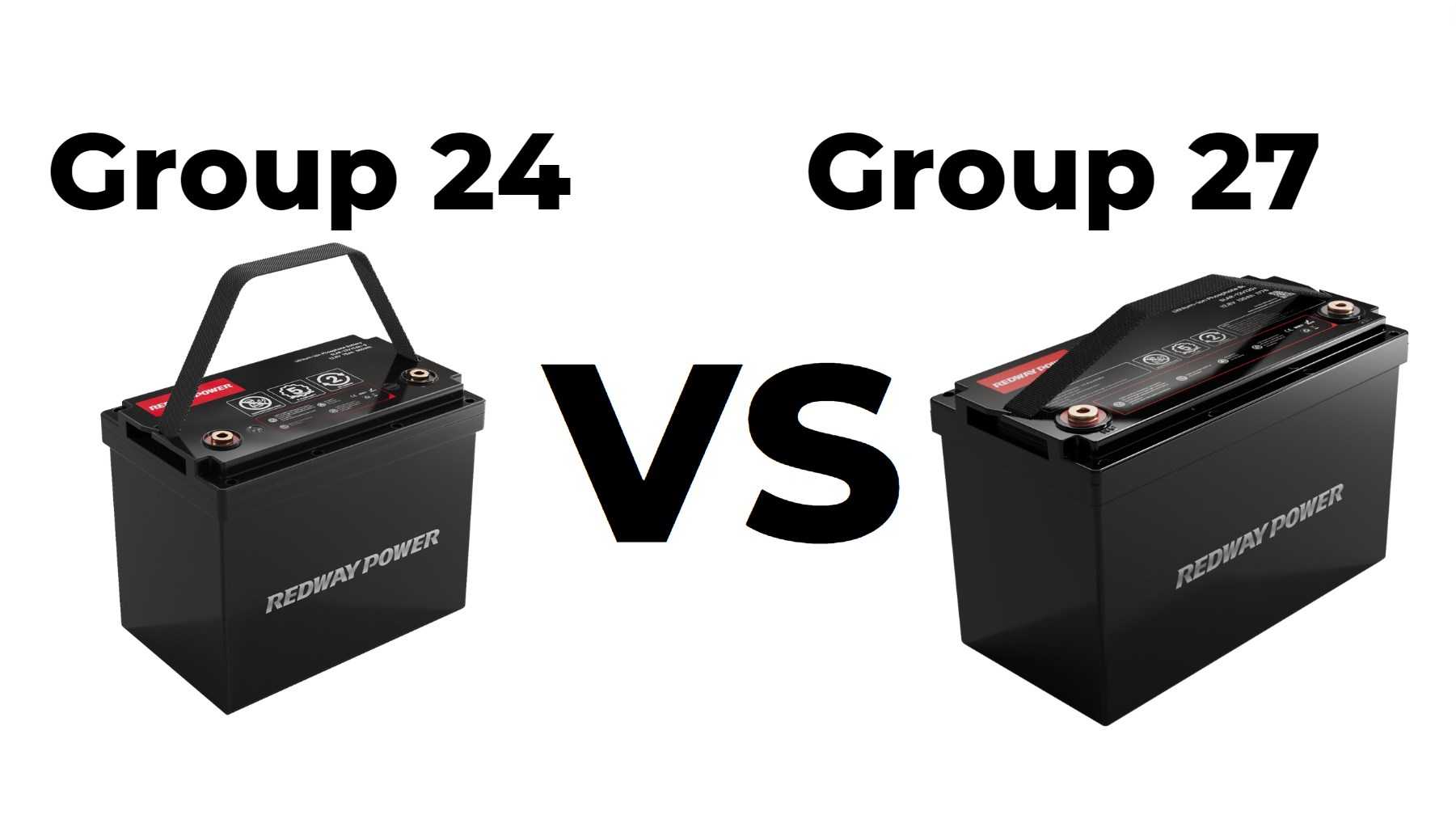
The differences between Group 24 and Group 27 batteries primarily lie in their size, capacity, weight, applications, and cost. While both types serve specific purposes, understanding these distinctions helps in selecting the right battery for your needs.


What Are the Key Differences Between Group 24 and Group 27 Batteries?
Group 24 batteries are generally smaller, lighter, and have a lower capacity compared to their larger counterparts, the Group 27 batteries, which offer greater power storage capabilities ideal for demanding applications.| Feature | Group 24 | Group 27 |
|---|---|---|
| Dimensions | Approx. 10.25×6.81×8.88 inches | Approx. 12.06×6.81×8.88 inches |
| Capacity (Ah) | 70−85 | 85−100 |
| Weight | 40−50 lbs | 50−60 lbs |
| Typical Applications | Smaller vehicles, boats | Larger vehicles, RVs |
How Do the Dimensions of Group 24 and Group 27 Batteries Compare?
Group 24 batteries measure approximately 10.25×6.81×8.88 inches, while group 27 batteries are about 12.06×6.81×8.88 inches in size; this difference in length can significantly impact fitment in various applications.What is the Capacity of Group 24 and Group 27 Batteries?
Group 24 batteries typically have a capacity ranging from 70 to 85 amp-hours (Ah), while group 27 batteries boast a higher capacity of 85 to 100 Ah, allowing them to power devices for longer periods before requiring a recharge.How Do Weight and Size Affect Battery Performance?
The increased weight of group 27 batteries can impact installation ease but also contributes to their ability to deliver higher performance levels in demanding applications such as marine or RV use.What Are Common Applications for Group 24 and Group 27 Batteries?
Group 24 batteries are often used in smaller vehicles, backup power systems, medical equipment, and light marine applications; conversely, group 27 batteries find their place in larger vehicles like trucks or RVs needing sustained power over extended periods.How Do Cold Cranking Amps (CCA) Differ Between Groups?
Cold cranking amps (CCA), which indicate a battery’s ability to start an engine in cold conditions, tend to be higher in group 27 batteries—often ranging from 750−1000CCA—compared to group 24, which usually has lower ratings.What Are the Cost Differences Between Group 24 and Group 27 Batteries?
Group 24 batteries are generally less expensive due to their smaller size and lower capacity; however, group 27 batteries come at a premium because they provide greater power storage capabilities suited for more demanding applications.The cost of Group 27 batteries is typically higher than that of Group 24 batteries due to their larger size and greater capacity:- Group 24 Battery: Generally more economical, suited for budget-conscious consumers who need a smaller, less expensive battery.
- Group 27 Battery: Higher cost reflects its larger size and higher capacity, which may be justified by the increased power and longer usage time.
Can Group 24 and Group 27 Batteries Be Interchanged?
While it is possible to interchange these battery groups under certain conditions—specifically if space allows—group 24 batteries may not fit in compartments designed for group 27, but vice versa is often feasible due to size differences.What Factors Should Be Considered When Choosing Between Group 24 and Group 27 Batteries?
When selecting between these two battery types, consider factors such as available space, required power capacity, weight restrictions, application type, budget constraints, and maintenance needs.How Does Battery Maintenance Differ Between Groups?
Maintenance requirements can vary significantly; lead-acid group 24 batteries may require regular water level checks while lithium options generally demand less frequent maintenance due to their sealed nature.What Are the Lifespan Expectations for Group 24 vs. Group 27 Batteries?
The lifespan of both battery types can vary based on usage patterns; however, group 27 batteries typically last longer due to their larger capacity enabling deeper cycling without damage compared to group 24.Expert Views
“Choosing between group 24 and group 27 batteries should be based on a thorough understanding of your specific power needs,” states an automotive battery expert. “While group 24 offers versatility for lighter applications, group 27‘s enhanced capacity makes it indispensable for demanding environments.”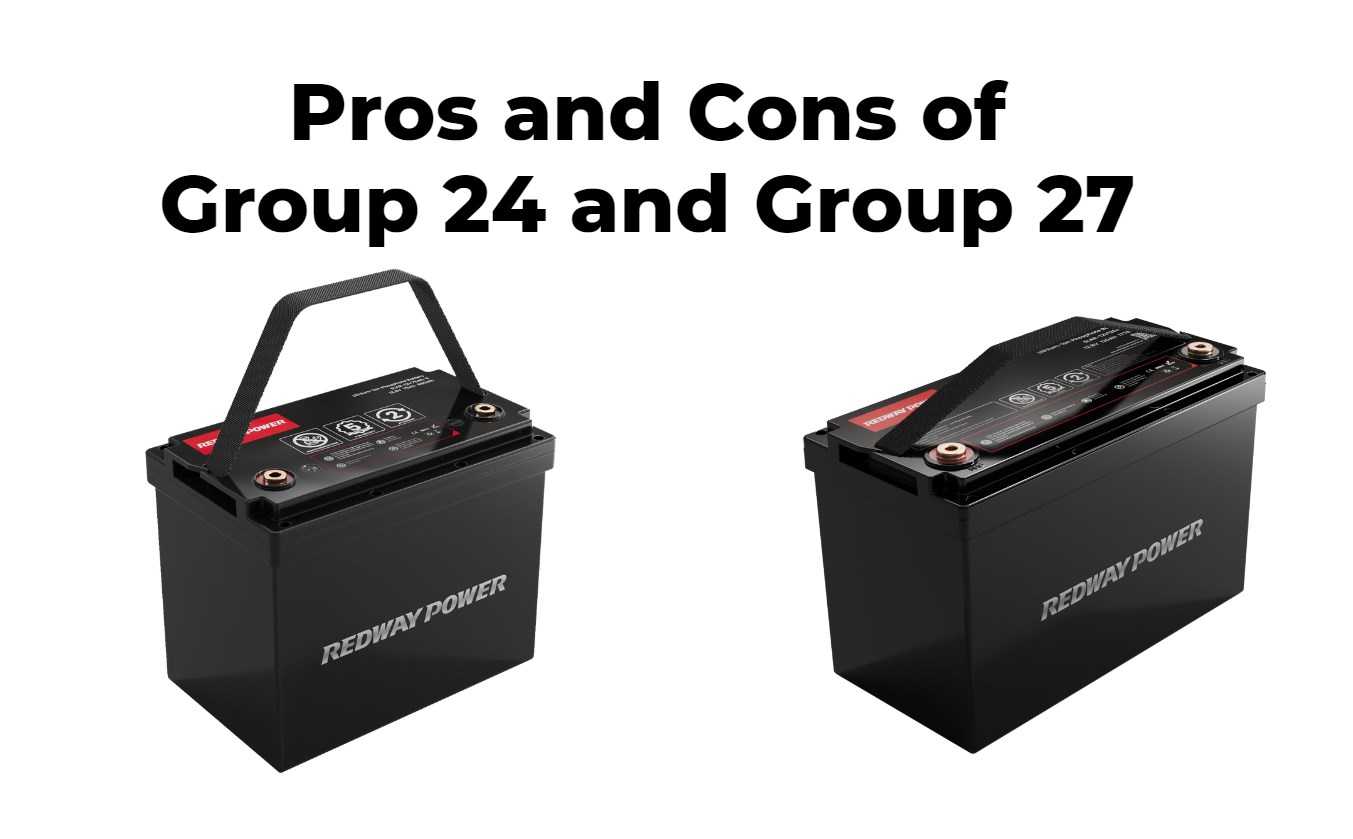
Redway Battery’s Expertise in Battery Technologies
Since its establishment in 2012, Redway Battery has been at the forefront of battery technology, with a focus on NiMH and LiFePO4 batteries. With extensive experience and a solid foundation in the industry, Redway Battery operates two production bases and an R&D center in Shenzhen, Dongguan, and Sichuan.Redway Battery’s Contributions- Advanced Technologies: Redway Battery excels in developing innovative solutions, including NiMH and LiFePO4 batteries, known for their high performance and reliability.
- Industry Leadership: Redway’s expertise and infrastructure position it as a leader in the lithium battery sector, driving advancements in energy storage technologies.
FAQs
How Do Group 24 and Group 27 Battery Dimensions Differ?

What Chemical Differences Exist Between Group 24 and Group 27 Batteries?
12.8V 100AH LFP BCI Group 24 Battery TestingKnow more:group 24 battery weight group 24 vs 27 battery group 24 vs 27Conclusion
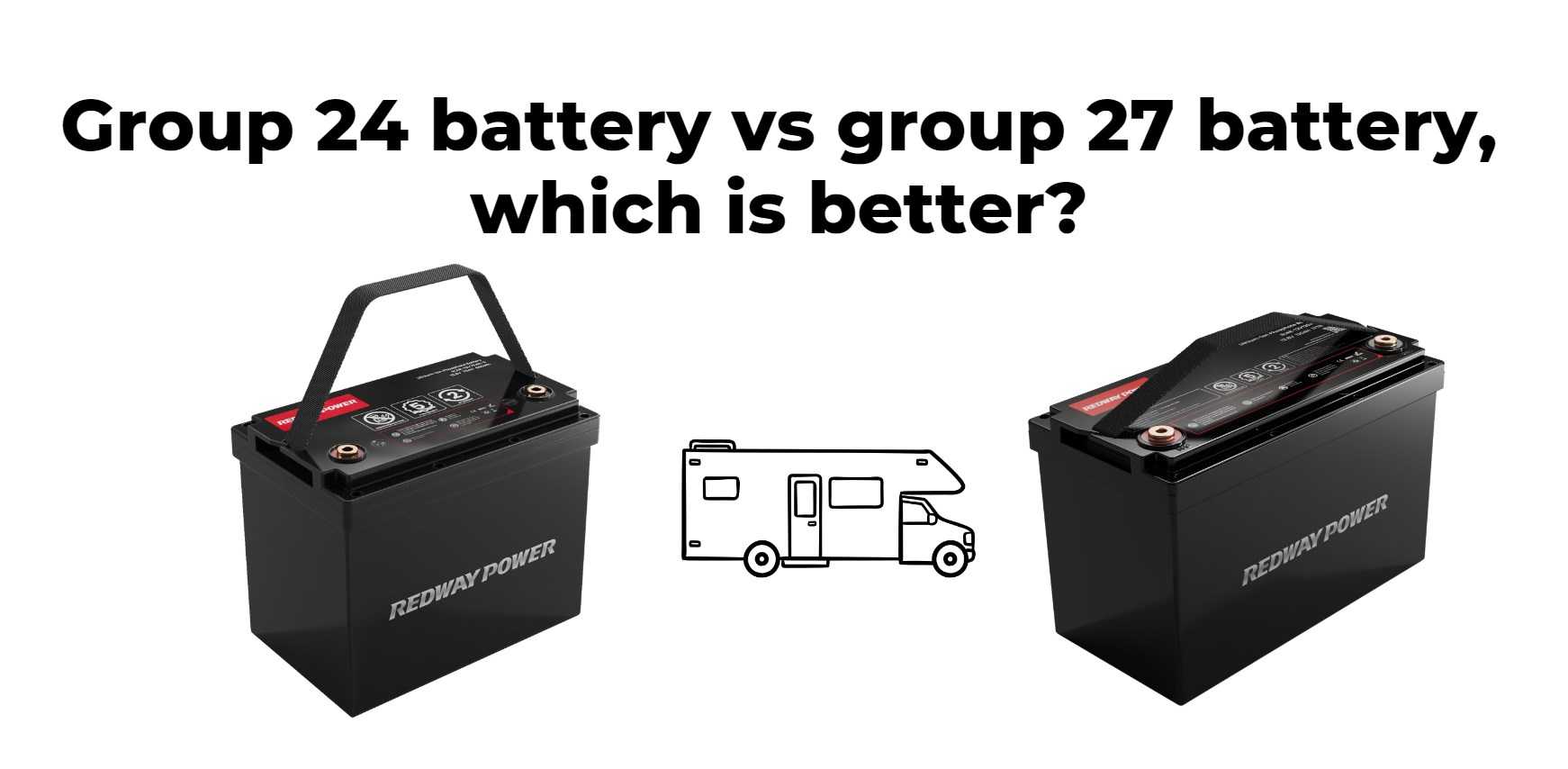
Choosing between a Group 24 and a Group 27 battery involves evaluating several factors, including your specific power needs, available space, and application requirements:- Group 24 Battery: Best suited for smaller applications with limited power demands and space constraints. It offers a cost-effective solution for basic power needs.
- Group 27 Battery: Ideal for larger systems requiring extended power and energy reserves. Its higher capacity and power output make it suitable for demanding applications such as RVs and larger marine vessels.
Continue exploring: Use the Battery Types & Chemistry Comparisons guide to review battery fundamentals, chemistry comparisons, performance, lifespan, testing, storage, and recycling guidance.