
Redway battery guides
Battery Voltage, Capacity & Sizing
Separate voltage compatibility, usable energy and peak power. This hub routes low voltage, high voltage, capacity and connection design decisions.
The system at a glance
- VoltageMatch the equipment
- Usable energyPlan the working period
- Current & fitVerify the complete pack
A decision framework · verify the actual product specification.
Before you choose
Battery ratings describe different limits. Voltage establishes compatibility, amp-hours describe charge capacity, watt-hours connect capacity with energy, and current ratings describe power delivery. A useful sizing decision keeps those quantities beside the load, operating time and charging opportunity.
Voltage is a compatibility limit, not a capacity rating. Match the nominal and full operating voltage window to the equipment, charger, inverter and protection devices. A higher-voltage battery does not automatically contain more energy, and two systems with the same amp-hours can store very different watt-hours. Confirm low-voltage cut-off, charge termination and communication limits before connecting any pack.
Keep these battery sizing inputs separate
| Decision | What to establish |
|---|---|
| Compatibility | Nominal voltage and the complete operating voltage window. |
| Energy | Load energy, operating time, losses and reserve assumptions. |
| Current | Continuous demand, surges and permitted battery output. |
| Configuration | Approved series/parallel arrangements and system interfaces. |
| Verification | Measured operating data, usable capacity and recharge time. |
Voltage & compatibility
Read a capacity label together with voltage and the permitted operating window. Compare batteries using the same load, temperature, reserve and end-of-life assumptions so that nominal ratings do not hide different duties.

 Selected article
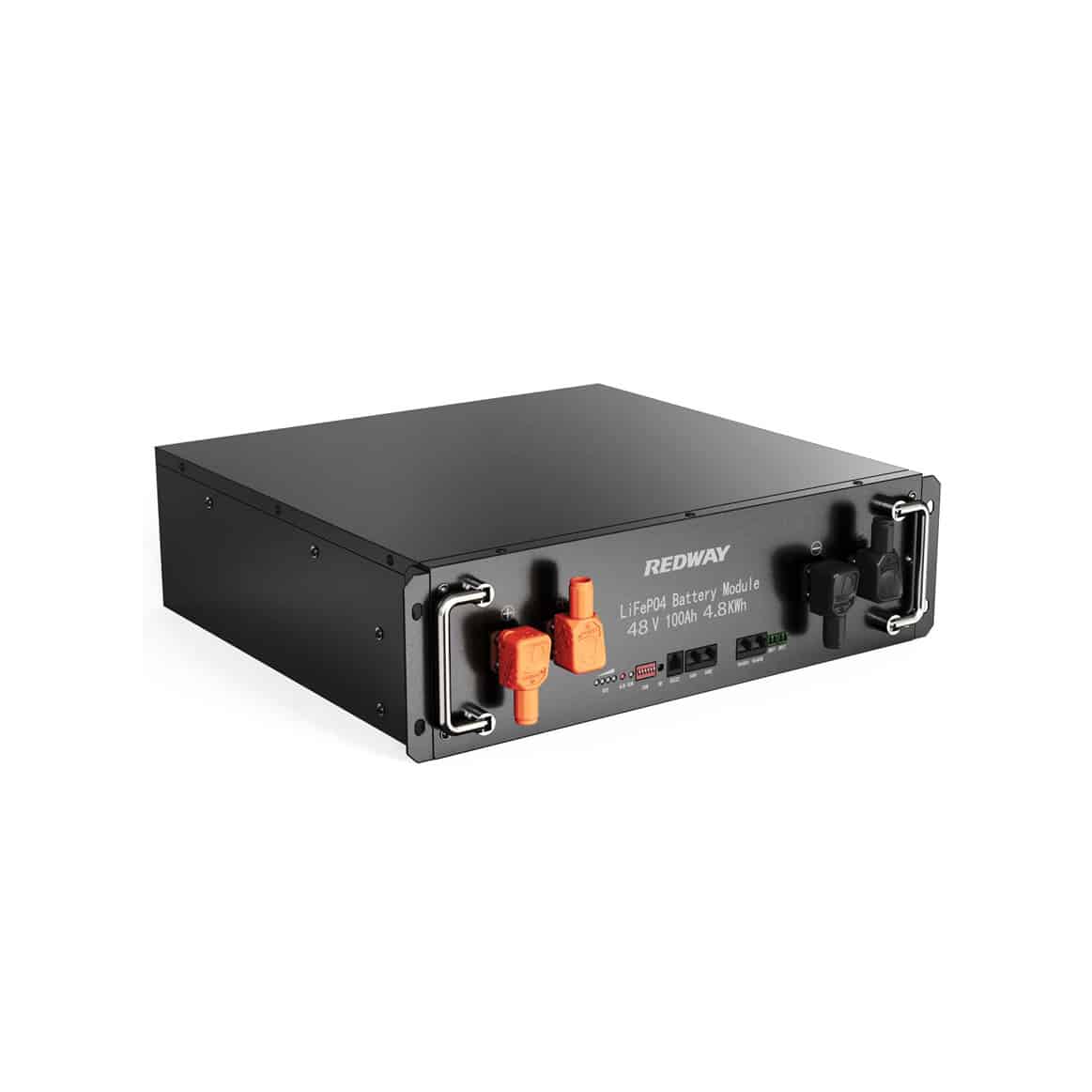
How Does Battery Voltage Work?
Selected articleWhat Is Battery Voltage and Why Does It Matter?
Every rating answers a different design question
Size energy in watt-hours and power in watts. Daily energy determines how long the system can run, while peak power determines whether motors, inverters and electronics start without excessive voltage sag or a BMS trip. Convert every load to watts and realistic hours, add conversion losses and reserve, then verify continuous and surge current separately. Capacity and current are related but cannot replace each other.
Use usable capacity rather than the nameplate. The permitted depth of discharge, discharge rate, temperature, ageing and conversion efficiency reduce the energy available to the load. Lead-acid and lithium systems often expose different usable fractions. Protect reserve for critical operation and avoid promising runtime from nominal amp-hours alone. A sizing model should state every assumption so measurements can correct it later.
Series and parallel connections change different limits. Series raises voltage while amp-hours remain the same; parallel raises amp-hours and current capability while voltage remains the same. Use matched batteries, balanced conductors and approved module counts. Protection, charger voltage, BMS communication and fault current must be recalculated for the final arrangement rather than copied from a single battery.
Validate calculations with the hardest real duty. Measure voltage, current, energy and temperature during the largest normal load and the longest operating period. Check recharge time using the actual charger and available downtime. Compare results with the model and adjust reserve, conductor size or module count. A verified duty cycle is more reliable than a calculator whose inputs were never measured.
Build the battery around real electrical duty
Voltage, energy, power, connections, protection and charging must be verified together.
Explore the complete topic
- Are RVs 12V or 24V?
- How To Convert Amp Hours (Ah) To Kilowatt Hours (kWh)?
- What is 200 amp hours in watt hours?
- How many amp hours is 2048 watt hours?
- How many watt hours is a 100Ah 48V battery?
- How to Effectively Connect Batteries in Series and Parallel?
- Series vs. Parallel Connections Explained
- Amp-Hours, Watt-Hours & kWh Conversions
- Battery Series, Parallel & Bank Design
- Contact
Capacity & runtime
Connect energy demand with expected operating time, and check continuous and surge current independently. Series and parallel arrangements must also suit the equipment, protection and manufacturer-approved configuration.
Decision guide36V, 48V & High-Voltage Batteries
Higher-voltage systems suit larger power and longer conductors, but require coordinated chargers, inverters, disconnects, insulation, communication and service procedures.
Decision guideBattery Capacity, Ah, kWh & Runtime
Convert load schedules into watt-hours, include efficiency and usable depth of discharge, and verify peak current separately. Runtime is a duty-cycle result, not an amp-hour promise.
Decision guideBattery Series, Parallel & System Sizing
Series and parallel arrangements must use matched batteries, balanced wiring, coordinated protection and an approved charger. Calculate the final voltage, energy, current and fault limits before assembly.
Selected articleHow Many kWh Is 100Ah in 48V?
 Selected article
What is an Ampere Hour (Ah) or Amp Hour?
Document assumptions and review measured performance
A calculation is useful only when its inputs remain visible. Keep load schedules, conversion efficiency, reserve, temperature, ageing and charging assumptions with the specification. Compare them with actual voltage, current, energy and recharge measurements after representative operation.
Expansion requires a fresh current, fault, conductor and protection review. Match batteries by model, age, voltage and state of charge, and follow the manufacturer’s approved series and parallel limits.
Use monitoring to keep the sizing model honest
Trend voltage, current, energy, temperature and state of charge during representative duty. Investigate drift before it becomes an unexpected shutdown, and update reserve or charging assumptions when loads, routes or operating conditions change. Keep the approved baseline with service records.
Explore the complete topic
- Why Is a 24 Volt Battery System Better Than a 12 Volt System?
- The Benefits of a 12 Volt Lithium Battery
- What Are Battery Voltages and How Do Low Voltage Alerts & Cutoffs Work?
- Is 48V Considered High Voltage in Electrical Systems?
- High Voltage Lithium-ion Battery Advantages
- What is the price of 48 volt 100ah lithium battery?
- What indicators should you monitor to ensure high voltage battery health?
- How To Calculate Watts From Volts And Amps?
- Battery Runtime, Load & Power Calculations
- 12V LiFePO4 Battery Systems
- 24V LiFePO4 Battery Systems
- 36V LiFePO4 Battery Systems
- 48V LiFePO4 Battery Systems
- 60V & 72V LiFePO4 Battery Systems
- Battery Capacity, Reserve & Cranking Ratings
- Battery Voltage Testing, Charts & Cutoffs
- Battery, Inverter & Controller System Integration
- 100Ah Lithium Battery Sizing & Applications
- 200Ah Lithium Battery Sizing & Applications
- AA, AAA & 9V Battery Voltage Guide
- Lithium Battery Suppliers, OEM & Sizing
- UPS & Appliance Battery Runtime Sizing
- Battery Capacity, Voltage & Performance Reference
- Battery Selection, Compatibility & Sizing Reference
Series & parallel connections
Treat a sizing result as a model to verify. Compare measured loads, delivered energy and charging time with the original assumptions, then revisit the design when duty, environment or equipment changes.
 Selected article
Series vs. Parallel Connections Explained
 Selected article
Can I Connect 2 LiFePO4 Batteries in Parallel?
Recheck the design when duty or charging changes
Repeat the sizing review after seasonal temperature changes, a charger replacement, a load upgrade or a change in operating hours. Record the lowest loaded voltage, highest current, energy removed, maximum battery temperature and time needed to return to full charge. Those measurements expose an undersized pack, restrictive cabling, an unrealistic runtime assumption or insufficient charging time before the problem interrupts production.
Set review limits before commissioning so operators know when to escalate. A growing voltage drop can indicate a loose connection; rising temperature can reveal excess resistance or sustained overload; declining usable energy may point to imbalance, ageing or an inaccurate state-of-charge model. Correct the cause before adding capacity, because extra modules do not repair incompatible voltage settings, weak conductors or poor protection coordination.
Common questions
Battery Voltage, Capacity & Sizing FAQ
What should be checked first for Battery Voltage, Capacity & Sizing?
Start with equipment voltage, continuous and surge current, daily energy, allowed depth of discharge, charging source and installation limits.
Are amp-hours enough to compare batteries?
No. Multiply amp-hours by nominal voltage to compare watt-hours, then account for usable depth of discharge, efficiency, temperature and ageing.
When should system voltage increase?
Higher voltage can reduce current and conductor losses for the same power, but equipment, charger, protection and safety requirements must all support it.
What information should be sent for a battery specification?
Send equipment voltage, continuous and peak watts, daily energy, runtime, dimensions, charging window, temperature and compliance market.