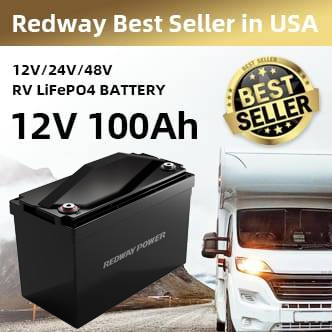
For RV boondocking, lithium iron phosphate (LiFePO4) batteries are the optimal choice due to their superior cycle life, depth of discharge (DoD) up to 80-100%, and lightweight design. Unlike lead-acid batteries, LiFePO4 systems maintain stable performance in extreme temperatures and charge efficiently via solar panels. For example, a 300Ah LiFePO4 battery provides ~2.4kWh usable energy, powering refrigerators and lighting for 2-3 days. Always pair with a battery management system (BMS) to prevent over-discharge and balance cells during solar charging cycles.
Where to Find Used and Refurbished Golf Cart BatteriesWhat battery chemistry excels in off-grid RV use?
LiFePO4 batteries dominate RV boondocking with 3,000-5,000 cycles at 80% DoD, outperforming AGM/gel batteries (300-500 cycles). Their thermal stability prevents overheating during high solar input, critical for desert camping. Pro Tip: Use LiFePO4’s 100% usable capacity to reduce battery bank size by 50% vs lead-acid alternatives.
Unlike traditional lead-acid batteries that degrade below 50% charge, LiFePO4 systems thrive in deep discharge scenarios common in off-grid setups. A 200Ah LiFePO4 pack weighs ~60 lbs—half the weight of comparable AGM units—freeing payload for water or gear. For solar compatibility, their 14.4V absorption voltage aligns perfectly with MPPT controllers. Practical example: Two 200Ah LiFePO4 batteries can run a 12V fridge (3A draw) for 66+ hours versus 22 hours with AGMs. Always monitor cell balancing—imbalanced packs above 0.2V difference risk premature failure.

How does depth of discharge impact RV battery choice?
Depth of discharge (DoD) determines usable energy: LiFePO4 permits 100% DoD vs 50% for AGM. This doubles effective capacity without increasing physical size. For solar-dependent RVs, deeper DoD accommodates multi-day cloud coverage.
Lead-acid batteries suffer permanent damage if discharged beyond 50% regularly, while LiFePO4 chemistry remains stable. Consider a 400Ah AGM bank—only 200Ah is usable, requiring larger, heavier installations. With LiFePO4, 400Ah provides full 400Ah access. Pro Tip: Size LiFePO4 banks at 70% of lead-acid calculations—a 280Ah LiFePO4 matches 400Ah AGM capacity. Real-world impact: For a 1kW daily load, AGM users need 200Ah/day (4x 100Ah batteries), whereas LiFePO4 requires just 2x 100Ah units. Table 1 compares DoD efficiency:

| Type | DoD Limit | Usable Energy per 100Ah |
|---|---|---|
| LiFePO4 | 100% | 1.28kWh |
| AGM | 50% | 0.64kWh |
What solar charging specs optimize LiFePO4 performance?
LiFePO4 requires 14.2-14.6V absorption voltage and 13.6V float—lower than lead-acid systems. Solar controllers must support lithium profiles to avoid undercharging. A 60A MPPT controller pairs well with 400W solar arrays for 30-40A charging currents.
Unlike AGM batteries needing 20-50% of capacity in charging current (e.g., 50A for 200Ah), LiFePO4 accepts 1C rates (200A for 200Ah). This enables faster solar replenishment—400W panels can fully recharge a 200Ah bank in 5 sun hours vs 10+ hours for AGM. Practical example: Morning clouds reduce solar output to 15A—LiFePO4 still reaches 80% charge by noon, while AGM struggles at 40%. Always disable equalization charging on solar controllers; lithium batteries don’t require it and overvoltage can trigger BMS shutdowns.
| Parameter | LiFePO4 | AGM |
|---|---|---|
| Charge Voltage | 14.2-14.6V | 14.4-14.8V |
| Float Voltage | 13.6V | 13.2-13.8V |
| Max Charge Current | 1C (e.g., 100A) | 0.3C (e.g., 30A) |
Redway Battery Expert Insight
FAQs
Yes, but upgrade charge controllers to lithium-compatible units. LiFePO4’s lower internal resistance may trip legacy AGM-focused chargers.
How cold can LiFePO4 batteries operate?Discharge works to -4°F, but charging requires temps above 32°F unless models with heated cells are used.
Do LiFePO4 batteries require ventilation?No—they don’t emit gases during operation, allowing safe installation in sealed compartments.
Continue exploring: Use the RV Battery Off-Grid Power & Safety guide to compare RV battery specifications, charging decisions, operating requirements, and practical guidance.