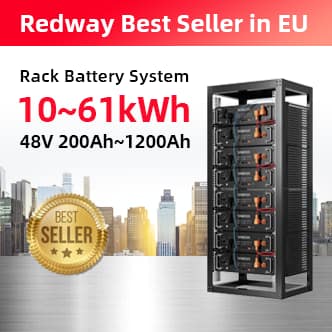
The wattage required to charge a 48V battery depends on its capacity and state of charge. Generally, you would need at least the product of voltage (48V) and current (in amps) to determine total watts.When it comes to charging a 48V battery, whether for an electric vehicle, solar power system, or other applications, understanding the appropriate wattage required is crucial for efficient and effective charging. The charging process is influenced by various factors, including the battery’s amp-hour (Ah) capacity, the voltage of the solar panels, and the overall configuration of the solar array. This guide provides an in-depth exploration of how many watts are necessary to charge a 48V battery and how solar panels can be optimally used to achieve this.Understanding the Basics of a 48V Battery SystemA 48V battery system is commonly used in renewable energy setups and electric vehicles due to its balance between voltage and capacity. The battery’s capacity, measured in amp-hours (Ah), determines how much energy it can store and deliver. For instance, a 100Ah 48V battery can store up to 4,800 watt-hours (Wh) of energy (48V x 100Ah = 4,800Wh).To efficiently charge such a battery, it’s important to align the solar array’s wattage with the battery’s capacity and voltage requirements. Let’s delve into the specifics of how many solar panels are needed and the wattage involved in this process.Solar Panel Wattage Requirements for Charging a 48V BatteryWhen using solar panels to charge a 48V battery, the key consideration is ensuring that the voltage and wattage of the solar array are compatible with the battery’s specifications. The ideal solar array configuration should match the voltage range of the charge controller and battery system to achieve efficient charging.

- Determining the Solar Array WattageTo charge a 48V 100Ah battery, you need to determine the total wattage required from the solar panels. Assuming that the battery is to be charged within a standard timeframe, a general rule of thumb is to aim for a solar array that produces approximately 1.5 to 2 times the battery capacity in watts. For a 48V 100Ah battery, this translates to a required solar array wattage of approximately 1,500 to 2,000 watts (1.5 x 4,800Wh = 7,200Wh per day, considering peak sunlight hours).
- Choosing the Solar PanelsSolar panels are commonly available in 250W to 300W ratings. To meet the wattage requirement, a combination of these panels can be used. For example:
- Six 250W panels in series will provide 1,500 watts (250W x 6 = 1,500W).
- Five 300W panels will also provide 1,500 watts (300W x 5 = 1,500W).
- Using a DC-DC Step-Up ConverterA DC-DC step-up converter increases the 12V output from the charger to the required 48V. The converter must be rated for the power requirements of the battery, ensuring it can handle the necessary current and voltage without overheating or causing damage.
- Safety and Efficiency ConsiderationsWhen using a 12V charger, ensure that the step-up converter is of high quality and properly installed. Follow all safety guidelines to prevent electrical hazards and ensure efficient charging. Regularly monitor the system to check for any issues related to voltage conversion or power loss.
- Estimate Daily Solar OutputIf the solar array produces 1,500 watts and assuming an average of 5 peak sunlight hours per day, the daily energy output would be 7,500 watt-hours (1,500W x 5 hours = 7,500Wh).
- Determine Charging TimeTo fully charge a 48V 100Ah battery, which requires 4,800 watt-hours, divide the total battery capacity by the daily solar output:Charging Time=4,800Wh7,500Wh/day≈0.64 days\text{Charging Time} = \frac{4,800 \text{Wh}}{7,500 \text{Wh/day}} \approx 0.64 \text{ days}This calculation assumes ideal conditions and no energy losses. Real-world factors may affect charging time.
Continue exploring: Use the Charger Efficiency, Power Quality & Energy Use guide for the related decision process, evidence, and practical guidance.