Does Reducing Transparency Help Battery Life?
Find out whether iPhone Reduce Transparency saves battery, what the setting actually changes, and which display and usage changes have a larger impact.

Find out whether iPhone Reduce Transparency saves battery, what the setting actually changes, and which display and usage changes have a larger impact.
Continue exploring: Use the Battery Terminals, Connections & Pack Design guide for the related decision process, evidence, and practical guidance.
| Feature | Lithium Marine Batteries | Lead-Acid Marine Batteries |
|---|---|---|
| Lifespan | 3,000 – 5,000 cycles | 500 – 1,500 cycles |
| Weight | Approximately half | Heavier |
| Charging Time | 4 hours | 10+ hours |
| Depth of Discharge | Up to 100% | Typically 50% |
| Power Consistency | Steady output | Voltage drops as discharged |
| Environmental Impact | Lower waste | Higher waste due to replacements |
Continue exploring: Use the Marine Battery Technology & Compatibility Guide guide for the related decision process, evidence, and practical guidance.
Continue exploring: Use the Lithium Battery Selection, Sizing, Testing & Life guide for the related decision process, evidence, and practical guidance.
Continue exploring: Use the Lithium Deep-Cycle Battery Conversion guide for the related decision process, evidence, and practical guidance.
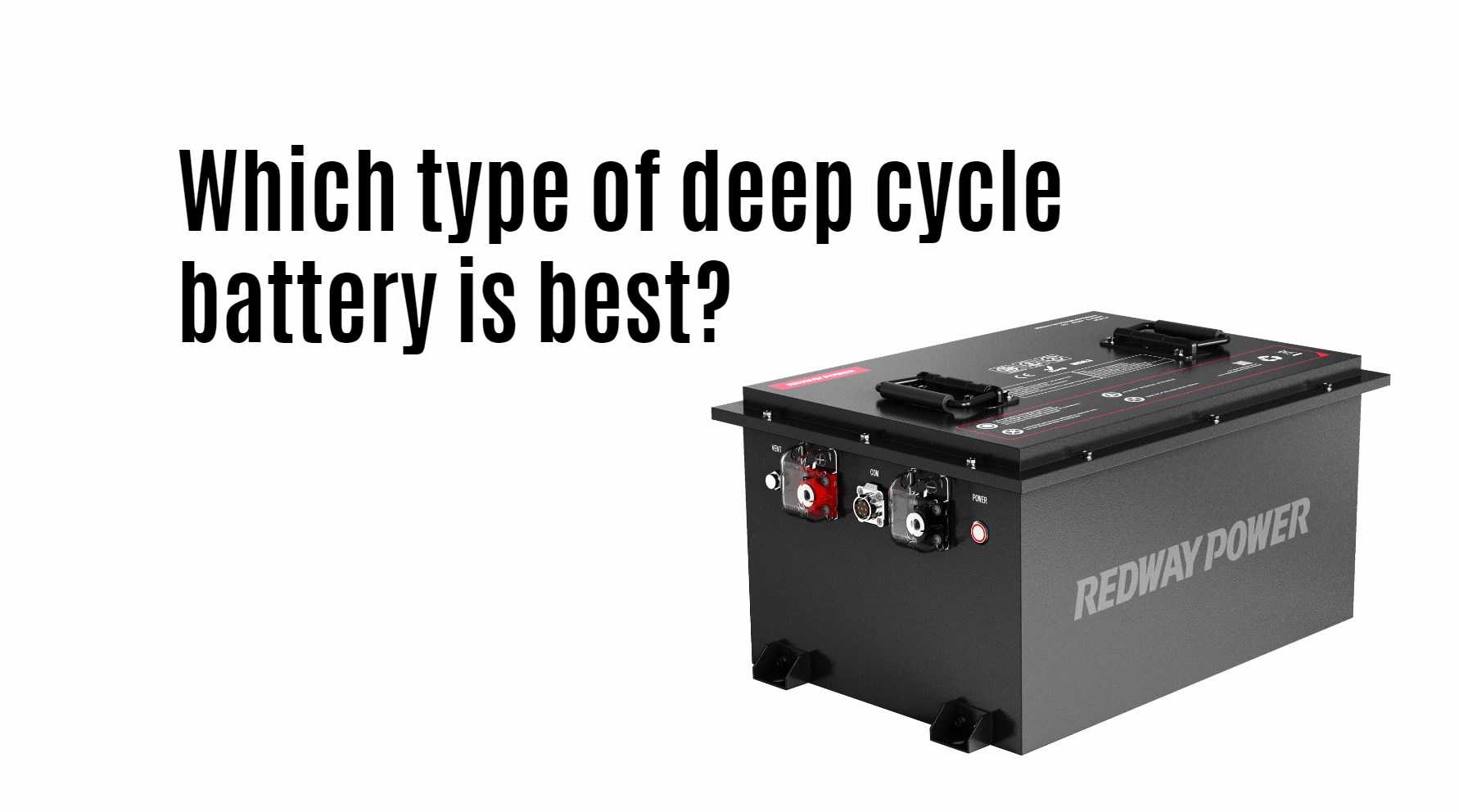
Choosing the best deep cycle battery depends on your specific needs and applications. Generally, lithium-ion batteries are considered the best option due to their long lifespan, lightweight design, and high discharge rates. However, AGM (Absorbed Glass Mat) batteries also offer excellent performance for various applications, particularly in marine and RV settings.
1. Lithium-Ion Batteries
2. AGM Batteries
3. Flooded Lead-Acid Batteries
4. Gel Batteries
| Battery Type | Lifespan (Cycles) | Depth of Discharge | Weight | Maintenance | Cost |
|---|---|---|---|---|---|
| Lithium-Ion | 3,000 – 5,000 | Up to 100% | Light | None | High |
| AGM | 500 – 1,000 | Up to 80% | Moderate | None | Moderate |
| Flooded Lead-Acid | 300 – 500 | Up to 50% | Heavy | Regular upkeep | Low |
| Gel | 500 – 1,000 | Up to 80% | Moderate | None | Moderate |
“As experts in lithium LiFePO4 battery technology, we believe that lithium-ion batteries represent the future of deep cycle energy storage. Their superior lifespan, efficiency, and lightweight design make them ideal for a wide range of applications from RVs to renewable energy systems. While the initial investment is higher, the long-term benefits far outweigh the costs.”
In conclusion, while lithium-ion batteries are generally considered the best type of deep cycle battery due to their longevity and efficiency, AGM batteries also provide excellent performance for specific applications. Ultimately, the choice depends on individual needs, budget constraints, and intended use cases. By understanding the differences between these battery types, you can make an informed decision that best suits your energy storage requirements.
Lithium Deep Cycle Batteries
Lead-Acid Deep Cycle Batteries
Advantages of Lithium Deep Cycle Batteries
Continue exploring: Use the Lithium Deep-Cycle Battery Conversion guide for the related decision process, evidence, and practical guidance.
| Battery Type | Energy Density | Cycle Life | Cost | Safety |
|---|---|---|---|---|
| Lithium-Ion | High (250-260 Wh/kg) | Moderate (500-1,500) | Moderate | Medium risk |
| Sodium-Ion | Lower (150-160 Wh/kg) | Moderate (up to 5,000) | Lower | Lower risk |
| Lithium-Sulfur | Very High (up to 900 Wh/kg) | Low (50 cycles currently) | Moderate | Medium risk |
| Solid-State | Very High | Potentially longer | Higher | Low risk |
Continue exploring: Use the Lithium Battery Selection, Sizing, Testing & Life guide for the related decision process, evidence, and practical guidance.
Continue exploring: Use the Marine Starting, Dual-Purpose & Deep-Cycle Batteries guide for the related decision process, evidence, and practical guidance.
Continue exploring: Use the Marine LiFePO4 Safety, Regulations & Sustainability guide for the related decision process, evidence, and practical guidance.
Lithium-ion batteries, despite their popularity, have several disadvantages including safety risks, limited lifespan, environmental impact, and higher costs. These drawbacks affect their efficiency and application across industries, necessitating careful handling and innovation to overcome limitations in energy storage technologies.
Lithium-ion batteries can pose safety risks such as overheating, fire, or explosion under certain conditions.
Safety concerns arise primarily from thermal runaway caused by internal short circuits or physical damage. These batteries require precise charging, high-quality manufacturing, and protective circuitry. Inadequate management or defects can lead to overheating, causing fires or explosions. Manufacturers like Redway Battery implement safety measures such as built-in battery management systems (BMS) to mitigate these risks and enhance operational security.
Lithium-ion batteries degrade over time due to charge cycles, reducing capacity and performance.
Each full charge-discharge cycle slightly diminishes the battery’s total capacity. Typical lifespans range from 500 to 1500 cycles depending on usage and chemistry. As capacity fades, devices require more frequent charging or battery replacement. This aging process is influenced by temperature, charging habits, and depth of discharge. Redway Battery develops solutions like LiFePO4 batteries to extend lifespan and provide reliable performance for industrial applications.
Lithium-ion batteries involve expensive materials and complex manufacturing processes.
The use of lithium, cobalt, nickel, and manganese contributes to raw material costs. Additionally, refining and assembling battery cells with safety features requires technologically advanced facilities. This results in higher upfront pricing than alternatives such as lead-acid or nickel-metal hydride batteries. However, the energy density and efficiency gains often justify the investment for consumers and enterprises, with companies like Redway Battery offering OEM customization to balance cost and performance.
Lithium-ion batteries pose environmental challenges due to resource extraction and recycling difficulties.
Mining for lithium and cobalt raises ecological and ethical concerns, including habitat destruction and labor issues. Disposal or improper recycling can release toxic materials, threatening soil and water quality. Despite advances, recycling lithium-ion batteries remains costly and inefficient at scale. Industry leaders like Redway Battery are investing in sustainable production methods and supporting improved recycling technologies to reduce ecological footprints.
Temperature extremes negatively impact lithium-ion battery capacity, safety, and longevity.
Low temperatures reduce battery efficiency and runtime by slowing chemical reactions, while high temperatures accelerate degradation and increase safety risks. Maintaining batteries within optimal temperature ranges is critical, especially in applications such as electric vehicles or solar energy storage. Redway Battery integrates thermal management systems within their products to maintain stable operation under varying environmental conditions.
Currently, lithium-ion batteries cannot be recycled to 100%, but recycling technologies are improving steadily.
Recycling processes recover valuable metals like cobalt and lithium but some materials degrade or are lost during recovery. Economic and technical barriers restrict widespread recycling. Nevertheless, advances in hydrometallurgical and direct recycling promise better resource recovery. Companies prioritizing sustainability, including Redway Battery, collaborate with recycling initiatives to improve circularity in battery supply chains.
Industries reliant on long-lasting, safe, and cost-effective energy storage face challenges due to lithium-ion battery limitations.
Sectors such as electric vehicles (EVs), renewable energy storage, telecom, and material handling heavily use lithium-ion technology. Disadvantages like limited cycle life, safety concerns, and environmental impact influence design choices and operational costs. Redway Battery, with expertise in forklift and telecom batteries, works closely with these industries to tailor solutions addressing these constraints.
Manufacturers focus on chemistry improvements, thermal management, and smart battery systems to reduce drawbacks.
Advancements in LiFePO4 chemistry improve stability and lifespan. Integration of battery management systems enhances safety through real-time monitoring. Redway Battery invests in automated production and quality control to ensure consistent performance and reliable battery packs. Customization options allow clients to match batteries to specific use cases, optimizing performance despite inherent disadvantages.
Table 1: Key Disadvantages of Lithium-Ion Batteries and Mitigation Strategies
| Disadvantage | Impact | Mitigation Strategy | Redway Battery’s Approach |
|---|---|---|---|
| Safety Hazards | Fire, explosion risk | Battery Management Systems, quality control | BMS integration and rigorous testing |
| Limited Lifespan | Capacity fade after cycles | Improved chemistry, temperature control | Use of LiFePO4 and optimized cell design |
| High Costs | Expensive raw materials | Manufacturing efficiency, OEM customization | Scalable production with cost control |
| Environmental Impact | Resource extraction, recycling | Sustainable sourcing, recycling partnerships | Commitment to eco-friendly practices |
| Temperature Sensitivity | Performance degradation | Thermal management solutions | Integrated thermal design for stability |
Table 2: Comparison of Lithium-Ion Battery Chemistries on Key Metrics
| Chemistry Type | Cycle Life | Safety Level | Energy Density (Wh/kg) | Cost |
|---|---|---|---|---|
| LiCoO2 (Cobalt) | ~500-1000 | Moderate | High (150-200) | High |
| LiFePO4 (Phosphate) | ~2000-5000 | High | Moderate (90-120) | Moderate |
| NMC (Nickel-Mn-Co) | ~1000-2000 | Moderate-High | High (150-220) | High |
“Addressing the disadvantages inherent to lithium-ion batteries requires a holistic approach combining chemistry, engineering, and manufacturing excellence. At Redway Battery, we focus on LiFePO4 technology, which offers enhanced safety and longevity, critical for demanding industrial environments such as forklifts and telecom. Our commitment is to deliver tailor-made, reliable battery solutions that push the boundaries of performance while meeting sustainability goals. Through innovation and rigorous quality assurance, we strive to overcome the challenges and set new industry standards.” – Senior Engineer, Redway Battery
Lithium-ion batteries, while transformative, come with notable disadvantages including safety risks, aging, cost, environmental concerns, and temperature sensitivity. Recognizing these limitations is crucial for selecting the right energy storage solution. Industries must balance performance needs with these trade-offs, leveraging innovations like those from Redway Battery’s LiFePO4 technologies and integrated battery management systems.
Practical steps include prioritizing reputable OEMs, advocating for recycling, monitoring battery health, and choosing chemistry matched to application. By understanding and managing these challenges, users and manufacturers can optimize lithium-ion battery utilization for safe, durable, and cost-effective power.
Q1: Can lithium-ion batteries catch fire easily? A1: They can catch fire if damaged, overcharged, or overheated, but quality manufacturing and BMS largely prevent this risk.
Q2: How long do lithium-ion batteries typically last? A2: Most last between 500 and 1500 charge cycles, with lifespan varying by chemistry and usage.
Q3: Are lithium-ion batteries recyclable? A3: Yes, though not fully recyclable yet; recycling technologies are advancing to recover critical materials.
Q4: Does temperature impact lithium-ion battery performance? A4: Yes, extreme cold reduces capacity and heat accelerates degradation, stressing the need for thermal management.
Q5: How does Redway Battery improve lithium-ion battery safety? A5: Through LiFePO4 chemistry, robust BMS integration, rigorous testing, and advanced manufacturing quality control.
Continue exploring: Use the Lithium Battery Recycling, Sustainability & Supply guide for the related decision process, evidence, and practical guidance.
Continue exploring: Use the Lithium Battery Selection, Sizing, Testing & Life guide for the related decision process, evidence, and practical guidance.