How to Replace Forklift Battery Cells: A Step-by-Step Guide?
Decide whether a forklift battery cell is repairable, what evidence to send the service shop, and which post-repair checks should be documented.

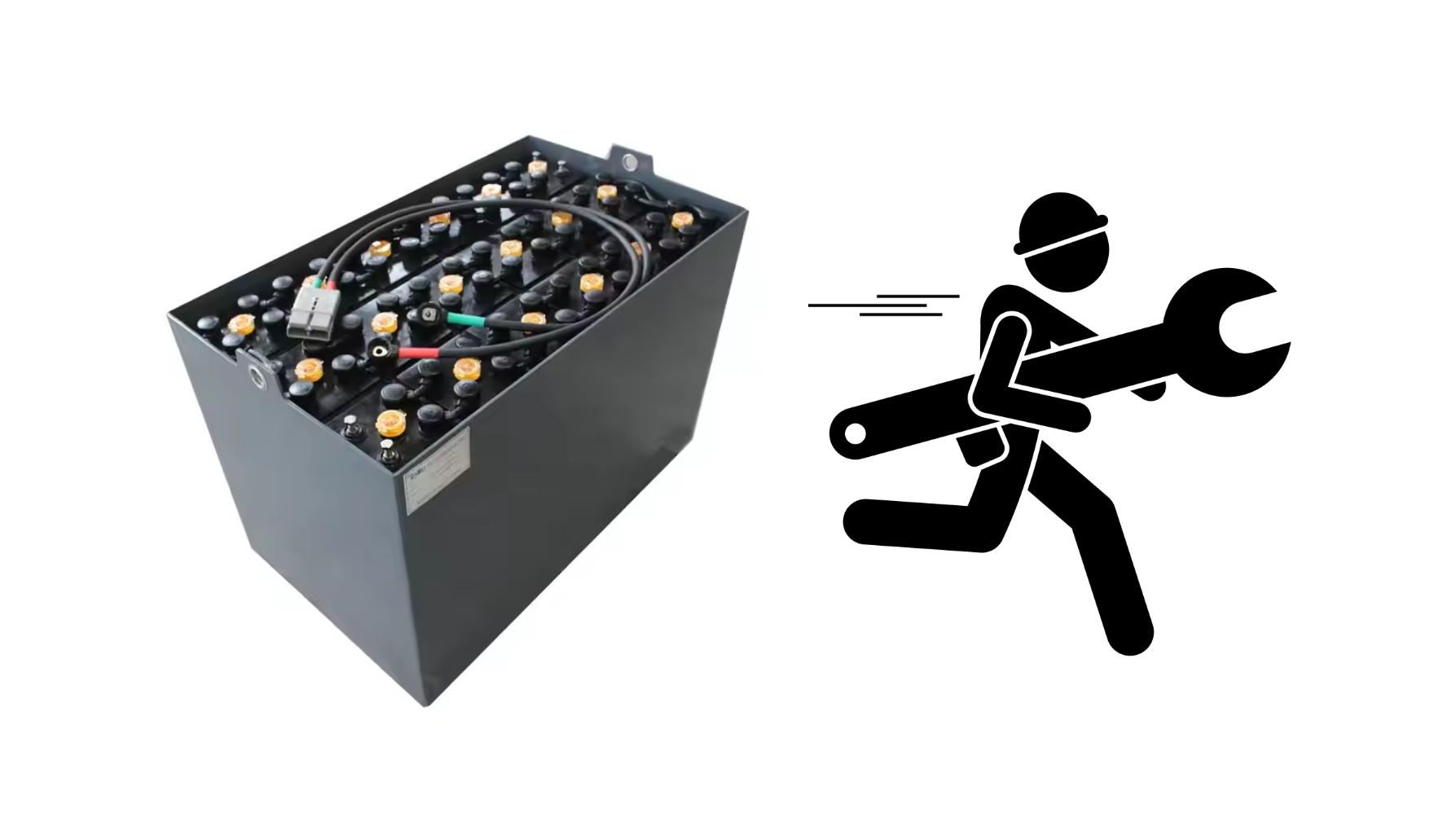
Decide whether a forklift battery cell is repairable, what evidence to send the service shop, and which post-repair checks should be documented.
Plan safe forklift battery cell replacement with authorized service, chemistry-specific controls, a written repair scope and documented release checks.
Forklift battery cells degrade due to sulfation, plate corrosion, and electrolyte loss. Repeated charge cycles cause wear, reducing capacity and runtime. Proper maintenance, like regular watering and avoiding deep discharges, slows degradation. Typical lifespan ranges 3–5 years, depending on usage. Replacing individual cells instead of the entire battery can save 30–50% in costs while restoring performance.
Understanding Forklift Battery State of Charge: A Complete GuideSulfation occurs when lead sulfate crystals form on plates during incomplete charging, permanently reducing active material. This process accelerates in batteries left partially charged for extended periods. Plate corrosion manifests as grid material breakdown, especially in overcharged systems. Electrolyte evaporation worsens ion transfer efficiency – a particular issue in high-temperature environments.
| Degradation Factor | Impact on Lead-Acid | Impact on Lithium |
|---|---|---|
| Charge Cycles | Loses 15-20% capacity after 1,500 cycles | Retains 80% capacity after 3,000 cycles |
| Temperature Sensitivity | Performance drops 10% per 15°C above 25°C | Tolerates -20°C to 60°C with minimal loss |
Water lead-acid cells weekly (distilled water only). Avoid overcharging; use equalization cycles monthly. Keep terminals clean with anti-corrosion spray. Store batteries at 50–80% charge in cool, dry areas. For lithium, maintain 20–80% charge and avoid extreme temperatures. Regular capacity testing identifies early degradation.
Implementing automated watering systems reduces maintenance labor by 40% while preventing electrolyte imbalance. For lithium batteries, firmware updates to battery management systems (BMS) optimize charge algorithms. Thermal imaging scans during operation help detect abnormal heat patterns signaling cell stress. Consider these maintenance schedules:
| Task | Lead-Acid Frequency | Lithium Frequency |
|---|---|---|
| Voltage Checks | Weekly | Monthly |
| Terminal Cleaning | Bi-weekly | Quarterly |
Replacing individual cells instead of entire batteries cuts costs by half while reducing e-waste. At Redway, we’ve seen clients extend battery life by 2–3 years using hybrid refurbished-new cell strategies. Always prioritize UL-certified cells and smart charging systems for lithium upgrades.” — John Michaels, Senior Engineer, Redway Power Solutions
Continue exploring: Use the Forklift Battery Repair, Reconditioning & Cells guide for the related decision process, evidence, and practical guidance.
Proper forklift battery maintenance involves regular watering, cleaning terminals, avoiding deep discharges, and monitoring voltage. Replacement is needed when capacity drops below 80% or physical damage occurs. Always follow OEM guidelines and use trained technicians for safe handling. Prioritize temperature-controlled charging and invest in quality cells to extend lifespan.
How Much Does a Forklift Battery Weigh? A Comprehensive GuideLead-acid batteries require distilled water to maintain electrolyte levels above plates. Underwatering causes sulfation, while overwatering dilutes acid concentration. Check levels weekly and refill after charging when electrolyte expands. Use automated watering systems to reduce labor costs and ensure consistency. Proper hydration prevents dry-out failures that account for 50% of premature battery replacements.
Advanced watering systems like HydroLink or Flow-Rite can reduce maintenance time by 75% through one-point connection designs. These systems automatically stop filling when optimal levels are reached, preventing overflow. For facilities operating multiple shifts, consider installing water sensors that alert technicians via SCADA systems when levels drop below 10% of plate coverage. According to Battery Council International, proper watering intervals can extend cycle life by 300-500 charges compared to irregular maintenance schedules.
Clean terminals bimonthly using a wire brush and baking soda solution (1 cup water:1 tablespoon soda). Apply anti-corrosion gel after cleaning to block sulfur deposits. Never use petroleum-based lubricants that attract dirt. Corroded terminals increase resistance by 300%, causing voltage drops and uneven cell aging. Always disconnect batteries before cleaning to avoid short circuits.
For heavy corrosion buildup, ultrasonic cleaners using 40 kHz frequency waves remove oxidation without damaging lead components. Post-cleaning treatment with zinc-based sprays creates a protective barrier lasting 6-8 months. Document terminal voltage before and after cleaning – improvements exceeding 0.3V indicate significant resistance reduction. Facilities in coastal areas should increase cleaning frequency to monthly due to salt-air accelerated corrosion rates.
| Temperature Range | Effect on Capacity | Recommended Action |
|---|---|---|
| >113°F/45°C | 50% faster plate corrosion | Install cooling fans, reduce charge rate |
| 59-77°F/15-25°C | Optimal performance | Maintain ambient conditions |
| <32°F/0°C | 30-60% capacity loss | Use battery blankets, warm storage |
High temperatures (above 113°F/45°C) accelerate plate corrosion by 2x per 15°F increase. Cold environments below freezing reduce capacity 20-50%. Maintain charging areas at 59-77°F (15-25°C) for optimal performance. Thermal management systems can extend cycle life from 1,500 to over 2,000 charges. Always allow batteries to cool for 8 hours post-discharge before recharging.
Modern lithium-ion forklift batteries require different maintenance – no watering, but strict SOC management between 20-80%. We’re seeing 40% longer lifespan versus lead-acid when properly maintained. Always verify battery management system firmware updates monthly.”
– Redway Power Systems Engineer
Continue exploring: Use the Forklift Battery Life, Cycles & Replacement guide for the related decision process, evidence, and practical guidance.
Evaluate a weak lithium-ion forklift battery with service logs, approved diagnostics and a documented decision on module repair or pack replacement.
Evaluate forklift battery repair with a pack-level report, compare an isolated cell fault with wider wear, and check who can authorize the repair.
Forklift battery State of Charge (SoC) refers to the remaining energy in a battery, expressed as a percentage of its total capacity. Accurate measurement ensures optimal performance, prevents downtime, and extends battery life. Common methods include voltage testing, hydrometer readings, and advanced battery management systems (BMS). Regular monitoring avoids deep discharges, which can damage battery cells.
Understanding Forklift Battery State of Charge: A Complete GuideVoltage testing measures the battery’s open-circuit voltage (OCV) using a multimeter. A fully charged 48V battery typically reads 50.9V, while a 50% charge shows ~48.4V. However, voltage fluctuates with temperature and load, requiring a 2-hour rest period after charging/discharging for accuracy. This method is quick but less precise for partially discharged batteries.
To improve accuracy, operators should consider battery chemistry variations. For instance, lithium-ion batteries exhibit a flatter voltage curve, making voltage-based SoC estimation less reliable below 20% charge. The table below compares typical voltage ranges for lead-acid and lithium-ion forklift batteries at 25°C:
| Battery Type | 100% SoC | 50% SoC | 20% SoC |
|---|---|---|---|
| Lead-Acid (48V) | 50.9V | 48.4V | 46.2V |
| Lithium-Ion (48V) | 54.6V | 52.0V | 50.4V |
Combining voltage readings with temperature sensors can mitigate environmental errors. For example, a battery at 15°C may display 0.3V lower than its true resting voltage. Advanced multimeters automatically apply correction factors, but manual adjustments using manufacturer-provided charts remain critical for lead-acid systems.
Hydrometers measure electrolyte specific gravity in lead-acid batteries. A fully charged cell reads 1.277-1.300 SG; 1.215 SG indicates 50% charge. This method is highly accurate but requires removing cell caps and handling corrosive acid. Temperature corrections and proper safety gear are essential. Not suitable for sealed or lithium-ion batteries.
BMS integrates voltage, current, and temperature sensors to calculate SoC via algorithms like Coulomb counting. It provides real-time data via displays or IoT platforms, enabling predictive maintenance. Advanced BMS adjusts charging rates to prevent overcharging. Ideal for lithium-ion batteries, it reduces manual errors but requires initial calibration and firmware updates.
Temperature affects chemical reactions in batteries, altering voltage and specific gravity readings. For every 1°C below 25°C, lead-acid batteries lose ~0.004 SG. BMS compensates by adjusting readings. Measure SoC in stable environments (15-30°C) or use temperature-corrected charts. Extreme cold can temporarily reduce capacity by 20-50%, mimicking low SoC.
Telematics systems wirelessly transmit SoC, voltage, and usage patterns to fleet managers. GPS tracking identifies underused batteries, while alerts flag low charges. Integration with warehouse management software optimizes charging schedules. Redway’s IoT-enabled batteries report 18% fewer downtime incidents through predictive analytics, per 2023 case studies.
Modern telematics platforms offer tiered functionality tailored to fleet size. Small operations might use basic voltage tracking, while large warehouses leverage AI-driven analytics for charge cycle optimization. Key features often include:
| Feature | Basic Tier | Advanced Tier |
|---|---|---|
| Real-time SoC Alerts | ✓ | ✓ |
| Historical Usage Reports | ✓ | ✓ |
| Predictive Maintenance | ✗ | ✓ |
| Multi-Battery Dashboard | ✗ | ✓ |
Integration with existing BMS allows for automated load balancing, dynamically adjusting charging stations based on shift schedules. For example, a warehouse operating three shifts might prioritize charging batteries slated for night operations during off-peak energy hours, reducing electricity costs by up to 15%.
Calibrate multimeters and hydrometers every 6 months using certified reference tools. BMS auto-calibrates during full charge cycles but may drift 2-5% monthly. Manual verification quarterly is advised. For lithium-ion, perform a full discharge-recharge calibration annually. Document calibration dates to maintain warranty compliance and ISO 9001 standards.
“Modern forklift batteries demand precision beyond voltage snapshots,” says Redway’s Chief Engineer. “Our BMS pairs adaptive algorithms with thermal imaging to predict SoC within 1.5% error margins. In 2024, expect AI-driven SoC models that factor in aging patterns and load cycles, slashing unplanned replacements by 30%.”
Accurate SoC measurement hinges on method selection, environmental factors, and tool maintenance. While voltage and hydrometer tests suit routine checks, BMS and telematics offer scalable, data-driven insights. Prioritize calibration and temperature adjustments to maximize battery lifespan and operational efficiency.
Continue exploring: Use the Forklift BMS, Fleet Monitoring & Telematics guide for the related decision process, evidence, and practical guidance.
| Usage Level | Watering Frequency | Water Type |
|---|---|---|
| High (3+ shifts) | Every 5-7 days | Distilled only |
| Moderate (1-2 shifts) | Every 10-14 days | Distilled only |
| Low (Intermittent) | Monthly | Distilled only |
| Parameter | Lead-Acid | Lithium-Ion |
|---|---|---|
| Charge Level | 100% | 80-90% |
| Charge Time | 8-10 hours | 2-4 hours |
| Cooling Period | 30 mins post-use | Immediate charging |
“Modern forklift batteries demand a blend of traditional maintenance and smart tech. At Redway, we’ve seen IoT-driven monitoring cut downtime by 40% by predicting failures before they occur. Pairing scheduled equalization with operator training remains the gold standard for maximizing ROI.” — James Carter, Senior Battery Engineer, Redway Power Solutions
Continue exploring: Use the Forklift BMS, Fleet Monitoring & Telematics guide for the related decision process, evidence, and practical guidance.

Track forklift battery charge cycles by energy throughput, temperature and operating conditions. Use approved charge limits to assess loss of runtime.
Lithium-ion batteries maintain a stable voltage output throughout their discharge cycle, offering predictable state of charge (SOC) levels. Lead-acid batteries experience voltage drops as they discharge, making SOC estimation less accurate. Lithium-ion typically retains 95-98% energy efficiency, while lead-acid loses 15-20% to heat and gassing. Lithium-ion also charges faster and requires no maintenance, unlike lead-acid, which needs regular watering and equalization.
How Much Does a Forklift Battery Weigh? A Comprehensive Guide
State of Charge (SOC) measures a battery’s remaining energy as a percentage of its total capacity. Accurate SOC monitoring ensures optimal performance, prevents over-discharge, and extends battery life. Lithium-ion batteries provide linear voltage-SOC correlation, simplifying monitoring. Lead-acid batteries exhibit nonlinear voltage curves, complicating SOC estimation and requiring frequent voltage checks or hydrometer tests.
Lithium-ion batteries charge at 80-100% efficiency with partial charging capability, reaching full charge in 1-2 hours. Lead-acid batteries operate at 70-85% efficiency, requiring 8-12 hours for a full charge. Partial charging damages lead-acid cells, necessitating full cycles. Lithium-ion’s ability to handle opportunity charging during breaks reduces downtime, while lead-acid demands scheduled charging windows.
Modern warehouses using lithium-ion can implement rapid 30-minute “top-up” charges during operator breaks without battery degradation. This contrasts sharply with lead-acid systems, where partial charges accelerate plate corrosion. The table below illustrates key charging differences:
| Metric | Lithium-Ion | Lead-Acid |
|---|---|---|
| Charge Time (0-100%) | 1.5 hours | 10 hours |
| Energy Lost as Heat | 2-3% | 15-20% |
| Partial Charge Cycles | Unlimited | Not Recommended |
Lithium-ion batteries tolerate 80-100% DOD daily without degradation, achieving 3,000-5,000 cycles. Lead-acid batteries degrade rapidly beyond 50% DOD, limiting them to 1,200-1,500 cycles. Frequent deep discharges in lead-acid batteries cause sulfation, reducing capacity. Lithium-ion’s robust chemistry avoids memory effects, enabling flexible discharge patterns without lifespan penalties.
The crystalline structure of lead-acid battery plates becomes irreversibly sulfated when discharged below 50%, permanently reducing active material. Lithium-ion’s layered oxide cathode and graphite anode allow lithium ions to intercalate without structural damage. For operations requiring deep discharges, lithium-ion provides 3x more usable energy per cycle. Below is a lifespan comparison at different DOD levels:
| DOD | Lithium-Ion Cycles | Lead-Acid Cycles |
|---|---|---|
| 100% | 3,500 | 500 |
| 80% | 4,200 | 800 |
| 50% | 5,000+ | 1,200 |
Lead-acid batteries require weekly watering, terminal cleaning, and equalization to prevent stratification. Neglect causes inconsistent SOC readings and capacity loss. Lithium-ion batteries are maintenance-free, with built-in Battery Management Systems (BMS) that balance cells and prevent overcharging. This ensures stable SOC levels and eliminates manual interventions.
Lead-acid batteries lose 30-40% capacity at -20°C and risk thermal runaway above 45°C. Lithium-ion operates at 90% efficiency from -20°C to 60°C. BMS in lithium-ion adjusts SOC calculations for temperature, while lead-acid requires manual compensation. Cold storage environments favor lithium-ion’s stable SOC tracking.
Lithium-ion costs 2-3x more upfront but lasts 2-3x longer than lead-acid. Reduced energy waste (5% vs. 20%) and zero maintenance lower total ownership costs by 30-40% over 10 years. Lead-acid’s lower initial price attracts budget buyers, but frequent replacements and downtime increase long-term expenses.
“Lithium-ion’s SOC stability revolutionizes warehouse efficiency. Unlike lead-acid, operators no longer guess remaining runtime or plan shifts around charging. With Redway’s lithium-ion solutions, clients report 20% productivity gains and 50% lower energy costs. The tech isn’t just superior—it’s redefining how fleets operate.” — Redway Power Systems Engineer
Lithium-ion batteries outperform lead-acid in SOC accuracy, charging speed, lifespan, and operational flexibility. While lead-acid suits low-budget, low-usage scenarios, lithium-ion’s long-term ROI and reliability make it the future of forklift power. Advances in BMS and thermal management will further widen this gap, solidifying lithium-ion’s dominance in industrial energy storage.
Temperature directly influences the electrochemical reactions within forklift batteries. Charging in cold conditions (below 50°F/10°C) slows ion movement, reducing charge acceptance and risking undercharging. Conversely, high temperatures (above 95°F/35°C) accelerate degradation, causing electrolyte evaporation and plate corrosion. Optimal charging occurs between 60°F–80°F (15°C–27°C), balancing efficiency and longevity.
How Much Does a Forklift Battery Weigh? A Comprehensive GuideBattery capacity decreases in cold environments due to thickened electrolytes and restricted ion flow, reducing usable energy by 20–40%. Heat increases initial capacity but accelerates sulfation and grid oxidation, permanently lowering capacity over time. Lithium-ion batteries are less temperature-sensitive than lead-acid but still require thermal management for peak performance.
Forklift Battery Cell Replacement: A Comprehensive GuideRecent studies show lead-acid batteries in freezer warehouses (-20°C) deliver only 58% of rated capacity, while lithium-ion variants maintain 82% under identical conditions. Seasonal capacity swings of 35% are common in unregulated environments, with each 18°F (10°C) temperature drop below 77°F (25°C) reducing lead-acid capacity by 1.5%. Prolonged heat exposure above 95°F (35°C) can permanently degrade capacity by 0.8% per month through accelerated plate corrosion. Modern battery management systems now incorporate dynamic capacity modeling that adjusts discharge thresholds based on real-time temperature readings to maximize usable energy.
| Battery Type | Operating Range | Capacity Loss at 32°F (0°C) |
|---|---|---|
| Flooded Lead-Acid | 50°F–95°F | 42% |
| AGM | 32°F–113°F | 28% |
| Lithium-Ion | -4°F–131°F | 15% |
– Insulate battery compartments with ceramic-fiber blankets in cold
– Install forced-air cooling ducts for summer operations
– Use opportunity charging in cold to maintain optimal charge states
– Rotate batteries between temperature zones to equalize wear
– Implement pulsed charging to reduce heat generation
Advanced thermal solutions like phase-change material (PCM) pads are now being integrated into battery trays, absorbing 300+ BTU during peak heat cycles. For cold storage applications, resistive heating mats with moisture-resistant coatings maintain electrolyte temperatures above 40°F (4.5°C). A major automotive manufacturer recently documented 37% reduction in winter capacity loss through strategic battery rotation – moving units from freezing loading docks to 68°F (20°C) maintenance areas during breaks. Infrared thermal imaging surveys have become critical for identifying hotspots in battery banks, with smart charging systems automatically reducing current flow to cells exceeding 105°F (40.5°C).
“Modern forklift fleets need hybrid thermal systems,” says a Redway engineer. “Phase-change materials in battery trays absorb heat spikes, while resistive heaters prevent cold throttling. We’ve seen 23% longer cycle life in pallet trucks using graphene-enhanced heat spreaders. Always prioritize ventilation – a 10°F (5.5°C) reduction doubles lead-acid battery lifespan.”
Top LiFePO4 Forklift Battery Suppliers Ranked
Temperature management is non-negotiable for maximizing forklift battery ROI. Through adaptive charging, climate-controlled storage, and advanced battery chemistries, operators can neutralize 60–75% of temperature-related efficiency losses. Real-time monitoring systems paying for themselves within 8 months through reduced replacement costs and downtime.
How to Access the Battery on a Toyota Forklift?Continue exploring: Use the Cold Storage & Temperature-Controlled Forklift Batteries guide for the related decision process, evidence, and practical guidance.
Forklift battery State of Health (SoH) is influenced by charging cycles, temperature exposure, depth of discharge, maintenance practices, and charging algorithms. Advanced techniques like opportunity charging, equalization cycles, and adaptive voltage control optimize SoH. Avoiding deep discharges and extreme temperatures preserves capacity. Regular monitoring via battery management systems (BMS) ensures longevity and performance consistency.
How Much Does a Forklift Battery Weigh? A Comprehensive GuideAdvanced charging algorithms use pulse charging, temperature compensation, and dynamic voltage adjustments to minimize stress on battery plates. These methods reduce sulfation and electrolyte stratification, common causes of capacity loss. For example, IUoU charging (constant current followed by voltage taper) prevents overcharging. Smart chargers with AI-driven load analysis adapt to usage patterns, extending cycle life by 15-20%.
Modern charging systems now incorporate multi-stage algorithms that adjust parameters in real-time. During the bulk charging phase, the algorithm applies a high current to quickly reach 80% capacity, then switches to absorption mode to top off the remaining charge without overheating. This precision is critical for lithium-ion batteries, where voltage stability directly impacts longevity. Some advanced chargers also use ripple charging, which intersperses short discharge pulses to break down sulfate crystals on lead-acid plates. A 2023 study by the Battery Technology Institute found this method reduces sulfation by 40% compared to traditional charging.
| Charging Method | Cycle Life Extension | Energy Efficiency |
|---|---|---|
| Pulse Charging | 15-20% | 92% |
| IUoU Charging | 10-18% | 89% |
| Ripple Charging | 20-25% | 94% |
High temperatures accelerate chemical reactions, causing plate corrosion and electrolyte evaporation, while low temperatures increase internal resistance. Ideal operating range is 20-25°C. Thermal management systems, such as active cooling or insulated enclosures, stabilize temperatures. Forklift batteries charged in temperature-controlled environments retain 10-15% more capacity over 1,000 cycles compared to uncontrolled settings.
Lithium-ion batteries exposed to temperatures above 30°C experience 2% monthly capacity loss versus 0.5% at 25°C. Active thermal management systems like liquid cooling loops maintain even cell temperatures, preventing hotspots that accelerate aging. In contrast, passive systems using phase-change materials are cost-effective for small fleets but less efficient in high-demand environments. Warehouse data shows actively cooled batteries retain 95% capacity after 1,500 cycles versus 82% for passive systems.
| Temperature (°C) | Capacity Retention (1,000 cycles) | Resistance Increase |
|---|---|---|
| 20 | 88% | 12% |
| 25 | 85% | 15% |
| 30 | 78% | 22% |
Equalization charging balances cell voltages and reverses sulfation. Perform it every 10-15 cycles or when capacity drops by 10%. This process applies a controlled overcharge (2.4-2.5V per cell) to homogenize electrolyte density. Avoid over-equalization, as excessive gassing damages plates. Use automated chargers with sulfation detection to trigger equalization only when necessary.
Key practices include cleaning terminals to prevent corrosion, checking water levels weekly, and ensuring proper electrolyte density (1.280±0.010 SG). Torque cable connections to 8-12 Nm to reduce resistance. Conduct impedance testing monthly to identify weak cells. Recalibrate BMS firmware annually for accurate SoH tracking. These steps improve energy efficiency by 8-12% and delay replacement timelines.
IoT-enabled telematics track real-time metrics: state of charge (SoC), voltage variance, and thermal hotspots. Predictive analytics flag deviations from baseline performance, enabling proactive maintenance. For example, a 5% rise in internal resistance triggers maintenance alerts. Integration with warehouse management systems optimizes charging schedules based on shift patterns, reducing idle time by 20%.
Ultracapacitors buffer peak loads during acceleration, reducing battery discharge rates by 30-40%. Hybrid systems pair lithium-ion batteries with ultracapacitors, slashing cycle counts on primary cells. During regenerative braking, ultracapacitors absorb 80% of recovered energy, minimizing heat stress on batteries. This extends lead-acid battery life by 25% in high-throughput warehouses.
“Modern lithium-ion forklift batteries thrive on adaptive charging. At Redway, we’ve seen pulsed ripple charging extend LFP cycle life beyond 5,000 cycles—double traditional methods. The key is modulating charge profiles based on real-time impedance spectroscopy. Pair this with hydrogen recombination vents in lead-acid models, and you’ll cut water topping by 90%.” – Dr. Ethan Zhou, Senior Battery Engineer, Redway Power Solutions.
Maximizing forklift battery SoH demands integrated strategies: AI-driven charging, rigorous maintenance, and environmental controls. Implementing these advanced techniques reduces total cost of ownership by 18-22% annually while ensuring compliance with ISO 12405-4 battery standards. Prioritize technologies offering granular data analytics to preempt failures and optimize fleet utilization.
Continue exploring: Use the Cold Storage & Temperature-Controlled Forklift Batteries guide for the related decision process, evidence, and practical guidance.