What Is The Difference Between A Golf Cart Battery And A Deep Cycle Battery?
Learn how a golf cart battery fits the deep-cycle category and compare a 48 V cart pack with other deep-cycle batteries before choosing a replacement.

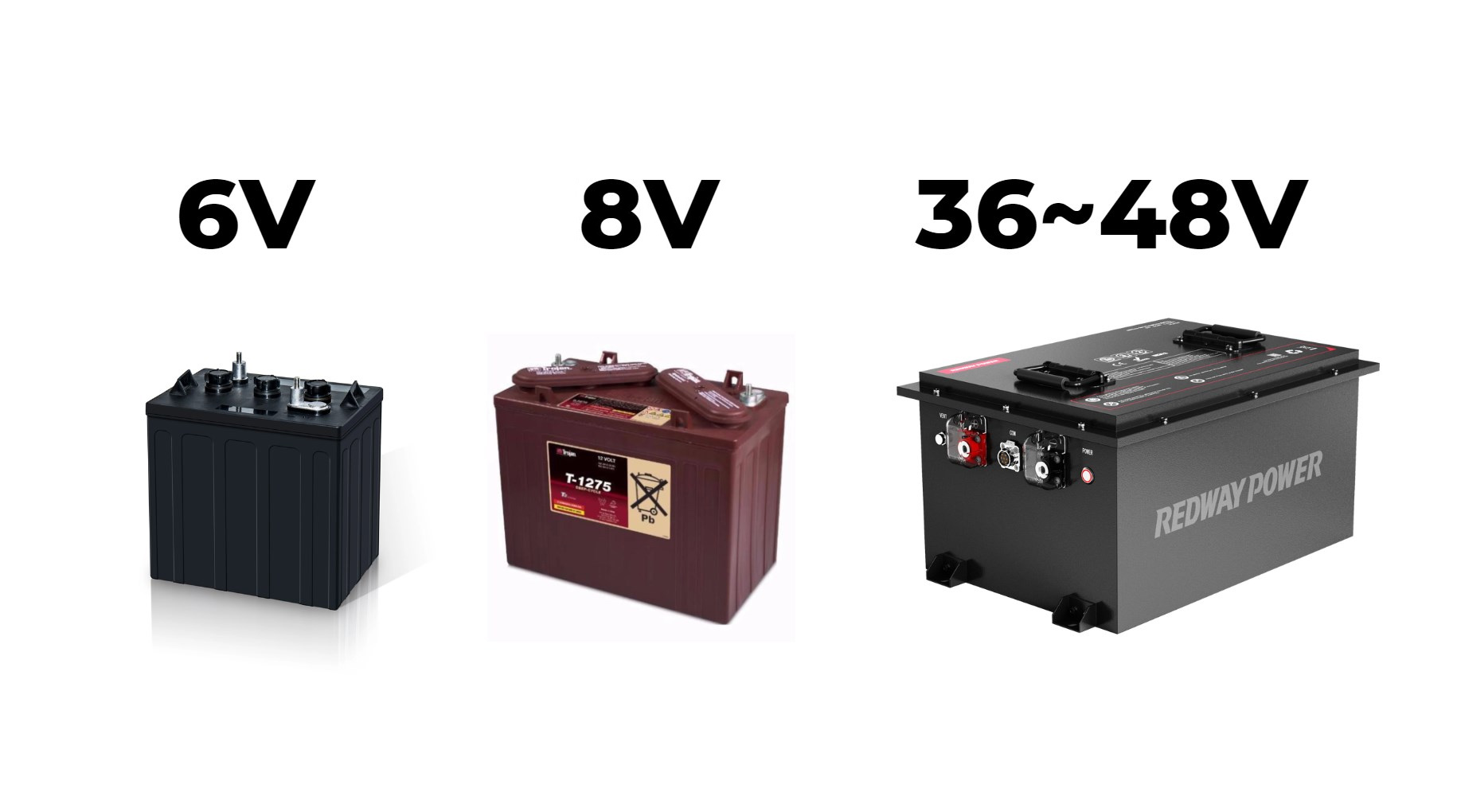
Learn how a golf cart battery fits the deep-cycle category and compare a 48 V cart pack with other deep-cycle batteries before choosing a replacement.
A 6-volt golf cart battery is considered faulty if it fails to hold a charge, exhibits voltage drops under load, or shows physical degradation. Key indicators include voltage readings below 5.5V after resting 12 hours, sulfation (white crust on terminals), and swollen casing. Load testing with a hydrometer or multimeter reveals capacity loss, while frequent water depletion or overheating during charging signals internal damage.
Best EZ-GO Golf Cart Batteries for Longevity
Resting voltage below 6.3V indicates partial discharge; readings under 5.5V confirm failure. Use a digital multimeter on terminals after 12+ hours post-charging. Pro Tip: Test individual cells—variations >0.2V between cells (in flooded batteries) reveal imbalances requiring equalization.
Voltage testing provides the first diagnostic layer. A healthy 6V battery should stabilize at 6.37V (±0.05V) when fully charged and rested. If you measure 6.1V, it’s 50% discharged; 5.8V suggests 80% capacity loss. But what happens if voltage temporarily recovers after charging? That’s where load testing becomes critical. For flooded lead-acid batteries, check each cell’s specific gravity with a hydrometer—1.277 is ideal at 80°F. Values below 1.215 indicate a dead cell. For example, a battery showing 5.9V open-circuit voltage but dropping to 3V under 50A load has failed. Always wear gloves and goggles when handling sulfuric acid during testing.
Visible sulfation (white/gray terminal crust), bulged casing from overheating, or electrolyte discoloration signal failure. Terminal corrosion exceeding 30% surface area requires immediate replacement.
Physical inspection often reveals what meters miss. Sulfation—crystalline lead sulfate buildup—reduces active material and conductivity. A battery with >25% terminal corrosion likely has internal resistance issues. Check case warping: lithium batteries swell when failing, while lead-acid types bulge from excessive gassing during overcharging. For flooded batteries, low electrolyte levels exposing plates cause irreversible sulfation. Imagine a battery where plates resemble cracked desert soil—that’s end-of-life. Pro Tip: Tap terminals lightly with a wrench; hollow sounds suggest loose internal connections. Always clean corrosion with baking soda paste, not wire brushes that damage lead.
| Test | Pass | Fail |
|---|---|---|
| Voltage (rested) | 6.3-6.4V | <5.8V |
| Hydrometer | 1.265-1.299 | <1.225 |
Apply 50-75% of CCA rating for 15 seconds; voltage drop below 4.8V indicates failure. Use carbon pile testers for accurate readings. Warning: Repeated load tests accelerate degradation in weak batteries.
Load testing stresses the battery’s current-delivery capability. For a 6V golf cart battery rated 225Ah, apply 112A load. Healthy units maintain ≥5.5V; failures plunge below 4.5V. But how do you test without professional equipment? Use the cart itself: fully charge, then drive up a moderate incline. If speed drops abruptly, batteries struggle under load. A 6V battery pack should maintain ≥5.8V per battery during hill climbs. Pro Tip: Test batteries individually—weak cells in series strings drag down the entire pack. Replace batteries showing >0.4V variance under identical loads.
Excessive heat (>120°F case temperature), rapid acceptance (<2 hour charge time), or failure to reach 7.1-7.3V absorption voltage indicate problems. Smart chargers displaying “replace battery” codes validate suspicions.
Charging patterns tell a diagnostic story. Good batteries accept current gradually, reaching 7.2V in 5-8 hours. Failing units either charge too fast (no capacity to fill) or never complete charging cycles. Thermal runaway—where batteries get hotter as charging continues—requires immediate disconnection. For instance, a battery that jumps from 6V to 7V in 30 minutes then plateaus has significant sulfation. Modern chargers detect this through dV/dt algorithms. Remember: Always charge in well-ventilated areas—faulty batteries can emit explosive hydrogen gas.
| Charging Stage | Normal Voltage | Faulty Battery |
|---|---|---|
| Bulk | 6.0→7.1V | Stalls at 6.5V |
| Absorption | 7.2V steady | Fluctuates ±0.4V |
Monthly voltage checks and quarterly load tests extend pack life. Replace all batteries if >1 unit fails—mixing new/old cells strains the system.
Can corroded terminals be repaired?
Light corrosion can be cleaned, but pitted terminals require replacement. Apply anti-corrosion gel after cleaning to prevent recurrence.
Old golf cart batteries can sometimes be revived depending on their type, age, and condition. Lead-acid batteries may regain up to 70–80% capacity through proper desulfation and electrolyte maintenance, while lithium-ion packs require precise cell balancing and diagnostics. Regular maintenance, careful charging, and timely intervention are essential to maximize performance and safety.
Lead-acid batteries often fail due to sulfation, where lead sulfate crystals build up on the plates. Effective revival methods include:
1. Desulfation and Electrolyte Management
Pulse Chargers: High-frequency pulses break down sulfate crystals. Early intervention can restore 60–80% of original capacity.
Electrolyte Replacement: Replacing old or depleted electrolyte with fresh distilled water or 1.265 SG solution helps balance cell chemistry.
Procedure Example:
Measure specific gravity; values below 1.225 indicate sulfation.
Apply controlled pulse charging at 2.4–2.45V per cell for 8–12 hours.
Refill with distilled water or fresh electrolyte as needed.
Safety Note: Always wear acid-resistant gloves and work in a well-ventilated area. Never add concentrated sulfuric acid, as it accelerates corrosion.
| Method | Success Rate | Cost |
|---|---|---|
| Pulse Desulfation | 65% | $50–$200 |
| Electrolyte Swap | 40% | $20–$80 |
Physical damage such as warped plates or cracked cases is irreversible, making battery replacement necessary. Regular temperature monitoring during charging is crucial; stop charging if cells exceed 50°C.
Lithium-ion batteries are more sensitive than lead-acid and require cell-level diagnostics. Restoration is feasible only if capacity loss is due to voltage imbalance rather than chemical degradation.
Key Steps for Lithium Revival:
Use a quality balance charger to equalize cell voltages. Differences greater than 0.1V indicate faulty cells.
Reset the Battery Management System (BMS) if necessary.
Limitations: Packs with more than 20% capacity loss or beyond 800 charge cycles usually suffer irreversible damage. Attempting disassembly without professional supervision is extremely risky due to potential thermal runaway.
For Lead-Acid Batteries:
Initial Inspection: Check for cracks, leaks, or swelling. Unsafe batteries must be replaced.
Voltage Check: A multimeter can identify deep discharge; some voltage indicates potential recovery.
Stepwise Charging: Start with low-amperage charging for each cell, gradually increasing until standard golf cart charger can maintain a full charge.
Repeat Cycles: Some batteries require several partial charging cycles to restore performance.
Important Considerations:
Use only distilled water to refill cells.
Avoid chemical hacks like baking soda or aspirin.
Use a hydrometer to check electrolyte specific gravity for more accurate diagnostics.
Even with proper care, some batteries cannot be saved. Replace batteries if:
Cases are swollen, cracked, or leaking.
Persistent failure to hold charge despite reconditioning.
Strong sulfur smell indicates internal damage.
Age exceeds typical lifespan (3–5 years for most golf cart batteries).
Regular maintenance, timely desulfation, and controlled charging remain the best ways to extend battery life.
“Reviving old batteries is possible, but success depends on careful assessment and the type of battery. Lead-acid batteries can often regain significant capacity with desulfation and proper electrolyte management. Lithium batteries, however, require precise diagnostics and cell balancing. At Redway Battery, we recommend replacement for lithium packs when capacity falls below 70%, as attempted repairs frequently cost more than new units while delivering lower performance.
Routine Charging: Keep batteries fully charged and avoid deep discharges.
Clean Connections: Prevent corrosion with regular terminal cleaning.
Monitor Water Levels: Maintain appropriate electrolyte levels in flooded lead-acid cells.
Temperature Control: Avoid exposing batteries to excessive heat during use or charging.
Professional Diagnostics: Redway Battery supports OEM-level testing and BMS evaluation to extend battery longevity.
How often can lead-acid batteries be reconditioned?
2–3 times at most. Each cycle slightly thins plates, eventually leading to structural failure.
Do battery additives effectively restore performance?
Most provide temporary relief from sulfation but accelerate terminal corrosion over time.
Can lithium batteries be repaired at home?
No. Lithium packs require professional tools and expertise due to risks of thermal runaway and chemical damage.
Is it safe to mix old and new batteries in a pack?
No. Differences in voltage and capacity can lead to uneven charging, reduced performance, and safety hazards.
What is the most reliable way to prevent battery failure?
Regular maintenance, proper charging, and early intervention at signs of sulfation or voltage imbalance.
Old golf cart batteries can often be revived with careful evaluation, proper techniques, and professional guidance. Lead-acid batteries benefit from desulfation and electrolyte management, while lithium packs require advanced diagnostics and cell balancing. Prioritize safety, regular maintenance, and timely replacement to ensure optimal performance. Redway Battery’s expertise highlights that investing in quality care and professional support is essential for lasting battery life.
Continue exploring: Use the Golf Cart Battery Testing, Life & Replacement guide for the related decision process, evidence, and practical guidance.
A full charge on a 6-volt golf cart battery is reached when its voltage stabilizes between 6.2V and 6.5V after a charging cycle. For flooded lead-acid batteries, this typically corresponds to a specific gravity of 1.265 to 1.285. It’s essential to avoid overcharging, and always use a charger that is compatible with your battery type to maintain its lifespan.
A 6-volt battery is considered fully charged when it reaches a voltage between 6.3V and 6.5V. This measurement should be taken after the battery has rested for a few hours following the charging cycle. Additionally, flooded lead-acid batteries can be tested with a hydrometer. A reading of 1.265 to 1.285 specific gravity across all cells indicates a full charge. Always ensure you’re using the right tools and methods for an accurate reading.
To maintain the health of your 6-volt golf cart battery, always use a charger that matches the battery’s specifications. For flooded lead-acid batteries, avoid using a 12V charger, as this can cause thermal runaway and damage the battery. The optimal charge time for a 6V lead-acid battery is between 8 and 12 hours, but a new battery may take longer. Avoid discharging the battery below 20% to extend its life. For AGM and gel batteries, ensure you are using a charger designed for those specific types.
Temperature plays a critical role in the charging process. Cold temperatures can slow down the chemical reactions inside the battery, extending the charging time by up to 30%. On the other hand, high temperatures can accelerate corrosion, potentially damaging the battery. For accurate readings, always measure the battery at 77°F (25°C), as colder temperatures can result in artificially low voltage readings that may mislead you into thinking the battery is undercharged.
Overcharging a 6-volt golf cart battery can lead to several problems, including damage to the electrolyte and the formation of lead sulfate crystals. For flooded lead-acid batteries, overcharging can cause the electrolyte to boil off, leading to permanent damage and a shorter battery lifespan. Always use a charger with an automatic cut-off to prevent overcharging and ensure the battery is only charged to the recommended voltage of 7.35V for flooded batteries and 7.2V for AGM/gel types.
“6-volt golf cart batteries, especially flooded types, are sensitive to both charging conditions and environmental factors. Redway Battery offers LiFePO4 alternatives that virtually eliminate the risk of sulfation. Our LiFePO4 batteries charge safely and efficiently with integrated temperature sensors, providing superior performance with up to 3,000 cycles. For users of lead-acid batteries, we recommend monthly equalization charging at 7.5V to maximize battery life.”
To keep your 6-volt golf cart battery in optimal condition, always follow a consistent charging routine. Avoid allowing the battery to discharge below 20%, as deep discharges can reduce its lifespan. Regularly check the voltage and specific gravity for flooded batteries. Additionally, using a smart charger that adjusts for temperature is vital for maintaining charge efficiency. Periodically equalize flooded batteries by charging them to 7.5V for a short period to break down any sulfate buildup.
The lifespan of a 6-volt golf cart battery depends on its type and maintenance. Lead-acid batteries typically last between 4 and 6 years, while newer technologies like LiFePO4 can last over 10 years with proper care. Proper charging habits, like avoiding deep discharges and overcharging, are key to prolonging battery life. Regular maintenance, such as topping off water levels in flooded batteries and checking voltage, can also help maximize the lifespan.
Maintaining your 6-volt golf cart battery requires proper charging, temperature management, and regular maintenance. Always use a compatible charger, avoid overcharging, and check your battery’s voltage and specific gravity regularly. Cold temperatures can impact charging time, while high temperatures can cause internal damage. Redway Battery’s LiFePO4 options provide a longer-lasting and maintenance-free alternative. Follow these best practices to ensure your battery lasts for years.
Can I use a car charger for a 6-volt golf cart battery?
No. Car chargers output 12V or higher, which can cause overcharging and damage. Always use a charger specifically designed for 6-volt batteries.
How long does it take to charge a 6-volt golf cart battery?
Charging time typically ranges from 8 to 12 hours, depending on battery capacity and charger output. For a 225Ah battery with a 25A charger, expect around 10 hours of charge time.
How can I check if my 6-volt golf cart battery is fully charged?
Use a digital voltmeter to check the voltage after resting the battery for a few hours. A fully charged 6-volt battery should read between 6.3V and 6.5V. For flooded batteries, use a hydrometer to measure the specific gravity, which should range from 1.265 to 1.285.
Continue exploring: Use the Golf Cart Battery Charging & Care guide to compare related specifications, selection factors, operating requirements, and practical guidance.
To check a 6V battery’s health, measure its voltage with a multimeter (static voltage ≥6V), perform load testing (stable voltage under load), inspect for physical damage, and use a charger to assess charging response. A healthy battery maintains voltage above 5.5V under load and charges without overheating.
Best EZ-GO Golf Cart Batteries for LongevityUse a multimeter set to DC voltage. Connect probes to terminals: ≥5.5V indicates partial charge, while <5V suggests degradation. Always test after 1–2 hours of rest post-charging.
Start by setting your multimeter to the 20V DC range for precision. Attach the red probe to the positive terminal and black to negative. A healthy 6V battery should read 6.3–6.4V when fully charged. If it shows ≤5.8V, the battery’s sulfation level is critical. For example, a 6V golf cart battery dropping to 4.9V under a 50A load has lost 30% capacity. Pro Tip: Test voltage both before and after a 10-minute load to spot voltage sag. But what if your readings fluctuate? Ensure clean terminals—corrosion adds resistance, skewing results.
Apply a 6V-specific load (e.g., 20W bulb) for 5–10 minutes. Voltage should stay above 5.5V. A drop below 5V signals capacity loss ≥40%.
Load testers simulate real-world demands. For DIY setups, a 6V 35W halogen bulb draws ~6A—monitor voltage every minute. A robust battery maintains ≥5.8V after 5 minutes. Automotive shops often use carbon pile testers applying 50–75A loads. For instance, a 6V deep-cycle battery failing at 50A for 15 seconds needs replacement. Pro Tip: Always wear gloves—batteries under load may vent hydrogen. Practically speaking, how long should a healthy battery last? A 100Ah unit powering a 10A motor should run 8–9 hours, not 5.
| Method | Load Applied | Pass Threshold |
|---|---|---|
| Halogen Bulb | 6A | >5.5V @5min |
| Carbon Pile | 50A | >5.0V @15sec |
Healthy 6V batteries accept charge smoothly, reaching 7.2–7.4V absorption voltage. Faulty units overheat or fail to hold voltage post-charging.
Connect a smart charger and observe its stages. A functional battery transitions from bulk charging (high current) to absorption (voltage plateau) in 2–3 hours. For example, a degraded AGM battery might hit 7V quickly but can’t sustain it, triggering error codes. Pro Tip: Use temperature probes—a >10°C rise during charging indicates internal shorts. Beyond voltage metrics, what about charge retention? After a full charge, disconnect and measure voltage 24 hours later; >6.2V means low self-discharge.
Yes—surface charge can mask weakness. Always load-test after removing surface charge via a 5-minute 2A discharge.
How often should 6V batteries be tested?Monthly for frequent users; quarterly for seasonal equipment. Voltage checks take 2 minutes but prevent 80% of failures.
Continue exploring: Use the Battery Selection, Compatibility & Sizing Reference guide for the related decision process, evidence, and practical guidance.
Using three 12V deep-cycle batteries in a 36V golf cart is technically possible through series wiring, but mismatched capacity (Ah) and discharge rates often lead to underperformance, reduced lifespan, and voltage imbalance. Most 36V carts use six 6V batteries (e.g., Trojan T-105) for balanced energy delivery. Pro Tip: Always match battery voltage and capacity to avoid BMS failures or thermal runaway.
Top Picks for Best Lithium Golf Cart BatterySeries-wired 12V batteries create 36V nominal voltage but risk capacity mismatch if Ah ratings differ. For example, three 12V 100Ah batteries yield 36V 100Ah, but uneven discharge rates strain weaker cells. Deep Dive: Golf carts require sustained current (150–300A), which 12V marine/RV batteries aren’t designed for—their thinner plates degrade faster under deep discharges. A typical 6V golf cart battery (e.g., US Battery 2200XC) uses thick lead plates tolerating 80% DoD (depth of discharge), while 12V deep-cycle units max out at 50% DoD. Practically speaking, using 12V batteries cuts cycle life by 40–60%. Pro Tip: Monitor voltage per battery—if one drops below 10.5V under load, replace the set immediately. Table: 12V vs. 6V Golf Cart Batteries
| Parameter | 12V Deep-Cycle | 6V Golf-Cart |
|---|---|---|
| Cycle Life at 50% DoD | 400–600 | 1,200–1,500 |
| Plate Thickness | 2.0–2.5 mm | 2.6–3.2 mm |
| Cost per kWh | $180–$220 | $150–$180 |
Wiring three 12V batteries in series achieves 36V output but amplifies weakest-link failures. For instance, if one 12V unit degrades 20% faster, the entire bank’s capacity drops proportionally. Deep Dive: Golf cart motors (e.g., 36V 4kW PMAC) demand steady voltage—sags below 32V during acceleration trigger controller cutoffs. Twelve-volt batteries, optimized for low-current applications (e.g., trolling motors), suffer voltage droop under 150A+ spikes, reducing hill-climbing torque by 15–25%. Transitionally, lithium conversions solve this—a 36V 60Ah LiFePO4 pack outlasts lead-acid with 2,000+ cycles. But what if you’re stuck with lead-acid? Pro Tip: Equalize charges monthly to prevent stratification. Table: 12V vs. 6V Performance
| Metric | 3x12V | 6x6V |
|---|---|---|
| Range (miles) | 12–15 | 18–22 |
| Peak Current | 180A | 250A |
| Recharge Cycles | 400 | 1,200 |
Mixing voltages creates dangerous imbalances. For example, pairing two 12V and two 6V batteries in series would yield 36V, but the 12V units discharge 50% faster, causing thermal stress. Deep Dive: Battery management systems (BMS) for mixed voltages don’t exist—controllers can’t regulate per-bank charging. Even slight capacity differences (e.g., a 12V 100Ah + 6V 200Ah) create reverse currents during discharge, accelerating corrosion. Transitionally, some try parallel 12V/6V pairs, but this risks ground loops and fires. Pro Tip: Stick to one battery type—homogeneous packs last 2–3x longer.
Standard 36V chargers (e.g., Lester Summit II) apply 42–45V absorption, overcharging 12V batteries rated for 14.4–14.8V (43.2–44.4V total). Deep Dive: Each 12V battery in series must reach 14.4V ±0.5V during charging. Without individual balancing, weaker units undercharge, causing sulfation. For instance, a 12V battery at 13.8V while others hit 14.4V accumulates sulfate crystals, losing 2–4% capacity monthly. Pro Tip: Use a 36V charger with per-battery monitoring, like the NOCO Genius GENPRO 36V, to prevent imbalance.
Why Buy ICON EV Golf Carts Through CostcoNo—car batteries are starter (SLI) types designed for short bursts, not deep cycling. Using them risks 70% capacity loss within 50 cycles.
How long do 12V batteries last in golf carts?12V deep-cycle units last 1–2 years with daily use, versus 4–6 years for lithium. Frequent deep discharges accelerate plate corrosion.
Continue exploring: Use the 36V Golf Cart Battery Systems guide for the related decision process, evidence, and practical guidance.
A 6-volt golf cart battery shows signs of failure through performance drops, voltage inconsistencies, or physical damage. Key indicators include slow acceleration, dim lights, swelling, terminal corrosion, or inability to hold a charge after 8–12 hours. Testing with a multimeter, hydrometer, or load tester confirms degradation. Regular monitoring and maintenance ensure reliable operation and prevent safety risks.
Failing 6V batteries exhibit slow acceleration, reduced driving range, and dim headlights. Voltage readings below 6V at rest or under 5.5V under load signal weak cells. Swollen cases and terminal corrosion indicate overheating or acid leakage. Internal resistance rises as batteries age—healthy batteries measure 0.05–0.1Ω, while values above 0.2Ω indicate sulfation. Monthly water-level checks and annual load testing help prevent early failure.
| Condition | Resting Voltage | Load Voltage (70A) |
|---|---|---|
| Healthy | 6.3–6.4V | 5.9–6.1V |
| Failing | 5.8–6.1V | <5.5V |
Set the multimeter to DC voltage, connect probes to battery terminals, and measure the resting voltage after at least 12 hours post-charging. A fully charged 6V battery reads 6.3–6.4V; under load, values below 5.5V indicate weakness. Load testing with a resistor or carbon pile tester mimics real-world use. Surface charge may temporarily mask degradation, so multiple testing methods ensure accuracy.
Yes. A hydrometer measures electrolyte specific gravity (SG). Healthy SG ranges from 1.265–1.299; readings below 1.225 indicate failing cells, while variations greater than 0.050 between cells suggest sulfation or stratification. Equalizing charges and regular water top-offs help maintain uniform SG. Physical damage like swelling or leaks cannot be detected by hydrometers, so visual inspection remains essential.
Swollen cases result from overheating or short circuits, while corroded terminals increase resistance and voltage drops. Both conditions are irreversible and require immediate replacement. Swelling stresses internal plates, risking cracks and leaks. Corrosion forms from electrolyte vapor reacting with lead and can be mitigated temporarily with anti-corrosion gels, but severe cases necessitate battery replacement for safety.
Sulfation occurs when crystalline lead sulfate forms on plates, reducing active material and capacity. Mild sulfation can be reversed with equalization charges or pulse desulfators, extending battery life by 20–30%. Advanced sulfation permanently damages plates. Monitoring and preventative measures, like consistent charging and avoiding prolonged low states, reduce the risk of severe sulfation.
| Sulfation Stage | Reversible? | Capacity Loss |
|---|---|---|
| Early (Soft Crystals) | Yes | 10–30% |
| Advanced (Hardened) | No | 50–70% |
Voltage drops after charging indicate high internal resistance due to sulfation or plate corrosion. Healthy batteries retain ≥6.2V for 12+ hours. Cells that drain faster than others create imbalance, leading to premature performance loss. Reconditioning may help, but batteries older than three years often require replacement. Regular monitoring and load testing prevent unexpected failures.
At Redway Battery, we recommend consistent voltage checks and annual load testing for 6V golf cart batteries. Our lithium solutions eliminate sulfation risks, provide stable 6.6V output, and exceed 2,000 cycles. Integrated BMS protects against overcharging and swelling, while corrosion-resistant aluminum cases ensure longevity in humid environments. For lead-acid users, monthly water checks and quarterly terminal cleaning maintain optimal performance and safety.”
Identifying a bad 6V golf cart battery requires observation, testing, and preventative care. Watch for slow acceleration, voltage drops, swelling, and corrosion. Use a multimeter, hydrometer, and load tester to confirm performance issues. Redway Battery’s solutions, including lithium upgrades, improve reliability, prevent sulfation, and extend battery life. Regular maintenance and timely replacement ensure safe, consistent golf cart operation.
Can I recondition a sulfated 6V battery?
Mild sulfation can be reversed with equalization charges. Severe sulfation requires professional desulfators; home remedies may cause overcharging.
Is it safe to mix old and new 6V batteries?
No. Mixing old and new batteries causes imbalance, leading to faster degradation. Always replace the entire set together.
How long should a 6V golf cart battery last?
With proper care, 2–4 years is typical. Maintenance like monthly charging, distilled water top-offs, and avoiding deep discharges can extend life beyond 5 years.
What is the safest way to test battery voltage?
Measure resting voltage at least 12 hours after charging using a multimeter. Load testing with a resistor or carbon pile tester confirms real-world performance.
How do I prevent sulfation in lead-acid batteries?
Regular charging, avoiding prolonged low states, equalization, and monthly water checks prevent sulfation and extend battery life.
Continue exploring: Use the Golf Cart Battery Troubleshooting & Repair guide for the related decision process, evidence, and practical guidance.
Yes, replacing six 8V batteries with four 12V units is possible if the total system voltage remains 48V. However, capacity (Ah), physical fit, and discharge rates must align. For example, six 8V 150Ah batteries provide 48V/150Ah, while four 12V 100Ah units yield 48V/100Ah—reducing runtime by 33%. Use deep-cycle 12V batteries and confirm BMS/charger compatibility to avoid performance drops.
Top Picks for Best Lithium Golf Cart BatteryBoth configurations deliver 48V total, but cell arrangement impacts performance. Six 8V batteries split voltage evenly, while four 12V units may strain cells under load. Pro Tip: Verify your motor controller’s input tolerance—some cut power if voltage dips below 46V during acceleration.
When swapping, the nominal voltage remains unchanged, but ripple currents and voltage sag patterns shift. For instance, 12V batteries typically have thicker internal plates, which handle sustained loads better but may struggle with rapid discharges common in hilly terrain. Practically speaking, a 12V battery’s lower internal resistance can reduce energy loss during peak demand. However, what happens if one cell fails? Fewer batteries mean each unit bears more stress, potentially shortening lifespan. A real-world analogy: Swapping six smaller water tanks for four larger ones keeps total volume (voltage) the same, but flow rates (current) depend on pipe (battery) size.
| Factor | 6x8V | 4x12V |
|---|---|---|
| Total Voltage | 48V | 48V |
| Typical Capacity | 150-170Ah | 100-120Ah |
| Weight (approx.) | 360 lbs | 240 lbs |
Capacity determines range per charge. Halving the Ah (e.g., 150Ah → 75Ah) cuts runtime by 50%, assuming similar discharge rates. Prioritize 12V batteries with ≥120Ah to minimize range loss.
Deep-cycle 8V batteries excel in golf carts due to their high Ah ratings and deep discharge tolerance—often 80% depth of discharge (DoD). Most 12V automotive batteries, however, are designed for 50% DoD, meaning usable capacity drops further. Beyond capacity numbers, consider the C-rate: A 12V 100Ah battery rated for C/5 delivers 20A continuously, while an 8V 150Ah unit at C/8 provides ~18.75A. Pro Tip: Opt for lithium 12V batteries—they offer 95%+ DoD and lighter weight, compensating for lower Ah. For example, four 12V 100Ah LiFePO4 packs weigh ~120 lbs vs. 360 lbs for lead-acid, boosting efficiency. But how does this translate to real-world use? A 48V/100Ah system powers a 500W motor for ~2 hours vs. ~3 hours with 150Ah.
| Battery Type | Ah | Range (miles) |
|---|---|---|
| 6x8V Lead-Acid | 150 | 35-40 |
| 4x12V Lithium | 100 | 25-30 |
No—charging speed depends on charger output (amps) and battery chemistry. Lithium 12V units accept higher currents, reducing charge time by 30-50% vs. lead-acid.
Can I reuse my existing 48V charger?Only if compatible with the new battery chemistry. Lead-acid chargers may overcharge lithium packs; always verify voltage/current profiles.
Continue exploring: Use the Golf Cart Battery Installation, Wiring & Conversion guide for the related decision process, evidence, and practical guidance.
Golf cart batteries fail primarily due to sulfation, deep discharging, corrosion, improper maintenance, and exposure to extreme temperatures. Lead-acid batteries degrade faster when not fully charged, while lithium alternatives, such as LiFePO4 from Redway Battery, resist sulfation and can endure deeper discharge cycles. Consistent care, appropriate charging, and temperature management significantly extend battery life and performance.
Sulfation forms when lead sulfate crystals accumulate on battery plates during discharge and are not dissolved during recharging. This reduces the active surface area, increases internal resistance, and lowers overall capacity. For example, a 48V battery left at 20% charge for a month may lose 30% of its capacity. Flooded lead-acid batteries are particularly vulnerable, while AGM batteries resist sulfation moderately, and LiFePO4 batteries from Redway Battery are fully immune.
| Battery Type | Sulfation Risk | Mitigation |
|---|---|---|
| Flooded Lead-Acid | High | Monthly equalization charge |
| AGM | Moderate | Voltage-regulated charging |
| LiFePO4 | None | Not required |
Temperatures above 75°F (24°C) accelerate sulfation. Lithium options like Redway Battery’s LiFePO4 bypass these issues, offering consistent performance without complex maintenance.
Deep discharging below 50% state-of-charge (SOC) strains lead-acid batteries, exposing plates to acidic electrolyte and causing oxidation. Each full discharge cycle reduces capacity 3–5% faster than partial cycles. For instance, a 6V battery discharged to 5V daily may last only 150 cycles versus 600 cycles at 50% discharge.
Partial-state-of-charge operation can lead to acid stratification, weakening plate reactions and reducing efficiency. Extreme cold can instantly cut available capacity by 50%. Lithium batteries, such as Redway Battery’s LiFePO4 line, tolerate 80–100% depth-of-discharge safely, making them ideal for heavy-use golf carts.
Corrosion increases resistance at battery terminals, leading to voltage drops and uneven charging. White or green deposits reduce conductivity significantly. Copper and lead components can experience galvanic corrosion in humid environments, loosening connections and creating hotspots. Cleaning terminals biannually with baking soda and applying anti-corrosion sprays preserves battery efficiency. Severe internal corrosion may require professional repair, often costing up to 60% of a new battery.
Proper maintenance prevents early battery failure. Key practices include:
Water Levels: Ensure lead-acid plates are fully covered with distilled water; overfilling causes spills.
Regular Cleaning: Prevents corrosion buildup and improves conductivity.
Correct Charging: Avoid overcharging, undercharging, or using incompatible chargers. Disconnect automatic chargers when fully charged.
Environmental Care: Protect batteries from high heat, freezing temperatures, and excessive operational stress.
Redway Battery’s LiFePO4 solutions reduce the need for traditional maintenance while providing long-term reliability.
Extreme temperatures, heavy usage, and frequent short trips significantly reduce battery life. Heat accelerates chemical degradation, while cold reduces capacity. Driving over steep hills or leaving accessories running strains the battery. Short trips prevent full recharging, leading to undercharged batteries and sulfation risks in lead-acid types. Lithium batteries like Redway Battery’s models handle these challenges more efficiently, maintaining longer cycle life and stable performance.
“Lithium iron phosphate batteries redefine golf cart energy management. They eliminate sulfation and corrosion risks, tolerate deep discharges, and operate across broad temperature ranges. Redway Battery’s modular designs allow voltage customization from 36V to 72V, compatible with Club Car, EZ-GO, and Yamaha carts. Their built-in battery management systems ensure safety and reliability, reducing maintenance while extending operational life. These batteries offer a balance of performance, durability, and efficiency unmatched by traditional lead-acid systems.”
Improper Charging: Overcharging damages plates; undercharging fosters sulfation.
Using Wrong Charger: Voltage or type mismatches can permanently harm cells.
Draining to Zero: Both lead-acid and lithium cells suffer from full discharges.
Lack of Maintenance: Low water, terminal corrosion, and grime accelerate failure.
Extreme Temperatures: Heat speeds degradation; freezing reduces capacity.
Operational Stress: Heavy use, running accessories, or frequent short trips increase wear.
Long-Term Inactivity: Unused batteries discharge naturally; prolonged low voltage causes damage.
Even with proper care, lead-acid batteries last 3–5 years, while lithium-ion batteries, including Redway Battery’s LiFePO4 series, can exceed 10 years with consistent maintenance and appropriate usage.
Can you revive a sulfated golf cart battery?
Partially. Slow charging or using a desulfator can restore some capacity. If voltage remains below 80%, replacement is necessary.
How often should I check water levels in lead-acid batteries?
Monthly checks are recommended. Always add distilled water if plates are exposed, without exceeding the maximum marker.
Do lithium batteries need maintenance?
No. Sealed LiFePO4 batteries eliminate watering, equalization, and terminal cleaning, reducing upkeep time significantly.
What happens if I overcharge my battery?
Overcharging can damage internal plates, cause water loss, and increase the risk of corrosion, reducing overall lifespan.
Can extreme temperatures permanently damage batteries?
Yes. Heat accelerates chemical degradation, while freezing may reduce capacity or damage casings in lead-acid batteries. Lithium models handle extremes better.
Golf cart battery life is determined by proper charging, consistent maintenance, and environmental management. Lead-acid batteries are sensitive to sulfation, deep discharges, and corrosion, while lithium options from Redway Battery offer durable, low-maintenance alternatives. Prioritizing correct usage, avoiding extreme temperatures, and monitoring battery health ensures optimal performance and longer lifespan. Selecting high-quality, reliable batteries like those from Redway Battery delivers peace of mind and sustained efficiency.
Continue exploring: Use the 6V Golf Cart Deep-Cycle Batteries guide for the related decision process, evidence, and practical guidance.
Converting a 36V golf cart to 48V typically costs between $1,200 and $3,500, depending on component quality and labor. Essential upgrades include replacing the battery pack (48V lithium-ion or lead-acid), upgrading the controller to handle higher voltage, and often replacing the solenoid and wiring. Chargers must also be swapped to 48V-compatible models. For example, a basic lithium battery upgrade might cost $1,800, while a full system overhaul with premium components could exceed $3,000. Pro Tip: Always verify motor compatibility—some 36V motors overheat at 48V without modifications.
Top Picks for Best Lithium Golf Cart BatteryA 48V conversion requires new batteries, controller, and charger as core replacements. The motor may need rewinding or replacement if not rated for 48V.
Beyond voltage requirements, the battery pack’s physical size and terminal orientation must match the cart’s chassis. Controllers should have a 48V input rating and current limits matching the motor’s torque needs—a 300A controller is common for mid-sized carts. Chargers require precise voltage matching; using a 48V charger on 36V batteries risks undercharging. For example, a Club Car DS conversion often needs a 48V Navitas AC motor ($1,100) and 400A controller ($450). Pro Tip: Keep old 36V batteries as backups if they’re still functional.
Some 36V motors tolerate 48V temporarily but risk overheating and brush wear during sustained use. Permanent upgrades require rewinding or replacement.
Motors designed for 36V operate 33% faster at 48V, which strains bearings and armature windings. Thermal failure becomes likely after 30+ minutes of hill climbing. Rewinding costs $200–$500 but extends lifespan, while new 48V motors range from $600–$1,800. A real-world example: EZGO TXT series motors often fail within 6 months at 48V without modifications. Pro Tip: Install a temperature sensor on the motor housing to monitor heat buildup during test drives.
| Component | 36V System | 48V Upgrade |
|---|---|---|
| Battery Cost | $800–$1,200 | $1,200–$2,500 |
| Controller | 275A max | 300–500A |
48V systems boost range by 25–40% compared to 36V setups due to reduced current draw and improved efficiency.
Higher voltage lowers amperage for the same power output, minimizing energy loss through resistance. A 36V cart with 100Ah batteries provides 3.6kWh, while 48V/100Ah offers 4.8kWh—enough for 35–50 miles per charge. However, actual gains depend on terrain; hilly courses see smaller improvements due to motor heating. Pro Tip: Pair lithium batteries with 48V systems for maximum range—they deliver 95% capacity even at 20% discharge rates.
Pre-packaged DIY kits ($1,500–$2,800) simplify conversions but require mechanical skills. Professional installations ensure warranty validity.
Kits typically include batteries, controller, charger, and wiring harnesses. Missing adapter plates or incorrect throttle signal types cause 30% of DIY failures. For instance, Alltrax XCT controllers need throttle position sensor calibration—a step often overlooked by novices. Pro Tip: Rent a battery terminal crimper ($25/day) for secure high-current connections.
| Option | Cost Range | Time Required |
|---|---|---|
| DIY Kit | $1,500–$2,800 | 6–10 hours |
| Professional | $2,200–$3,500 | 3–5 hours |
48V systems demand heavy-gauge wiring (4 AWG minimum) and HD solenoids to prevent meltdowns during peak loads.
Standard 36V 6 AWG cables overheat at 48V’s lower current but higher-power conditions. Upgrading to 4 AWG or 2 AWG reduces resistance by 50–75%. Solenoids must handle 200–400A continuous draws—look for 48V-rated models with silver contacts. A Yamaha G29 conversion, for example, requires a White-Rodgers 586-1121 solenoid ($85) to avoid contact welding. Pro Tip: Use dielectric grease on all high-voltage connections to prevent corrosion-induced voltage drops.
Yes, most OEMs void warranties if non-approved voltage modifications are made. Always check manufacturer policies before upgrading.
How long do 48V lithium batteries last in golf carts?Properly maintained LiFePO4 packs last 2,000–3,000 cycles (8–10 years), outperforming lead-acid’s 400–600 cycle lifespan.
Continue exploring: Use the Golf Cart Battery Sizing, Voltage & Range guide for the related decision process, evidence, and practical guidance.
Yes, you can use four 12-volt batteries in a 48-volt golf cart by wiring them in series, combining their voltages to achieve the required 48 volts. This approach simplifies installation and maintenance compared to traditional six 8-volt batteries while providing comparable performance, provided the batteries have sufficient amp-hour capacity and are properly installed.
The most common configuration for a 48-volt golf cart is six 8-volt batteries connected in series (6 × 8V = 48V). Alternatively, four 12-volt batteries wired in series (4 × 12V = 48V) are used for a more compact setup. Some carts also use eight 6-volt batteries arranged in series and parallel to maximize capacity and extend battery life.
| Configuration | Total Voltage | Number of Batteries | Typical Ah | Advantages |
|---|---|---|---|---|
| Six 8-Volt Batteries | 48V | 6 | 150-200 Ah | Better longevity, widely used |
| Four 12-Volt Batteries | 48V | 4 | 150-200 Ah | Simpler setup, easier maintenance |
| Eight 6-Volt Batteries | 48V | 8 | Higher Ah | Longer life, better deep cycling |
Wiring batteries in series involves connecting the positive terminal of one battery to the negative terminal of the next. This adds the voltage of each battery while maintaining the same amp-hour (Ah) rating as a single unit. For example, four 12-volt batteries in series produce 48 volts while keeping the Ah rating equal to that of one battery.
Using four 12-volt batteries reduces installation complexity and cable management. They fit better in compact battery trays and generally weigh less, making handling easier. Six 8-volt batteries, however, typically offer longer cycle life, deeper discharge capability, and better performance under heavy use.
Yes, the amp-hour (Ah) rating directly impacts runtime and performance. To match a six 8-volt battery system, four 12-volt batteries should have adequate Ah ratings, typically around 150–200 Ah. Insufficient capacity reduces driving range, strains the batteries, and shortens lifespan.
Ensure the replacement batteries match the original voltage (48V) and meet or exceed the amp-hour capacity. Always use deep-cycle batteries, maintain water levels, and keep terminals clean. Avoid mixing battery types or ages to prevent imbalance and reduced efficiency.
Regular maintenance—including checking electrolyte levels, cleaning terminals, and equalizing charges—maximizes battery life and reliability. Neglecting maintenance accelerates capacity loss and may lead to early failure. Redway Battery emphasizes following manufacturer protocols to ensure optimal performance and durability.
Absolutely. Redway Battery provides advanced lithium-ion batteries compatible with 48-volt golf cart systems. Their lithium batteries are lighter, offer higher energy density, faster charging, longer cycle life, and maintain the necessary voltage and amp-hour capacity for consistent performance.
Redway Battery lithium options are up to 60% lighter and provide more consistent power output. They last 8–10 years compared to 3–5 years for lead-acid batteries. Though the upfront cost is higher, total ownership costs are lower due to reduced maintenance and extended lifespan. Built-in battery management systems enhance safety and reliability.
Yes. Proper series wiring is essential: positive to negative terminals in sequence to reach 48 volts. Ensure secure connections, use insulated cables, and install terminal covers. Following safety guidelines, wearing protective gear, and adhering to installation instructions prevents short circuits and accidents.
| Battery # | Connection | Voltage (V) | Notes |
|---|---|---|---|
| 1 | Negative to cart | 0 | System ground |
| 1 to 2 | Positive to Negative | 12 | Series connection |
| 2 to 3 | Positive to Negative | 24 | Series connection |
| 3 to 4 | Positive to Negative | 36 | Series connection |
| 4 | Positive to cart | 48 | Output voltage to drivetrain |
Selecting the proper configuration ensures efficient operation, optimal range, consistent power, and long battery life. High-quality batteries from Redway Battery minimize downtime, reduce maintenance costs, and enhance overall golf cart performance.
“Combining four 12-volt batteries to power a 48-volt golf cart is effective when amp-hour capacity and maintenance are matched correctly,” states a Redway Battery expert. “Our lithium battery products further enhance this setup by providing longer life, consistent energy output, lighter weight, and greater efficiency. Proper installation and ongoing care, coupled with advanced battery technology, guarantee an excellent golf cart experience.”
Using four 12-volt batteries in a 48-volt golf cart is practical, offering simpler installation than six 8-volt batteries. Success depends on proper series wiring, adequate amp-hour capacity, and battery maintenance. Redway Battery’s lithium solutions enhance durability, reduce weight, and deliver consistent performance, making them an ideal choice for modern golf carts.
Can I put four 12-volt batteries in a 48-volt golf cart?
Yes, wiring four 12-volt batteries in series achieves the required 48 volts.
Is it better to use six 8-volt batteries or four 12-volt batteries?
Six 8-volt batteries provide longer lifespan, but four 12-volt batteries are easier to install and maintain.
What amp-hour capacity should the batteries have?
A range of 150–200 Ah is recommended for optimal performance and runtime.
Can Redway Battery lithium batteries fit a 48-volt golf cart?
Yes, Redway Battery offers lithium batteries designed specifically for standard 48-volt golf carts.
What safety precautions are necessary when wiring batteries?
Always wire in series with correct polarity, use insulated cables, wear protective gear, and verify voltage after installation.
Continue exploring: Use the 48V Golf Cart Battery Systems guide for the related decision process, evidence, and practical guidance.
Determining whether your EZGO golf cart operates on a 36V or 48V system is essential for safety, performance, and battery longevity. You can identify the voltage by inspecting the battery configuration, checking the charger specifications, or measuring the total voltage with a multimeter. Correct identification ensures optimal compatibility with Redway Battery replacements and prevents damage to your cart’s motor controller.
The battery configuration defines the cart’s voltage. Most EZGO 36V models have six 6V batteries wired in series, while 48V systems use six 8V batteries or four 12V batteries. Older TXT models typically run 36V, whereas RXV models are more likely 48V.
To check:
Remove the seat or battery compartment cover.
Count the batteries and note individual voltages.
Use a multimeter: a fully charged 36V system reads ~38V, and a 48V system ~51V.
| Feature | 36V System | 48V System |
|---|---|---|
| Battery Voltage | 6V each | 8V each |
| Total Batteries | 6 | 6 |
| Charged Voltage | ~38V | ~51V |
⚠️ Always disconnect batteries before inspecting to avoid short circuits.
Charger output voltage directly indicates the system type. A 36V charger delivers a maximum of ~42V, while a 48V charger reaches ~58V. Using mismatched chargers risks undercharging, overvoltage, or damage to the battery cells.
| Charger Feature | 36V System | 48V System |
|---|---|---|
| Max Voltage | 42V | 58V |
| Amperage Range | 15–25A | 10–18A |
| Compatible Batteries | 6x6V | 6x8V |
Always verify charger compatibility, and observe amperage if using analog chargers to protect battery life.
Using a multimeter provides an accurate measurement of the total system voltage:
Set the multimeter to DC voltage.
Place the positive probe on the main positive terminal and the negative probe on the main negative terminal of the battery pack.
Read the voltage: ~38V indicates a 36V system, ~51V indicates a 48V system.
This method works even if labels are worn or missing.
Counting the water fill holes on each battery offers a simple visual check:
Each hole represents 2 volts.
Six 6V batteries (3 holes each) equal a 36V system.
Six 8V batteries (4 holes each) or four 12V batteries (6 holes each) equal 48V.
This method is effective for lead-acid batteries and helps prevent misidentification when inspecting older EZGO carts.
“Accurate voltage identification is critical for safety and performance. At Redway Battery, we recommend using lithium replacements, like our 48V 100Ah LiFePO4 packs, for upgraded torque and extended lifespan. Matching battery chemistry to your cart’s controller is essential—48V systems require MOSFETs rated for 60V+ to handle regenerative braking and avoid failures.”
Identifying whether your EZGO golf cart is 36V or 48V is crucial for proper operation and battery longevity. Inspect the battery configuration, verify charger output, and confirm with a multimeter. Redway Battery provides high-performance lithium replacements tailored to your voltage system, ensuring safer, more efficient operation and improved durability.
Can I convert a 36V EZGO to 48V?
Yes, but it requires replacing batteries, upgrading the charger, and modifying the motor controller to handle higher voltage safely.
Does voltage affect speed?
Indirectly—48V systems maintain higher RPMs under load, allowing faster performance than 36V systems.
How many batteries power a 48V golf cart?
Typically six 8V batteries or four 12V batteries, connected in series for a total of 48V.
What is a fully charged 36V or 48V cart voltage?
A fully charged 36V cart reads ~38V, and a 48V cart reads ~51V after resting post-charge.
Where should I check my EZGO serial number for voltage info?
Look inside the passenger glove box, under the seat on the frame, or near the charger port; newer carts’ serials indicate voltage system.
Redway Battery ensures that your replacement batteries are fully compatible with both 36V and 48V systems, offering reliable energy solutions for every golf cart owner.
Continue exploring: Use the 48V Golf Cart Battery Systems guide for the related decision process, evidence, and practical guidance.