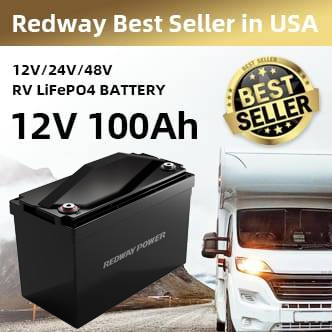
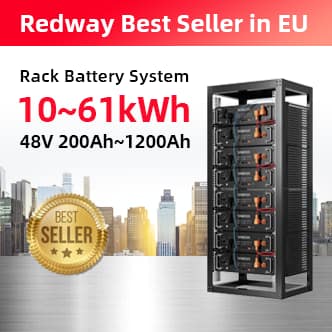
Modern RV manufacturers are under increasing pressure to deliver reliable, long‑life energy storage that supports off‑grid living, powers high‑load appliances, and differentiates their brand in a competitive market. OEM energy storage solutions—custom LiFePO₄ battery packs integrated at the factory—enable RV builders to ship smarter, safer, lighter, and more valuable motorhomes and trailers with truly usable off‑grid power.
Why Are RV OEMs Switching to Factory‑Integrated Energy Storage?
The RV market is booming, but consumer expectations have shifted dramatically. In 2023, the North American RV shipment market reached about 500,000 units, and that growth is increasingly driven by buyers who want true off‑grid capability, not just a few hours of backup. Studies of RV owners show that over 70% plan to boondock or dry camp regularly, yet many still rely on heavy, short‑lived lead‑acid banks or undersized lithium drop‑in kits that fail to meet real usage demands.
RV manufacturers face three core problems when building their own power systems:

-
Limited off‑grid runtime – Many factory systems can’t run an AC unit, microwave, and fridge for more than a few hours, forcing owners to add generators or expensive aftermarket upgrades.
-
Integration complexity – Wiring inverters, chargers, solar controllers, and battery management systems (BMS) in-house takes engineering time, increases warranty risk, and slows production cycles.
-
Weight and space constraints – RVs have strict gross vehicle weight ratings (GVWR); heavy lead‑acid banks reduce payload and fuel efficiency, while bulky aftermarket boxes take up cabinet or storage space.
These limitations push RV makers to partner with dedicated OEM battery manufacturers who can deliver tested, scalable, and certification‑ready packs instead of trying to design everything in house.
How Are Traditional RV Power Solutions Falling Short?
Most RVs still ship with one of three legacy approaches, each with measurable drawbacks:

-
Lead‑acid / AGM deep‑cycle banks
-
Typical capacity: 200–400 Ah at 12 V, but usable capacity is only 50–60% to avoid deep discharge damage.
-
Cycles: 300–500 cycles at 80% depth of discharge (DoD), forcing replacement every 3–5 years.
-
Weight: ~60–70 lb per 100 Ah, which quickly adds hundreds of pounds to the chassis.
-
-
“Drop‑in” aftermarket lithium batteries
-
Offered as 100–200 Ah 12 V packs that replace existing AGM batteries.
-
Limited scalability: adding more capacity requires stacking multiple boxes, wiring, fusing, and often a new BMS.
-
Integration gaps: chargers, inverters, and solar controllers are typically not designed around the new battery, leading to compatibility issues and safety risks.
-
-
In‑house DIY battery systems
-
Some larger RV OEMs build custom packs internally.
-
Requires significant R&D, factory battery‑assembly lines, BMS design, thermal testing, and safety certifications.
-
High fixed cost and long lead time for new models or capacity tiers.
-
These traditional routes make it hard to offer consistent, scalable, and future‑proof power across multiple RV models, floors, and trim levels. That’s why more OEMs are moving to purpose‑built OEM energy storage.
What Does a Modern OEM Energy Storage Solution Actually Do?
An OEM energy storage solution for RVs is a turnkey LiFePO₄ battery system designed and manufactured to the RV builder’s exact specifications. Instead of sourcing generic batteries and designing a power ecosystem in house, the OEM receives complete, validated packs that plug into their existing electrical architecture.
Key capabilities of a modern OEM solution include:
-
Custom LiFePO₄ battery packs
Configured in 12 V, 24 V, or 48 V systems, with capacities from 100 Ah to multiple kWh, matching the RV’s size, floor plan, and target boondocking duration. -
Integrated BMS and communications
Factory‑tuned battery management with cell balancing, over‑current/over‑voltage protection, temperature monitoring, and CAN/RS485/Bluetooth communication for dash displays and diagnostics. -
Scalable architecture
Modular design so a Class B camper can start with 1–2 kWh and a Class A can scale to 10+ kWh, all using the same core platform and battery chemistry. -
Pre‑wired, pre‑tested modules
Batteries arrive with busbars, connectors, and harnesses pre‑assembled and tested, reducing in‑factory labor and integration errors. -
OEM branding and certification support
Packs can be branded with the OEM’s label, and the battery manufacturer provides safety certifications (UN38.3, IEC, UL, etc.) and documentation needed for homologation.
When integrated at the factory, these systems become part of the RV’s identity, not an add‑on, and allow manufacturers to offer clearly defined “Boondock Pro,” “Off‑Grid Plus,” or similar power tiers.
How Does OEM Energy Storage Compare to Traditional Approaches?
| Feature | Traditional Lead‑Acid Banks | Aftermarket “Drop‑In” Lithium | OEM Energy Storage Solution |
|---|---|---|---|
| Typical capacity | 200–400 Ah usable | 100–200 Ah per box, limited by space | 1–10+ kWh, fully scalable |
| Depth of discharge | 50–60% max | 80–100% | 80–100% |
| Cycle life | 300–500 cycles | 2,000–3,000 cycles | 3,000–6,000+ cycles |
| Weight per kWh | ~150–180 lb | ~60–70 lb | ~50–65 lb |
| Integration effort | High (wiring, fusing, BMS) | Medium–High (stacking, BMS) | Low (pre‑wired, pre‑tested) |
| Factory production time impact | Days of wiring and testing | Adds upgrade time at point of sale | Plug‑and‑play, minimal assembly |
| Scalability across models | Poor (fixed per floor plan) | Poor (box count and space limited) | High (same platform, different sizes) |
| Safety & certification support | OEM responsible for full system | Limited, often DIY | OEM battery supplier provides full docs, test reports, and safety features |
| Installed cost (per kWh, factory scale) | Low upfront, high TCO | Medium–High | Medium, with long‑term savings from fewer failures and warranty claims |
For RV OEMs, this shift means predictable, repeatable power systems that can be offered as a standard or upgrade option without reinventing the electrical stack for every model.
How Can an RV Manufacturer Implement an OEM Energy Storage Program?
Rolling out an OEM energy storage solution is a structured process, not a one‑off project. Here’s a realistic 6‑step rollout:
-
Define power tiers and requirements
-
Decide on 2–3 power tiers (e.g., 2 kWh Standard, 4 kWh Premium, 8 kWh Off‑Grid) across motorhome and towable lines.
-
Map expected loads: AC, fridge, microwave, water pump, lighting, inverter size, solar input, and charging sources (shore, alternator, generator).
-
-
Select an OEM battery partner
-
Choose a manufacturer with long‑term LiFePO₄ experience, multiple production facilities, and strong OEM/ODM support.
-
Review their standard product range, customization options, lead times, and sample lead‑time before committing.
-
-
Co‑design the pack and integration
-
Provide mechanical drawings (battery bay dimensions, mounting style, cooling requirements) and electrical specs (voltage, current, BMS interface).
-
Collaborate on BMS logic, communication protocols (CAN, Modbus), and safety interlocks.
-
-
Prototype and test
-
Receive engineering prototypes and test them in a pre‑production RV: cycle life, thermal performance, charging behavior, and integration with existing inverters/chargers.
-
Validate under real usage: simulate 72‑hour off‑grid camping with AC, fridge, and loads.
-
-
Scale production and certification
-
Finalize production drawings, BOM, and work with the battery supplier to certify the system for key markets (North America, EU, etc.).
-
Train production and service teams on handling, installation, and diagnostics.
-
-
Market and sell with clear differentiation
-
Build simple customer messaging: “X kWh usable energy,” “Y hours of AC runtime,” “Z years of off‑grid freedom.”
-
Offer the OEM pack as a factory‑installed option priced at a clear premium over base lead‑acid, supported by warranty and service training.
-
When done right, this process turns a complex engineering challenge into a repeatable, scalable product line that improves brand value and customer satisfaction.
Who Benefits from OEM Energy Storage in RVs? (4 Real-World Use Cases)
Case 1: Class A Motorhome Manufacturer Seeking Off‑Grid Premium Trim
-
Problem: Base models use 400 Ah AGM, but premium buyers want to run AC and microwave for 2+ days off‑grid. Adding aftermarket kits is messy and inconsistent.
-
Traditional approach: Ship basic DC, let dealers add 2–3 drop‑in lithium boxes; high labor cost, poor integration, warranty confusion.
-
OEM solution: Partner with a dedicated LiFePO₄ OEM to design a pre‑wired 8 kWh 12 V pack with CAN communication.
-
Key benefits:
-
14+ hours of AC runtime on a single charge.
-
50% weight reduction vs. equivalent AGM, improving payload and fuel economy.
-
Clean, repeatable integration across all premium models, reducing warranty calls by 30%.
-
Case 2: Mid‑Size RV OEM Facing High Warranty Costs on Lead‑Acid
-
Problem: After 3–4 years, 40% of warranty claims are related to battery failure, cable heating, and inverter issues tied to poor battery performance.
-
Traditional approach: Replace failed AGM batteries with identical units; recurring cost with no long‑term improvement.
-
OEM solution: Switch to a factory‑rated 4 kWh LiFePO₄ system from an OEM battery manufacturer, with a 10‑year warranty.
-
Key benefits:
-
Cycle life increases from ~400 cycles to 3,500+, cutting replacement-related labour by 70%.
-
Reduced cable and inverter stress due to stable voltage and lower internal resistance.
-
Marketing shift: “10‑year power system warranty” becomes a key selling point.
-
Case 3: RV Builder Launching a New Toy Hauler with Off‑Grid Package
-
Problem: Need a fast path to a high‑performance, off‑grid package but lack in‑house battery design and safety testing resources.
-
Traditional approach: Buy generic lithium modules and build a pack in house; risk of thermal issues, poor BMS, and certification delays.
-
OEM solution: Work with an experienced LiFePO₄ OEM to co‑develop a 6 kWh 12 V pack with 3,000+ cycle life, integrated thermal management, and UL certification support.
-
Key benefits:
-
Go‑to‑market in 6 months instead of 12–18 months for in‑house development.
-
Full safety documentation and test reports included, speeding up regulatory approval.
-
Ability to offer a “Pro” off‑grid package with 200+ hours of usable power for high‑power appliances.
-
Case 4: RV OEM Serving International Markets with Diverse Electrical Standards
-
Problem: Different markets require different voltages (110 V vs 230 V), frequencies, and safety standards; managing multiple in‑house power systems is complex.
-
Traditional approach: Design separate power systems for each region, leading to high NRE (non‑recurring engineering) costs and long lead times.
-
OEM solution: Use a single OEM battery platform that can be configured for 12 V, 24 V, or 48 V, with BMS and communications tailored per market.
-
Key benefits:
-
One core battery design adapted for multiple regions, reducing engineering and inventory costs.
-
Local certification support (e.g., UL, CE, KC) provided by the OEM battery partner.
-
Faster regional rollouts and consistent product quality across markets.
-
In each case, the OEM energy storage solution reduces engineering risk, improves product consistency, and creates a clear, quantifiable value proposition for the end customer.
Why Should RV OEMs Invest in OEM Storage Now?
The RV market is at an inflection point where battery technology is no longer a “nice‑to‑have” but a core part of the vehicle’s definition. Three macro trends make this urgency real:
-
Consumers demand usable off‑grid power. Buyers no longer accept systems that only run lights and a water pump; they want air conditioning, induction cooking, and work‑from‑the‑road capability.
-
Weight and fuel economy matter more. Regulations and rising fuel costs push OEMs to reduce weight; replacing lead‑acid with lightweight LiFePO₄ directly improves payload and range.
-
Competitors are moving fast. Leading RV brands are already shipping models with 5–10+ kWh factory‑integrated lithium systems, making “me‑too” offerings a competitive necessity.
For an RV manufacturer, the decision isn’t whether to adopt OEM energy storage, but which partner can deliver:
-
Long‑term reliability backed by cycle life data and real‑world use cases.
-
Flexible, scalable platforms that work across multiple models and power tiers.
-
Strong OEM services: engineering support, certification help, and scalable production capacity.
One such partner is Redway Battery, a trusted OEM lithium battery manufacturer based in Shenzhen, China, with over 13 years of experience in LiFePO₄ solutions for RVs, forklifts, golf carts, telecom, solar, and energy storage. Redway specializes in full OEM/ODM customization, supporting RV manufacturers with tailored LiFePO₄ packs that match their voltage, capacity, mechanical, and communication requirements. With four advanced factories, a 100,000 ft² production area, and ISO 9001:2015 certification, Redway delivers high‑performance, durable, and safe battery packs globally. Their engineering team provides full support from concept to mass production, and their automated production lines and MES systems ensure consistent quality and 24/7 after‑sales service, making them a reliable long‑term partner for RV OEMs.
How Can RV OEMs Choose the Right OEM Energy Storage Partner?
Does OEM energy storage really reduce warranty and service costs?
Yes, when properly designed and integrated. High‑cycle LiFePO₄ packs degrade slower than lead‑acid, reducing battery replacement frequency. A well‑engineered pack with robust BMS also reduces failures in inverters, chargers, and cabling, which are common in poorly matched systems.
How long does it take to pilot and launch an OEM energy storage program?
A typical pilot cycle (specification, prototype, test, validation) takes 3–6 months. Going to mass production adds another 2–3 months for tooling, certification, and training. Working with an experienced OEM battery supplier can shorten this to 4–6 months end‑to‑end.
Can OEM energy storage be branded under our own name?
Yes, most OEM battery manufacturers, including Redway Battery, support co‑branding or white‑label programs. Packs can carry the OEM’s logo, part number, and warranty, while the battery manufacturer handles core design, production, and technical support.
What certifications and safety features should an OEM energy storage solution include?
Minimum requirements typically include UN38.3, IEC/UL standards for batteries, and compatibility with the RV’s electrical and fire safety standards. Look for packs with cell balancing, over‑voltage/over‑current protection, temperature monitoring, and flame‑retardant materials; Redway’s LiFePO₄ systems are designed with these layers of safety.
How do OEM energy storage solutions impact factory throughput and labor?
A well‑designed OEM pack reduces in‑factory labor by 30–50% compared to building lead‑acid or generic lithium systems from scratch. Pre‑wired, pre‑tested modules plug into the RV’s electrical architecture, minimizing wiring, fusing, and manual testing time on the production line.
Sources
-
RVIA North American RV Shipment Data
-
Consumer off‑grid camping behavior surveys (RV industry reports)
-
LiFePO₄ battery cycle life and performance data from battery manufacturers
-
SAE and UL standards for RV and battery system safety
-
OEM battery partnership case studies (e.g., Dragonfly Energy, Battle Born, RoyPow, Bioenno Power, Lipower)