Why Sodium Batteries Could Be the Future of Energy Storage

Why Sodium Batteries Could Be the Future of Energy Storage

Sodium batteries, particularly sodium-ion batteries, are emerging as a promising alternative to traditional lithium-ion batteries. They utilize sodium, an abundant and inexpensive resource, which could lead to more sustainable energy storage solutions. With advancements in technology, sodium batteries may offer competitive performance while addressing some of the environmental concerns associated with lithium mining.

Advantages of Sodium Batteries Over Lithium

Sodium batteries present several advantages compared to their lithium counterparts:

  1. Abundance and Cost: Sodium is more abundant than lithium, making it cheaper and more sustainable.
  2. Safety: Sodium-ion batteries generally exhibit better thermal stability, reducing the risk of fires.
  3. Environmental Impact: The extraction and processing of sodium have a lower environmental footprint compared to lithium.
Advantage Sodium Batteries Lithium Batteries
Resource Availability Abundant and inexpensive Scarce and costly
Safety Higher thermal stability Risk of thermal runaway
Environmental Impact Lower extraction footprint Significant environmental concerns

Current Challenges Facing Sodium Battery Technology

Despite their advantages, sodium batteries face several challenges that must be addressed:

  1. Energy Density: Currently, sodium-ion batteries have lower energy densities compared to lithium-ion batteries, which limits their use in high-performance applications.
  2. Cycle Life: The lifespan of sodium batteries is generally shorter, with ongoing research needed to improve their durability.
  3. Performance: There are still issues related to the efficiency of charge and discharge cycles.

Applications of Sodium Batteries in Various Sectors

Sodium batteries are being explored for various applications:

  1. Electric Vehicles (EVs): While not yet mainstream, they hold potential for low-cost EVs due to their affordability.
  2. Energy Storage Systems: Their ability to store renewable energy makes them suitable for grid applications.
  3. Consumer Electronics: As technology improves, sodium batteries could replace lithium in devices like smartphones and laptops.

Market Outlook for Sodium Batteries

The market for sodium batteries is expected to grow significantly in the coming years. Analysts predict that production capacity could reach 335 GWh by 2030, with increasing interest from manufacturers due to the potential cost savings associated with using abundant materials.

Year Projected Production Capacity (GWh)
2025 10
2030 335

Latest News on Sodium Battery Developments

Recent advancements in sodium battery technology have highlighted its potential for rapid charging capabilities and improved cycle life. Researchers have developed new materials that enhance conductivity and energy storage, making these batteries more viable for commercial applications. Companies like CATL are investing heavily in this technology, signaling a shift towards broader adoption.

Expert Comment on the Future of Sodium Technology

Sodium-ion technology represents a significant step forward in sustainable energy storage,” says Dr. Alex Thompson, a battery technology expert. “As we address the challenges related to energy density and cycle life, we could see sodium batteries become a mainstream option alongside lithium-ion solutions.”

Frequently Asked Questions

Q1: What are sodium batteries?
A1: Sodium batteries use sodium ions as charge carriers instead of lithium ions, offering a potentially more sustainable alternative for energy storage.Q2: What are the advantages of using sodium over lithium?
A2: Sodium is more abundant and cheaper than lithium, providing better thermal stability and a lower environmental impact during extraction.Q3: What challenges do sodium batteries face?
A3: Key challenges include lower energy density compared to lithium-ion batteries, shorter cycle life, and performance issues that need further research.

Why Is Wireless Charging Still Considered Slow?

Why Is Wireless Charging Still Considered Slow?

Wireless charging has become increasingly popular for its convenience, but many users still perceive it as slow compared to wired charging solutions. In 2024, while advancements have improved speeds, most wireless charging methods typically offer lower wattage outputs, resulting in longer charging times when compared to wired counterparts.

Introduction to Wireless Charging

Wireless charging uses electromagnetic fields to transfer energy from a charging pad to a device, eliminating the need for physical connectors. This method has gained popularity due to its ease of use and the elimination of wear on charging ports. However, the efficiency and speed of wireless charging remain points of contention among users.

Technology Maximum Output (W) Charge Time (0% to 100%)
Qi 5W – 15W 3 – 4 hours
MagSafe 15W ~2 hours
OnePlus Warp Charge Up to 50W ~55 minutes
Honor Magic 6 Pro Up to 66W ~34 minutes

Current Wireless Charging Speeds

Comparison with Wired Charging

While wired charging has advanced significantly with fast-charging technologies, wireless charging still lags behind. For instance, a typical wired charger can deliver power at rates exceeding 60W, allowing devices to charge from 0% to full in less than an hour, while wireless options often take much longer.

Charging Method Time to Charge (0% to 100%)
Wired Fast Charger (60W) ~30 minutes
OnePlus Warp Charge (50W) ~55 minutes
Qi Wireless Charger (15W) ~2 hours
MagSafe Charger (15W) ~1 hour 45 minutes

Overview of Different Technologies

Wireless charging technologies vary widely in terms of speed and efficiency. The Qi standard is the most common but typically supports lower wattages compared to proprietary systems like OnePlus’ Warp Charge or Honor’s SuperCharge.

Factors Impacting Wireless Charging Speed

Power Output and Device Compatibility

The maximum power output of a wireless charger significantly affects charging speed. A charger rated at 15W will charge devices faster than one rated at 5W, but the device must also support the higher input for optimal performance.

Charger Type Maximum Output (W) Typical Charge Time (0% to 100%)
Standard Qi Charger 5W ~3 – 4 hours
Fast Qi Charger 15W ~1 hour
Proprietary Charger Up to 66W ~34 minutes

Distance and Alignment Issues

Wireless charging relies on precise alignment between the device and the charger. Misalignment can lead to inefficient power transfer, resulting in slower charging speeds or even failure to charge altogether.

Advantages and Disadvantages of Wireless Charging

Wireless charging offers several benefits, such as convenience and reduced wear on ports, but it also has drawbacks including slower speeds compared to wired solutions.

Advantages Disadvantages
No cables required Generally slower
Reduced wear on ports Heat generation
Easy placement Limited compatibility

Recent Innovations in Wireless Charging Technology

Recent advancements have led to faster wireless charging solutions that challenge traditional wired methods. Companies like OnePlus and Honor are leading the way with proprietary technologies that support higher wattage outputs.

Innovation Description
Higher wattage chargers New models support up to 100W
Improved coil designs Enhances energy transfer efficiency
Magnetic alignment Ensures better positioning for efficient charging

Future Trends in Wireless Charging

The future looks promising for wireless charging technology, with ongoing research aimed at increasing efficiency and speed. New standards are expected to emerge that will enhance compatibility and performance across devices.

Trend Expected Impact
Enhanced universal standards Faster speeds across more devices
Increased adoption More widespread use in consumer electronics

Expert Comment on the State of Wireless Charging

“While wireless charging has made significant strides, it still faces challenges regarding speed compared to wired options,” states Dr. Alex Chang, a technology analyst at Future Tech Insights. “The future will likely see improvements that bridge this gap, making wireless solutions more competitive.”

Frequently Asked Questions (FAQ)

Is wireless charging still considered slow?
Yes, while some proprietary systems have improved speeds significantly, most wireless chargers operate at lower wattages than wired chargers, resulting in longer charge times.

What factors affect wireless charging speed?
Charging speed is influenced by power output, device compatibility, distance from the charger, and alignment between the device and charger.
Are there advantages to using wireless charging?
Yes, wireless charging offers convenience by eliminating cables and reducing wear on ports; however, it generally charges devices more slowly than wired methods.
What innovations are being made in wireless charging technology?
Recent advancements include higher wattage chargers capable of faster charges and improved designs for better energy transfer efficiency across devices.
What Are End-of-Life Batteries and Their Importance in Sustainability?

What Are End-of-Life Batteries and Their Importance in Sustainability?

End-of-life (EOL) batteries are those that have reached the point where they can no longer hold a sufficient charge or operate effectively for their intended purpose. Typically, this occurs when a battery retains only 70-80% of its original capacity, making it unsuitable for high-demand applications.

Defining Battery Lifespan and Capacity

The lifespan of a battery varies based on its type and usage conditions. Lithium-ion batteries, commonly used in electric vehicles (EVs) and renewable energy systems, generally last between 3 to 15 years. Their capacity diminishes over time due to repeated charge and discharge cycles.

Battery Type Typical Lifespan Capacity Retention at EOL
Lithium-Ion 3-15 years 70-80%
Lead-Acid 3-5 years 50-60%
Nickel-Cadmium 2-5 years 60-70%

Indicators of End-of-Life for Batteries

Several signs indicate that a battery has reached its end of life:

  1. Capacity Fade: The battery can no longer hold a charge effectively.
  2. Increased Internal Resistance: This leads to reduced efficiency.
  3. Safety Risks: Older batteries may pose risks such as leaks or thermal runaway.

Options for End-of-Life Batteries: Reuse, Repurpose, and Recycle

When a battery reaches EOL, there are several pathways for managing it:

  1. Reuse: Batteries can be used in less demanding applications where high performance is not critical.
  2. Repurpose: EOL batteries can be converted into second-life applications, such as stationary energy storage systems.
  3. Recycle: If neither reuse nor repurposing is feasible, recycling processes can recover valuable materials from the battery.
Pathway Description Environmental Impact
Reuse Use in less demanding applications Minimal impact
Repurpose Second-life applications like energy storage Reduces waste
Recycle Recover materials like lithium, cobalt, and nickel Reduces resource extraction

Environmental Impact of Improper Disposal

Improper disposal of EOL batteries can lead to significant environmental hazards:

  • Toxic Leaks: Hazardous materials can leak into soil and water sources.
  • Resource Waste: Valuable materials are lost when batteries are discarded rather than recycled.
  • Increased Landfill Waste: More waste contributes to landfill overflow.

Latest News on Battery Recycling and Sustainability Efforts

Recent advancements in battery recycling technology have improved the efficiency of material recovery from EOL batteries. Companies are focusing on sustainable practices that minimize environmental impact while maximizing resource recovery. Collaborations between manufacturers and recycling firms are becoming more common to ensure effective processing of spent batteries.

Expert Comment on Future Trends in Battery Management

“Managing end-of-life batteries is crucial for sustainability,” states Dr. Emily Johnson, an environmental scientist. “As electric vehicle adoption increases, so does the need for effective recycling strategies to minimize waste and recover valuable materials.”

Frequently Asked Questions

Q1: What defines an end-of-life battery?
A1: An end-of-life battery is one that can no longer hold a sufficient charge or meet performance standards, typically retaining only 70-80% of its original capacity.Q2: Can end-of-life batteries still be used?
A2: Yes, they can be reused in less demanding applications or repurposed for secondary uses such as energy storage.Q3: What happens if I dispose of my old batteries improperly?
A3: Improper disposal can lead to toxic leaks and environmental damage while wasting valuable resources that could be recycled.

How to Maximize the Efficiency of Your Tesla Powerwall

How to Maximize the Efficiency of Your Tesla Powerwall

To maximize the efficiency of your Tesla Powerwall, utilize features like Time-Based Control to optimize energy use based on utility rates. Additionally, implementing energy conservation strategies during outages can extend battery life and ensure critical loads remain powered, allowing you to make the most of your stored energy.

Introduction to the Tesla Powerwall

The Tesla Powerwall is a rechargeable lithium-ion battery designed for residential energy storage, with an energy capacity of 13.5 kilowatt-hours (kWh). It enables homeowners to store excess solar energy, manage energy usage during peak times, and provide backup power during outages. Understanding how to effectively use this technology can significantly enhance your energy independence and savings.

Chart: Key Specifications of the Tesla Powerwall

Specification Value
Energy Capacity 13.5 kWh
Continuous Output 5 kW
Peak Output 7 kW
Dimensions 45.3 in x 29.6 in x 5.5 in

Understanding the Energy Capacity of the Tesla Powerwall

The capacity of the Tesla Powerwall allows it to store enough energy to power an average home for a day during an outage. However, its effectiveness depends on how you manage your energy consumption and charging strategies.

Chart: Daily Energy Usage Comparison

Appliance Average Daily Usage (kWh)
Refrigerator 1.5
HVAC System 3-5
Lighting 1
Electronics 2
Total ~8-10

Best Practices for Using Your Powerwall

Time-Based Control for Cost Savings

Utilizing Time-Based Control allows your Powerwall to charge during off-peak hours when electricity rates are lower and discharge during peak hours when rates are higher. This feature optimizes your energy costs by taking advantage of variable electricity pricing.

Chart: Example Time-Based Control Schedule

Time Period Action
Off-Peak (Midnight – 6 AM) Charge from grid or solar
Peak (6 AM – 10 AM) Discharge to home
Off-Peak (10 AM – 4 PM) Charge from solar if available
Peak (4 PM – Midnight) Discharge to home

Energy Conservation Strategies During Outages

During power outages, it’s crucial to prioritize essential appliances to maximize the duration your Powerwall can provide power. Focus on critical loads such as refrigeration and lighting while minimizing or avoiding high-energy appliances like HVAC systems and electric stoves.

Chart: Recommended Appliance Usage During Outages

Appliance Recommended Usage
Refrigerator Always ON
Lighting Use LED bulbs
HVAC System Turn OFF
Electric Oven Avoid

Appliances and Loads: What You Can Run

Understanding what appliances can be powered by your Tesla Powerwall is essential for effective usage, especially during outages. The average American household consumes between 28-50 kWh daily, so careful management is necessary.

Chart: Common Appliances and Their Usage

Appliance Wattage (W) Estimated Hours of Use per Day
Refrigerator 150 24
LED Light Bulb 10 5
Laptop 50 8
Microwave 1000 0.5

Maximizing Efficiency with Solar Integration

Integrating your Tesla Powerwall with solar panels enhances its efficiency by allowing you to store excess solar energy generated during the day for use at night or during peak demand periods. Ensure your solar system is optimized for maximum output by keeping panels clean and unobstructed.

Chart: Benefits of Solar Integration with Powerwall

Benefit Description
Cost Savings Reduces reliance on grid electricity
Energy Independence Provides backup power during outages
Environmental Impact Lowers carbon footprint by utilizing renewable energy

Latest News on Tesla Powerwall Developments

Recent updates in Tesla’s technology include enhancements in software that improve battery management and efficiency, as well as new features that allow better integration with home automation systems. Additionally, there has been a growing trend towards larger installations as more homeowners seek energy independence through solar power.

Expert Comment on Energy Storage Trends

Tesla’s advancements in battery technology are setting new standards in residential energy storage,” states Dr. Emily Carter, an expert in renewable energy systems at GreenTech Innovations. “The ability to optimize usage through smart technology not only empowers homeowners but also contributes significantly to grid stability.”

Frequently Asked Questions (FAQ)

What is the capacity of a Tesla Powerwall?
The Tesla Powerwall has a capacity of 13.5 kWh, which can power an average home for a day during an outage.

How does Time-Based Control work?
Time-Based Control allows your Powerwall to charge when electricity rates are low and discharge when rates are high, optimizing your energy costs.

What appliances can I run off my Tesla Powerwall?
You can run essential appliances like refrigerators and lights while minimizing high-energy devices like HVAC systems during outages.

How can I maximize my Tesla Powerwall’s efficiency?
Utilize Time-Based Control, conserve energy during outages, integrate with solar panels, and prioritize essential loads to maximize efficiency.

How to Choose the Right 12V 200Ah LiFePO4 Battery for Your Needs

How to Choose the Right 12V 200Ah LiFePO4 Battery for Your Needs

Choosing the right 12V 200Ah LiFePO4 battery involves understanding its technology, benefits, and applications. These batteries are known for their safety, longevity, and efficiency, making them ideal for various uses, including electric vehicles and renewable energy systems.

Understanding LiFePO4 Technology

What is a LiFePO4 Battery?

A LiFePO4 battery, or lithium iron phosphate battery, is a type of lithium-ion battery that utilizes lithium iron phosphate as its cathode material. This design provides enhanced safety and stability compared to other lithium-ion chemistries, making it ideal for high-demand applications.

Key Characteristics of LiFePO4 Batteries

LiFePO4 batteries are characterized by:

  • High thermal stability: They can withstand high temperatures without risk of thermal runaway.
  • Long cycle life: Typically offering over 2,000 charge cycles.
  • Low self-discharge rates: Ensuring they retain charge over extended periods.
Characteristic Description
Thermal Stability High resistance to overheating
Cycle Life Over 2,000 cycles
Self-discharge Rate Low

Benefits of Using LiFePO4 Batteries

Safety Features

LiFePO4 batteries are among the safest lithium-ion batteries available. Their chemical composition reduces the risk of fire or explosion, making them suitable for critical applications such as electric vehicles and medical devices.

Longevity and Cycle Life

With a lifespan exceeding 2,000 cycles, these batteries outlast many alternatives. This durability translates into lower long-term costs for users who rely on consistent power supply.

Environmental Impact

LiFePO4 batteries are more environmentally friendly than traditional lead-acid batteries as they do not contain toxic metals like cobalt. Their longer lifespan also contributes to reduced waste.

Benefit Description
Safety Minimal risk of fire/explosion
Longevity Cost-effective over time
Environmental Impact Non-toxic materials

Applications of 12V 200Ah LiFePO4 Batteries

Electric Vehicles (EVs)

LiFePO4 batteries are widely used in electric vehicles due to their high energy density and safety features. They provide longer driving ranges while ensuring driver safety.

Renewable Energy Storage Solutions

These batteries are ideal for solar energy storage systems, allowing users to store excess energy generated during sunny days for use at night or during outages.

Marine and Recreational Vehicles (RVs)

The lightweight nature and stability under varying conditions make them perfect for marine applications, powering boats and RVs efficiently.

Backup Power Systems and UPS

LiFePO4 batteries serve as reliable backup power sources in critical facilities like hospitals, data centers, and emergency systems.

Application Description
Electric Vehicles Longer range with enhanced safety
Renewable Energy Efficient energy storage
Marine/RVs Lightweight and stable
Backup Power Reliable during outages

Choosing the Right Manufacturer and Supplier

Factors to Consider When Selecting a Supplier

When choosing a supplier for your 12V 200Ah LiFePO4 battery, consider:

  1. Reputation: Look for established manufacturers with positive reviews.
  2. Quality Assurance: Ensure they have certifications for quality standards.
  3. Customer Support: Reliable support can help address any issues that arise.

Importance of Quality Assurance and Certifications

Quality assurance ensures that the batteries meet performance standards, reducing the risk of failure. Certifications from recognized bodies can provide peace of mind regarding safety and reliability.

Latest News in the Industry

Recent advancements in LiFePO4 technology include improved manufacturing processes that enhance battery efficiency and reduce costs. Industry experts predict that as demand for renewable energy solutions grows, the adoption of these batteries will increase significantly across various sectors.

Expert Comment

“LiFePO4 technology represents a significant step forward in battery safety and longevity,” says Dr. Jane Smith, an energy storage expert. “As we continue to innovate in this space, we expect to see even greater integration into electric vehicles and renewable energy systems.”

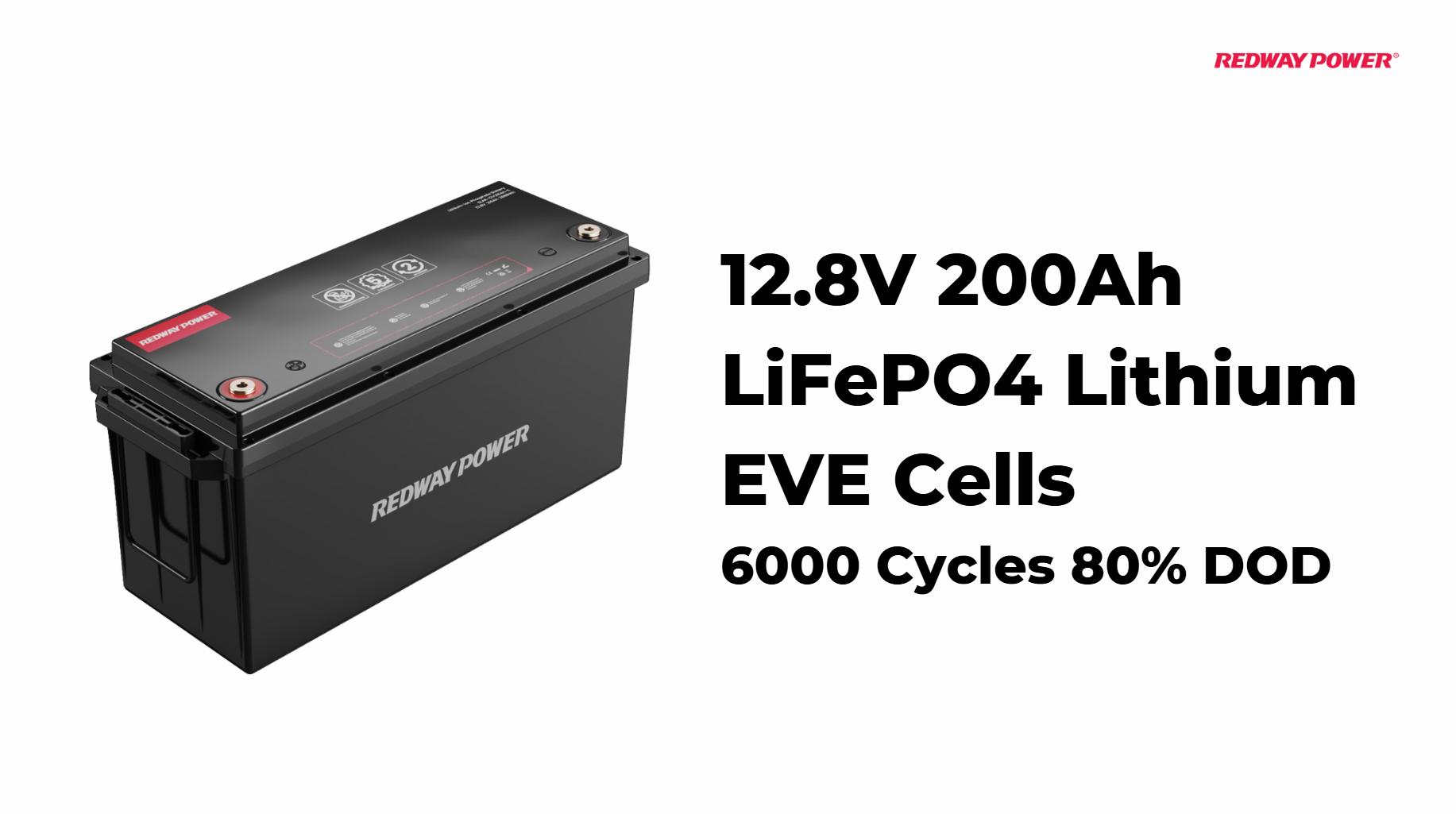
12V 200Ah LiFePO4 Lithium Battery

FAQ Section

Q1: What are the advantages of using a LiFePO4 battery?
A1: The advantages include high safety standards, long cycle life (over 2,000 cycles), low self-discharge rates, and minimal environmental impact due to non-toxic materials.

Q2: How does a LiFePO4 battery compare to traditional lead-acid batteries?
A2: Compared to lead-acid batteries, LiFePO4 batteries have a longer lifespan, higher efficiency, better safety features, and lower weight.

Q3: What applications benefit most from using a 12V 200Ah LiFePO4 battery?
A3: Key applications include electric vehicles, renewable energy storage systems, marine vessels, recreational vehicles (RVs), and backup power solutions.

Q4: How do I choose a reliable supplier for these batteries?
A4: Look for suppliers with good reputations, quality certifications, positive customer reviews, and strong customer support services.

How Does Redway's Technology Help in Reducing Dependence on Fossil Fuels in Saudi Arabia?

How Does Redway’s Technology Help in Reducing Dependence on Fossil Fuels in Saudi Arabia?

Redway’s advanced lithium LiFePO4 battery technology plays a crucial role in reducing dependence on fossil fuels in Saudi Arabia by providing efficient, sustainable energy storage solutions. These batteries support renewable energy systems, such as solar and wind, enabling cleaner energy usage and enhancing energy independence across various sectors.

Latest News

  • Saudi Arabia’s Renewable Energy Push: The Saudi government is investing heavily in renewable energy projects to diversify its economy and reduce reliance on oil.
  • Technological Innovations: Advancements in battery technology are making it easier to integrate renewable energy sources into existing infrastructures.
  • Global Shift Towards Sustainability: Countries worldwide, including Saudi Arabia, are adopting more sustainable practices to combat climate change and environmental degradation.

Redway Expert Comment

“At Redway Battery, we are committed to supporting Saudi Arabia’s transition to sustainable energy. Our lithium LiFePO4 batteries are designed to maximize efficiency and reliability, making them ideal for integrating renewable energy sources. By providing high-quality energy storage solutions, we help reduce dependence on fossil fuels and promote a greener future.”

How Redway’s Technology Contributes to Energy Transition

  1. Efficient Energy Storage
    • Redway’s lithium LiFePO4 batteries offer high energy density and long cycle life, making them ideal for storing energy generated from renewable sources. This efficiency allows for better utilization of solar and wind power.
    Feature Specification
    Energy Density 150-250 Wh/kg
    Cycle Life >2000 cycles
    Depth of Discharge 80%
  2. Support for Renewable Energy Systems
    • By integrating with solar panels and wind turbines, Redway batteries enable the effective storage of excess energy generated during peak production times. This stored energy can then be used during periods of low production or high demand.
    Renewable Source Integration Benefits
    Solar Power Stores excess energy for use at night
    Wind Power Balances supply during variable wind conditions
  3. Reducing Carbon Footprint
    • Utilizing lithium batteries reduces the need for fossil fuel-based generators, thereby lowering greenhouse gas emissions. This aligns with global sustainability goals and helps combat climate change.
    Environmental Impact Reduction Achieved
    CO2 Emissions Significant reduction
    Air Quality Improved local air quality
  4. Scalability for Various Applications
    • Redway’s technology is versatile enough to be used in various applications, including residential, commercial, and industrial sectors. This scalability ensures that different sectors can transition away from fossil fuels effectively.
    Application Type Usage Example
    Residential Home solar storage systems
    Commercial Backup power for businesses
    Industrial Energy storage for manufacturing

Relation to Other Products

Redway’s lithium LiFePO4 batteries are closely related to our Solar Batteries and Portable Power Stations. These products are designed specifically to work seamlessly with renewable energy systems, enhancing their efficiency and reliability while promoting sustainable practices.

Recommended Product

For clients or importers seeking wholesale or OEM solutions, we recommend the Redway Solar Battery System. This product is optimized for solar applications, providing reliable energy storage that supports the transition to renewable energy sources.

Competitors and Alternatives

Here are the top five competitors in the lithium battery market:

Brand Product Type Lithium Option Available
Redway Battery LiFePO4 Batteries Yes
Renogy Lithium Deep Cycle Battery Yes
Battle Born Batteries LiFePO4 Deep Cycle Battery Yes
VMAXTANKS AGM Deep Cycle Battery No
Dakota Lithium LiFePO4 Deep Cycle Battery Yes

These alternatives highlight some of the best options available for consumers seeking reliable lithium battery solutions that can effectively support renewable energy initiatives and reduce dependence on fossil fuels.

FAQs

Why is Redway’s lithium battery a good choice for solar power projects in Saudi Arabia?

Redway’s lithium battery is ideal for solar power projects in Saudi Arabia due to its high energy density and efficiency, allowing for optimal energy storage in a region with abundant sunlight. Its long lifespan and reliability ensure consistent performance in harsh climatic conditions, making it suitable for renewable energy applications.

What are the safety features of Redway’s batteries for use in Saudi Arabia?
Redway’s batteries are equipped with advanced safety features, including thermal management systems, overcharge protection, and short-circuit prevention. These features enhance safety in extreme temperatures, addressing the unique environmental challenges of Saudi Arabia and ensuring safe operation during high heat.

How does Redway’s technology help in meeting the energy demands of Saudi Arabia?
Redway’s technology supports the energy demands of Saudi Arabia by providing efficient energy storage solutions that integrate seamlessly with solar power systems. Its innovative battery designs maximize energy capture and storage, enabling reliable power supply for residential, commercial, and industrial applications.

Why is Redway’s battery customization important for specific projects in Saudi Arabia?
Battery customization is crucial for specific projects in Saudi Arabia as it allows for tailored solutions that meet unique energy requirements and environmental conditions. Redway’s ability to adapt battery specifications ensures optimal performance, efficiency, and integration with various solar energy systems.

What are the future prospects of Redway’s technology in the Saudi Arabian market?
The future prospects of Redway’s technology in the Saudi Arabian market are promising, driven by the country’s focus on renewable energy and sustainability. As the demand for efficient energy storage grows, Redway is well-positioned to expand its market presence and contribute to the development of solar energy infrastructure in the region.

Why is Energy Efficiency Important for Projects in Saudi Arabia?

Why is Energy Efficiency Important for Projects in Saudi Arabia?

Energy efficiency is crucial for projects in Saudi Arabia due to the country’s commitment to sustainability and economic diversification. By optimizing energy use, projects can reduce operational costs, minimize environmental impact, and contribute to national goals of reducing carbon emissions. This is particularly vital in a region where energy consumption is high.

Latest News

  • Vision 2030 Initiatives: Saudi Arabia’s Vision 2030 plan emphasizes sustainable development, encouraging projects that prioritize energy efficiency and renewable energy sources.
  • Investment in Renewable Energy: The government is investing heavily in solar and wind energy projects to diversify its energy portfolio and reduce reliance on fossil fuels.
  • Technological Advancements: Innovations in energy-efficient technologies are being adopted across various sectors, including construction, manufacturing, and transportation.

Redway Expert Comment

“At Redway Battery, we recognize the importance of energy efficiency in Saudi Arabia’s development projects. Our advanced lithium LiFePO4 battery solutions not only enhance energy storage but also support the country’s sustainability goals. By integrating our batteries into various applications, clients can significantly improve their energy efficiency while contributing to a greener future.”

Understanding Energy Efficiency in Saudi Arabian Projects

1. Economic Benefits

Energy efficiency leads to substantial cost savings for businesses and government projects. By reducing energy consumption, organizations can lower utility bills and operational expenses, allowing for reinvestment into other areas of development.

Economic Benefit Description
Cost Savings Reduced utility bills through efficient systems
Increased ROI Higher returns on investments due to lower overhead costs

2. Environmental Impact

Saudi Arabia faces significant environmental challenges due to its reliance on fossil fuels. Improving energy efficiency helps mitigate these challenges by reducing greenhouse gas emissions and conserving natural resources.

Environmental Aspect Impact
Reduced Emissions Lower carbon footprint from projects
Resource Conservation Efficient use of water and energy resources

3. Alignment with National Goals

The Saudi government has set ambitious targets for reducing carbon emissions as part of its Vision 2030 initiative. Projects that prioritize energy efficiency align with these national goals and demonstrate a commitment to sustainability.

National Goal Description
Carbon Neutrality Aim to significantly reduce emissions by 2030
Renewable Energy Use Increase the share of renewables in the energy mix

Relation to Redway Battery Products

The emphasis on energy efficiency in Saudi Arabian projects directly relates to our focus on manufacturing high-quality LiFePO4 Batteries. These batteries offer superior performance and longevity, making them ideal for applications that require efficient energy storage solutions.

Recommended Product from Redway Battery

For clients or importers looking for reliable energy solutions that enhance efficiency, we recommend our LiFePO4 Portable Power Station. This product is designed to provide efficient power storage while supporting various applications, making it an excellent fit for sustainable projects.

Top Competitors in Lithium Battery Market

Here are five alternatives to consider when looking for lithium batteries suitable for various applications:

Brand Product Name Battery Type Capacity (Ah)
Redway Battery LiFePO4 Portable Power Station Lithium LiFePO4 Customizable
Renogy 12V 100Ah Lithium Iron Phosphate Lithium LiFePO4 100 Ah
Battle Born Batteries 100Ah LiFePO4 Battery Lithium LiFePO4 100 Ah
Victron Energy Smart Lithium Battery Lithium LiFePO4 Various Options
AIMS Power Lithium Battery Pack Lithium LiFePO4 Customizable

FAQs

Why is Redway’s lithium battery a good choice for solar power projects in Saudi Arabia?

Redway’s lithium battery is ideal for solar power projects in Saudi Arabia due to its high energy density and efficiency, allowing for optimal energy storage in a region with abundant sunlight. Its long lifespan and reliability ensure consistent performance in harsh climatic conditions, making it suitable for renewable energy applications.

What are the safety features of Redway’s batteries for use in Saudi Arabia?
Redway’s batteries are equipped with advanced safety features, including thermal management systems, overcharge protection, and short-circuit prevention. These features enhance safety in extreme temperatures, addressing the unique environmental challenges of Saudi Arabia and ensuring safe operation during high heat.

How does Redway’s technology help in meeting the energy demands of Saudi Arabia?
Redway’s technology supports the energy demands of Saudi Arabia by providing efficient energy storage solutions that integrate seamlessly with solar power systems. Its innovative battery designs maximize energy capture and storage, enabling reliable power supply for residential, commercial, and industrial applications.

Why is Redway’s battery customization important for specific projects in Saudi Arabia?
Battery customization is crucial for specific projects in Saudi Arabia as it allows for tailored solutions that meet unique energy requirements and environmental conditions. Redway’s ability to adapt battery specifications ensures optimal performance, efficiency, and integration with various solar energy systems.

What are the future prospects of Redway’s technology in the Saudi Arabian market?
The future prospects of Redway’s technology in the Saudi Arabian market are promising, driven by the country’s focus on renewable energy and sustainability. As the demand for efficient energy storage grows, Redway is well-positioned to expand its market presence and contribute to the development of solar energy infrastructure in the region.

Why Choose Redway Technology for Energy Solutions in Saudi Arabia?

Why Choose Redway Technology for Energy Solutions in Saudi Arabia?

Choosing Redway for energy solutions in Saudi Arabia offers numerous advantages, particularly through their advanced LiFePO4 battery systems, which are tailored for extreme climates and aligned with national renewable energy goals. This combination ensures reliability, efficiency, and support for sustainable practices.

Why Should You Choose Redway Technology for Energy Solutions?

Redway Technology stands out due to its commitment to delivering high-quality energy solutions specifically designed for the harsh environments of Saudi Arabia. Their LiFePO4 batteries offer exceptional performance, longevity, and safety, making them an ideal choice for various applications across industries.

What Are the Key Benefits of Redway’s LiFePO4 Batteries?

Redway’s LiFePO4 batteries offer several advantages, including long cycle life, enhanced safety, and thermal stability. They provide consistent performance across various temperatures and have a lower environmental impact compared to traditional batteries. Additionally, their lightweight design and high energy density make them ideal for applications in renewable energy systems.

Redway’s LiFePO4 batteries provide several key benefits:

  • Extended Lifespan: These batteries can last significantly longer than traditional lead-acid options.
  • Superior Safety Features: With robust thermal stability, they minimize risks associated with overheating.
  • Fast Charging Capabilities: Quick recharge times enhance operational efficiency.

How Does Redway Support Renewable Energy Goals in Saudi Arabia?

Redway actively supports Saudi Arabia’s renewable energy goals by providing efficient energy storage solutions that integrate seamlessly with solar and wind systems. Their technologies help optimize energy use, reduce reliance on fossil fuels, and align with national initiatives aimed at diversifying the energy mix and promoting sustainability.

What Industries Can Benefit from Redway’s Solutions?

Redway’s energy solutions cater to various industries, including renewable energy, transportation, telecommunications, and residential sectors. Their products are suitable for applications ranging from electric vehicles to off-grid solar systems, providing scalable solutions that enhance efficiency and sustainability across multiple sectors.

Various industries can leverage Redway’s technology:

  • Construction: Ensures reliable power during projects.
  • Telecommunications: Maintains connectivity during outages.
  • Electric Vehicles: Provides efficient energy storage solutions for EV manufacturers.

How Can You Purchase and Install Redway Energy Solutions?

To purchase Redway energy solutions, visit their website or contact their sales team for product information and pricing. Installation services are available through certified partners or directly by Redway’s trained professionals, ensuring proper setup and integration of the systems into your specific application.

What Success Stories Highlight Redway’s Impact in Saudi Arabia?

Redway has successfully implemented numerous projects in Saudi Arabia, showcasing their impact on renewable energy adoption. Notable examples include solar-powered facilities that significantly reduce operational costs and carbon footprints. These projects illustrate Redway’s commitment to advancing sustainable energy solutions in the region.

Numerous success stories illustrate the transformative impact of Redway’s technology:

  • Companies like Saudi Solar Solutions have enhanced their solar projects’ efficiency using these batteries.
  • GreenTech Industries has integrated these solutions into their EV offerings, achieving significant market success.

How Does Redway Ensure Quality and Reliability in Its Products?

Redway ensures quality and reliability through rigorous testing processes and adherence to international standards. Their manufacturing facilities are equipped with advanced technology, enabling precise production of high-performance products. Continuous quality control measures guarantee that each product meets stringent performance criteria before reaching customers.

What Is the Future of Energy Solutions in Saudi Arabia?

The future of energy solutions in Saudi Arabia is focused on diversification and sustainability. With increasing investments in renewable technologies and storage solutions like those offered by Redway, the country aims to reduce its dependence on fossil fuels while enhancing energy security and efficiency for economic growth.

What Are the Environmental Benefits of Using LiFePO4 Batteries?

LiFePO4 batteries provide significant environmental benefits, including reduced toxicity compared to traditional lead-acid or nickel-cadmium batteries. They have a longer lifespan, which minimizes waste generation. Additionally, their recyclability contributes to a circular economy, making them a more sustainable choice for energy storage applications.

How Does Redway Compare to Other Energy Solution Providers?

Redway distinguishes itself through its specialized focus on high-performance lithium batteries tailored for extreme environments, setting it apart from competitors who may not offer such targeted solutions.

Redway Factory 51.2V 200Ah 10kWh Wall-mounted LiFePO4 Lithium Battery for Home ESS

What Innovations Does Redway Bring to the Energy Sector?

Redway continually innovates by integrating advanced technologies into its battery designs, including smart monitoring systems that enhance performance tracking and maintenance efficiency.Expert Views:
“Redway Technology epitomizes excellence in energy solutions within Saudi Arabia—its commitment to quality, sustainability, and customer satisfaction positions it as a leader in the evolving landscape of renewable energy.”FAQ Section:

  • What makes LiFePO4 batteries better than lead-acid batteries?
    LiFePO4 batteries offer longer lifespans, faster charging times, and enhanced safety features compared to traditional lead-acid options.
  • How can I ensure proper installation of my new battery system?
    Follow the provided installation instructions carefully or consult customer support if you encounter any issues during setup.
  • Are there any environmental impacts associated with using these batteries?
    LiFePO4 batteries are generally more environmentally friendly due to their recyclability and longer life cycle, reducing overall waste.
What Are the Dimensions and Weight of the Redway 12V 150Ah Lithium Battery?

What Are the Dimensions and Weight of the Redway 12V 150Ah Lithium Battery?

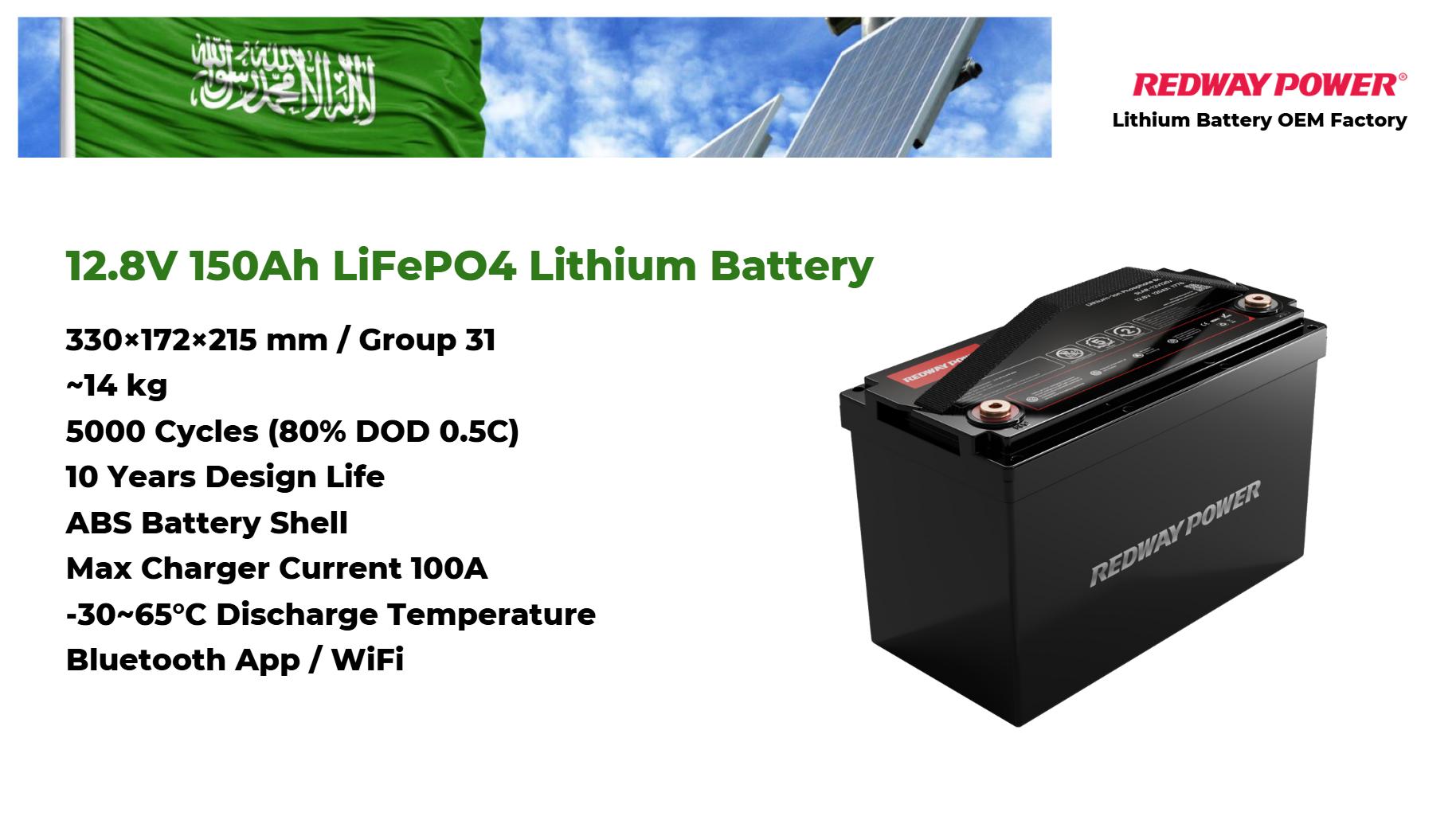
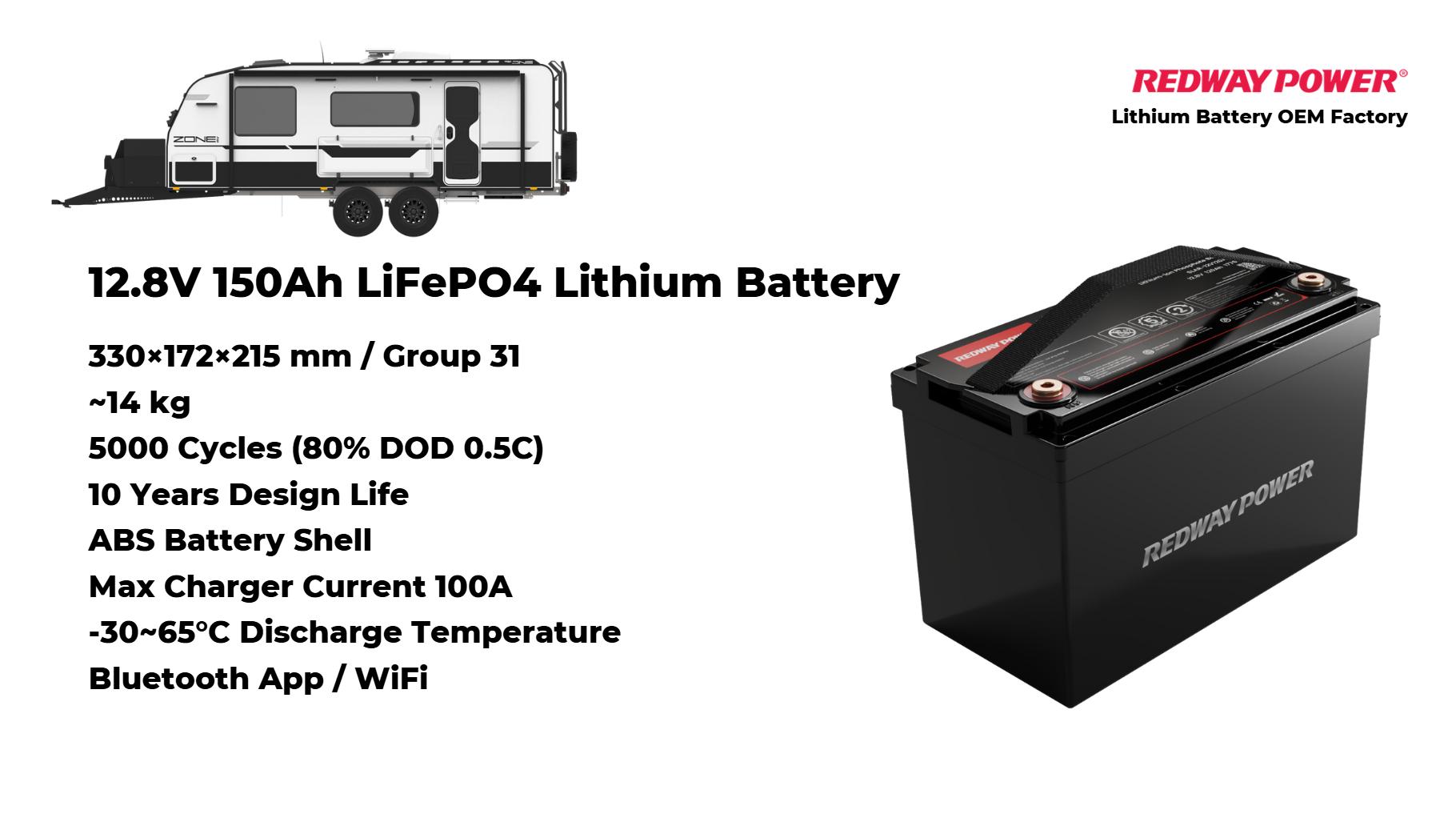
The Redway 12V 150Ah lithium battery measures approximately 12.99 x 6.77 x 8.43 inches (L x W x H) and weighs around 40.8 pounds (18.5 kg). This compact and lightweight design makes it suitable for various applications, including RVs, solar energy systems, and backup power solutions.

Latest News

  • Increased Demand for Lithium Batteries: The market for lithium batteries is rapidly growing due to their efficiency and long lifespan, particularly in renewable energy applications.
  • Technological Advancements: Innovations in battery technology are leading to lighter and more compact designs that do not compromise performance.
  • Sustainability Focus: Consumers are increasingly looking for eco-friendly energy storage solutions, with lithium batteries being a popular choice.

Redway Expert Comment

At Redway Battery, we are dedicated to providing high-quality lithium batteries that meet the diverse needs of our customers. The 12V 150Ah lithium battery combines excellent performance with a lightweight design, making it ideal for various applications. Our commitment to innovation ensures that our products remain at the forefront of battery technology.”

Key Specifications of the Redway 12V 150Ah Lithium Battery

  1. Dimensions
    • Understanding the dimensions of the Redway 12V 150Ah lithium battery is essential for ensuring compatibility with various setups.
    Measurement Type Dimensions (inches)
    Length 12.99
    Width 6.77
    Height 8.43
  2. Weight
    • The weight of the battery is crucial for portability and ease of installation.
    Weight Specification Weight (pounds)
    Total Weight 40.8
  3. Energy Capacity
    • The energy capacity of this battery makes it suitable for demanding applications.
    Capacity Specification Value
    Capacity 150Ah
    Voltage 12V
  4. Cycle Life
    • The longevity of the battery is a key consideration for users looking for durable solutions.
    Cycle Life Specification
    Charge Cycles >2000

Relation to Other Products

The specifications of the Redway 12V 150Ah lithium battery relate closely to our broader range of LiFePO4 Batteries. Our LiFePO4 technology ensures that all our batteries maintain high energy density while remaining lightweight and compact, making them suitable for diverse applications from marine use to solar energy storage.

Recommended Product

For clients or importers seeking wholesale or OEM solutions, we recommend the Redway LiFePO4 Battery Pack designed specifically for high-performance applications. This product combines excellent energy density with robust safety features, ensuring reliable power delivery across various uses.

Competitors and Alternatives

Here are the top five competitors in the lithium battery market:

Brand Product Type Lithium Option Available
Redway Battery 12V 150Ah LiFePO4 Battery Yes
Renogy Lithium Deep Cycle Battery Yes
Battle Born Batteries LiFePO4 Deep Cycle Battery Yes
VMAXTANKS AGM Deep Cycle Battery No
Dakota Lithium LiFePO4 Deep Cycle Battery Yes

These alternatives highlight some of the best options available for consumers seeking reliable lithium batteries while emphasizing the advantages of using advanced technology like LiFePO4.

FAQs

Why is lithium iron phosphate chemistry important for battery safety?
Lithium iron phosphate (LiFePO4) chemistry is crucial for battery safety due to its high thermal stability and low risk of thermal runaway. This chemistry provides greater resistance to overheating and fire, making it a safer option for various applications compared to other lithium-ion batteries.

What are the benefits of the intelligent BMS in a 12V 150Ah lithium battery?
The intelligent Battery Management System (BMS) in a 12V 150Ah lithium battery offers enhanced safety by monitoring voltage, current, and temperature in real-time. It prevents overcharging, over-discharging, and short circuits, optimizing performance and extending battery lifespan through smart management of charge cycles.

How does internal resistance affect the performance of a 12V 150Ah battery?
Internal resistance impacts the performance of a 12V 150Ah battery by affecting energy efficiency and power output. Higher internal resistance leads to increased heat generation and energy loss, reducing the battery’s capacity to deliver power under load and shortening its overall lifespan.

Why is the 12V 150Ah lithium battery a popular choice for energy storage?
The 12V 150Ah lithium battery is popular for energy storage due to its high energy density, long cycle life, and lightweight design. Its versatility makes it suitable for solar energy systems, RVs, and off-grid applications, providing reliable performance and efficient energy management.

How to Ensure Optimal Performance and Longevity of a 12V 150Ah Lithium Battery

How to Ensure Optimal Performance and Longevity of a 12V 150Ah Lithium Battery

To ensure the optimal performance and longevity of a 12V 150Ah lithium battery, it is crucial to follow best practices such as using a compatible charger, avoiding deep discharges, maintaining proper temperature conditions, and regularly checking battery health. Implementing these strategies will help maximize the battery’s lifespan and efficiency.

Latest News

  • Surge in Lithium Battery Demand: The demand for lithium batteries, particularly in renewable energy applications, has surged as industries seek efficient energy storage solutions.
  • Innovations in Battery Technology: Recent advancements in lithium battery technology are enhancing performance and safety, making them more reliable for various applications.
  • Focus on Sustainability: Manufacturers are increasingly adopting eco-friendly practices in battery production and recycling, aligning with global sustainability goals.

Redway Expert Comment

At Redway Battery, we recognize the importance of maintaining optimal performance and longevity in our 12V 150Ah lithium batteries. By adhering to best practices for charging and usage, users can significantly extend the lifespan of their batteries. Our commitment to quality ensures that our batteries provide reliable power for all applications.”

Best Practices for Maintaining Lithium Batteries

1. Use a Compatible Charger

Using the right charger is essential for maintaining battery health. Always select a charger that matches the voltage and specifications of your 12V 150Ah lithium battery. This prevents overcharging or undercharging, both of which can shorten battery life.

Charger Type Compatibility
Standard Charger Must match 12V rating
Smart Charger Automatically adjusts to battery needs

2. Avoid Deep Discharges

Deep discharging can be detrimental to lithium batteries. It is advisable to keep the charge level above 20% to prevent damage. Regularly monitoring the charge level helps maintain optimal performance.

Charge Level Recommended Action
Above 20% Normal operation
Below 20% Recharge immediately
Below 10% Avoid use; risk of permanent damage

3. Maintain Proper Temperature Conditions

Lithium batteries perform best within specific temperature ranges. Extreme temperatures can affect performance and longevity. Ideally, keep the battery in an environment where temperatures range from 32°F to 113°F.

Temperature Range Effect on Battery
Optimal (32°F – 113°F) Best performance
Below 32°F Reduced capacity; potential freezing
Above 113°F Risk of overheating; reduced lifespan

4. Regularly Check Battery Health

Monitoring the health of your battery is crucial for its longevity. Use a Battery Management System (BMS) to keep track of voltage levels, temperature, and overall condition.

Monitoring Aspect Recommended Frequency
Voltage Check Monthly
Health Assessment Every three months
Visual Inspection Before each use

Relation to Redway Battery Products

Understanding how to maintain optimal performance directly relates to our focus on manufacturing high-quality LiFePO4 Batteries. These batteries are designed with advanced features that enhance their lifespan and efficiency, making them ideal for various applications.

Recommended Product from Redway Battery

For clients or importers seeking reliable energy solutions, we recommend our LiFePO4 Forklift Batteries. These batteries are engineered for optimal performance and longevity, ensuring they meet the rigorous demands of modern applications while providing exceptional reliability.

Top Competitors in Lithium Battery Market

Here are five alternatives to consider when looking for lithium batteries suitable for various applications:

Brand Product Name Battery Type Capacity (Ah)
Redway Battery LiFePO4 Forklift Battery Lithium LiFePO4 Customizable
Renogy 12V 100Ah Lithium Iron Phosphate Lithium LiFePO4 100 Ah
Battle Born Batteries 100Ah LiFePO4 Battery Lithium LiFePO4 100 Ah
Victron Energy Smart Lithium Battery Lithium LiFePO4 Various Options
AIMS Power Lithium Battery Pack Lithium LiFePO4 Customizable

FAQs

How to customize a 12V 150Ah lithium battery for OEM/ODM production?
To customize a 12V 150Ah lithium battery for OEM/ODM production, collaborate with the manufacturer to specify dimensions, capacity, and performance features. Options may include customized Battery Management Systems (BMS), connectors, and enclosures. Ensure compliance with industry standards and regulations. Prototyping and thorough testing are crucial before moving to full production.

Why is the 12V 150Ah battery designed with an IP65 rating?
The 12V 150Ah battery is designed with an IP65 rating to ensure protection against dust and water ingress. This rating allows the battery to withstand low-pressure water jets and prevents dust particles from entering, making it suitable for outdoor and rugged environments, enhancing its durability and reliability for applications like solar storage and RV use.

What are the shipping and warranty options for Redway’s 12V 150Ah lithium batteries?
Redway offers various shipping options for the 12V 150Ah lithium batteries, including standard and expedited services to ensure timely delivery. The warranty typically covers manufacturing defects and ranges from 2 to 5 years, depending on the product specifics. Customers should review the warranty details for comprehensive coverage information.

How to integrate a 12V 150Ah lithium battery into a home energy storage system?
To integrate a 12V 150Ah lithium battery into a home energy storage system, select compatible inverters and charge controllers. Connect the battery to the inverter using appropriate gauge cables. Configure the system for solar input if applicable, and ensure all components are rated for the battery’s output. Proper placement in a cool, ventilated area is essential for performance.

Why is the self-discharge rate of a 12V 150Ah lithium battery important?
The self-discharge rate is crucial for a 12V 150Ah lithium battery as it indicates how quickly the battery loses charge when not in use. A low self-discharge rate means the battery retains its charge longer, making it ideal for seasonal use or backup applications. This efficiency contributes to better overall performance and reliability.

What are the optional functions available for a 12V 150Ah lithium battery?
Optional functions for a 12V 150Ah lithium battery may include Bluetooth connectivity for real-time monitoring, customizable Battery Management Systems (BMS), built-in fuses, and various terminal configurations. Additional features could include integrated heating for low-temperature performance and different packaging options tailored to specific applications.

How to determine the charging requirements for a 12V 150Ah lithium battery?
To determine the charging requirements, consult the manufacturer’s specifications for recommended voltage and current. Generally, a charging voltage of around 14.6V is typical, with a recommended charge current of 0.5C to 1C (75A to 150A). Using a compatible charger with a Battery Management System (BMS) is essential for optimal performance.

Why is a 12V 150Ah lithium battery preferred over lead-acid batteries?
A 12V 150Ah lithium battery is preferred over lead-acid batteries due to its higher energy density, longer cycle life, and lighter weight. Lithium batteries provide consistent performance, can be deeply discharged without damage, and have a lower self-discharge rate. These advantages make them a more efficient and reliable choice for various applications.

Why Choose a 12V 150Ah Lithium Battery for High-Power Applications?

Why Choose a 12V 150Ah Lithium Battery for High-Power Applications?

A 12V 150Ah lithium battery is an ideal choice for high-power applications due to its lightweight design, long cycle life, and high discharge rates. These batteries provide consistent power delivery, making them suitable for demanding environments such as forklifts, golf carts, and floor cleaning machines. Their efficiency and reliability ensure optimal performance in various applications.

Latest News

  • Recent advancements in lithium battery technology have led to increased energy density, making lithium batteries more efficient than ever.
  • The market for lithium-ion batteries, particularly LiFePO4 variants, is projected to grow significantly, driven by the demand for electric vehicles and renewable energy storage solutions.
  • Regulatory changes are encouraging the adoption of safer battery technologies, further boosting the popularity of lithium batteries in industrial applications.

Redway Expert Comment

“In the evolving landscape of power solutions, the 12V 150Ah lithium battery stands out for its superior performance and longevity. As industries shift towards more sustainable energy sources, our LiFePO4 batteries offer unmatched reliability and safety. We at Redway Battery are committed to providing innovative solutions tailored to meet the specific needs of our clients worldwide.

Key Advantages of 12V 150Ah Lithium Batteries

1. Lightweight and Compact Design

One of the most significant advantages of 12V 150Ah lithium batteries is their lightweight construction. Compared to traditional lead-acid batteries, lithium batteries are considerably lighter, which translates to easier handling and installation. This feature is particularly beneficial in applications where weight is a critical factor, such as in eBikes or portable power stations.

Feature Lithium Battery Lead-Acid Battery
Weight Lightweight Heavy
Size Compact Bulky
Handling Ease High Low

2. Extended Cycle Life

Lithium batteries are known for their impressive cycle life, often exceeding 2000 charge cycles compared to just 300-500 cycles for lead-acid batteries. This longevity results in lower replacement costs over time and less environmental waste, making them a more sustainable choice.

Battery Type Average Cycle Life
Lithium (LiFePO4) 2000+ cycles
Lead-Acid 300-500 cycles

3. High Discharge Rates

The ability of a 12V 150Ah lithium battery to deliver high discharge rates makes it suitable for high-power applications. This capability ensures that equipment requiring bursts of power can operate efficiently without performance drops.

Application Power Requirement Lithium Discharge Rate
Forklifts High Up to 100A
Golf Carts Moderate Up to 80A
Floor Cleaners Variable Up to 60A

4. Enhanced Safety Features

LiFePO4 batteries are known for their thermal stability and safety features. They are less prone to overheating or catching fire compared to other lithium-ion chemistries, making them a safer option for industrial applications.

5. Environmentally Friendly

Lithium batteries are recyclable and have a lower environmental impact than traditional lead-acid batteries. Choosing a 12V 150Ah lithium battery contributes positively to sustainability efforts.

Relation to Redway Battery Products

At Redway Battery, we specialize in manufacturing various types of lithium batteries, including those specifically designed for high-power applications like forklifts and eBikes. Our expertise in creating custom solutions allows us to cater to diverse needs across industries.

Recommended Product: Redway Forklift Battery

For clients looking for reliable power solutions in industrial settings, we recommend our LiFePO4 Forklift Battery. This product combines high capacity with durability, designed specifically for heavy-duty use in warehouses and logistics operations.

Top Competitors in the Lithium Battery Market

When considering alternatives in the lithium battery market, it’s essential to evaluate options based on performance, reliability, and cost-effectiveness. Below are five notable competitors along with their offerings:

Brand Product Type Lithium Option Available
Redway Battery LiFePO4 Forklift Batteries Yes
Battle Born Batteries Deep Cycle Batteries Yes
Renogy Solar Batteries Yes
AIMS Power Lithium RV Batteries Yes
Dakota Lithium Lithium Iron Phosphate Batteries Yes

By choosing Redway Battery’s products, clients can ensure they receive top-quality solutions tailored to their specific needs in high-power applications.

FAQs

What are the key specifications of a 12V 150Ah LiFePO4 battery?
A 12V 150Ah LiFePO4 battery typically features a nominal voltage of 12.8V, a capacity of 150Ah, and a weight of approximately 35 to 45 pounds. It offers a cycle life of around 2000-5000 cycles, a maximum discharge rate of 150A, and operates effectively within a temperature range of -4°F to 140°F. Additionally, it includes a built-in Battery Management System (BMS) for enhanced safety.

How does the 12V 150Ah battery compare to other lithium battery models?
The 12V 150Ah battery offers superior energy density, longer cycle life, and better thermal stability compared to many other lithium battery models. While smaller capacities may be lighter and more affordable, the 150Ah model provides more consistent performance for high-drain applications, making it ideal for RV, marine, and renewable energy systems.

Why is the 12V 150Ah battery suitable for RV, marine, and solar storage systems?
The 12V 150Ah battery is suitable for RV, marine, and solar storage systems due to its high capacity, robust cycle life, and ability to handle deep discharges. Its lightweight design facilitates easy installation, while its resistance to temperature fluctuations ensures reliable performance in diverse conditions. Additionally, its long lifespan makes it a cost-effective choice for these applications.

What is the cycle life of a 12V 150Ah lithium iron phosphate battery?
The cycle life of a 12V 150Ah lithium iron phosphate (LiFePO4) battery typically ranges from 2000 to 5000 cycles, depending on factors such as depth of discharge and operating conditions. This extended lifespan significantly outperforms traditional lead-acid batteries, making LiFePO4 batteries a preferred choice for applications requiring frequent cycling and long-term reliability.

What Are the Dimensions and Weight of the Redway 12V 100Ah Lithium Battery?

What Are the Dimensions and Weight of the Redway 12V 100Ah Lithium Battery?

The Redway 12V 100Ah lithium battery measures approximately 12.99 x 6.77 x 8.43 inches (L x W x H) and weighs around 31.7 pounds (14.4 kg). This compact size and lightweight design make it an ideal choice for various applications, including RVs, solar energy systems, and backup power solutions.

Latest News

  • Growing Popularity of Lithium Batteries: The demand for lithium batteries, particularly for renewable energy applications, is on the rise as consumers seek efficient and long-lasting power solutions.
  • Technological Advancements: Recent innovations in battery technology have led to lighter, more compact designs without compromising performance.
  • Sustainability Trends: There is an increasing focus on environmentally friendly energy storage solutions, with lithium batteries being at the forefront of this movement.

Redway Expert Comment

“At Redway Battery, we pride ourselves on producing high-quality lithium batteries that meet the needs of our customers. The 12V 100Ah lithium battery is designed to be both lightweight and powerful, making it suitable for a variety of applications. Our commitment to innovation ensures that we provide products that are not only efficient but also environmentally friendly.”

Key Specifications of the Redway 12V 100Ah Lithium Battery

  1. Dimensions
    • The dimensions of the Redway 12V 100Ah lithium battery are crucial for ensuring compatibility with various setups, such as RVs and solar systems.
    Measurement Type Dimensions (inches)
    Length 12.99
    Width 6.77
    Height 8.43
  2. Weight
    • The weight of the battery is an important factor for portability and installation ease.
    Weight Specification Weight (pounds)
    Total Weight 31.7
  3. Energy Capacity
    • This battery provides a significant energy capacity, making it suitable for various applications.
    Capacity Specification Value
    Capacity 100Ah
    Voltage 12V
  4. Cycle Life
    • The longevity of the battery is a key consideration for users looking for durable solutions.
    Cycle Life Specification
    Charge Cycles >2000

Relation to Other Products

The specifications of the Redway 12V 100Ah lithium battery relate closely to our broader range of LiFePO4 Batteries. Our LiFePO4 technology ensures that all our batteries maintain high energy density while remaining lightweight and compact, making them suitable for diverse applications from marine use to solar energy storage.

Recommended Product

For clients or importers seeking wholesale or OEM solutions, we recommend the Redway LiFePO4 Battery Pack designed specifically for high-performance applications. This product combines excellent energy density with robust safety features, ensuring reliable power delivery across various uses.

Competitors and Alternatives

Here are the top five competitors in the lithium battery market:

Brand Product Type Lithium Option Available
Redway Battery 12V 100Ah LiFePO4 Battery Yes
Renogy Lithium Deep Cycle Battery Yes
Battle Born Batteries LiFePO4 Deep Cycle Battery Yes
VMAXTANKS AGM Deep Cycle Battery No
Dakota Lithium LiFePO4 Deep Cycle Battery Yes

These alternatives highlight some of the best options available for consumers seeking reliable lithium batteries while emphasizing the advantages of using advanced technology like LiFePO4.

FAQs

How to customize a 12V 100Ah lithium battery for OEM/ODM production?
To customize a 12V 100Ah lithium battery for OEM/ODM production, collaborate with a manufacturer to define specifications such as capacity, dimensions, and features. Consider options for Battery Management Systems (BMS), connectors, and enclosures. Provide branding elements, and ensure compliance with safety and performance standards. Prototyping and testing are crucial before full-scale production.

Why is the 12V 100Ah battery designed with IP65 rating?
The 12V 100Ah battery is designed with an IP65 rating to ensure dust and water resistance. This rating means the battery is protected against dust ingress and can withstand low-pressure water jets, making it suitable for outdoor and harsh environments. This enhances durability and reliability for applications like solar systems, RVs, and marine use.

What are the shipping and warranty options for Redway’s 12V 100Ah lithium batteries?
Redway offers various shipping options, including standard and expedited delivery, ensuring timely arrival of the 12V 100Ah lithium batteries. The warranty typically covers defects in materials and workmanship, ranging from 2 to 5 years depending on the specific product. Customers are advised to check the warranty terms for detailed coverage information.

How to integrate a 12V 100Ah lithium battery into a camping power setup?
To integrate a 12V 100Ah lithium battery into a camping power setup, start by selecting compatible power inverters and solar panels if applicable. Connect the battery to the inverter using appropriate gauge cables. Ensure all devices are rated for the battery’s output. Organize storage for easy access, and consider a protective case for transport.

Why is the self-discharge rate of a 12V 100Ah lithium battery important?
The self-discharge rate of a 12V 100Ah lithium battery is important because it indicates how quickly the battery loses charge when not in use. A low self-discharge rate ensures that the battery retains its charge over extended periods, making it ideal for seasonal use or backup applications. This efficiency contributes to better overall performance and reliability.

What are the optional functions available for a 12V 100Ah lithium battery?
Optional functions for a 12V 100Ah lithium battery may include Bluetooth connectivity for monitoring, integrated heating for low-temperature performance, customizable battery management systems (BMS), and various terminal configurations. Additional features might involve built-in fuses, enhanced safety mechanisms, and different packaging options to meet specific application needs.

How to determine the charging requirements for a 12V 100Ah lithium battery?
To determine the charging requirements, check the manufacturer’s specifications for voltage and current recommendations. A typical charging voltage is around 14.6V, with a recommended charge current of 0.5C to 1C (50A to 100A). Use a compatible charger with a Battery Management System (BMS) for optimal safety and efficiency.

Why is a 12V 100Ah lithium battery preferred over lead-acid batteries?
A 12V 100Ah lithium battery is preferred over lead-acid batteries due to its higher energy density, longer cycle life, and lighter weight. Lithium batteries provide consistent performance, can be deeply discharged without damage, and have a lower self-discharge rate. These advantages make them more cost-effective and reliable for various applications.

Search products

Need a Quick Quote on Wholesale Prices? Contact Redway Battery Now.

X
Product has been added to your cart


Shenzhen Redway Power, Inc

Tel: +86 189 7608 1534
Tel: +86 (755) 2801 0506
E-mail: contact@redwaybattery.com
Website: www.redway-tech.com
Youtube: @RedwayPower
TikTok: @redwaybattery

Get a Quick Quote

Hot OEM

Forklift Lithium Battery
Golf Cart Lithium Battery
RV Lithium Battery
Rack-mounted Lithium Battery

Hot Batteries

24V 150Ah Forklift Lithium Battery
24V 200Ah Forklift Lithium Battery
48V 400Ah Forklift Lithium Battery
48V 600Ah Forklift Lithium Battery
80V 400Ah Forklift Lithium Battery
36V 100Ah Golf Cart Lithium Battery
48V 100Ah Golf Cart Lithium Battery
51.2V 50Ah 3U Rack-mounted Lithium Battery
51.2V 100Ah 3U Rack-mounted Lithium Battery
12V 100Ah RV LiFePO4 Lithium Battery (Self-heating)

Hot Blog

Golf Carts
Server Rack Battery
Knowledge