LiFePO4 Batteries: Revolutionizing EV Technology

Lithium Iron Phosphate (LiFePO4) batteries are rapidly becoming a cornerstone in electric vehicle (EV) technology due to their unique advantages over traditional lithium-ion batteries. As the automotive industry shifts toward sustainable energy solutions, LiFePO4 batteries are proving to be a reliable and efficient option for powering electric vehicles.

Key Advantages of LiFePO4 Batteries in EVs

  1. Safety and Stability
    • One of the standout features of LiFePO4 batteries is their superior thermal stability. They are less prone to thermal runaway, which significantly reduces the risk of fires and explosions. This safety advantage makes them ideal for use in vehicles, where safety is paramount.
  2. Long Lifespan
    • LiFePO4 batteries offer an impressive cycle life, often exceeding 2,000 to 5,000 charge cycles. This longevity translates into lower replacement costs over time, making them a cost-effective choice for EV manufacturers and consumers alike.
  3. Rapid Charging Capabilities
    • These batteries can accept higher charging currents without overheating, allowing for faster charging times. For instance, a Tesla Model 3 equipped with an LFP battery can charge from 10% to 80% in approximately 27 minutes, showcasing their efficiency.
  4. Weight Efficiency
    • While LiFePO4 batteries have a lower energy density compared to other lithium-ion batteries, their weight-to-performance ratio is favorable. This characteristic helps maintain the overall efficiency and handling of electric vehicles.
  5. Environmental Impact
    • The materials used in LiFePO4 batteries—iron and phosphate—are abundant and environmentally friendly compared to the cobalt and nickel used in many lithium-ion batteries. This makes LiFePO4 a more sustainable option for future EV technologies.

Real-World Applications

Leading manufacturers like Tesla, BYD, and Renault have already adopted LiFePO4 technology in several of their models. For example:

  • Tesla has integrated LFP batteries into its Model 3 Standard Range Plus for markets in China, Europe, and Australia.
  • BYD has been utilizing LFP batteries in its e6 models since 2015, demonstrating the technology’s reliability and performance.

Performance Metrics

LiFePO4 batteries provide consistent performance across various temperature ranges, making them suitable for diverse climates. They can operate effectively in extreme cold or heat conditions, ensuring that EVs maintain optimal performance regardless of environmental challenges.

Future Outlook

As the demand for electric vehicles continues to rise, the role of LiFePO4 batteries is expected to expand further. Their reliability and safety features align perfectly with the automotive industry’s goals of sustainability and efficiency. Additionally, ongoing research aims to enhance their energy density and performance even further.

Conclusion

LiFePO4 batteries are revolutionizing electric vehicle technology by offering a safe, durable, and efficient power source. With their long lifespan, rapid charging capabilities, and lower environmental impact, they are poised to play a crucial role in the future of sustainable transportation. As more manufacturers adopt this technology, the landscape of electric mobility will continue to evolve toward greener solutions.

Are LiTime Lithium Batteries a Reliable Power Solution?

LiTime lithium batteries are widely recognized for their reliability, safety, and long lifespan, making them an excellent choice for marine, off-grid, solar, and backup power applications. Their automotive-grade LiFePO4 cells combined with built-in battery management systems ensure consistent performance and protection.

How Do LiTime Lithium Batteries Ensure Reliable Performance?

LiTime batteries maintain reliable performance by using high-quality Automotive Grade A LiFePO4 cells known for their stability and longevity. The integrated 100A built-in Battery Management System (BMS) protects against overcharging, overheating, and short circuits, ensuring safe and consistent voltage delivery, even after prolonged inactivity.

Detailed Explanation:
Reliability is paramount in demanding power applications. LiTime batteries achieve this through premium-grade lithium iron phosphate cells, which offer superior chemical stability and thermal tolerance compared to traditional lead-acid batteries. These cells reduce voltage fluctuations and maintain better charge retention, critical for trolling motors and off-grid systems. The built-in BMS actively monitors and manages battery health, preventing damage during abnormal conditions and extending the overall lifespan.

What Are the Key Performance Features of LiTime Lithium Batteries?

LiTime lithium batteries provide high power output capable of supporting multiple electronics and heavy loads like air conditioners. Users report consistent current delivery and the ability to run complex marine electronics, solar setups, and household appliances without interruption.

Detailed Explanation:
Performance in lithium batteries depends on cell quality, internal resistance, and thermal management. The automotive-grade LiFePO4 cells in LiTime batteries allow for fast discharge and recharge while maintaining efficiency. This makes them ideal for off-grid living and marine setups where steady power is essential. The 100A BMS also ensures that power is distributed safely, optimizing battery output without risking damage, even under continuous heavy loads.

Which Applications Are Best Suited for LiTime Lithium Batteries?

LiTime batteries excel in marine applications (trolling motors and boat electronics), off-grid living (powering home essentials), solar power systems, and home backup solutions, where durable, safe, and long-lasting energy storage is required.

Detailed Explanation:
Different applications require varying power capacities and reliability standards. LiTime’s robust construction and safety features meet the specific needs of marine environments where vibration and corrosion risk are high. Their stable performance under fluctuating solar inputs makes them ideal for off-grid and renewable energy users. Additionally, the ability to reliably backup home power ensures continuity during outages, adding to their versatility.

Application Key Benefits Typical Use Case
Marine Vibration resistant, consistent power output Trolling motors, marine electronics
Off-Grid Living Long lifespan, high cycle count Cabin power, appliances, computers
Solar Systems Fast recharge, reliable energy storage Workshop power, solar arrays
Backup Power Safety features, instant power availability Emergency home power

Why Is the Built-in Battery Management System Important in LiTime Batteries?

The built-in BMS in LiTime batteries provides critical safety by managing charge cycles, preventing overcharging, overheating, and short circuits, thus extending battery life and protecting connected devices.

Detailed Explanation:
A Battery Management System is essential for lithium batteries to operate safely and efficiently. LiTime’s BMS monitors key parameters such as voltage, current, and temperature, preventing the battery from operating outside safe thresholds. The 100A rating ensures it can handle high current demands, safeguarding both the battery pack and the user’s equipment. This technology helps protect against potential hazards common in lithium batteries without smart management.

Are There Any Limitations or Considerations When Using LiTime Lithium Batteries?

While LiTime lithium batteries are lighter than lead-acid alternatives, larger-capacity models remain heavy and may require two people to move. Some users report occasional Bluetooth app connectivity issues for monitoring battery status.

Detailed Explanation:
Weight is a practical concern when handling or installing larger lithium battery packs; although they are significantly lighter than traditional batteries, certain high-capacity models can be bulky. Additionally, while the Bluetooth app adds convenience for monitoring, intermittent connectivity issues may require manual reconnection. Potential buyers should weigh these minor inconveniences against the substantial benefits in performance and safety.

How Does Redway Battery Support High-Quality Lithium Battery Manufacturing?

Redway Battery, a Shenzhen-based OEM, leverages over 13 years of industry expertise, advanced factories, and ISO certification to produce custom LiFePO4 battery packs, including solutions for forklifts, telecom, solar, and RV uses, ensuring durability and safety that align closely with LiTime technology.

Detailed Explanation:
Redway Battery’s commitment to quality is evident through its large production capacity and adherence to strict manufacturing standards (ISO 9001:2015). Their engineering team tailors products to client specifications with full OEM/ODM services, utilizing automated workflows and comprehensive after-sales support. Many of the technology elements seen in LiTime batteries—such as automotive-grade cells and built-in BMS—are also standard in Redway’s premium battery offerings, reinforcing their market leadership.

What Advantages Does the Automotive Grade A LiFePO4 Cell Offer?

Automotive Grade A LiFePO4 cells ensure higher safety, improved thermal stability, and longer cycle life compared to standard lithium cells, critical for applications that demand consistent high performance and safety.

Detailed Explanation:
Automotive grade implies cells undergo stringent testing for reliability and resilience in demanding conditions such as vibration, temperature extremes, and long-term cycling. These enhanced cells have lower internal resistance and improved chemical stability, translating into better charge retention and operational safety. The use of such cells in LiTime batteries provides users with confidence that their energy storage system can handle rigorous, real-world environments.

When Should Users Prefer LiTime Batteries Over Traditional Lead-Acid Options?

Users should choose LiTime lithium batteries when they need longer lifespan, higher cycle counts, better weight-to-power ratios, and safer, more consistent energy delivery for sensitive or high-demand applications.

Detailed Explanation:
Traditional lead-acid batteries perform well in cost-sensitive, low-demand applications but suffer from shorter lifespans, higher weight, and maintenance requirements. LiTime batteries, with LiFePO4 chemistry, offer 2–3 times the cycle life, faster charging, and no maintenance. This makes them especially advantageous for marine, solar, and off-grid uses where reliability and weight are critical considerations.

Can LiTime’s Bluetooth App Improve Battery Monitoring?

Yes, LiTime’s Bluetooth app provides users real-time access to battery status such as charge level, voltage, and health, enhancing the ability to monitor and manage energy usage, though occasional connectivity resets may be necessary.

Detailed Explanation:
Battery monitoring apps add convenience by delivering comprehensive data on battery performance directly to smartphones or tablets. LiTime’s Bluetooth app allows users to avoid surprises by checking capacity and health at a glance, optimizing system management. However, some users have noted intermittent connectivity issues, which can generally be resolved by reconnecting, making this feature a valuable but not flawless tool.

Are LiTime Lithium Batteries Cost-Effective Over Their Lifecycle?

Despite a higher initial investment, LiTime batteries tend to be cost-effective long-term due to their durability, high cycle life, and reduced maintenance requirements compared to lead-acid batteries.

Detailed Explanation:
Total cost of ownership is a vital factor when selecting energy storage. LiTime batteries, though more expensive upfront, offer thousands of cycles—often double or triple that of traditional options—resulting in fewer replacements and lower cumulative costs. Their maintenance-free nature also reduces ongoing expenses, making them an economical choice over many years of use in both commercial and residential settings.


Redway Expert Views

“With over a decade’s experience in lithium technology manufacturing, Redway Battery prioritizes integrating advanced LiFePO4 cells with intelligent management systems to provide safe, durable power solutions. As the demand for reliable, high-performance batteries grows in sectors like marine, solar, and industrial vehicles, our commitment remains to deliver innovation combined with customization. This ensures every user benefits from maximum uptime and operational safety.” — Redway Battery Engineering Team


Conclusion

LiTime lithium batteries offer a robust, safe, and long-lasting power source ideal for marine, off-grid, solar, and backup applications. Their use of automotive-grade LiFePO4 cells paired with an integrated BMS ensures excellent performance, durability, and protection. Although app connectivity issues and weight considerations exist, the benefits far outweigh these minor drawbacks. Backed by manufacturers like Redway Battery, these lithium solutions represent a smart investment for anyone seeking reliable energy storage.


Frequently Asked Questions (FAQs)

Q1: How long do LiTime lithium batteries typically last?
They can last several years with thousands of full charge-discharge cycles due to high-quality LiFePO4 cells and built-in protection.

Q2: Can LiTime batteries be used in cold climates?
Yes, LiFePO4 chemistry maintains stable performance over a wide temperature range, though extreme cold may reduce capacity temporarily.

Q3: Is the Bluetooth app essential for battery operation?
No, the battery functions independently; the app is a helpful monitoring tool but not required for standard use.

Q4: Are LiTime batteries compatible with existing solar systems?
Yes, LiTime batteries integrate well with solar charge controllers and inverters designed for lithium battery management.

Q5: Do LiTime batteries require special chargers?
They recommend chargers compatible with LiFePO4 chemistry to optimize charging speed and battery longevity.

Exploring Global Lithium Production: Key Countries and Trends

Lithium has emerged as a critical resource in the modern world, primarily due to its essential role in rechargeable batteries for electric vehicles (EVs), portable electronics, and renewable energy storage systems. As demand for lithium continues to surge, understanding the global landscape of lithium production is crucial. This article explores the leading lithium-producing countries, their production capacities, and emerging trends in the industry.

Top Lithium-Producing Countries

  1. Australia
    • Production Share: Approximately 46.3% of global lithium production.
    • 2023 Production: Estimated at 86,000 metric tons (MT).
    • Key Characteristics: Australia primarily extracts lithium from hard-rock spodumene deposits. The country has significant reserves and has seen substantial growth in production over the past decade.
  2. Chile
    • Production Share: About 23.9% of global production.
    • 2023 Production: Approximately 44,000 MT.
    • Key Characteristics: Chile extracts lithium from brine deposits, notably from the Salar de Atacama. The country holds the largest lithium reserves globally, estimated at around 9.3 million MT, making it a vital player in the lithium market.
  3. China
    • Production Share: Roughly 16.2% of global lithium production.
    • 2023 Production: Estimated at 33,000 MT.
    • Key Characteristics: China is not only a significant producer but also the largest consumer of lithium due to its booming electronics and EV industries. The country controls most of the world’s lithium processing facilities.
  4. Argentina
    • Production Share: Approximately 7.2% of global production.
    • 2023 Production: Around 9,600 MT.
    • Key Characteristics: Argentina is part of the “Lithium Triangle” along with Chile and Bolivia, which hosts some of the richest lithium reserves. The country is increasing its production capacity through new investments.
  5. Brazil
    • Production Share: About 2.2% of global production.
    • 2023 Production: Estimated at 4,900 MT.
    • Key Characteristics: Brazil has been ramping up its lithium output and is expected to play a more significant role in future supply chains.
  6. Zimbabwe
    • Production Share: Approximately 1.4% of global production.
    • 2023 Production: Around 3,400 MT.
    • Key Characteristics: Zimbabwe is home to significant lithium deposits and has potential for increased production in coming years.
  7. Other Notable Producers
    • Countries like Portugal and the United States contribute smaller shares to global production but are important for regional supply chains.

Trends in Lithium Production

  1. Rising Demand for Electric Vehicles (EVs)
    The growing adoption of EVs is driving an unprecedented demand for lithium-ion batteries, prompting producers to increase output significantly. Projections indicate that global lithium demand could reach over 1.5 million tons by 2025, necessitating a tripling of current production levels.
  2. Investment in Infrastructure
    Countries with high lithium reserves are investing heavily in infrastructure to boost production capabilities. For instance, Argentina has committed substantial funds to enhance its lithium industry, aiming to increase output significantly over the next few years.
  3. Sustainability Concerns
    As lithium extraction can have environmental impacts, there is increasing scrutiny on sustainable practices within the industry. Companies are exploring more environmentally friendly extraction methods and recycling initiatives to mitigate negative effects.
  4. Geopolitical Factors
    The geopolitical landscape is influencing supply chains as countries seek to secure access to critical minerals like lithium. Strategic partnerships and investments are becoming common as nations aim to bolster their positions in the global market.
  5. Technological Advancements
    Innovations in extraction technology are improving efficiency and reducing costs, making it easier for producers to tap into previously inaccessible resources.

Conclusion

As demand for lithium continues to grow due to its pivotal role in renewable energy and electric vehicles, understanding the dynamics of global production is essential for stakeholders across various sectors. Countries like Australia, Chile, and China will continue to dominate the market, while emerging players like Argentina and Brazil are poised for growth. By staying informed about these trends, businesses can better navigate the evolving landscape of lithium production and its implications for future energy solutions.

Solar Powered Battery, Comprehensive Guide

A solar powered battery stores energy generated from solar panels, allowing users to harness solar energy for use during non-sunny periods, such as at night or during power outages. These batteries are essential for maximizing the efficiency of solar energy systems.

Understanding Solar Batteries

Solar batteries are integral components of solar energy systems, designed to store excess energy produced by solar panels. This stored energy can be used when sunlight is not available, ensuring a continuous power supply.

How Solar Batteries Work

  1. Energy Capture: When sunlight hits the solar panels, it generates direct current (DC) electricity.
  2. Storage Process: This electricity flows into the solar battery, where it is stored as chemical energy.
  3. Power Delivery: When needed, the stored energy is converted back into DC electricity and supplied to power homes or businesses.

Types of Solar Batteries

Solar batteries come in various types, each with unique characteristics:

  1. Lead-Acid Batteries:
    • Description: Traditional battery type, commonly used in off-grid systems.
    • Pros: Lower initial cost and widely available.
    • Cons: Heavier, shorter lifespan (200-500 cycles), and requires maintenance.
  2. Lithium-Ion Batteries:
    • Description: The most popular choice for modern solar systems.
    • Pros: Longer lifespan (2000-5000 cycles), lightweight, and faster charging.
    • Cons: Higher upfront cost.
  3. Nickel-Cadmium (NiCd) Batteries:
    • Description: Known for their durability and ability to perform in extreme temperatures.
    • Pros: Long cycle life and robust performance.
    • Cons: Environmental concerns due to cadmium content.
  4. Flow Batteries:
    • Description: Large-scale storage solutions ideal for commercial applications.
    • Pros: Long lifespan and scalable capacity.
    • Cons: High initial investment and larger physical size.

Choosing the Right Solar Battery

When selecting a solar battery, consider the following factors:

  1. Capacity:
    • Evaluate your daily energy needs to choose a battery with sufficient storage capacity. For example, if your household uses 30 kWh daily, select a battery that can accommodate this demand.
  2. Lifespan:
    • Look for batteries with longer lifespans to maximize your investment. Lithium-ion batteries typically last longer than lead-acid options.
  3. Depth of Discharge (DoD):
    • Higher DoD values allow you to use more of the battery’s capacity without affecting its lifespan negatively. Aim for batteries with a DoD of 80% or higher.
  4. Efficiency:
    • Choose batteries with high efficiency ratings to ensure minimal energy loss during charging and discharging processes.
  5. Compatibility:
    • Ensure that the battery is compatible with your existing solar system components, including charge controllers and inverters.

Installation and Maintenance

Installation Process

  1. Location Selection:
    • Choose a suitable location for the battery, ideally indoors or in a shaded outdoor area to protect it from extreme temperatures.
  2. Electrical Wiring:
    • Follow electrical codes and safety guidelines when wiring the battery to your solar system’s components.
  3. Commissioning:
    • After installation, initialize the battery according to the manufacturer’s instructions and conduct performance tests.

Maintenance Tips

  • Regularly check connections for corrosion or wear.
  • Monitor battery voltage and temperature during operation.
  • Keep the area around the battery clean and free from obstructions.

Latest Trends in Solar Battery Technology

  • Advancements in lithium-ion technology continue to improve performance metrics such as energy density and charging speed.
  • Smart technology integration allows for real-time monitoring of battery health and performance.
  • Research into solid-state batteries promises enhanced safety and longevity compared to traditional lithium-ion cells.

Conclusion

Solar powered batteries are essential for optimizing solar energy systems, providing reliable power storage for homes and businesses. By understanding the types available, factors influencing selection, installation practices, and maintenance requirements, users can make informed decisions that enhance their energy independence and sustainability efforts.

How long will a 200Ah lithium battery last?

How Long Will a 200Ah Lithium Battery Last?

When considering how long a 200Ah lithium battery will last, it’s essential to factor in various elements such as load demand, temperature conditions, and maintenance practices. Generally, users can expect this type of battery to provide reliable service for anywhere from 5 to 15 years with proper care.

How Long Will a 200Ah Lithium Battery Last?

A 200Ah lithium battery typically lasts between 5 to 15 years, depending on its usage patterns and maintenance practices. With proper care, these batteries can endure numerous charge cycles while maintaining efficiency.

What Factors Affect the Lifespan of a 200Ah Lithium Battery?

Several factors influence the lifespan of a lithium battery:

  • Depth of Discharge (DoD): Regularly discharging the battery deeply can reduce its overall lifespan.
  • Temperature Conditions: Extreme heat or cold can negatively impact performance and longevity.
  • Charging Practices: Using appropriate charging methods is crucial for maintaining battery health.

How Does Load Demand Influence Battery Duration?

The load demand directly affects how long a battery will last; for example, if you connect devices that draw significant power, such as an appliance requiring 100 amps, your battery will deplete much faster than if you were using low-power devices.Chart: Runtime Calculation Based on Load Demand

Device Load (Amps) Estimated Runtime (Hours)
10 Amps Approximately 16 hours
20 Amps Approximately 8 hours
50 Amps Approximately 3.2 hours
100 Amps Approximately 1.6 hours

What Is the Typical Cycle Life of a 200Ah Lithium Battery?

Lithium batteries generally have a cycle life ranging from approximately 3000 to 5000 charge cycles before their capacity significantly degrades, making them more durable compared to traditional lead-acid batteries.

How Do Temperature Conditions Affect Lithium Battery Performance?

Temperature plays a critical role in lithium battery performance; high temperatures can accelerate degradation while low temperatures may reduce effective capacity temporarily, impacting overall runtime.

What Are the Best Practices for Maintaining Lithium Batteries?

To extend the life of your lithium batteries:

  • Avoid deep discharges; maintain a DoD between 20% and 80%.
  • Store batteries in moderate temperature conditions.
  • Use quality chargers designed for lithium technology.

How Can You Calculate Runtime for a 200Ah Lithium Battery?

To calculate runtime:

  1. Determine the wattage of your device.
  2. Use the formula:
    Runtime hours =Battery Capacity Ah ×Battery Voltage V / Device Wattage W 

For example, using a device that draws 100W with a fully charged 12V battery:

Runtime=200 Ah×12 V/100 W=24 hours 

What Are the Advantages of Using Lithium Batteries Over Lead-Acid?

Lithium batteries offer several advantages:

  • Longer lifespan and more charge cycles.
  • Higher energy density leading to lighter weight.
  • Faster charging times compared to lead-acid batteries.

What Are the Environmental Considerations for Lithium Batteries?

Lithium batteries require responsible recycling due to their chemical components; improper disposal can lead to environmental hazards, making it essential to follow local regulations regarding battery disposal.

How Do Different Charging Methods Affect Battery Life?

Charging methods significantly influence battery longevity; smart chargers that match lithium chemistry help optimize charging cycles and prevent overcharging, which can damage cells.

What Is the Cost Comparison Between Lithium and Lead-Acid Batteries?

While lithium batteries have a higher upfront cost compared to lead-acid options, their longer lifespan and lower maintenance needs often make them more cost-effective in the long run.

Expert Views:
“Understanding how long a 200Ah lithium battery will last involves recognizing various influencing factors—proper maintenance and usage practices are key to maximizing performance and lifespan.”

Testing the 200Ah LiFePO4 Lithium Battery: Performance, Value, and Longevity

FAQ Section

  • Can I use my lithium battery until it’s completely discharged?
    No, it’s recommended to avoid deep discharges as they can shorten battery life; aim to recharge before reaching low levels.
  • How often should I charge my lithium battery?
    Charge your lithium battery regularly based on usage; ideally maintain between a state of charge of about 20% to 80%.
  • What should I do if my lithium battery is not holding charge?
    Check for potential issues such as temperature extremes or faulty connections; if problems persist, consider consulting with an expert or replacing the battery.
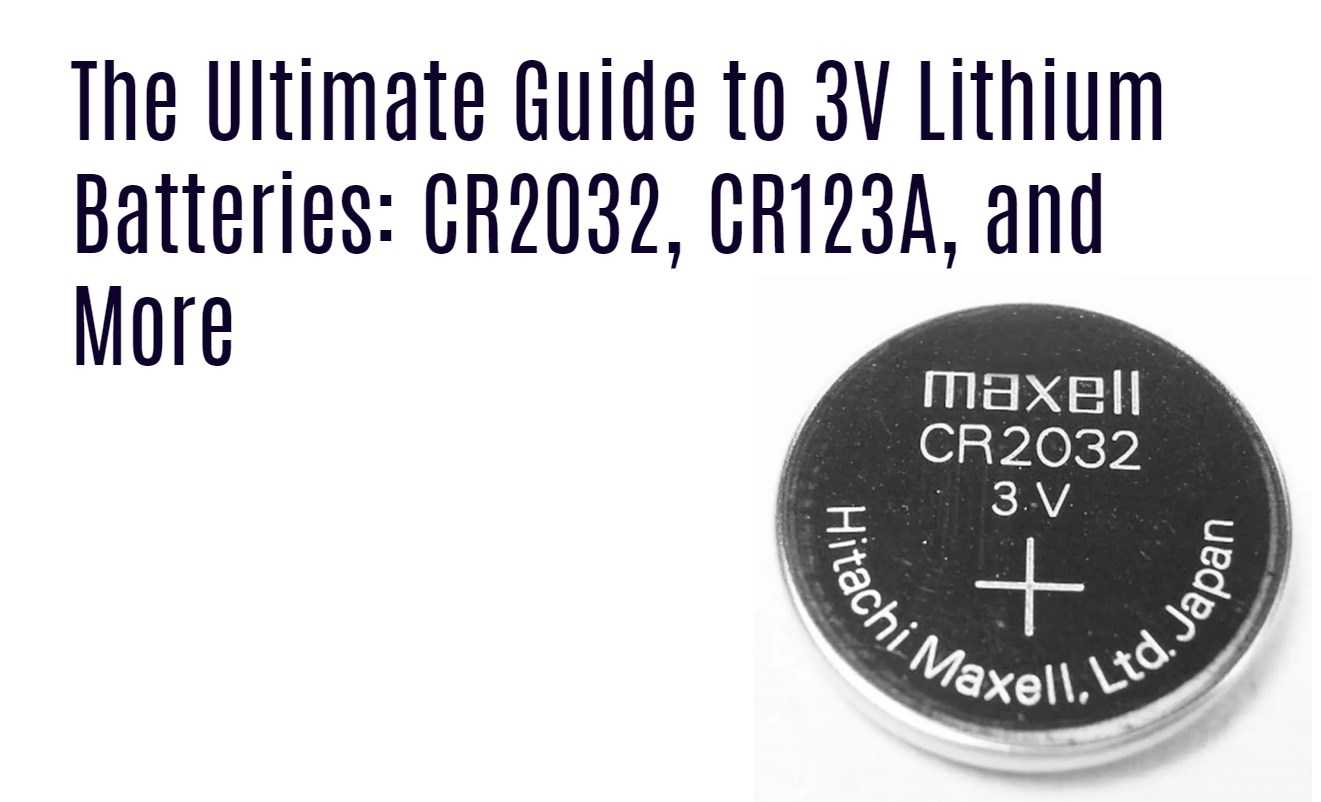
The Ultimate Guide to 3V Lithium Batteries: CR2032, CR123A, and More

The Ultimate Guide to 3V Lithium Batteries: CR2032, CR123A, and More

Lithium batteries are essential components in many electronic devices, providing reliable power in a compact form. This guide focuses on 3V lithium batteries, specifically popular types like the CR2032 and CR123A, along with their applications, advantages, and considerations.

Overview of 3V Lithium Batteries

3V lithium batteries are primary (non-rechargeable) cells that deliver a stable voltage ideal for various electronic devices. They utilize lithium as the anode material, allowing for higher energy density compared to other battery types. Common applications include watches, remote controls, cameras, and medical devices.

Types of 3V Lithium Batteries

  1. CR2032:
    • Description: A small, round button cell battery measuring 20mm in diameter and 3.2mm in height.
    • Capacity: Typically ranges from 220mAh to 240mAh.
    • Applications: Widely used in watches, fitness trackers, motherboards, and key fobs.
    • Advantages: Known for its long shelf life (up to 10 years) and reliability in low-drain applications.
  2. CR123A:
    • Description: A cylindrical battery measuring approximately 34.5mm in height and 17mm in diameter.
    • Capacity: Generally offers around 1500mAh to 1700mAh.
    • Applications: Commonly used in cameras, flashlights, and security systems.
    • Advantages: High energy density and ability to deliver high currents make it suitable for demanding applications.
  3. Other Types:
    • CR2016: Similar to the CR2032 but thinner (1.6mm), often used in smaller devices like calculators.
    • CR2450: A larger button cell (24mm diameter, 5mm height) typically used in more power-hungry devices like fitness gadgets.

Advantages of 3V Lithium Batteries

  • Long Shelf Life: Most 3V lithium batteries can last up to a decade when stored properly.
  • Wide Temperature Range: They perform well across a range of temperatures, making them suitable for various environments.
  • High Energy Density: These batteries provide substantial power relative to their size, making them ideal for compact devices.

Considerations When Using 3V Lithium Batteries

  1. Non-Rechargeable Nature:
    • Most 3V lithium batteries are designed for single use. Attempting to recharge them can lead to leakage or rupture.
  2. Compatibility:
    • Always check device specifications before replacing batteries. Using the wrong type can damage the device or lead to suboptimal performance.
  3. Disposal:
    • Proper disposal is crucial as lithium batteries can be harmful to the environment. Many retailers offer recycling programs for used batteries.

Latest Trends in Battery Technology

  • The market is seeing a shift towards more sustainable battery solutions, with an emphasis on recycling and reducing environmental impact.
  • Innovations in battery chemistry are aimed at enhancing performance while maintaining safety standards.

Redway Expert Comment

“Understanding the specifications and applications of various 3V lithium batteries is essential for ensuring optimal performance in your devices. At Redway Battery, we emphasize the importance of choosing the right battery type for your specific needs while considering longevity and environmental impact.”

Conclusion

3V lithium batteries like the CR2032 and CR123A play a vital role in powering everyday electronics. By understanding their characteristics, advantages, and proper usage guidelines, consumers can make informed choices that enhance device performance and longevity. Whether for personal gadgets or industrial applications, these batteries remain a reliable power source in our increasingly digital world.

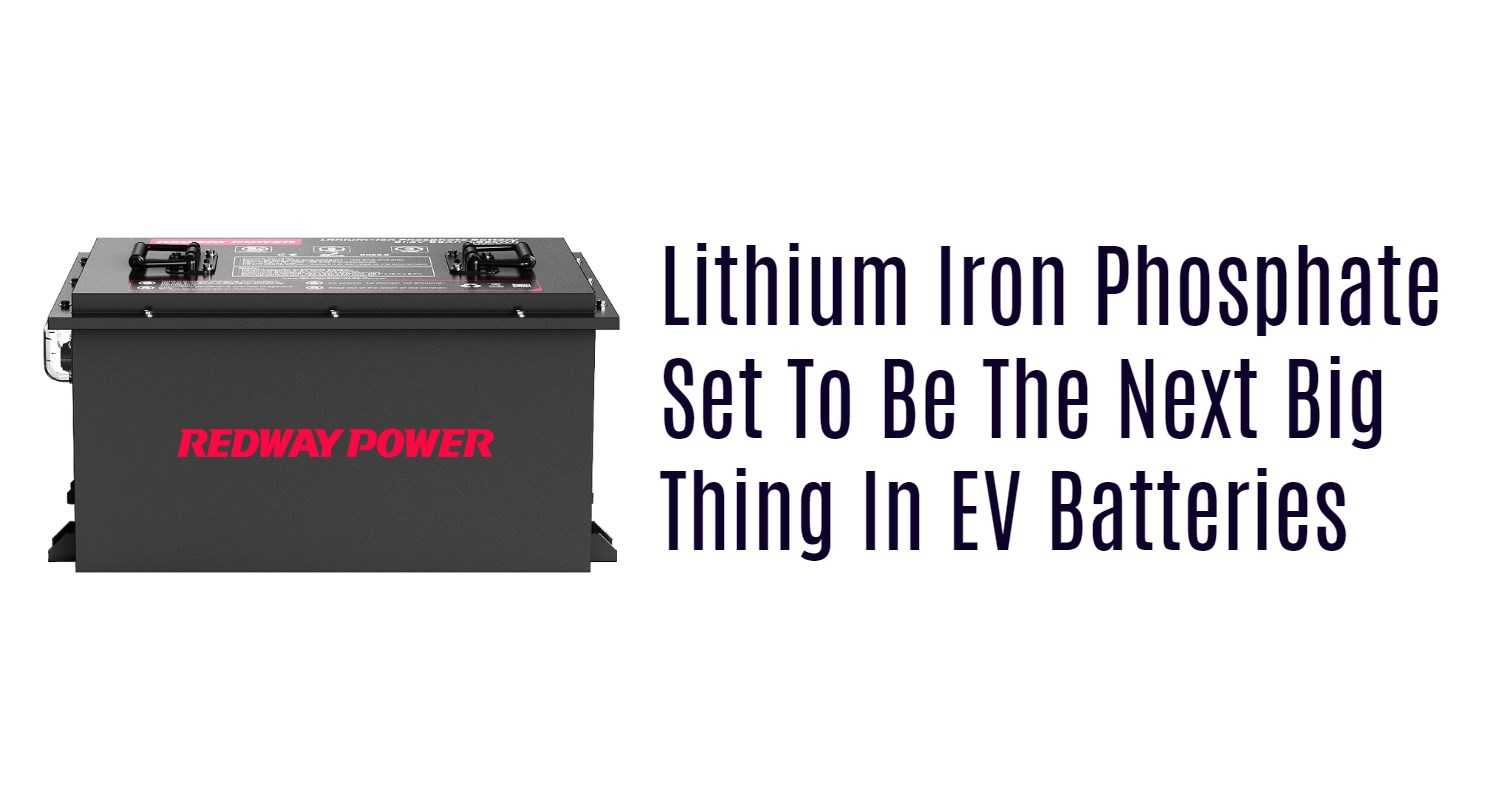
Lithium Iron Phosphate Set To Be The Next Big Thing In EV Batteries. 48v 100ah golf cart lifepo4 battery factory

Lithium Iron Phosphate Set To Be The Next Big Thing In EV Batteries

In the dynamic landscape of energy storage and electric vehicles, questions about the future of battery technology are ever-present. As society increasingly pivots towards renewable energy sources and sustainable transportation solutions, the focus on batteries, particularly lithium-ion variants, intensifies.

Who is the largest LFP battery producer?

The largest LFP battery producer is Contemporary Amperex Technology Ltd. (CATL).

What is the next big battery technology?

The next big battery technology innovation is under debate.

Five new technologies are listed in this article, but the author makes no predictions as to which of them will be the “next big thing.”

Here is a summary of the five new battery technologies.

  1. NanoBolt lithium tungsten batteries – These batteries use tungsten and carbon multi-layered nanotubes that bond to the base to form a web-like nano structure, increasing surface area for more ions to attach to. They are faster to recharge and store more energy than traditional batteries.
  2. Zinc-manganese oxide batteries – This technology uses a chemical conversion reaction to increase energy density in conventional batteries without increasing cost. This makes them a potential alternative to lithium-ion and lead-acid batteries, especially for large-scale energy storage like what is used with electricity grids.
  3. Organosilicon electrolyte batteries – The electrolyte in lithium batteries is dangerous because it can catch fire or explode. Organosilicon (OS) based liquid solvents are a safer alternative. This electrolyte can be engineered for use in industrial, military, and consumer markets.
  4. Gold nanowire gel electrolyte batteries – This battery uses a gel electrolyte instead of a more combustible liquid, which makes it safer. Researchers have discovered that coating gold nanowires with manganese dioxide and then covering them with electrolyte gel creates a very resilient battery that can go through 200,000 cycles without losing its ability to hold a charge. Traditional batteries can only handle 6,000 cycles.
  5. TankTwo String Cellâ„¢ batteries – Electric vehicles have a slow recharging process that can be inconvenient for drivers. This technology involves modularizing a battery so that the small cells can be quickly and easily swapped at service stations. This speeds up the recharging process significantly.

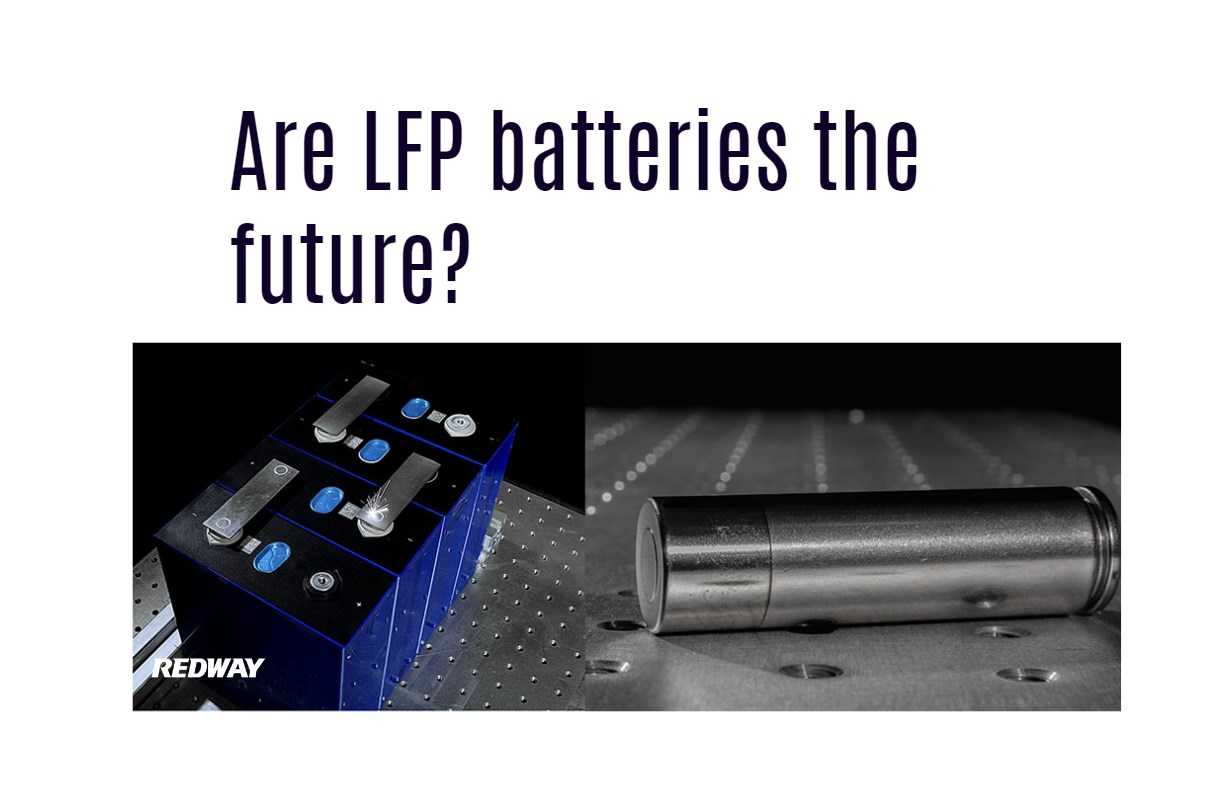
Are LFP batteries the future?

LFP (lithium ferro-phosphate) batteries have emerged as potential candidates for electric vehicle (EV) batteries due to their lower cost, longer cycle life, and stability at high temperatures compared to nickel-based batteries. However, their lower energy density has been a limiting factor for their widespread adoption in EVs.

The future of LFP batteries in EV construction is uncertain. While they offer advantages in terms of cost and safety, their lower energy density poses a challenge for meeting the increasing demand for longer driving ranges in EVs.

Automakers like Ford and Tesla have previously announced plans to incorporate LFP batteries into their EV lineups, but Ford has recently paused construction of a major LFP battery plant in Michigan. This decision highlights the ongoing debate and uncertainty surrounding the future of LFP batteries in the EV industry.

Factors Influencing the Adoption of LFP Batteries:

  • Driving Range Requirements: Consumer demands for longer driving ranges may continue to favor nickel-based batteries with higher energy densities.
  • Cost Considerations: The significantly lower cost of LFP batteries could make them attractive for budget-friendly EV models or in markets where cost-sensitive consumers are the target audience.
  • Technological Advancements: Ongoing research and development efforts could lead to improvements in the energy density of LFP batteries, making them more competitive with nickel-based batteries.
  • Government Regulations: Environmental concerns and regulations may incentivize the adoption of LFP batteries due to their lower carbon footprint over the long term.

Are LFP batteries the future?

What will replace lithium in battery technology?

Currently, the leading battery technology is lithium-ion batteries, but there are other promising technologies that are in the early stages of development. Some of these include:

  • Solid-state batteries use a solid electrolyte instead of a liquid electrolyte, which makes them more stable, safer, and more energy-dense than lithium-ion batteries.
  • Sodium-ion batteries use sodium ions instead of lithium ions, which makes them less expensive and more widely available than lithium-ion batteries.
  • Iron-air batteries use iron and air to generate electricity, which makes them very inexpensive and sustainable.
  • Zinc-based batteries use zinc ions instead of lithium ions, which makes them more environmentally friendly and less toxic than lithium-ion batteries.
  • Graphene batteries use graphene as the anode material, which makes them very conductive and fast-charging.

These are just a few of the new battery technologies that are being developed. As these technologies continue to mature, they could potentially replace lithium-ion batteries in the future.

What is the future for lithium-ion battery technology?

The future of lithium-ion battery technology is based on three specific technological advancements:

  • Improvements in battery technology can be achieved in a huge range of different ways and focus on several different components to deliver certain performance characteristics of the battery. While there are various paths that battery technology evolution could take, S&P Global has defined three new alternatives to lithium-ion batteries in the table below.

Key Information

  • Next-generation 1 Gr-Si Anode / Hi-Ni Cathode: Most likely to be adopted on light vehicle EVs that require longer ranges and fast charging.
  • Next-generation 2 Solid State Battery (SSB): Key technology to eliminate battery fire concerns and deliver moderate performance improvements.
  • Next-generation 3 Lithium Sulphur / Air: Revolutionary technologies that diverge from all previous chemistry systems.

Key Performance Characteristics of Battery Technology Evolution

  • Energy Density: These two values are associated directly to the amount of energy that can be stored per unit volume or mass. The weight and size of batteries are of critical importance to adoption in EV and stationary energy storage applications.
  • Power Density: Battery power density is the amount of energy released by a battery when it is discharged within a given capacity. Specific power, like specific energy, refers to the amount of energy produced per unit of mass.
  • Charging rate: Charging rate is a term used to describe the amount of power required to charge a device (C-rate). The discharge power of a battery measures how much energy it can produce at any given moment, while the C-rate embodies how fast a battery can be fully charged.
  • Life Span: A battery’s capacity decays with the amount of charge and discharge cycles, showing how long it will last. A battery should be reused (second life applications) or recycled once it has degraded to a point when it is no longer suitable for its intended application.
  • Cost: The cost of battery is usually defined on a per kWh basis and is the key focus in achieving EV cost parity with internal combustion engine (ICE) vehicles as a battery pack system is the most expensive single component of an electric vehicle (EV).
  • Safety: Because of the flammable liquid electrolyte and the release of thermal energy when the cathode material ‘fatigues’ after a certain number of cycles, battery safety is a concern. The rising concerns over battery safety could inhibit the wide adoption of EVs and batteries for energy storage applications.

What will Tesla use instead of lithium?

Tesla does not currently use lithium 12V batteries instead of lead-acid. Instead, they use lead-acid batteries for the 12V system and high-voltage lithium-ion batteries for the main propulsion system. Lithium batteries are lighter and have a longer lifespan than lead-acid batteries, but they are also more expensive. Tesla may switch to lithium 12V batteries in the future, but there is no current timeline for this.

What metal will replace lithium in batteries?

Currently, sodium is the potential alternative to lithium in batteries.

  1. Availability: Unlike lithium, sodium is 1000 times more abundant than lithium. This abundance can address sourcing challenges related to lithium and expand the scope of battery manufacturing.
  2. Environmental impact: The extraction of lithium requires water-intensive and polluting mining processes, affecting local ecosystems and water resources. Sodium, in contrast, can be obtained from seawater, offering a more environmentally friendly option.
  3. Cost-Effectiveness: Recent advancements have improved the energy density of sodium-ion batteries, and their cost-effectiveness is becoming comparable to certain lithium-ion technologies, particularly those using lithium iron phosphate (LFP) cathodes.

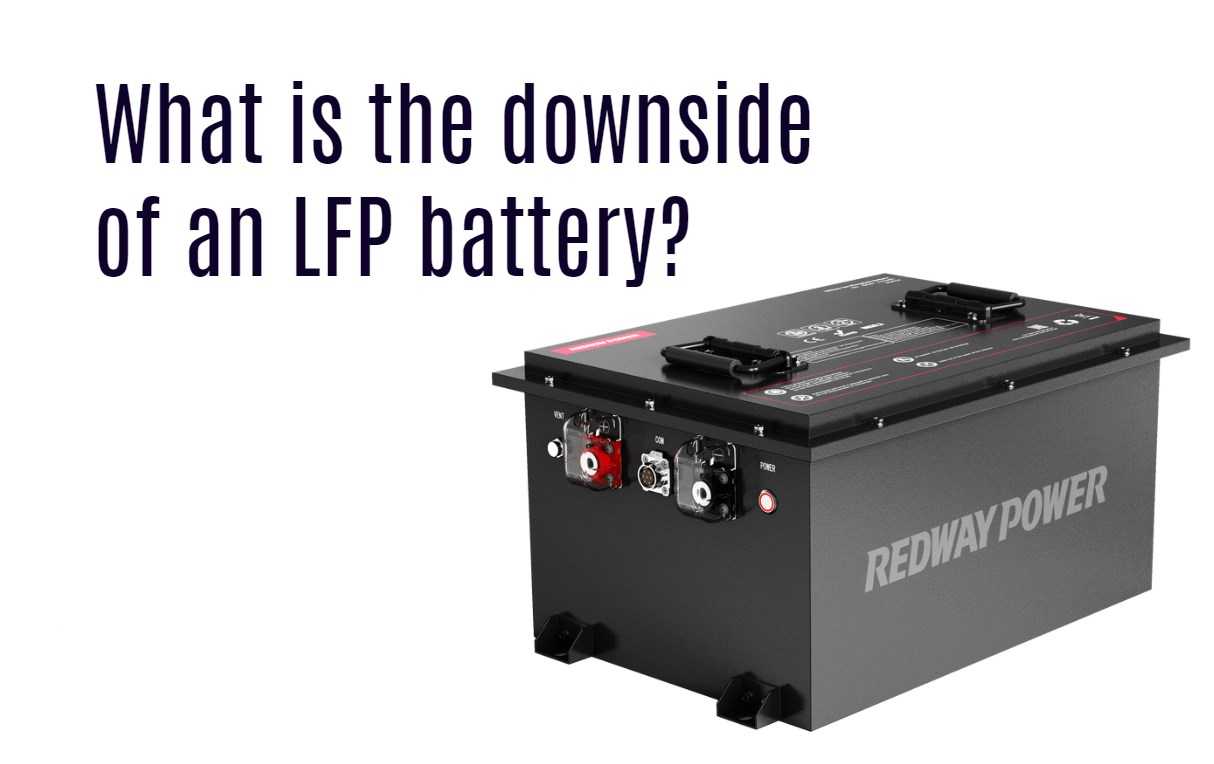
What is the downside of an LFP battery?

LiFePO4 batteries, like other types of batteries, have both advantages and disadvantages.

Advantages of LiFePO4 batteries:

  1. Long cycle life: LiFePO4 batteries can withstand a large number of charge-discharge cycles, often exceeding 5,000 cycles or more. This significantly extends the service life of the battery compared to other chemistries, such as lead-acid batteries.
  2. High current capability: LiFePO4 batteries can deliver high currents, making them suitable for applications where sudden bursts of energy are required, such as in electric vehicles or power tools.
  3. Wide temperature range: LiFePO4 batteries operate over a wide temperature range, typically from -20°C to 50°C (-4°F to 122°F). This allows them to perform well in both cold and hot environments.
  4. Light weight: LiFePO4 batteries are lighter than lead-acid batteries of similar capacity, making them easier to transport and install.
  5. Environmentally friendly: LiFePO4 batteries do not contain toxic heavy metals, such as lead or cadmium, which makes them more environmentally friendly than some other battery chemistries.

Disadvantages of LiFePO4 batteries:

  1. Lower energy density: LiFePO4 batteries have a lower energy density compared to other lithium-ion chemistries, such as LiCoO2 or LiMn2O4. This means they store less energy for a given weight or volume.
  2. Higher cost: LiFePO4 batteries are generally more expensive than lead-acid batteries and some other lithium-ion battery chemistries. This can be a drawback for applications where cost is a critical factor.
  3. Limited availability: LiFePO4 batteries may not be as widely available as some other battery chemistries, especially in certain regions or for specialized applications.

48v 100ah golf cart lithium battery lifepo4 lfp factory redway

Why is Tesla switching to LFP?

Tesla is switching to LFP batteries for several reasons, including:

  • Cost: LFP batteries are cheaper than other types of lithium-ion batteries, such as NMC and NCA batteries. This is because LFP batteries use iron and phosphorus instead of the more expensive nickel, manganese, and cobalt found in NMC and NCA batteries.
  • Safety: LFP batteries are more stable and safer than other types of lithium-ion batteries. They are less likely to catch fire or explode, even if they are damaged or overcharged.
  • Lifespan: LFP batteries have a longer lifespan than other types of lithium-ion batteries. They can last for up to 10 years or more, compared to 5-7 years for NMC and NCA batteries.
  • Environmental impact: LFP batteries are more environmentally friendly than other types of lithium-ion batteries. They do not contain cobalt, which is a toxic metal that is often mined in dangerous conditions.

Tesla is using LFP batteries in its standard range Model 3 and Model Y vehicles. The company has said that it plans to switch to LFP batteries for all of its vehicles in the future.

Other automakers using LFP

Other automakers are also starting to use LFP batteries in their electric vehicles. Ford has announced that it will use LFP batteries in its Mustang Mach-E and F-150 Lightning vehicles. Rivian is also using LFP batteries in its R1T and R1S vehicles.

The use of LFP batteries in electric vehicles is expected to increase in the coming years. This is because LFP batteries offer several advantages over other types of lithium-ion batteries, including lower cost, improved safety, longer lifespan, and reduced environmental impact.

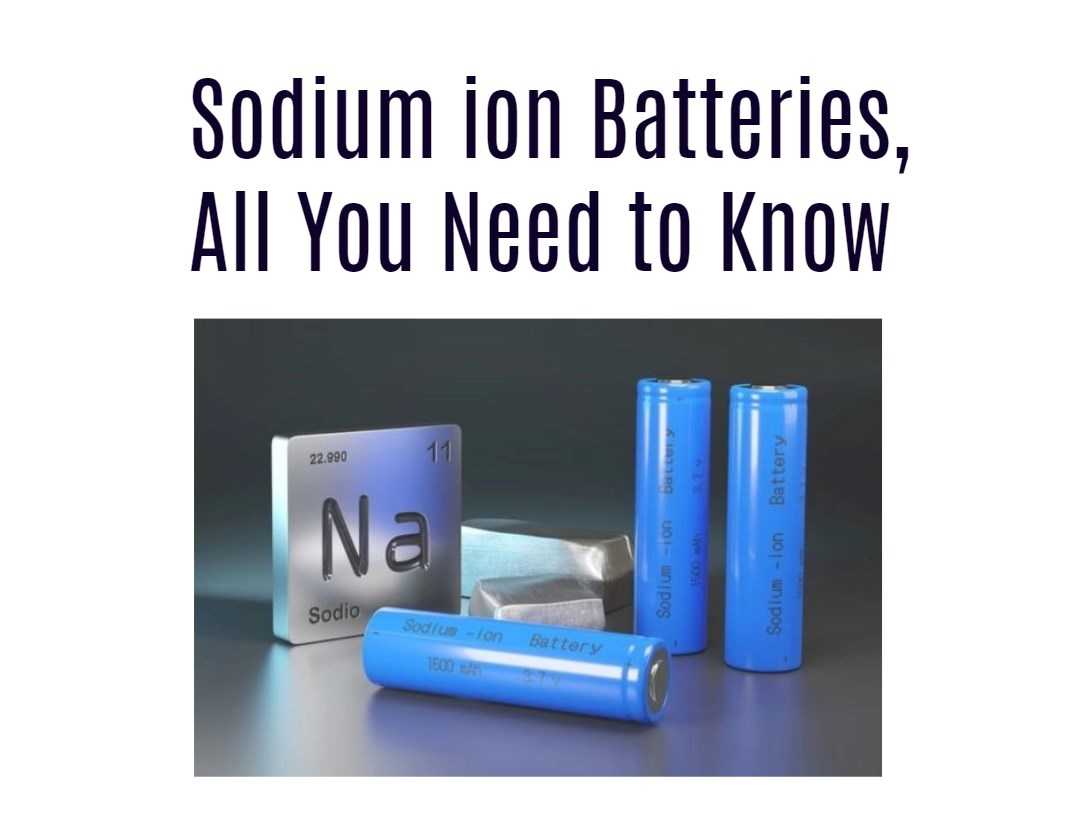
Sodium ion Batteries, All You Need to Know

Sodium ion Batteries, All You Need to Know

Exploring alternatives to lithium-ion batteries, sodium-ion batteries emerge as a promising contender. While offering potential advantages such as lower cost and abundance of sodium resources, they face challenges including lower energy density. Despite advancements, widespread adoption hinges on overcoming technical hurdles and scaling up production.

Are there lithium free batteries?

Yes, there are lithium-free battery technologies being developed. Companies like Alsym Energy have created non-flammable, high-performance rechargeable battery chemistries that are free of lithium and cobalt, offering potential alternatives to traditional lithium-based batteries.
  1. Lithium-Free Battery Innovations: Companies like Alsym Energy have developed non-flammable, high-performance rechargeable battery chemistries that are free of lithium and cobalt.
  2. Safety and Sustainability: Lithium-free battery technologies aim to provide safer and more sustainable alternatives to traditional lithium-based batteries.
  3. Diversifying Battery Options: The development of lithium-free batteries expands the range of choices for energy storage applications.
Ongoing research and innovation in lithium-free battery technologies offer promising alternatives for safer and more sustainable energy storage solutions.

What are the advantages of sodium-ion batteries?

Sodium-ion batteries offer advantages such as energy-efficient power with fast charging, stability against temperature extremes, and safety against overheating or thermal runaway.
  1. Energy-Efficient Power: Sodium-ion batteries provide energy-efficient power, allowing for efficient energy usage.
  2. Fast Charging: These batteries have fast charging capabilities, ensuring quick and convenient usage.
  3. Stability and Safety: Sodium-ion batteries exhibit stability against temperature extremes and prioritize safety, preventing overheating or thermal runaway.
The advantages of sodium-ion batteries make them a promising technology for various applications, offering energy efficiency, fast charging, and enhanced safety features.

What are the disadvantages of sodium-ion batteries?

One of the main disadvantages of sodium-ion batteries is their low energy density compared to other popular batteries, such as lithium batteries. Sodium-ion batteries can store less energy per unit weight.
  1. Low Energy Density: Sodium-ion batteries have a lower energy density compared to batteries like lithium-ion, which means they can store less energy per unit weight.
  2. Performance Implications: The lower energy density of sodium-ion batteries may impact their overall performance and suitability for certain applications.
Ongoing research aims to address the challenges associated with the energy density of sodium-ion batteries, unlocking their potential for various energy storage applications.

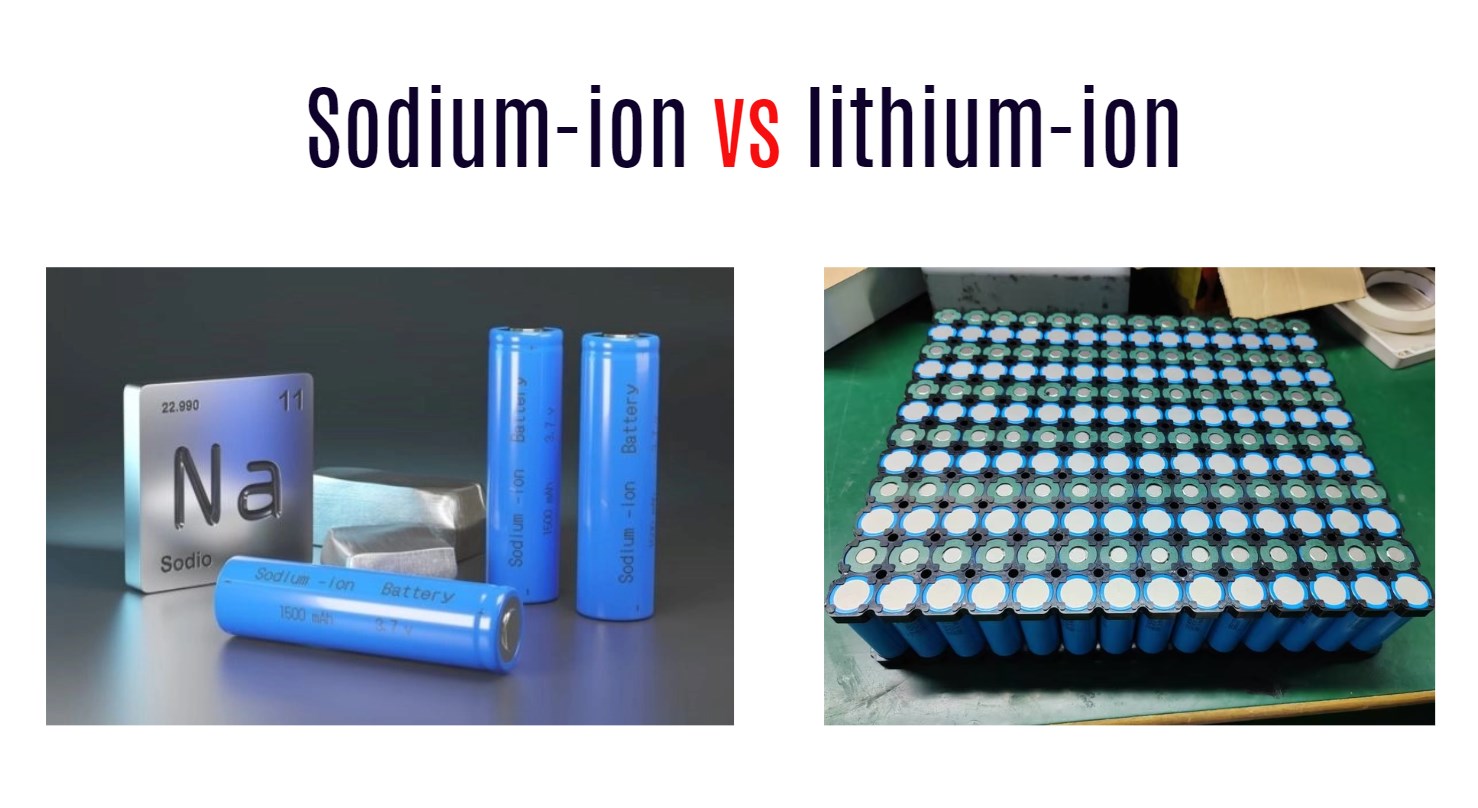
Sodium-ion batteries vs lithium-ion batteries

Sodium-ion batteries vs lithium-ion batteries: Sodium-ion batteries use sodium ions instead of lithium ions. Sodium is abundant and eco-friendly. While lithium-ion batteries dominate now, sodium-ion batteries offer cost-effectiveness and safety.

  1. Sodium vs. Lithium:
    • Sodium-ion batteries swap lithium ions for sodium ions.
    • Sodium is abundant and found in everyday items like table salt, making it cheaper and more environmentally friendly.
  2. Safety and Environment:
    • Sodium-ion batteries are safer than lithium-ion batteries because they’re less likely to catch fire.
    • They’re also more eco-friendly since sodium is readily available in nature.
  3. Current Dominance:
    • Lithium-ion batteries are currently more common due to their higher energy density and existing infrastructure.

In conclusion, while lithium-ion batteries are currently more prevalent, sodium-ion batteries offer a promising alternative that’s safer and more sustainable in the long run.

Sodium-ion batteries vs lithium-ion batteries

Are sodium batteries better than lithium?

Sodium-ion batteries have advantages such as lower cost, better safety characteristics, and similar power delivery capabilities compared to lithium-ion batteries. However, sodium-ion batteries have a lower energy density.
  1. Lower Cost: Sodium-ion batteries are generally more cost-effective compared to lithium-ion batteries.
  2. Enhanced Safety: Sodium-ion batteries exhibit improved safety characteristics, ensuring safer usage.
  3. Similar Power Delivery: Sodium-ion batteries deliver power in a manner similar to lithium-ion batteries.
Although sodium-ion batteries have their advantages, the lower energy density compared to lithium-ion batteries may impact their suitability for certain energy-intensive applications.

What is the problem with sodium batteries?

One of the major disadvantages of sodium-ion batteries is their relatively low energy density compared to other battery technologies like lithium-ion batteries. Sodium-ion batteries store less energy per unit volume or weight.
  1. Lower Energy Density: Sodium-ion batteries have a relatively lower energy density compared to battery technologies like lithium-ion batteries.
  2. Impact on Performance: The lower energy density of sodium-ion batteries may affect their overall performance and suitability for certain applications.
Ongoing research aims to improve the energy density of sodium-ion batteries, unlocking their potential for more efficient energy storage solutions.

Why are we not using sodium-ion batteries?

One of the main disadvantages of sodium-ion batteries is their lower energy density compared to other battery technologies like lithium-ion batteries. Sodium-ion batteries can store less energy per unit volume or weight, which may limit their use in certain applications.
  1. Lower Energy Density: Sodium-ion batteries have a lower energy density compared to lithium-ion batteries, meaning they can store less energy per unit volume or weight.
  2. Impact on Performance: The lower energy density of sodium-ion batteries may affect their overall performance and suitability for certain applications.
  3. Limitations in Rechargeability: Sodium-ion batteries may have a lower life cycle, which affects their lifespan and rechargeability.
Ongoing research and development aim to address the challenges associated with sodium-ion batteries, unlocking their potential for improved performance and broader applications.

Will sodium batteries replace lithium?

Sodium batteries are considered complementary to lithium batteries, offering their own advantages for specific applications. They are not expected to replace lithium batteries entirely, but rather complement them in the energy storage landscape.
  1. Complementary Nature: Sodium batteries are considered complementary to lithium batteries, offering their own advantages.
  2. Specific Applications: Sodium batteries are explored as an alternative for specific applications in the energy storage landscape.
  3. Not Direct Substitutes: Sodium batteries are not expected to replace lithium batteries entirely, but rather work alongside them.

The complementary nature of sodium batteries and lithium batteries allows for a more diverse range of energy storage solutions to meet different application requirements.

What is the new sodium battery?

The new sodium battery is a high-performance hybrid sodium-ion energy storage device that surpasses the energy density of commercial lithium-ion batteries. It combines the characteristics of batteries and supercapacitors, enabling rapid charging and high power density.
  1. High-Performance Hybrid: The new sodium battery is a high-performance hybrid sodium-ion energy storage device.
  2. Superior Energy Density: This battery surpasses the energy density of commercial lithium-ion batteries, offering enhanced storage capacity.
  3. Rapid Charging and High Power Density: The new sodium battery combines the characteristics of batteries and supercapacitors, enabling rapid charging and high power output.
The development of the new sodium battery opens up possibilities for more efficient and powerful energy storage solutions in various applications.

Who makes sodium-ion batteries in the USA?

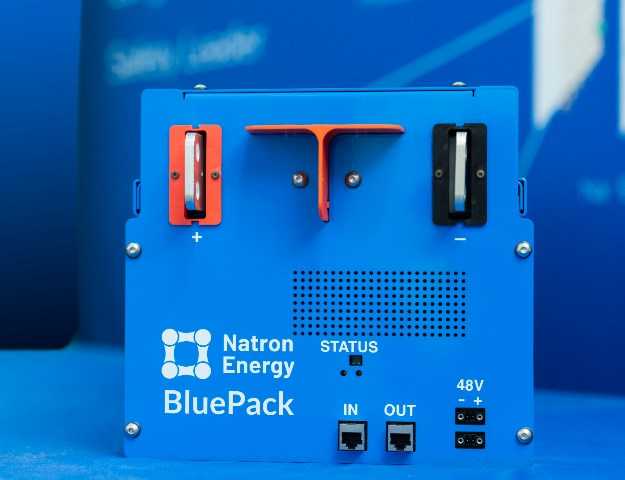
Natron Energy is one of the companies making sodium-ion batteries in the USA. Their sodium-ion battery plant in Holland, Michigan, started operations in April 2024, offering an alternative to lithium-based storage.
  1. Natron Energy: Natron Energy is one of the companies producing sodium-ion batteries in the USA.
  2. Sodium-Ion Battery Plant: Natron Energy operates a sodium-ion battery facility in Holland, Michigan.
  3. Operations and Alternative Storage: The facility began operations in April 2024, providing an alternative to lithium-based energy storage solutions.
The production of sodium-ion batteries by companies like Natron Energy contributes to the advancement of energy storage technologies in the USA.

Who makes sodium-ion batteries in the USA?

What company is making sodium batteries?

Companies like Natron Energy and Altris are involved in the production of sodium-ion batteries. They have announced the opening of new sodium-ion battery production facilities, contributing to the development of sodium battery technology.
  1. Natron Energy and Altris: Companies like Natron Energy and Altris are engaged in the production of sodium-ion batteries.
  2. New Production Facilities: These companies have announced the opening of new sodium-ion battery production facilities.
  3. Advancing Sodium Battery Technology: Their involvement contributes to the development and advancement of sodium battery technology.
The efforts of companies like Natron Energy and Altris play a vital role in driving the progress of sodium-ion battery technology and its potential applications.
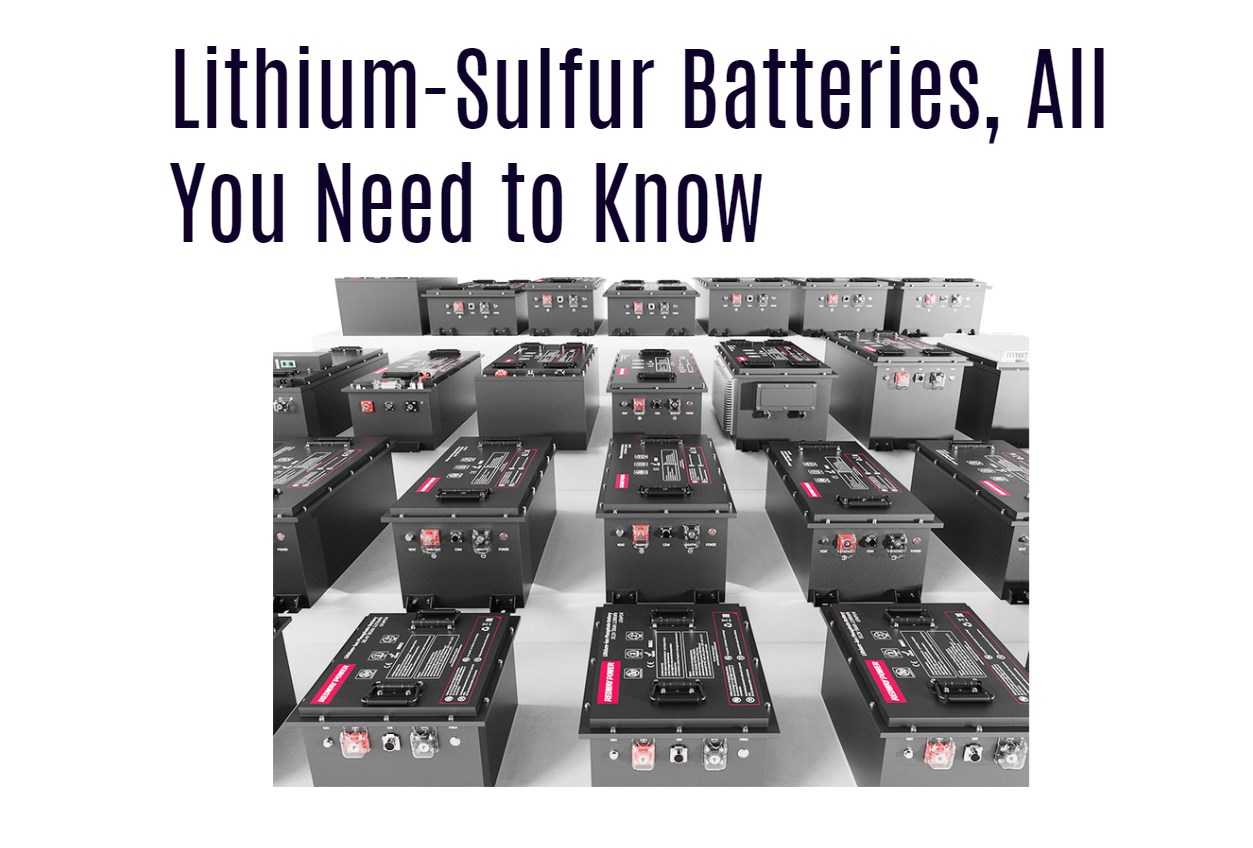
Lithium-Sulfur Batteries, All You Need to Know. golf cart lithium battery manufacturer factory redway

Lithium-Sulfur Batteries, All You Need to Know

Lithium-sulfur batteries are gaining attention for their potential to revolutionize energy storage. Offering longer lifespan and higher energy density compared to lithium-ion batteries, they hold promise for diverse applications. However, challenges such as limited cycle life and sulfur dissolution remain to be addressed for widespread adoption.

What is lithium-sulfur battery?

Lithium-sulfur (Li-S) batteries are rechargeable batteries that utilize lithium as the anode and sulfur as the cathode. They offer a high specific energy and are relatively lightweight, making them a promising technology for energy storage.
  1. Composition: Li-S batteries consist of lithium as the anode and sulfur as the cathode.
  2. High Specific Energy: These batteries offer a high specific energy, making them attractive for energy storage applications.
  3. Relatively Lightweight: Li-S batteries are relatively lightweight, providing a promising solution for portable and electric vehicle applications.
With their high specific energy and lightweight nature, lithium-sulfur batteries hold promise as a future energy storage technology.

What are the basics of lithium-sulfur battery?

The basics of a lithium-sulfur battery include a lithium metal anode, an organic liquid electrolyte, and a sulfur composite cathode. The battery operates through the reversible electrochemical redox conversion of elemental sulfur.
  1. Lithium Metal Anode: The battery includes a lithium metal anode for energy storage.
  2. Organic Liquid Electrolyte: An organic liquid electrolyte facilitates the movement of ions within the battery.
  3. Sulfur Composite Cathode: The cathode is composed of a sulfur composite material, enabling efficient energy conversion.
Through the reversible electrochemical redox conversion of elemental sulfur, lithium-sulfur batteries offer a promising approach to high-performance energy storage.

What is the lifespan of a lithium-sulfur battery?

The lifespan of a lithium-sulfur battery is considered to be around ten years. These batteries offer sustainability advantages and higher capacity compared to other lithium-ion batteries.
  1. Lifespan: The estimated lifespan of a lithium-sulfur battery is approximately ten years.
  2. Sustainability Advantages: Lithium-sulfur batteries offer sustainability benefits over other lithium-ion batteries.
  3. Higher Capacity: These batteries have a higher capacity, allowing for greater energy storage.
With their ten-year lifespan, lithium-sulfur batteries provide a durable and sustainable energy storage solution for various applications.

What is the lifespan of a lithium-sulfur battery? what is lithium-sulfur battery?

What is the promise of a lithium-sulfur battery?

Lithium-sulfur (Li-S) batteries hold promise as a superior alternative to current lithium-ion batteries. They offer increased energy density and lower costs, revolutionizing energy storage and enabling advancements in various applications.
  1. Increased Energy Density: Li-S batteries have the potential to provide higher energy storage capacity compared to current lithium-ion batteries.
  2. Cost Reduction: These batteries offer the prospect of lower costs, making energy storage more affordable.
  3. Revolutionizing Energy Storage: Li-S batteries hold promise in revolutionizing the energy storage industry and enabling advancements in various applications.
With their potential for increased energy density and lower costs, lithium-sulfur batteries offer a promising future for more efficient and affordable energy storage solutions.

Why are lithium-sulfur batteries better?

Lithium-sulfur (Li-S) batteries are better due to their higher energy density per unit weight. With a theoretical energy density of 2,700 Wh kg-1, Li-S batteries offer the potential for more efficient and longer-lasting energy storage solutions.
  1. Higher Energy Density: Li-S batteries offer a higher energy density per unit weight compared to other battery technologies.
  2. Efficient Energy Storage: The higher energy density of Li-S batteries enables more efficient energy storage solutions.
  3. Longer-Lasting Performance: With their higher energy density, Li-S batteries have the potential to provide longer-lasting energy storage capabilities.
The advantages of lithium-sulfur batteries lie in their higher energy density and potential for more efficient and longer-lasting energy storage solutions.

What is the difference between lithium-ion battery and lithium-sulfur battery?

The difference between lithium-ion (Li-ion) and lithium-sulfur (Li-S) batteries lies in their electrochemical reactions, energy density, weight, and charging capabilities. Li-S batteries offer higher energy density and lighter weight, potentially enabling longer driving ranges and faster charging. Li-ion batteries are widely used but have lower energy density compared to Li-S batteries. Li-S batteries show promise for cleaner and more sustainable transportation.

  1. Higher Energy Density and Lighter Weight: Li-S batteries offer increased energy density and are lighter, allowing for greater energy storage and longer driving ranges.
  2. Faster Charging: Li-S batteries have the potential for faster charging, providing convenience and reducing charging times.
  3. Advancements for Sustainable Transportation: Li-S batteries show promise for cleaner and more sustainable transportation options, contributing to a greener future.
Lithium-sulfur batteries are paving the way for improved energy storage solutions and more efficient electric vehicles.

What is the range of lithium-sulfur battery?

Lithium-sulfur batteries have the potential for a driving range of more than 400 miles, with practical capacities of up to 500 watt-hours per kilogram at the pack level, twice that of lithium-ion batteries.
  1. Extended Driving Range: Lithium-sulfur batteries offer the potential for a driving range of more than 400 miles.
  2. Higher Energy Capacity: With practical capacities of up to 500 watt-hours per kilogram at the pack level, Li-S batteries provide double the energy capacity of lithium-ion batteries.
The range and energy capacity of lithium-sulfur batteries make them a promising technology for electric vehicles, offering extended driving ranges and higher energy storage capabilities.

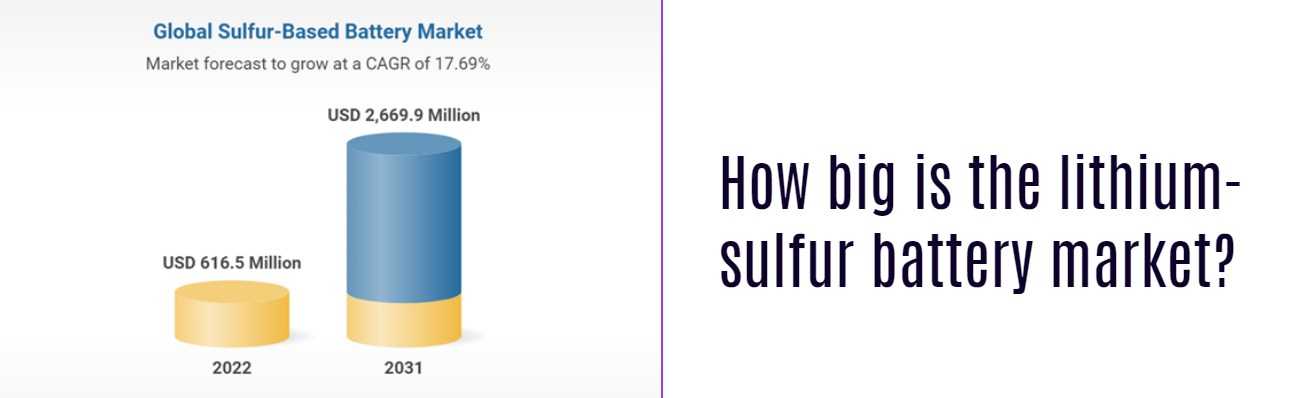
How big is the lithium-sulfur battery market?

The global lithium-sulfur battery market was valued at USD 24.13 million in 2022 and is projected to reach USD 932.34 million by 2032, indicating significant growth and demand for lithium-sulfur batteries in industries such as electric vehicles and energy storage.
  1. Market Size and Growth: The lithium-sulfur battery market is projected to reach USD 932.34 million by 2032, indicating significant growth opportunities.
  2. Demand in Various Industries: The increasing adoption of lithium-sulfur batteries in electric vehicles and energy storage systems drives market growth.
With the rising demand for clean energy solutions, the lithium-sulfur battery market shows promise for future growth and innovation.

How big is the lithium-sulfur battery market?

Is lithium-sulfur the future?

Lithium-sulfur (Li-S) batteries have the potential to power the future of energy storage. They offer advantages such as low cost, high energy density, and long life, making them a promising technology for the green energy transition.
  1. Advantages of Li-S Batteries: Li-S batteries offer advantages such as low cost, high energy density, and long life.
  2. Future Potential: Li-S batteries have the potential to revolutionize the energy storage industry and contribute to the green energy transition.
With their advantages and potential, lithium-sulfur batteries are poised to shape the future of energy storage solutions.

What company is making lithium-sulfur batteries?

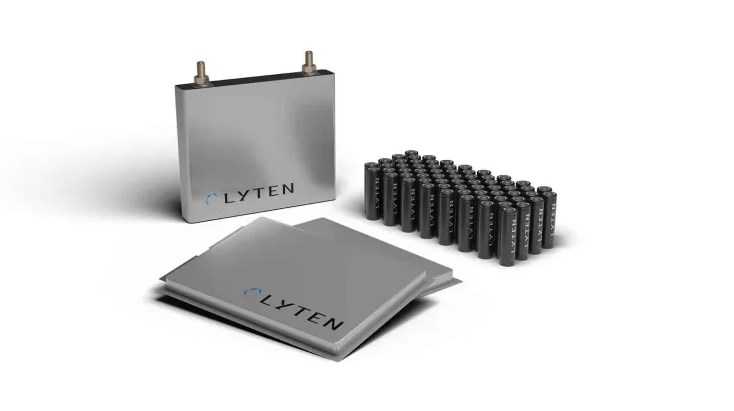
Lyten, a company based in Silicon Valley, has achieved a manufacturing milestone in producing lithium-sulfur batteries with a lithium metal anode. Their success confirms the potential to scale the delivery of next-generation lithium-sulfur batteries. Other companies, including NexTech Batteries Inc. and Zeta Energy, are also actively involved in advancing lithium-sulfur battery technology.
  1. Lyten’s Manufacturing Milestone: Lyten, based in Silicon Valley, has achieved success in producing lithium-sulfur batteries with a lithium metal anode.
  2. Scaling Next-Generation Batteries: Lyten’s success confirms the potential to scale the delivery of advanced lithium-sulfur batteries.
  3. Other Companies in the Field: NexTech Batteries Inc. and Zeta Energy are among the companies actively involved in advancing lithium-sulfur battery technology.
Companies like Lyten, NexTech Batteries Inc., and Zeta Energy are driving advancements in lithium-sulfur battery technology, paving the way for more efficient and sustainable energy storage solutions.

Is lithium-sulfur better than lithium-ion?

Lithium-sulfur (Li-S) batteries have the potential to be more environmentally friendly than lithium-ion (Li-ion) batteries. They utilize abundant and cost-effective sulfur, resulting in less resource-intensive extraction and processing compared to Li-ion batteries that use materials like cobalt.
  1. Advantages of Li-S Batteries: Li-S batteries have the potential to be more environmentally friendly due to their utilization of abundant and cost-effective sulfur.
  2. Less Resource-Intensive: The extraction and processing of materials for Li-S batteries are less resource-intensive compared to Li-ion batteries that use materials like cobalt.
The potential environmental benefits of lithium-sulfur batteries contribute to their appeal as a more sustainable and cost-effective energy storage solution.

What is the problem with lithium-sulfur batteries?

One challenge with lithium-sulfur (Li-S) batteries is the dissolution of sulfur species (polysulfides) into the electrolyte, causing corrosion and reducing battery life and rechargeability.
  1. Polysulfide Dissolution: The dissolution of sulfur species (polysulfides) into the electrolyte was a significant problem in early Li-S batteries.
  2. Corrosion and Reduced Battery Life: The polysulfide shuttling effect caused corrosion and negatively impacted battery life and rechargeability.
  3. Stable Battery Performance: Maintaining stable performance in Li-S batteries required addressing the challenges caused by polysulfide dissolution.
Ongoing research aims to overcome the challenges associated with polysulfide dissolution in lithium-sulfur batteries, paving the way for improved battery performance and reliability.
Chinese Scientists Unveil Breakthrough 'Water Battery' Technology

Chinese Scientists Unveil Breakthrough ‘Water Battery’ Technology

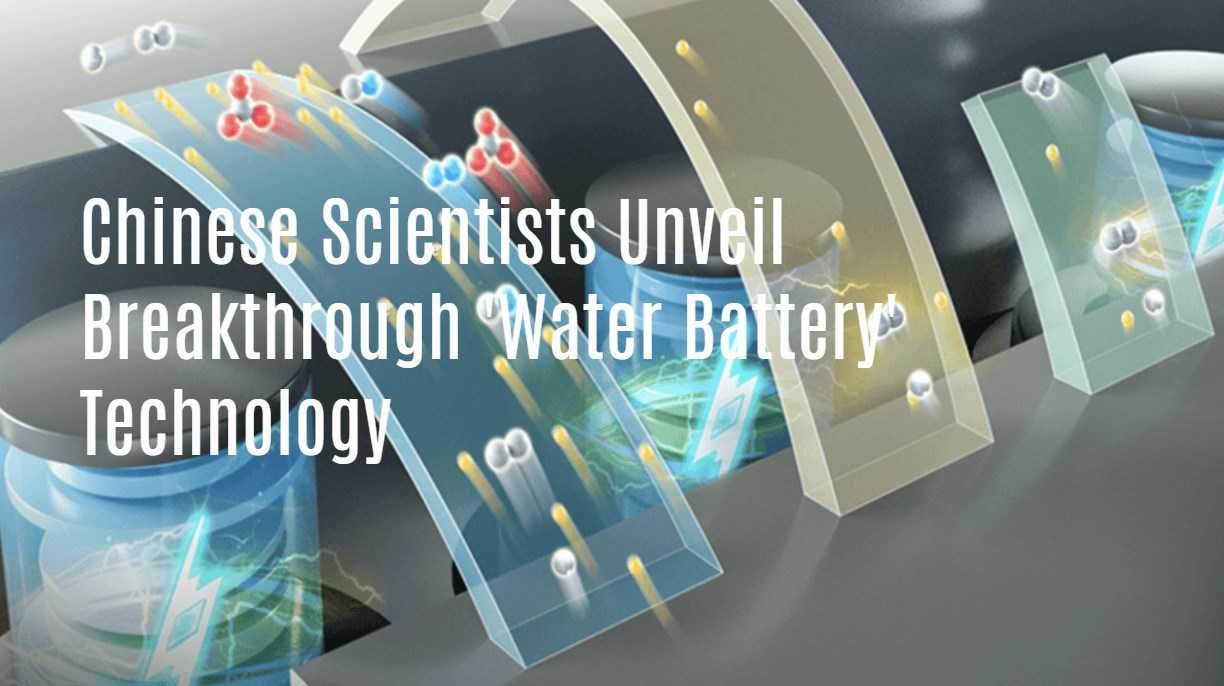
Chinese scientists have developed a water-based battery with nearly twice the energy density of a traditional lithium battery. This breakthrough in battery technology could open up new possibilities for aqueous batteries, including their use in electric vehicles.
  1. Water-Based Battery: Chinese scientists have created a water-based battery with almost double the energy density of traditional lithium batteries.
  2. Revolutionizing Aqueous Batteries: This breakthrough has the potential to revolutionize the field of aqueous batteries and expand their applications.
  3. New Possibilities: The enhanced energy density of the water-based battery opens up possibilities for its use in electric vehicles and other applications.

What is the new water battery?

‘Water batteries’ are formally known as aqueous metal-ion batteries. These devices use metals such as magnesium or zinc, which are cheaper to assemble and less toxic than the materials currently used in other kinds of batteries.
  1. Aqueous Metal-Ion Batteries: ‘Water batteries’ are formally known as aqueous metal-ion batteries.
  2. Advantages: These batteries utilize metals like magnesium or zinc, offering benefits such as cost-effectiveness, recyclability, and lower toxicity.
  3. Revolutionizing the Battery Industry: Aqueous metal-ion batteries have the potential to revolutionize the industry with their unique properties and advantages.
With their cost-effectiveness and environmentally friendly nature, aqueous metal-ion batteries hold promise for a sustainable future in energy storage.

How long does a water battery last?

Water batteries have a lifespan of approximately 1000mA hours, allowing a 10mA LED to run continuously for about 100 hours.
  1. Battery Lifespan: Water batteries typically last for approximately 1000mA hours.
  2. LED Runtime: With a 10mA LED, a water battery can power it continuously for about 100 hours.
The duration of a water battery’s lifespan depends on its capacity and the energy requirements of the devices it powers.

What is the major breakthrough in water battery technology?

Major breakthroughs in water battery technology include replacing the electrolyte in lithium-ion batteries with water, inventing recyclable ‘water batteries’ for enhanced safety and sustainability, and utilizing water-based electrodes for improved battery performance.
  1. Electrolyte Replacement: Researchers have replaced the electrolyte in lithium-ion batteries with water, improving safety and efficiency.
  2. Recyclable ‘Water Batteries’: Inventors have developed recyclable ‘water batteries’ that offer enhanced safety and sustainability.
  3. Water-Based Electrodes: The use of water-based electrodes enhances battery performance and safety.
These breakthroughs in water battery technology pave the way for safer, more sustainable, and high-performing energy storage solutions.

What is the major breakthrough in water battery technology?

Water Battery vs Lifepo4 Battery, what are the differences?

Water batteries, like those using zinc-ion or sodium-ion chemistry, use water-based electrolytes instead of organic solvents. They’re safer and eco-friendly but have lower energy density compared to LiFePO4 batteries. LiFePO4 batteries offer longer lifespan, safety, and are greener, as they lack nickel or cobalt. The choice depends on needs: longevity and environmental impact or safety and affordability.
  1. Water Batteries:
    • These batteries use water-based electrolytes instead of other chemicals.
    • They’re safer and better for the environment but have less power.
    • Imagine them like a sturdy water bottle – safe, reliable, but not as strong as other options.
  2. LiFePO4 Batteries:
    • These batteries last longer and are safer than traditional lithium-ion batteries.
    • They’re good for the environment because they don’t contain harmful materials.
    • Think of them as the eco-friendly superhero of batteries – strong, long-lasting, and kind to the planet.

In conclusion, the choice between water batteries and LiFePO4 batteries depends on what’s most important to you: safety and sustainability or power and longevity.

What is the new liquid battery?

The new liquid battery technology includes advancements such as an iron-based aqueous flow battery for grid energy storage and a low-cost battery design made from inexpensive materials.
  1. Iron-Based Aqueous Flow Battery: This technology offers potential for grid energy storage applications.
  2. Low-Cost Battery Design: A new battery design utilizes inexpensive and abundant materials, aiming for cost-effectiveness and sustainability.
These advancements in liquid battery technology pave the way for improved energy storage systems with enhanced performance and affordability.

What is the most promising future battery technology?

The most promising future battery technology includes advancements such as graphene batteries. These batteries offer faster charging, longer lifespans, and improved safety compared to traditional lithium-ion batteries.
  1. Graphene Batteries: Graphene batteries are among the most promising future battery technologies.
  2. Faster Charging and Longer Lifespans: These batteries offer faster charging times and longer lifespans compared to traditional lithium-ion batteries.
  3. Improved Safety: Graphene batteries also prioritize safety, making them an attractive option for future energy storage solutions.
With advancements in graphene and other emerging battery technologies, the future of energy storage looks promising, with improved performance and sustainability.

The breakthrough in ‘water battery’ technology

The breakthrough in ‘water battery’ technology by Chinese scientists holds promise for more efficient and sustainable energy storage solutions.

The ‘water battery’ concept leverages water as an electrolyte to generate electricity, releasing electrons through redox reactions, thus forming an electric current. This innovative technology utilizes iodine and bromine as electrolytes, boasting high safety standards with minimal risk of ignition or explosion. Moreover, it aligns seamlessly with eco-friendly practices as it is recyclable and harnesses readily available resources like tap water, soy sauce, or beverages for electricity generation.

One of the standout features of water batteries is their markedly superior energy density compared to conventional lithium batteries. This heightened energy density, coupled with enhanced safety attributes, positions water batteries as compelling contenders for a myriad of applications, including electric vehicles and other electric equipment.

The versatility of water batteries extends to electrofishing operations, where they offer prolonged service life and heightened stability, outperforming lithium batteries in freezing environments and certain other application scenarios.

Despite the promising outlook, researchers acknowledge ongoing challenges in the development of water batteries. These include addressing cost and kinetic performance issues associated with high salt concentration electrolytes, as well as the necessity for specialized designs to screen water-based prelithiation additives meeting stringent requirements.

Looking ahead, the future of water batteries appears promising, with experts anticipating their potential to supplant lithium-ion batteries within the next five years, ushering in a new era of enhanced convenience and sustainability in energy storage solutions.

The breakthrough in 'water battery' technology

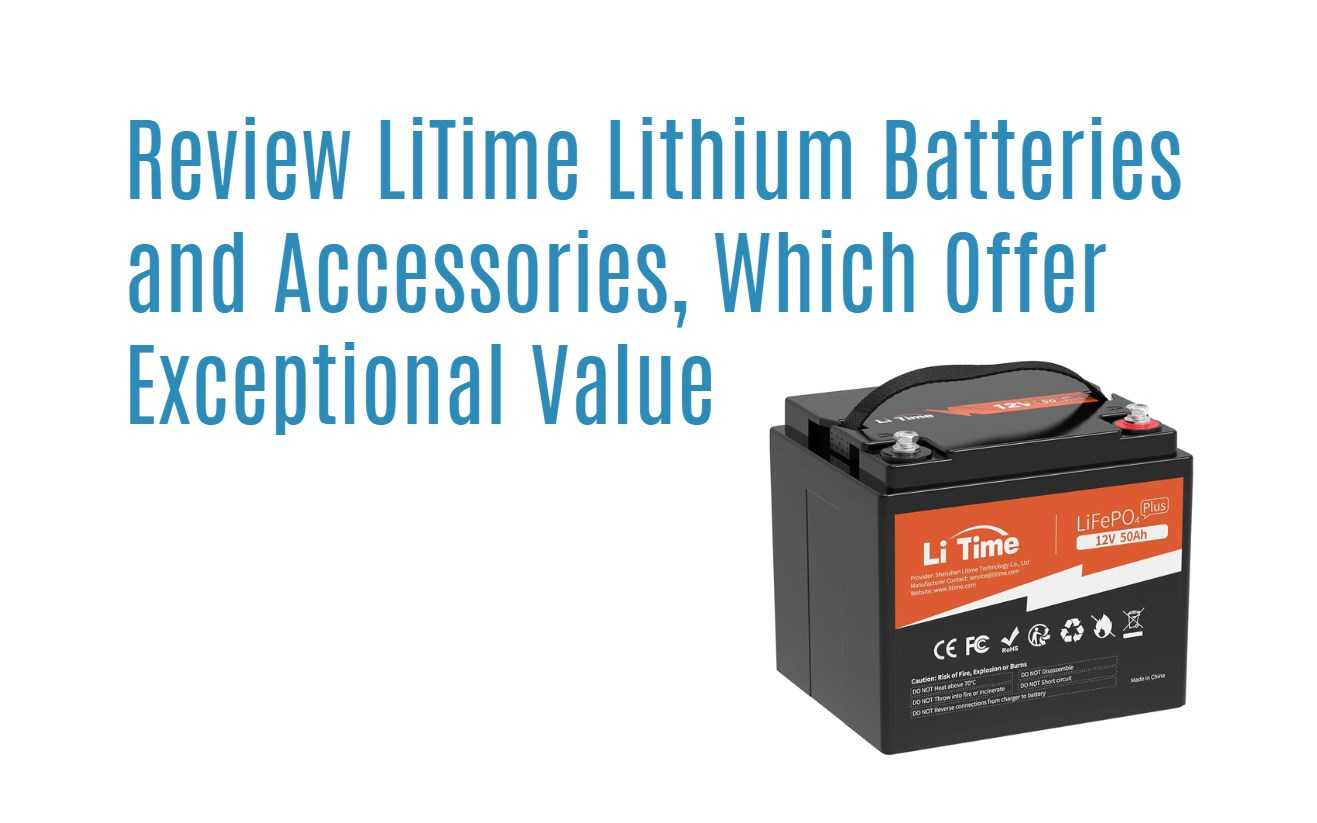
Review LiTime Lithium Batteries and Accessories, Which Offer Exceptional Value

Are LiTime Lithium Batteries and Accessories Really Exceptional Value?

LiTime lithium batteries and accessories offer exceptional value by combining high-performance LiFePO4 chemistry, smart Bluetooth-enabled battery management systems, compact designs, and durable construction, all at competitive prices. Their reliable safety features, long cycle life, and versatile applications make them ideal for RVs, solar, marine, and off-grid use, delivering dependable power without compromise.

What Are the Key Features of LiTime Lithium Batteries?

LiTime batteries are built using advanced LiFePO4 cells known for safety, longevity, and energy density. They feature Bluetooth 5.0 connectivity allowing real-time monitoring via a dedicated app, high-rate discharge capabilities with peak currents up to 1000A, self-heating for cold-weather use, and robust battery management systems (BMS) that provide comprehensive protections against overcharge, overdischarge, overheating, and short circuits. Compact dimensions optimize space without sacrificing capacity.

How Do LiTime Batteries Perform Compared to Traditional Lead-Acid Batteries?

LiTime’s lithium batteries outperform lead-acid batteries by offering up to 8 times greater energy density, significantly lighter weight (reducing system weight by over 50%), deeper discharge capacity with up to 4000+ cycles at 100% depth of discharge (DOD), faster charging times, and a cleaner environmental footprint. Their sealed, maintenance-free construction adds convenience and reliability for demanding applications like RVs, marine vessels, and solar energy systems.

Which Applications Are Best Suited for LiTime Lithium Batteries and Accessories?

LiTime batteries excel in recreational vehicles, trolling motors, marine fishing, off-grid solar setups, camping, and backup power systems. Their features support high continuous output power—up to 3200W for larger models—and temperature resilience from -20°C to 60°C, making them versatile for outdoor and mobile power needs. Accessories such as Bluetooth monitors and chargers enhance user control and system integration.

Why Does Bluetooth Connectivity Add Value to LiTime Batteries?

Bluetooth 5.0 integration enables users to monitor battery status, state of charge (SOC), voltage, and temperature remotely via the LiTime app, simplifying energy management. This real-time data access improves safety by alerting users to potential issues promptly and helps optimize battery usage and lifespan. It is especially valuable in off-grid or remote applications where physical battery checks are inconvenient.

How Does LiTime Ensure Battery Safety and Longevity?

Each LiTime battery incorporates a sophisticated BMS designed in-house, providing five layers of protection: overcharge, over-discharge, overcurrent, short circuit, and temperature safeguards. Alongside high-quality EV-grade LiFePO4 cells certified by UL, CE, RoHS, and UN38.3, this architecture guarantees stability even under high load or harsh environmental conditions. Self-heating features prevent cold-weather damage by maintaining operational temperatures during discharge and charging.

What Are the Environmental Benefits of Using LiTime Lithium Batteries?

LiFePO4 chemistry used in LiTime batteries is non-toxic, free from heavy metals, and highly recyclable. The extended cycle life significantly reduces battery waste compared to conventional lead-acid alternatives. Efficient energy use and the batteries’ compatibility with renewable energy sources like solar panels align with sustainable, eco-friendly energy solutions.

How Does LiTime’s Battery Range Cater to Different Power Needs?

LiTime offers a comprehensive portfolio from compact 12V 50Ah units ideal for fishing electronics and small RVs, to robust 12V 460Ah group 8D batteries capable of powering whole homes or large off-grid applications. Battery expansion via parallel and series connections (up to 4P4S configuration) allows users to scale energy storage tailored to their unique demands.

Comparison Table of Selected LiTime Batteries

Model Voltage Capacity (Ah) Energy (Wh) Max Continuous Discharge (A) Weight (lbs) Dimensions (in)
12V 50Ah 12.8V 50 640 100 ~13.6 Compact Size
12V 100Ah Group 24 12.8V 100 1280 100 21 10.23 x 6.61 x 8.22
12V 320Ah Mini 12.8V 320 4096 200 57.2 15.12 x 7.64 x 9.76
12V 460Ah Group 8D 12.8V 460 5888 250 86.7 20.47 x 10.59 x 8.66

What Accessories Does LiTime Offer to Enhance Battery Use?

LiTime provides a suite of accessories including Bluetooth monitors for real-time remote status feedback, smart chargers compatible with LiFePO4 chemistries, and modular connection systems for easy battery bank expansion. These accessories contribute to seamless integration, better battery life management, and improved user convenience, particularly important in off-grid and mobile power scenarios.

How Does LiTime Compare with Redway Battery in Quality and Market Position?

Both LiTime and Redway Battery manufacture high-quality LiFePO4 batteries with sophisticated BMS technology and have strong certifications. Redway Battery has over 13 years of OEM/ODM experience with extensive customizability across markets like forklifts, golf carts, telecom, and solar. LiTime focuses on user-friendly consumer products geared towards RV, marine, and solar enthusiasts with smart features like Bluetooth connectivity. Together, they represent top-tier options in lithium battery technology, serving complementary niches with reliability and innovation.

Redway Expert Views

“In the energy storage industry, sophisticated battery management and application-specific customization are essential. Redway Battery appreciates the innovation LiTime brings with Bluetooth-enabled, compact, and durable lithium batteries. Such advancements enhance user experience and broaden use cases, especially for off-grid living and recreational power solutions. As the market evolves, integrating smart technology and environmental consideration will define the future of reliable energy storage.”
— Senior Battery Engineer, Redway Battery

Summary of Key Takeaways

  • LiTime lithium batteries leverage advanced LiFePO4 cells, offering high energy density, long lifespan, and smart technology integration.

  • Bluetooth-enabled monitoring provides real-time data, improving user control and safety.

  • Wide product range covers diverse energy needs from small marine electronics to large off-grid solar setups.

  • Safety is ensured through robust BMS and temperature adaptations like self-heating.

  • Environmentally friendly chemistry and long cycle life result in reduced ecological impact.

  • Accessories enhance system management and customization flexibility.

  • Redway Battery complements the market with OEM-grade batteries and broad customization, emphasizing the vitality of quality and innovation in lithium battery technology.

Frequently Asked Questions (FAQs)

Q1: Are LiTime lithium batteries compatible with solar energy systems?
A: Yes, they are optimized for solar and off-grid use, supporting rapid charging and high discharge cycles.

Q2: How does Bluetooth enhance LiTime battery management?
A: It enables users to monitor battery health, state of charge, and receive alerts remotely via an app.

Q3: Can LiTime batteries be connected in parallel or series for greater capacity?
A: Yes, their design supports up to 4P4S configurations for scalable energy storage.

Q4: What warranties do LiTime batteries come with?
A: LiTime batteries typically offer 5-year warranties, reflecting confidence in durability and performance.

Q5: How do LiTime batteries compare environmentally to lead-acid batteries?
A: They are more sustainable due to non-toxic cell chemistry and longer operational lifespan, reducing waste.

Altilium Unveils Breakthroughs in Recycling LFP and NMC Electric Vehicle Batteries

Altilium Unveils Breakthroughs in Recycling LFP and NMC Electric Vehicle Batteries

Altilium announces technological advancements in recycling LFP and NMC electric vehicle batteries. They have demonstrated the ability to recycle both types of batteries, which is crucial for developing a sustainable circular economy for battery materials.
  1. Technological Advancements: Altilium has made significant strides in recycling LFP and NMC electric vehicle batteries.
  2. Recycling Capabilities: They have demonstrated the ability to recycle both types of batteries, contributing to a sustainable circular economy for battery materials.
  3. Environmental Impact: These breakthroughs support responsible and efficient management of electric vehicle battery waste, promoting sustainability in the electric vehicle industry.
By pushing the boundaries of battery recycling technology, Altilium plays a crucial role in minimizing waste and maximizing the environmental benefits of electric vehicle batteries.

Altilium, who is that?

Altilium is a clean technology group based in the UK that focuses on developing sustainable and low-carbon battery materials. They play a crucial role in supporting the global energy sector’s shift from fossil-based to zero-carbon sources. Altilium’s innovative solutions contribute to the development of a cleaner and more sustainable energy landscape.

Who is the leader in EV battery recycling?

China is the world leader in EV battery recycling, with a strong focus on the collection and recycling management of lithium-ion batteries used in electric vehicles. Their efforts contribute to the development of a sustainable and circular economy for battery materials.
  1. Global Leadership: China leads the world in EV battery recycling, focusing on the collection and recycling management of lithium-ion batteries.
  2. Sustainable Practices: Their efforts contribute to the development of a circular economy for battery materials, promoting sustainability in the electric vehicle industry.
Through their leadership in EV battery recycling, China plays a crucial role in minimizing waste and maximizing the environmental benefits of electric vehicle batteries.

What is the future of battery recycling?

The future of battery recycling is promising. As the demand for electric vehicles continues to rise, battery recycling is becoming increasingly important. By 2050, recycled batteries are expected to account for approximately half of the nickel and lithium supply. Investment in research and technology is driving the development of more efficient and sustainable battery recycling methods.
  1. Rising Demand: The exponential growth of electric vehicles is driving increased demand for battery recycling.
  2. Recycled Battery Supply: By 2050, recycled batteries are projected to account for around half of the nickel and lithium supply.
  3. Research and Technology: Investment in research and technology is paving the way for more efficient and sustainable battery recycling methods.
As the industry focuses on innovation and sustainability, the future of battery recycling holds the potential to create a more circular and environmentally friendly approach to managing battery waste.

Who are the key players in battery recycling?

The key players in battery recycling include Accurec Recycling GmbH, Aqua Metals, Battery Solutions, Call2recycle Inc., Eco-Bat Technologies, Enersys, Exide Technologies, and G&P. These companies are leading the way in sustainable battery recycling practices.
  1. Accurec Recycling GmbH: This company is at the forefront of battery recycling, promoting sustainable practices.
  2. Aqua Metals: They contribute to the responsible management of battery waste through their innovative recycling solutions.
  3. Battery Solutions, Call2recycle Inc., Eco-Bat Technologies, Enersys, Exide Technologies, and G&P: These companies play a significant role in developing sustainable battery recycling practices.
Together, these key players contribute to the advancement of battery recycling, promoting sustainability and responsible waste management.

What is the lithium-ion battery recycling market forecast?

The global lithium-ion battery recycling market is projected to reach $26.7 billion by 2031, growing at a CAGR of 18.65% during the forecast period for 2024-2031.
  1. Market Forecast: The global lithium-ion battery recycling market is projected to reach $26.7 billion by 2031.
  2. Growth Rate: The market is anticipated to grow at a CAGR of 18.65% during the forecast period from 2024 to 2031.
  3. Rising Demand: These forecasts reflect the increasing demand for battery recycling as the adoption of lithium-ion batteries continues to rise.
The projected growth of the lithium-ion battery recycling market indicates a positive future for sustainable and efficient battery waste management.

What is the lithium-ion battery recycling market forecast?

How much profit is being made from EV battery recycling?

The EV battery recycling market was worth $1.5 billion in 2019 and is projected to reach $12.2 billion by 2025. The increasing demand for battery recycling, driven by the growing adoption of electric vehicles, contributes to the profit potential of the industry.
  1. Market Size: The battery recycling market was valued at $1.5 billion in 2019 and is projected to reach $12.2 billion by 2025.
  2. Growing Demand: The increasing adoption of electric vehicles drives the demand for battery recycling, contributing to the profit potential of the industry.
  3. Sustainability and Value Creation: The industry’s focus on sustainability and value creation enhances the profit potential of EV battery recycling.
As the market continues to grow, the profit potential of EV battery recycling expands, driven by the increasing demand for sustainable and efficient battery waste management.

Why can’t you recycle EV batteries?

EV batteries, including lithium-ion batteries, are recyclable. However, the recycling process may not recover all the materials completely due to their lower value, especially components like plastics that may not be economically viable to recycle.
  1. Recyclability: EV batteries, including lithium-ion batteries, can be recycled.
  2. Limitations in Recycling: Some materials, like plastics, may not be fully recycled due to their lower value.
  3. Economic Viability: The recycling process focuses on recovering valuable metals, but other components may not be economically viable to recycle.
Efforts are being made to improve recycling technologies and maximize the recovery of materials from EV batteries.
Search products

Need a Quick Quote on Wholesale Prices? Contact Redway Battery Now.

X
Product has been added to your cart


Shenzhen Redway Power, Inc

Tel: +86 189 7608 1534
Tel: +86 (755) 2801 0506
E-mail: contact@redwaybattery.com
Website: www.redway-tech.com
Youtube: @RedwayPower
TikTok: @redwaybattery

Get a Quick Quote

Hot OEM

Forklift Lithium Battery
Golf Cart Lithium Battery
RV Lithium Battery
Rack-mounted Lithium Battery

Hot Batteries

24V 150Ah Forklift Lithium Battery
24V 200Ah Forklift Lithium Battery
48V 400Ah Forklift Lithium Battery
48V 600Ah Forklift Lithium Battery
80V 400Ah Forklift Lithium Battery
36V 100Ah Golf Cart Lithium Battery
48V 100Ah Golf Cart Lithium Battery
51.2V 50Ah 3U Rack-mounted Lithium Battery
51.2V 100Ah 3U Rack-mounted Lithium Battery
12V 100Ah RV LiFePO4 Lithium Battery (Self-heating)

Hot Blog

Golf Carts
Server Rack Battery
Knowledge