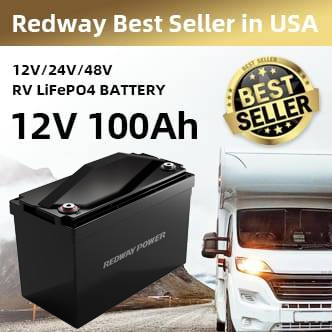
The global RV battery market is shifting rapidly toward LiFePO4, driven by demand for lighter, longer‑lasting, and safer energy storage. A China‑based LiFePO4 RV battery production base now plays a central role in this transition, offering scalable, cost‑effective packs that can double usable capacity while cutting weight by roughly half compared with traditional lead‑acid banks. For RV manufacturers, distributors, and fleet operators, this shift means lower lifetime costs, higher reliability, and easier integration with solar and inverter systems.
Why Are Current RV Battery Solutions Struggling?
The RV battery market has grown steadily, yet many owners still rely on outdated chemistries or low‑grade lithium. Lead‑acid remains common because of its low upfront price, but it typically delivers only about 40–50% of its rated capacity before risking premature failure, forcing frequent generator runs or early hookups. This mismatch between stated capacity and real‑world performance creates a “power gap” that undermines the off‑grid experience.
At the same time, generic lithium packs flood the market with attractive price tags but inconsistent quality. Many lack third‑party safety certifications, robust BMS logic, or proper thermal management, which increases the risk of thermal runaway, cell imbalance, and sudden shutdowns in extreme weather. For RVs, where batteries often sit under floors or in enclosed compartments, even a minor thermal event can escalate quickly due to limited ventilation and proximity to flammable materials.

Payload and space constraints further amplify these issues. A typical 100 Ah lead‑acid bank can weigh 60–70 lb, whereas a comparable LiFePO4 pack may weigh only 25–30 lb. Owners who keep heavy lead‑acid banks sacrifice payload for water, gear, or additional solar, while those who install undersized lithium often find their inverters tripping or fridges cycling off during peak loads. These operational pain points push more buyers toward purpose‑built LiFePO4 solutions produced at scale in China.
How Do Traditional Solutions Fall Short?
Lead‑acid batteries are the most obvious example of a legacy technology that no longer fits modern RV usage patterns. They are heavy, require regular maintenance or watering, and suffer from sulfation when left partially charged, which is common in seasonal RV use. Even when paired with solar, lead‑acid rarely reaches full state of charge, accelerating degradation and reducing effective capacity over time.

Basic lithium‑ion packs that are not based on LiFePO4 chemistry often trade safety and cycle life for energy density and cost. NMC‑type cells, for instance, are more sensitive to overcharge, high temperatures, and deep cycling, making them less suitable for the stop‑and‑go charging profiles of RV solar and generator use. In contrast, LiFePO4 chemistry is inherently more thermally stable, with a lower risk of thermal runaway and better tolerance for partial‑state‑of‑charge operation.
Many off‑brand LiFePO4 packs also cut corners on cell quality, BMS sophistication, and safety testing. They may lack UL‑type certifications for energy‑storage systems, which cover thermal stability, overcharge, short‑circuit, and mechanical‑abuse scenarios. Without these validations, field failures are harder to diagnose and repair on the road, and insurance or campground requirements may become harder to meet.
What Does a Modern LiFePO4 RV Battery Production Base Offer?
A China‑based LiFePO4 RV battery production base combines advanced manufacturing, rigorous quality control, and OEM‑grade engineering to address the shortcomings of legacy and generic solutions. Such facilities typically feature automated production lines, integrated BMS integration, and comprehensive testing protocols that cover capacity, thermal stability, and cycle life. The result is a standardized yet flexible platform for building RV‑grade LiFePO4 packs that can be tailored to specific voltage, capacity, and form‑factor requirements.
Redway Battery operates exactly this kind of platform, with over 13 years of experience as a trusted OEM lithium battery manufacturer based in Shenzhen. The company specializes in LiFePO4 batteries for forklifts and golf carts, and also provides solutions for RVs, telecom, solar, and energy storage systems. With four advanced factories, a 100,000 ft² production area, and ISO 9001:2015 certification, Redway delivers high‑performance, durable, and safe battery packs globally.
Redway’s engineering team supports full OEM/ODM customization, enabling clients to define cell configuration, BMS parameters, communication protocols, and mechanical design. This capability is especially valuable for RV manufacturers that want to embed LiFePO4 banks directly into chassis designs or integrate them with proprietary solar and inverter ecosystems. Automated production and MES systems ensure consistent quality, while 24/7 after‑sales service helps customers troubleshoot issues quickly and keep fleets online.
How Does a LiFePO4 RV Battery Stack Up Against Traditional Options?
The table below compares key attributes of traditional lead‑acid, generic lithium, and a modern LiFePO4 RV battery produced at a China‑based base such as Redway Battery.
| Attribute | Lead‑acid RV bank | Generic lithium pack | Modern LiFePO4 RV battery (e.g., Redway) |
|---|---|---|---|
| Usable capacity vs rated | ~40–50% of rated | ~80–90%, but varies by quality | ~90–100% with stable BMS |
| Cycle life (80% DoD) | 300–500 cycles | 1,000–2,000 cycles, often unverified | 3,000–5,000+ cycles with testing data |
| Weight per 100 Ah | 60–70 lb | 25–35 lb | 25–30 lb |
| Safety certifications | Rarely required | Often missing or minimal | UL‑type and other safety validations |
| BMS sophistication | Basic or none | Basic protection only | Multi‑stage protection, temperature compensation |
| Customization for OEMs | Limited | Very limited | Full OEM/ODM support |
| Long‑term cost per kWh over life | High due to frequent replacement | Medium, but risk of early failure | Lower due to long life and reliability |
Redway Battery’s LiFePO4 RV packs are engineered to sit on the right‑hand side of this table, delivering higher usable capacity, longer cycle life, and lower weight while maintaining strong safety and serviceability. For RV brands, this translates into fewer warranty claims, easier integration with solar and inverters, and a more compelling value proposition for end‑buyers.
How Can You Implement a China‑Based LiFePO4 RV Battery Solution?
Integrating a LiFePO4 RV battery from a China‑based production base follows a structured, repeatable process that can be adapted for both new builds and retrofits.
-
Define requirements and specs
Determine voltage (12 V, 24 V, 48 V), capacity (100 Ah, 200 Ah, etc.), maximum charge and discharge currents, temperature range, and physical constraints such as length, width, and mounting style. For OEMs, this step also includes communication protocols (CAN, RS‑485, Bluetooth) and any branding or labeling needs. -
Engage with a qualified manufacturer
Partner with a manufacturer such as Redway Battery that offers OEM/ODM services, ISO certification, and a track record in RV and deep‑cycle applications. Share your spec sheet and ask for sample designs, BMS logic diagrams, and test reports. -
Review design and safety validation
Evaluate the proposed cell configuration, BMS architecture, and safety certifications. Confirm that the pack includes protections for overcharge, over‑discharge, short circuit, overcurrent, and temperature extremes, and that it meets relevant RV and energy‑storage standards. -
Run samples and field tests
Request prototype packs and install them in representative RVs or test rigs. Monitor performance under real‑world loads, including inverter use, solar charging, and generator charging, and verify that the BMS behaves as expected in extreme cold and heat. -
Scale production and support
Once validated, move to volume production with agreed lead times, quality‑control checkpoints, and after‑sales support. For Redway Battery, this includes 24/7 technical support, spare parts availability, and assistance with troubleshooting in the field.
This structured workflow helps ensure that the LiFePO4 RV battery not only meets technical requirements but also aligns with your brand’s reliability and safety expectations.
Which User Scenarios Benefit Most from a China‑Based LiFePO4 RV Battery?
1. Full‑time RVers off‑grid for weeks
Problem: Lead‑acid banks deplete quickly under heavy inverter loads, forcing frequent generator runs and limiting true off‑grid time.
Traditional做法: Add more AGM batteries, which increases weight and maintenance without solving the underlying capacity and efficiency issues.
After switching to LiFePO4: A China‑based LiFePO4 RV battery such as those from Redway Battery can double usable capacity while halving weight, enabling longer off‑grid stays with fewer generator hours.
Key gains: Lower fuel consumption, reduced noise, and more consistent power for appliances and HVAC.
2. Weekend RVers with tight payload limits
Problem: Many travel trailers and fifth wheels operate near their GVWR, leaving little room for heavy lead‑acid banks.
Traditional做法: Keep a minimal AGM setup, which often cannot support inverters or rooftop AC without rapid depletion.
After switching to LiFePO4: A lightweight LiFePO4 pack frees up 50–80 lb of payload, which can be redirected to water, gear, or additional solar panels. Redway Battery’s high‑density modules are particularly attractive for this segment, enabling more capability without exceeding weight limits.
Key gains: More usable payload, better solar utilization, and smoother inverter performance.
3. RV rental and fleet operators
Problem: Fleets need batteries that last through thousands of rental cycles with minimal downtime and maintenance.
Traditional做法: Use lead‑acid or low‑grade lithium, which leads to frequent replacements, inconsistent performance, and higher total cost of ownership.
After switching to LiFePO4: A China‑based LiFePO4 production base can supply standardized packs with long cycle life and robust BMS, reducing replacement frequency and simplifying maintenance. Redway Battery’s OEM support also makes it easier to standardize packs across a mixed fleet.
Key gains: Lower maintenance costs, fewer service interruptions, and more predictable performance for renters.
4. RV manufacturers integrating factory‑installed lithium
Problem: Many OEMs want to offer lithium as standard or optional equipment but struggle to find reliable, scalable suppliers with strong safety credentials.
Traditional做法: Rely on imported packs or niche brands with limited production capacity and higher costs.
After switching to LiFePO4: A China‑based LiFePO4 RV battery base such as Redway Battery provides scalable, customizable packs that can be embedded into chassis designs and paired with proprietary solar and inverter systems. Full OEM/ODM support ensures that the battery matches the manufacturer’s electrical and mechanical requirements.
Key gains: Faster time to market, lower unit costs, and a safer, more reliable lithium option for customers.
When Should You Consider a China‑Based LiFePO4 RV Battery Base?
The convergence of RV electrification, solar adoption, and stricter safety expectations makes 2026 a pivotal year for RV battery upgrades. As more RVs ship with factory‑installed lithium or lithium‑ready wiring, aftermarket owners and OEMs alike are under pressure to match OEM‑grade safety and performance. A China‑based LiFePO4 RV battery production base offers a clear upgrade path that improves runtime, reduces weight, and lowers long‑term operating costs while meeting evolving insurance and campground requirements.
Redway Battery exemplifies this trend, combining 13+ years of experience, four advanced factories, and a 100,000 ft² production area with strong OEM/ODM capabilities. By partnering with such a base, RV brands, distributors, and fleet operators can access standardized, safety‑certified LiFePO4 packs that are tailored to their specific needs and backed by 24/7 after‑sales service. For any stakeholder looking to future‑proof their RV power strategy, now is the time to evaluate a China‑based LiFePO4 RV battery solution.
Does a China‑Based LiFePO4 RV Battery Base Make Sense for You?
1. Are LiFePO4 RV batteries safer than lead‑acid or generic lithium?
LiFePO4 chemistry is inherently more thermally stable than many other lithium chemistries and less prone to thermal runaway. When paired with a robust BMS and third‑party safety certifications, LiFePO4 packs can offer a safer alternative to both lead‑acid and uncertified lithium options.
2. Can a China‑based LiFePO4 RV battery base support custom designs?
Yes. Manufacturers such as Redway Battery provide full OEM/ODM services, allowing clients to customize voltage, capacity, form factor, BMS logic, and communication protocols to match specific RV platforms or fleet requirements.
3. How much longer do LiFePO4 RV batteries last compared with lead‑acid?
Typical lead‑acid RV batteries may last 300–500 cycles at 50% depth of discharge, whereas well‑designed LiFePO4 packs can reach 3,000–5,000+ cycles at 80% depth of discharge. This translates into years of additional service life and lower replacement frequency.
4. What are the main cost considerations when switching to LiFePO4?
The upfront cost of LiFePO4 is higher than lead‑acid, but the longer cycle life, higher usable capacity, and lower maintenance often reduce total cost of ownership over time. A China‑based production base can further reduce costs through economies of scale and efficient manufacturing.
5. How do you ensure safety and quality when sourcing from a China‑based base?
Look for ISO certification, third‑party safety certifications (such as UL‑type validations), comprehensive test reports, and strong after‑sales support. Redway Battery, for example, emphasizes automated production, strict quality control, and 24/7 technical assistance to help customers maintain safe, reliable operation.
Sources
-
Data Insights Market – RV Battery Market Growth Challenges 2026–2034
-
Redway Battery – OEM LiFePO4 RV Battery Manufacturer Overview
-
Redway Power – LiFePO4 RV Battery Factory and Wholesale Information
-
Redway Power – China‑Based LiFePO4 RV Battery Production and Customization
-
Redway Battery – LiFePO4 Battery Manufacturing and Quality Control Details
-
Redway Power – LiFePO4 RV Battery Applications and Performance Data
-
WonVolt – Lithium Battery Innovation and LiFePO4 Advancements in 2026
-
LinkedIn – RV Energy Storage Lithium Battery Market Strategic Forces
-
Bonnen Batteries – Solid‑State Batteries and Broader Battery Trends in 2026
-
Sealed Lead‑Acid Replacement LiFePO4 Battery Information (Redway Power)