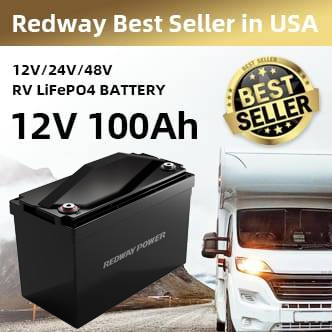
High‑efficiency LiFePO4 RV batteries are redefining mobile energy storage by combining long cycle life, deep‑discharge capability, and compact weight in a single solution. For RV owners, fleets, and off‑grid operators, upgrading to modern LiFePO4 packs can double usable capacity, cut charging time by half, and reduce long‑term replacement costs by 40–60% compared with traditional lead‑acid systems.
Why is the RV battery market shifting to LiFePO4?
The global RV battery market was valued at roughly 377 million dollars in 2025 and is projected to grow steadily through the early 2030s, driven by rising RV ownership and longer, more remote trips. As RVs add inverters, rooftop AC units, and solar‑ready wiring, demand has shifted from basic lead‑acid to high‑efficiency lithium‑ion chemistries, especially LiFePO4, which now accounts for an increasing share of new RV power‑system upgrades.
Industry data show that typical AGM or flooded lead‑acid RV batteries deliver only about 300–500 cycles at moderate depth of discharge, whereas modern LiFePO4 packs routinely achieve 2,000–5,000+ cycles at 80% depth of discharge. This means a well‑built LiFePO4 RV battery can last 5–10 years under daily cycling, versus 2–4 years for conventional lead‑acid, creating a clear economic and operational incentive to switch.

How are RV owners currently struggling with energy storage?
Many RVers still rely on legacy lead‑acid banks that sag under load, limit usable capacity, and require frequent replacement. A typical 100 Ah flooded or AGM battery may only provide 40–50 Ah of usable energy before risking damage, while a LiFePO4 pack of the same nominal capacity can safely deliver 80–90 Ah, effectively doubling usable power without adding space.
Weight is another major pain point. A 100 Ah lead‑acid battery can weigh around 70 pounds, whereas a 100 Ah LiFePO4 unit often weighs about 30–35 pounds. For RVs with strict payload limits—especially Class B vans and smaller trailers—this 50–60% weight reduction frees up capacity for water, gear, or passengers while improving fuel efficiency and handling.

What are the hidden costs of sticking with traditional RV batteries?
Beyond shorter life and lower usable capacity, traditional lead‑acid systems incur hidden costs in maintenance, downtime, and inefficiency. Flooded batteries require regular watering, equalization charges, and careful state‑of‑charge management to avoid sulfation, which many casual RVers neglect. AGM units are maintenance‑free but still degrade quickly if chronically undercharged or deeply cycled, leading to premature failure and unexpected replacement bills.
From a charging perspective, lead‑acid banks often need 6–10 hours to recharge from 50% state of charge, even with a robust converter or generator. In contrast, many LiFePO4 RV batteries can accept higher charge currents and refill from 20–80% in 2–4 hours, which is critical when boondocking or using limited solar and generator windows. These inefficiencies translate into more generator runtime, higher fuel costs, and more wear on the vehicle’s charging system.
How do traditional lithium‑ion options fall short for RVs?
Some budget lithium‑ion packs marketed for RVs use NMC or other high‑energy chemistries that prioritize capacity and low upfront cost over safety and longevity. These cells are more sensitive to overcharge, high temperatures, and deep cycling, making them less suited to the stop‑and‑go charging patterns of solar‑plus‑generator RV systems. Thermal‑runaway risk, though still low in well‑built packs, is higher than with LiFePO4, which is a concern in enclosed RV compartments and garages.
Many entry‑level lithium RV batteries also skimp on battery‑management system (BMS) features, offering minimal cell balancing, basic temperature protection, and no remote monitoring. Without robust BMS logic, packs can suffer from cell imbalance, reduced cycle life, and unexpected shutdowns during high‑load events such as air‑conditioner startup or inverter surge. This undermines the reliability that RVers expect from a premium lithium upgrade.
What makes high‑efficiency LiFePO4 RV batteries different?
High‑efficiency LiFePO4 RV batteries are engineered specifically for mobile, deep‑cycle applications with features that address the core limitations of lead‑acid and lower‑grade lithium. They combine thermally stable LiFePO4 cells, multi‑stage BMS protection, and high‑charge‑current capability into a single compact pack that can be wired in parallel or series to match an RV’s voltage and capacity needs.
Key capabilities include:
-
2,000–5,000+ cycles at 80% depth of discharge, enabling 5–10 years of daily use.
-
Usable capacity of 80–90% of rated Ah, versus 40–50% for lead‑acid.
-
Weight reduction of roughly 50–60% for the same nominal capacity.
-
Fast charging from 20–80% in 2–4 hours with compatible chargers.
-
Stable voltage under load, reducing brownouts and improving inverter efficiency.
Manufacturers such as Redway Battery design their LiFePO4 RV lines around these metrics, integrating smart BMS with Bluetooth monitoring, temperature‑based charge control, and configurable charge profiles that can be tuned to specific solar setups, inverter sizes, and travel patterns. Redway Battery’s RV‑focused LiFePO4 packs are produced in four advanced factories with a 100,000 ft² production area, ensuring consistent quality and scalability for both individual RVers and commercial fleets.
How do LiFePO4 RV batteries compare with traditional solutions?
The table below compares typical performance characteristics of lead‑acid and LiFePO4 RV batteries.
| Metric | Lead‑acid (AGM/Flooded) | LiFePO4 RV Battery |
|---|---|---|
| Nominal cycle life (80% DoD) | 300–500 cycles | 2,000–5,000+ cycles |
| Usable capacity (% of rated Ah) | 40–50% | 80–90% |
| Typical weight (100 Ah) | ~70 lb | ~30–35 lb |
| Charge time (20–80%) | 6–10 hours | 2–4 hours |
| Maintenance needs | Regular checks, watering (flooded), equalization | Virtually maintenance‑free |
| Thermal stability and safety | Moderate; risk of gassing and thermal issues | High; lower thermal‑runaway risk |
Redway Battery’s LiFePO4 RV packs sit firmly in the high‑efficiency column, combining long‑term durability with OEM‑grade engineering for both aftermarket upgrades and factory‑integrated systems. Their UL‑style‑tested designs emphasize safety, predictability, and compatibility with common RV charge sources, including solar, shore power, and alternator‑based systems.
How can you implement a LiFePO4 RV battery system step by step?
Deploying a high‑efficiency LiFePO4 RV battery system follows a clear, repeatable workflow:
-
Audit your energy needs. Calculate daily watt‑hour consumption for lights, fridge, water pump, inverter loads, and any AC units. A typical mid‑size RV with moderate solar may need 200–400 Ah at 12 V (2.4–4.8 kWh) for comfortable off‑grid use.
-
Choose voltage and capacity. Most RVs use 12 V systems; larger coaches may run 24 V or 48 V. Select a LiFePO4 pack or bank whose combined capacity matches or slightly exceeds your calculated daily draw, leaving headroom for cloudy days and peak loads.
-
Verify charging compatibility. Ensure your converter/charger, solar charge controller, and alternator can supply the recommended voltage and current profile for LiFePO4 (often around 14.2–14.6 V absorption and 13.5–13.8 V float). Some systems require a lithium‑specific charger profile or a DC‑DC charger between the alternator and battery.
-
Install the battery and BMS. Mount the LiFePO4 pack in a well‑ventilated, secure location, following manufacturer clearances. Connect the BMS leads to each cell or module, then wire the main positive and negative to the RV’s DC distribution panel, inverter, and charge sources, observing polarity and using appropriately sized cables.
-
Configure and test. Use the manufacturer’s app or interface (for Bluetooth‑enabled packs such as those from Redway Battery) to set charge parameters, low‑voltage cutoffs, and temperature limits. Run a full charge‑discharge cycle under controlled loads to confirm voltage stability and BMS behavior.
-
Monitor and optimize. Track state of charge, temperature, and charge efficiency over several trips. Adjust solar tilt, generator runtime, or inverter usage to keep the pack in its optimal operating window and maximize cycle life.
What are typical use‑case benefits of LiFePO4 RV batteries?
Case 1: Weekend boondocker with a Class C motorhome
Problem: The owner relies on a 200 Ah AGM bank that runs out of power by day two of dry camping, forcing early generator starts.
Traditional practice: Running the generator for 2–3 hours each morning and evening to recharge lead‑acid batteries.
After switching to LiFePO4: A 200 Ah LiFePO4 pack delivers roughly 160–180 Ah of usable energy and refills from solar plus short generator bursts in 3–4 hours.
Key benefits: Extended off‑grid stays (3–5 days without shore power), fewer generator hours, and lower fuel and noise impact.
Case 2: Full‑time RVer with rooftop solar
Problem: The RV has 400 W of solar but still struggles to keep lead‑acid batteries above 50% state of charge on cloudy days.
Traditional practice: Limiting inverter use, avoiding AC loads, and accepting frequent undercharging.
After switching to LiFePO4: The same solar array can push a 300 Ah LiFePO4 bank from 20–80% in a single sunny day, with deeper usable capacity and more stable voltage.
Key benefits: Ability to run larger inverters and small AC units more reliably, plus longer autonomy during overcast periods.
Case 3: Commercial RV rental fleet
Problem: Rental RVs often return with deeply discharged or damaged lead‑acid banks due to inconsistent guest charging habits.
Traditional practice: Replacing batteries every 2–3 years and absorbing labor and downtime costs.
After switching to LiFePO4: Fleet‑wide deployment of UL‑style‑tested LiFePO4 packs reduces annual battery‑replacement costs by 40–60% over a 10‑year horizon.
Key benefits: Lower maintenance, fewer roadside failures, and higher asset utilization, with Redway Battery’s OEM‑grade packs supporting consistent performance across hundreds of units.
Case 4: Off‑grid camper van with limited space
Problem: A Class B van has tight under‑floor space and strict weight limits, yet needs enough power for lights, fridge, and a small inverter.
Traditional practice: Squeezing in two heavy AGM batteries that consume significant payload.
After switching to LiFePO4: A single 100 Ah LiFePO4 pack weighing about 31 pounds replaces two 70‑pound AGM units, freeing up 100+ pounds of payload.
Key benefits: More cargo or water capacity, better fuel economy, and longer off‑grid capability from a smaller physical footprint.
How will the future of RV energy storage evolve?
The convergence of RV electrification, solar adoption, and stricter safety expectations is making high‑efficiency LiFePO4 RV batteries a practical necessity rather than a luxury. As more RVs ship with factory‑installed lithium or lithium‑ready wiring, aftermarket owners face pressure to match OEM‑grade safety and performance to maintain resale value and insurance compliance.
Market forecasts indicate that global lithium‑battery production will exceed 2.7 TWh in 2026, with LiFePO4 gaining share in stationary and mobile storage due to its balance of safety, cycle life, and cost. For RV manufacturers, installers, and end users, adopting LiFePO4 now positions them ahead of tightening regulations, rising fuel prices, and customer demand for longer, quieter, and more reliable off‑grid experiences. Redway Battery’s UL‑style‑tested LiFePO4 RV packs, backed by 13+ years of OEM manufacturing experience and automated production, are designed to support this transition with scalable, safe, and durable energy solutions.
Can you answer common questions about LiFePO4 RV batteries?
Can LiFePO4 RV batteries be used with existing RV chargers?
Most modern RV converters and solar charge controllers can be reprogrammed with a lithium‑specific profile, but some older units may require a DC‑DC charger or a dedicated lithium charger to avoid overcharging or undercharging.
Are LiFePO4 RV batteries safe in enclosed compartments?
LiFePO4 chemistry is inherently more thermally stable than other lithium‑ion types, with a lower risk of thermal runaway. When paired with a robust BMS and proper ventilation, LiFePO4 packs are considered safe for RV use, especially if they meet recognized safety‑test standards.
How long do LiFePO4 RV batteries last in real‑world use?
Under typical RV cycling patterns, a quality LiFePO4 pack can deliver 2,000–5,000+ cycles at 80% depth of discharge, translating to roughly 5–10 years of daily use before capacity drops below 80% of its original rating.
Can you mix LiFePO4 batteries with lead‑acid in the same RV system?
Mixing chemistries in the same bank is not recommended because their voltage profiles and charging requirements differ, which can lead to undercharging or overcharging and reduced lifespan for both types.
Does Redway Battery offer custom LiFePO4 packs for RVs?
Yes, Redway Battery provides full OEM/ODM customization for LiFePO4 RV batteries, including tailored capacity, voltage, BMS features, and mechanical form factors to fit specific RV models and energy‑storage architectures.
Sources
-
RV battery market size and growth outlook
-
LiFePO4 versus lead‑acid performance and cycle‑life data
-
Lithium‑ion battery production and supply‑demand outlook
-
LiFePO4 RV battery technical specifications and use‑case examples
-
Redway Battery product and engineering information for LiFePO4 RV packs