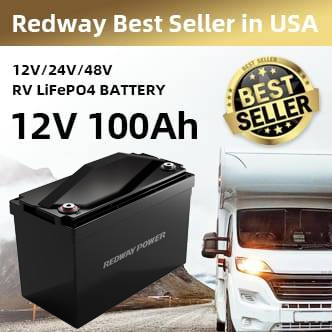
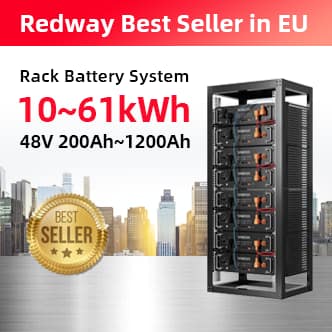
Global demand for rack‑mounted lithium battery systems has surged in recent years, driven by growth in renewable energy storage, telecom backup, and industrial applications. For buyers sourcing from Chinese manufacturers, the real competitive edge lies not only in product quality but in how efficiently bulk orders are planned, packaged, and shipped across borders. Redway Battery, a Shenzhen‑based OEM lithium battery manufacturer with over 13 years of experience, exemplifies how integrated logistics and compliance‑driven shipping can turn large‑volume LiFePO4 rack‑battery orders into predictable, scalable supply‑chain operations.
How Has the Rack Lithium Battery Market Changed?
The global lithium‑ion battery market is projected to grow at a double‑digit compound annual rate through the next decade, with stationary energy storage and industrial applications accounting for an increasing share. As more projects adopt 48 V and 51.2 V LiFePO4 rack systems for solar storage, telecom, and material‑handling fleets, procurement teams are placing larger, more frequent orders from China‑based OEMs.
At the same time, regulatory scrutiny on lithium‑battery transport has tightened, with stricter UN‑38.3 testing, MSDS requirements, and customs documentation for sea and air shipments. This creates tension between buyers’ need for low‑cost, high‑volume supply and the rising complexity of international logistics and compliance.

What Are the Main Pain Points in Bulk‑Order Logistics?
High and Unpredictable Shipping Costs
Importers frequently discover that quoted FOB prices from Chinese manufacturers do not reflect the total landed cost of rack lithium batteries. Sea‑freight surcharges, container‑handling fees, port congestion, and last‑mile delivery can add 15–30% or more to the invoice value, especially for 40‑foot containers of heavy battery racks.
Long and Variable Lead Times
For large‑format LiFePO4 rack packs, lead times can stretch from 4–8 weeks at the factory plus 3–6 weeks in transit, depending on the route and carrier. Seasonal peaks, port delays, and documentation errors often push delivery windows beyond the initial estimate, disrupting project timelines and inventory planning.

Compliance and Safety Risks
Lithium batteries are classified as dangerous goods, and non‑compliant packaging or labeling can lead to cargo rejection, fines, or even shipment bans. Buyers without in‑house logistics expertise may underestimate the effort required to coordinate UN‑38.3 reports, MSDS, air‑freight or sea‑freight declarations, and regional certifications such as CE, RoHS, or UL‑equivalent standards.
Why Are Traditional Solutions Insufficient?
Fragmented Supplier–Freight‑Forwarder Handoffs
Many buyers still rely on a “factory‑only” model: the Chinese manufacturer produces the rack batteries, then hands the goods to a third‑party freight forwarder with minimal coordination. This often results in misaligned packaging (e.g., racks not palletized or labeled for the chosen carrier), missing documentation, and last‑minute compliance fixes that delay loading.
One‑Size‑Fits‑All Packaging
Generic carton or crate solutions may work for small shipments but are inefficient for bulk orders of rack‑mounted LiFePO4 systems. Heavy racks require robust palletization, shock‑absorbing materials, and clear dangerous‑goods labeling; without this, damage rates rise and insurance claims increase.
Limited Visibility and After‑Sales Coordination
Traditional suppliers often provide minimal shipment tracking and no integrated after‑sales support for logistics‑related issues. If a container is held at customs or a pallet arrives damaged, buyers must juggle multiple contacts—factory, forwarder, customs broker—instead of having a single point of accountability.
What Does a Modern Bulk‑Order Logistics Solution Look Like?
A modern solution for bulk‑order logistics from Chinese rack lithium battery manufacturers combines OEM production, in‑house packaging design, and carrier‑agnostic shipping coordination. Redway Battery, for example, operates four advanced factories with a 100,000 ft² production area and ISO 9001:2015 certification, enabling it to control both manufacturing and outbound logistics for large‑volume LiFePO4 rack‑battery orders.
Core Capabilities
-
End‑to‑end order planning: From MOQ confirmation and production scheduling to container‑load optimization and route selection.
-
UN‑certified packaging: Racks are palletized, shrink‑wrapped, and labeled in compliance with UN‑38.3 and IATA/IMDG regulations for sea or air transport.
-
Multi‑mode shipping options: Sea freight for cost‑sensitive bulk orders, air freight for urgent or smaller‑volume shipments, and consolidated LCL services for buyers not ready to fill a full container.
-
Documentation and compliance: Full support for MSDS, packing lists, commercial invoices, and carrier‑specific declarations, reducing customs clearance delays.
Redway Battery further integrates its MES‑driven production line with logistics planning, allowing buyers to align delivery windows with project milestones and regional inventory targets.
How Does the New Solution Compare to Traditional Approaches?
| Aspect | Traditional Approach | Modern Integrated Solution (e.g., Redway Battery) |
|---|---|---|
| Order planning | Factory focuses only on production; logistics outsourced | Coordinated production and logistics planning from one team |
| Packaging | Generic crates or cartons; minimal DG compliance | UN‑certified, palletized rack packaging with DG labeling |
| Shipping options | Often limited to one carrier or mode | Flexible sea, air, and LCL options tailored to volume and urgency |
| Documentation | Basic paperwork; buyer often fills gaps | Full customs and DG documentation prepared by the supplier |
| Lead‑time visibility | Approximate dates; frequent delays | More predictable timelines with buffer and tracking |
| After‑sales logistics support | Minimal; buyer manages forwarder and customs | 24/7 after‑sales service including shipment coordination |
This structure makes it easier for buyers to scale from pilot orders to multi‑container deployments without overhauling their supply‑chain team.
How Can You Implement This Logistics Solution Step by Step?
Step 1: Define Order Scope and Timeline
Work with the manufacturer to specify rack‑battery configuration (voltage, capacity, BMS type), quantity, and required delivery window. For Redway Battery, this includes confirming OEM/ODM customization, such as rack dimensions, connector types, and communication protocols for solar, telecom, or forklift applications.
Step 2: Select Shipping Mode and Incoterms
Choose between sea freight (lower cost, longer lead time) or air freight (higher cost, faster delivery), and agree on Incoterms such as FOB, CIF, or DDP. Redway Battery typically offers FOB Shenzhen with optional CIF or DDP add‑ons, allowing buyers to control risk and cost allocation.
Step 3: Finalize Packaging and Compliance
The manufacturer designs pallet layouts and packaging that maximize container utilization while meeting dangerous‑goods requirements. Redway Battery ensures each pallet is clearly labeled with UN numbers, battery type, and handling instructions, reducing the chance of port or customs holds.
Step 4: Coordinate Shipment and Tracking
Once production is complete, the factory coordinates with the chosen carrier or forwarder, books space, and provides tracking details. Buyers can monitor container status and anticipate arrival windows, which helps warehouse teams prepare for unloading and quality checks.
Step 5: Post‑Delivery Support and Feedback
After delivery, the supplier supports any logistics‑related issues, such as damaged goods or documentation errors. Redway Battery’s 24/7 after‑sales service includes troubleshooting, replacement coordination, and process feedback to improve future bulk orders.
What Are Real‑World Use Cases for This Approach?
Case 1: Solar Energy Storage Project in Europe
Problem: A European EPC needed 500 units of 51.2 V LiFePO4 rack batteries for a community‑scale solar project but faced tight deadlines and complex customs rules.
Traditional practice: They sourced from a low‑cost Chinese supplier with no integrated logistics; packaging was inconsistent, and customs held one container for missing DG documentation.
Using an integrated solution: Switching to a manufacturer like Redway Battery, they received UN‑certified pallets, complete MSDS and invoices, and a coordinated sea‑freight plan.
Key benefits:
-
Customs clearance time reduced by about 30%.
-
Damage rate dropped to under 0.5% due to robust palletization.
-
Project stayed on schedule despite port congestion elsewhere.
Case 2: Telecom Backup Deployment Across Southeast Asia
Problem: A telecom operator required 2,000 rack‑mounted LiFePO4 units for base‑station backup across multiple countries, each with different import regulations.
Traditional practice: They placed separate orders with different suppliers and forwarders, leading to inconsistent labeling and delayed site deliveries.
Using an integrated solution: They consolidated with a single OEM such as Redway Battery, which managed multi‑country documentation and used consolidated LCL shipments to avoid full‑container commitments.
Key benefits:
-
Standardized packaging and labeling across all destinations.
-
20% lower total logistics cost per unit versus fragmented sourcing.
-
Faster deployment at remote sites due to predictable arrival windows.
Case 3: Forklift Fleet Electrification in North America
Problem: A warehouse operator in the U.S. wanted to replace lead‑acid forklift batteries with 48 V LiFePO4 rack systems for 100+ vehicles, requiring several full containers.
Traditional practice: Earlier attempts with generic suppliers led to oversized crates and higher freight charges, as racks were not optimized for container loading.
Using an integrated solution: They worked with a manufacturer that designed compact, stackable rack packaging and planned container loads to minimize wasted space.
Key benefits:
-
Up to 12% more units per 40‑foot container.
-
Lower per‑unit freight cost and reduced carbon footprint per kWh.
-
Smooth integration into existing warehouse workflows due to consistent pallet dimensions.
Case 4: RV and Mobile Power Systems in Australia
Problem: An Australian RV manufacturer needed 200–300 rack‑mounted lithium packs per quarter for mobile power systems, with strict safety and certification requirements.
Traditional practice: They struggled with inconsistent certifications and delayed shipments, which disrupted production schedules.
Using an integrated solution: They partnered with a supplier like Redway Battery that provided CE‑ and RoHS‑aligned documentation and coordinated quarterly sea‑freight cycles aligned with their production calendar.
Key benefits:
-
Stable quarterly delivery cadence with ±3‑day accuracy.
-
Reduced engineering time spent on recertification due to consistent product specs.
-
Lower inventory holding costs thanks to just‑in‑time‑like bulk shipments.
Why Should You Adopt This Model Now?
The combination of rising energy‑storage demand and tightening logistics regulations makes it increasingly risky to treat bulk‑order logistics as an afterthought. Buyers who integrate OEM production with compliant, carrier‑flexible shipping gain measurable advantages: lower total landed cost, fewer delays, and reduced compliance risk.
Manufacturers such as Redway Battery are positioned to deliver this model at scale, thanks to automated production lines, ISO‑certified quality systems, and global shipping experience. For companies planning multi‑container deployments of rack lithium batteries, adopting such a solution now can lock in predictable supply and avoid the escalating cost and complexity of last‑minute logistics fixes.
How Do You Handle Common Questions About Bulk Orders?
How long does it take to ship a bulk order of rack lithium batteries from China?
Lead times typically include 4–8 weeks for production plus 3–6 weeks for sea freight, depending on destination and carrier. Air freight can cut transit time to 7–14 days but at a higher cost per unit.
What incoterms are most suitable for large‑volume battery shipments?
FOB Shenzhen is common for buyers who want to control freight and insurance; CIF or DDP may suit those who prefer the supplier to manage transport and customs.
How are rack lithium batteries packaged for dangerous‑goods compliance?
They are palletized, secured with straps or shrink wrap, and labeled with UN numbers, battery type, and handling instructions, in line with UN‑38.3 and IATA/IMDG rules.
Can you customize rack dimensions and connectors for my project?
Yes; OEM/ODM manufacturers such as Redway Battery support custom rack layouts, connector types, and communication interfaces for solar, telecom, forklift, and RV applications.
What happens if a shipment is delayed or damaged in transit?
Reputable suppliers coordinate with carriers, file claims when needed, and offer replacement or repair support through 24/7 after‑sales channels.
Sources
-
https://www.redway-tech.com/what-is-the-best-way-to-bulk-order-rack-lithium-batteries-efficiently/
-
https://logistics-hq.com/choosing-the-best-logistics-partner-for-shipping-batteries-from-china/
-
https://dfhfreight.com/portfolio-item/shipping-batteries-from-china/
-
https://ezseo.cn/%E9%94%82%E7%94%B5%E6%B1%A0%E5%8F%8A%E5%82%A8%E8%83%BD%E8%AE%BE%E5%A4%87/