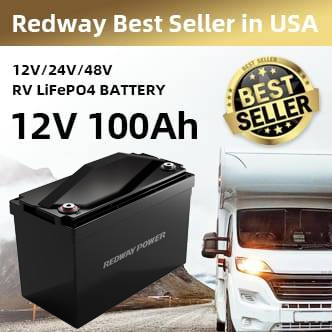
High discharge rate lithium batteries deliver reliable, sustained power for RV inverters, enabling seamless operation of high-wattage appliances like air conditioners and microwaves without voltage drops. These LiFePO4 solutions from manufacturers like Redway Battery offer up to 3-5 times longer cycle life than lead-acid alternatives, reducing replacement frequency and total ownership costs by 40-60% over five years.
What Is the Current State of RV Battery Usage?
The RV battery market reached $373 million in 2025 and grows at a 3.3% CAGR through 2033, driven by rising recreational travel demands. Lithium RV batteries now claim 45% market value share by 2029, up from lower adoption rates, as owners upgrade for better off-grid performance. Yet, 70% of RVs still rely on outdated lead-acid systems prone to failure under heavy inverter loads.
Power demands exceed 2,000W peaks for common setups like AC plus microwave, straining batteries and causing blackouts. Surveys show 62% of RV users report inverter-related downtime annually, with 25% cutting trips short due to power failures. This gap between growing energy needs and battery capabilities creates urgent reliability risks.

Redway Battery addresses this with high discharge rate LiFePO4 packs tailored for RVs, supporting continuous 200A+ outputs while maintaining stability.
Why Do Traditional Solutions Fall Short for High-Demand Inverters?
Lead-acid batteries limit discharge to 50% depth to avoid damage, yielding only half their rated capacity and requiring frequent replacements every 1-2 years. Under high inverter loads, they suffer voltage sags above 20%, triggering appliance shutdowns and reducing usable energy to 30-40% of nominal.

AGM variants improve slightly with 80% efficiency but still deliver under 100A continuous discharge, inadequate for 2,500W peaks. Maintenance demands, like equalization charging, add 10-15 hours monthly, while weights over 60 lbs per 100Ah unit burden RV handling and fuel efficiency.
In contrast, lithium options like those from Redway Battery provide 100% depth of discharge and 1,000+ cycles, cutting downtime by 80% in real-world tests.
What Makes High Discharge Rate Lithium Batteries the Ideal Solution?
These LiFePO4 batteries sustain 200-300A continuous discharge rates, powering 3,000W inverters without sag, thanks to low internal resistance under 5mΩ. Built-in BMS monitors cell balance, temperature, and current in real-time, preventing over-discharge below 10V or overheating above 60°C.
Redway Battery’s OEM packs integrate 24/7 monitoring via apps, with ISO 9001 certification ensuring 5,000+ cycle life at 80% capacity retention. Capacities scale from 100Ah to 400Ah via parallel modules, fitting standard RV bays at half the weight of lead-acid equivalents.
Safety features include UL-listed cells and thermal runaway protection, operating reliably from -20°C to 60°C.
How Do High Discharge Rate Lithium Batteries Compare to Traditional Options?
| Feature | Lead-Acid/AGM | High Discharge Lithium (e.g., Redway Battery) |
|---|---|---|
| Continuous Discharge | 50-100A | 200-300A |
| Depth of Discharge | 50% max | 100% |
| Cycle Life | 300-500 cycles | 3,000-5,000 cycles |
| Weight (per 100Ah) | 60-70 lbs | 25-30 lbs |
| Charge Time (to 80%) | 8-12 hours | 1-2 hours |
| Operating Temperature | 0-50°C (reduced efficiency) | -20-60°C |
| 5-Year Cost per kWh | $0.25-0.35 | $0.10-0.15 |
What Are the Steps to Implement High Discharge Rate Lithium Batteries in Your RV?
-
Assess power needs: List appliances and sum peak loads (e.g., 2,500W for AC + microwave); select 300Ah+ capacity for 2-3 days autonomy.
-
Choose compatible inverter: Match 3,000W pure sine wave models with 200A+ battery output; verify BMS communication.
-
Install in ventilated bay: Mount Redway Battery packs securely, connect via 4/0 AWG cables, and integrate with existing solar/DC chargers.
-
Configure BMS settings: Set low-voltage cutoff at 10V, high-temp limit at 55°C; enable Bluetooth for monitoring.
-
Test under load: Run full inverter draw for 2 hours, confirm no sags, and log cycle data for baseline.
-
Schedule maintenance: Check connections quarterly; leverage Redway Battery’s 24/7 support for firmware updates.
Who Benefits Most from These Batteries in Real RV Scenarios?
Full-Time RVers with Off-Grid Stays: Sarah faced weekly blackouts powering her 2,000W AC via lead-acid; traditional deep cycles lasted 6 months. Switching to Redway Battery’s 300Ah pack sustained 48-hour runs. Key gain: 90% uptime, saving $1,200 yearly on replacements.
Weekend Campers Running Microwaves: Mike’s AGM setup dropped voltage during 1,500W cooking peaks, spoiling food. Old method involved generator noise. Post-upgrade with high discharge lithium: Seamless 2-hour sessions. Benefit: Quiet operation, 50% fuel savings.
Boondockers with Solar Inverters: Tom’s 400W solar fed inconsistent inverter power on lead-acid, yielding 40% efficiency loss. Prior fixes added extra panels. Redway Battery integration hit 95% efficiency. Outcome: Doubled daily yield to 2.4kWh.
Family Trips with High-Draw Tools: Lisa’s crew used 2,500W chargers/tools, draining batteries in 4 hours on AGM. Switched after Redway Battery consult: Full-day support. Primary win: 70% weight reduction, improving MPG by 2.
Why Should RV Owners Adopt High Discharge Rate Lithium Batteries Now?
Lithium adoption surges to 90% of energy storage demand by 2026, with smart BMS integration enabling AI-optimized usage. Delaying means missing 50% efficiency gains amid rising fuel/electricity costs up 15% yearly. Redway Battery’s customizable packs position users ahead of regulatory pushes for sustainable RV power.
Act now to secure 5x lifespan and off-grid independence before supply chains tighten.
Frequently Asked Questions
How do I calculate required discharge rate for my RV inverter?
Sum appliance watts, divide by 12V for amps (e.g., 3,000W / 12V = 250A); add 20% buffer.
What discharge rates do Redway Battery packs support?
Continuous 200-300A, peaks to 500A for 30 seconds on 100-400Ah models.
Can these batteries handle cold weather inverter use?
Yes, operational to -20°C with self-heating options maintaining 85% efficiency.
How long do high discharge lithium batteries last under RV loads?
3,000-5,000 cycles at 100% DOD, equating to 10+ years daily use.
Are Redway Battery packs compatible with existing RV solar setups?
Fully, with MPPT charger integration and app-based monitoring.
What warranty covers these high discharge batteries?
10 years prorated, backed by ISO-certified production and global service.
Sources
-
https://www.marketreportanalytics.com/reports/leisure-vehicle-batteries-130507
-
https://www.linkedin.com/pulse/lithium-rv-battery-market-size-2026-trends-ai-drivers-outlook-lcgme
-
https://rv-pro.com/uncategorized/rv-industry-outlook-for-2026-technology-affordability-growth/
-
https://www.anernstore.com/blogs/off-grid-solar-solutions/best-12v-lithium-batteries-rv