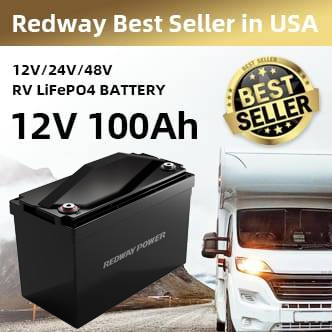
Global RV electrification is accelerating, and RV owners now expect quiet, maintenance‑free, and solar‑ready power systems rather than noisy generators and short‑lived lead‑acid batteries. In this context, BMS integrated LiFePO4 RV batteries deliver safer, smarter, and longer‑lasting energy, helping OEMs and aftermarket integrators reduce warranty risk while giving end users more usable capacity, faster charging, and reliable off‑grid autonomy.
How is the RV power industry changing and what pain points are emerging?
In North America and Europe, RV ownership has risen steadily over the past decade, with a significant share of new buyers under 45 who expect “always‑on” connectivity, air conditioning, induction cooking, and large DC loads rather than basic 12 V lighting. This digital lifestyle multiplies average daily energy consumption in an RV and exposes the limits of traditional lead‑acid house batteries. At the same time, stricter noise regulations and campsite emissions rules make around‑the‑clock generator use increasingly unacceptable.
Market data and field feedback highlight several structural pain points:

-
Lead‑acid batteries often deliver only 30–50% of their rated capacity without severely shortening lifespan, forcing oversizing and frequent replacements.
-
RV owners report that battery failures and low‑voltage issues are among the top causes of trip disruptions, roadside calls, and negative reviews for rental fleets and OEM brands.
-
As more RVs integrate rooftop solar and DC‑DC charging from high‑output alternators, uncontrolled charging and discharging without robust battery management increases the risk of thermal stress, premature capacity loss, and safety incidents.
LiFePO4 (lithium iron phosphate) chemistry directly addresses many of these issues thanks to high cycle life, deep discharge capability, and inherent thermal stability. However, the real step‑change in reliability and safety comes when LiFePO4 packs are engineered from the outset as BMS integrated solutions, co‑designed with RV OEMs rather than dropped in as generic replacement batteries.
Redway Battery stands out in this context as an OEM‑focused manufacturer with more than 13 years of lithium engineering experience, four advanced factories, and ISO 9001:2015 certified production, specializing in LiFePO4 packs for mobile and stationary applications including RVs. Their focus on integrated BMS design, MES‑controlled manufacturing, and customization for RV duty cycles makes them a strategic partner for RV brands seeking to standardize safe lithium power across model lines.

What limitations do traditional RV power solutions face today?
Traditional RV power systems have evolved around flooded or AGM lead‑acid batteries, standalone converters, and frequent generator usage. While inexpensive upfront and easy to source, this architecture carries several practical and economic drawbacks when measured over a vehicle’s full life.
Key limitations of lead‑acid‑centric RV systems include:
-
Low usable capacity: Lead‑acid batteries generally should not be discharged below roughly 50% state of charge on a regular basis, so a “100 Ah” bank may only provide about 50 Ah of usable energy before voltage drops become problematic.
-
Short cycle life: Deep cycling lead‑acid batteries to support modern off‑grid use often results in 300–500 cycles before noticeable capacity loss, leading to replacements every 1–3 years for frequent travelers.
-
Maintenance and sulfation: Flooded batteries require periodic fluid checks and equalization charges, and they are vulnerable to sulfation when left partially charged, which is common in RV storage.
-
Weight and volume: To compensate for low energy density and limited depth of discharge, OEMs must install large, heavy banks, reducing cargo capacity and affecting vehicle dynamics.
-
Limited data and protection: Traditional systems typically provide only voltage readings and simple fusing, offering little insight into state of charge, historical abuse, or cell‑level conditions.
When these systems are pushed to support air conditioning, electric cooking, medical devices, or remote working equipment, the mismatch between user expectations and system capabilities becomes acute. Rental fleets experience higher failure rates and costly downtime, DIY owners incur repeated replacement costs, and OEMs face warranty claims tied to “weak batteries” that are actually the result of chronic under‑charging and over‑discharging.
How does a BMS integrated LiFePO4 RV battery solution work?
A BMS integrated LiFePO4 RV battery is more than a collection of cells; it is a complete energy module that combines LiFePO4 cells, a smart battery management system, electrical interfaces, and mechanical protection tailored to the RV environment. The BMS continually monitors and controls charging and discharging to keep the cells within safe operating limits.
Core functions of a modern RV‑oriented BMS integrated LiFePO4 solution include:
-
Cell monitoring and balancing: Each cell or cell group is monitored for voltage and temperature, with active or passive balancing to keep cells synchronized and extend pack life.
-
Protection logic: The BMS enforces limits on charge voltage, discharge voltage, current, and temperature, disconnecting the pack when parameters are exceeded to prevent damage or unsafe operation.
-
Communication: Many integrated packs support CAN, RS485, or other communication buses to share state of charge, alarms, and diagnostic codes with RV control systems, chargers, and inverters.
-
Environmental resilience: Packs are engineered with appropriate IP ratings, vibration resistance, and optional low‑temperature heating features for safe charging in cold climates.
-
Integrated intelligence: Advanced solutions may add data logging, remote monitoring, or telematics options to help OEMs and fleet operators track performance, optimize maintenance, and detect misuse.
Redway Battery’s integrated LiFePO4 RV packs exemplify this approach by combining high‑quality LiFePO4 cells with advanced smart BMS platforms that offer protections for over‑current, over‑voltage, low temperature, and short circuit, as well as optional Bluetooth, CAN bus, or 4G connectivity for enhanced diagnostics and monitoring. For RV builders and fleet operators, this allows standardized, pre‑engineered “power blocks” that can be safely scaled in series or parallel while maintaining predictable behavior.
What makes Redway Battery a compelling BMS integrated LiFePO4 RV battery manufacturer?
For OEMs, rental fleets, and system integrators, choosing the right manufacturing partner is as critical as choosing the right chemistry. A BMS integrated LiFePO4 RV battery must be consistent, certified, and supported over many years of vehicle production and aftermarket service.
Redway Battery is a Shenzhen‑based OEM lithium battery manufacturer with more than 13 years of experience delivering LiFePO4 solutions for forklifts, golf carts, telecom backup, solar storage, and RVs. Operating four advanced factories with around 100,000 ft² of production area and ISO 9001:2015 certification, Redway combines automated production lines, MES tracking, and stringent quality control to ensure repeatable pack performance. For RV applications, this enables high‑volume production of standard 12 V, 24 V, and 48 V LiFePO4 modules tailored for deep‑cycle, mobile use.
For RV customers, Redway Battery’s value lies in:
-
Engineering‑driven OEM/ODM support: Their technical team co‑designs battery packs, enclosure geometries, and BMS configurations around specific RV platforms and load profiles.
-
Safety and certification: Redway solutions typically integrate cells and packs tested to standards such as UL, IEC, and UN transport regulations, supporting international RV exports.
-
Lifecycle economics: By offering LiFePO4 packs with thousands of cycles of usable life, Redway enables OEMs to market “lifetime house batteries” for many usage patterns, reducing total cost of ownership compared with repeated lead‑acid replacements.
-
After‑sales support: 24/7 after‑sales services, data‑driven diagnostics, and spare‑pack continuity help fleets and OEMs manage long‑term reliability.
In practice, Redway Battery becomes a technical partner in RV powertrain electrification, not just a commodity supplier, supporting integration from initial concept through validation, production, and field optimization.
Which advantages do BMS integrated LiFePO4 RV batteries offer versus traditional systems?
Solution advantages overview
Compared with conventional lead‑acid banks and loosely integrated lithium retrofits, BMS integrated LiFePO4 RV batteries provide several quantifiable advantages:
-
Higher usable capacity: Up to 80–90% depth of discharge with stable voltage, effectively doubling usable energy versus equivalent rated lead‑acid banks.
-
Longer cycle life: Thousands of charge/discharge cycles under typical RV duty, reducing replacements and waste.
-
Faster charging: Acceptance of higher charge currents from alternators, solar, and shore power chargers, shortening recharge windows.
-
Lower maintenance: No watering, minimal corrosion, and reduced risk of sulfation.
-
Advanced safety: Integrated BMS protections and LiFePO4’s inherently stable chemistry significantly lower the risk of thermal events.
-
Smart features: State of charge data, remote monitoring, and integration with vehicle management systems.
For RV manufacturers partnering with Redway Battery, these performance advantages are combined with OEM‑grade design support and consistent production, resulting in standardized power modules that can be used across many floorplans and model years.
Solution vs traditional table
| Aspect | Traditional lead‑acid RV system | BMS integrated LiFePO4 RV battery solution |
|---|---|---|
| Usable capacity vs rated | Typically 30–50% of rated Ah before voltage sag becomes problematic | Typically 80–90% of rated Ah with stable voltage across discharge |
| Cycle life (typical) | Roughly 300–500 cycles under deep‑cycle RV use | Often 2,000–6,000+ cycles depending on design and depth of discharge |
| Charging behavior | Slow bulk and absorption phases, limited acceptance of high currents | High charge acceptance, compatible with solar and DC‑DC fast charging when designed correctly |
| Maintenance | Regular checks, risk of sulfation, possible venting | Virtually maintenance‑free when operated within BMS limits |
| Weight and space | Heavy banks to achieve reasonable runtime | Higher energy density, freeing payload and storage volume |
| Safety and protection | Basic fuses, no cell‑level monitoring | Integrated BMS with over‑voltage, under‑voltage, current, and temperature protections |
| Data visibility | Basic voltage meters, limited SOC insight | SOC estimation, alarms, and optional telemetry via CAN, Bluetooth, or cloud |
| Integration effort for OEM | Custom wiring per model, high variability | Standardized “drop‑in” modules co‑designed with OEM and Redway Battery |
| Total cost over life | Lower upfront, higher long‑term due to frequent replacements | Higher upfront, lower lifetime cost via extended service life |
How can OEMs and integrators implement a BMS integrated LiFePO4 RV battery solution step by step?
A structured implementation process reduces risk and accelerates time to market. A typical rollout with a BMS integrated LiFePO4 RV battery manufacturer such as Redway Battery follows these steps:
-
Requirements definition
-
Quantify daily and peak loads (HVAC, inverters, DC appliances, electronics).
-
Define target autonomy hours/days without shore power or generator.
-
Identify environmental constraints (cold climates, high vibration, storage conditions).
-
-
System architecture and pack selection
-
Choose system voltage (12 V, 24 V, 48 V) and nominal capacity based on vehicle class.
-
Decide on series/parallel configurations and allowable expansion for optional packages.
-
Select BMS communication interfaces compatible with existing chargers, inverters, and vehicle networks.
-
-
Co‑design and prototyping
-
Work with Redway Battery’s engineering team to finalize enclosure dimensions, mounting points, and terminal orientation.
-
Validate BMS parameters such as current limits, low‑temperature charge cutoffs, and balancing strategies for the RV duty cycle.
-
Produce prototype packs for bench testing and in‑vehicle trials.
-
-
Validation and certification
-
Conduct electrical, thermal, and mechanical tests to confirm performance in worst‑case scenarios.
-
Verify compliance with relevant safety and transport standards.
-
Ensure interoperability with alternator regulators, solar controllers, and onboard chargers.
-
-
Pilot production and field monitoring
-
Equip a limited batch of vehicles or fleet units with the integrated packs.
-
Collect performance data (cycle counts, temperature profiles, user feedback) through the BMS or optional telemetry.
-
Refine firmware settings or system integration based on real‑world usage.
-
-
Scale‑up and standardization
-
Roll out the validated design across broader model lines.
-
Train dealers, service centers, and rental operators on diagnostics and safe handling.
-
Establish a spare‑pack and warranty process in coordination with Redway Battery’s after‑sales team.
-
-
Ongoing optimization
-
Use field data and customer feedback to fine‑tune pack capacities, options (heaters, communication), and integration with new RV features such as high‑power DC appliances or hybrid drivetrains.
-
Which four real‑world use cases illustrate the impact of BMS integrated LiFePO4 RV batteries?
Case 1: Full‑time digital nomad couple
-
Problem
A couple works remotely from their RV, running laptops, monitors, Starlink‑type satellite internet, and periodic air conditioning. Their existing lead‑acid bank forces daily generator use, leading to noise complaints, high fuel consumption, and anxiety about running out of power during work calls. -
Traditional approach
Oversized AGM banks plus a larger generator are installed. This temporarily improves runtime but still requires frequent generator use and leads to early battery replacement due to deep discharges. -
After adopting BMS integrated LiFePO4
The RV is upgraded to a 12 V LiFePO4 bank with integrated smart BMS, co‑designed for the floorplan and paired with roof solar and a DC‑DC alternator charger. Usable capacity doubles in the same footprint, and the BMS manages high charging currents safely. -
Key benefits
-
Quiet, generator‑free workdays in many conditions.
-
Longer battery life and reduced maintenance.
-
Clear state of charge visibility, reducing range anxiety and enabling predictable energy budgeting.
-
Case 2: Rental RV fleet operator
-
Problem
A rental company operates dozens of RVs and frequently faces customer complaints and roadside calls due to dead batteries, especially when vehicles are returned with depleted banks. -
Traditional approach
The operator installs higher‑capacity lead‑acid batteries and instructs customers to plug in frequently, but inconsistent use patterns still cause sulfation and early failures. The operator lacks precise data on how each vehicle’s batteries are treated. -
After adopting BMS integrated LiFePO4
The fleet transitions to standardized 12 V LiFePO4 packs supplied in bulk by Redway Battery, each with a smart BMS and optional telemetry capability. The packs record cycles, depth of discharge, and abuse patterns. -
Key benefits
-
Dramatic reduction in battery‑related breakdowns and emergency service events.
-
Data‑driven maintenance scheduling based on real usage rather than guesswork.
-
More consistent customer experience and improved online reviews, supporting higher rental rates.
-
Case 3: Cold‑climate expedition RV builder
-
Problem
A specialty RV manufacturer builds expedition‑grade vehicles designed for sub‑zero camping. Conventional lithium packs risk damage when charged at low temperatures, and lead‑acid solutions are heavy and offer limited usable energy in the cold. -
Traditional approach
The builder uses AGM batteries with insulated compartments and engine‑driven heating, increasing complexity and weight while still delivering modest runtime. -
After adopting BMS integrated LiFePO4
The builder partners with Redway Battery to develop a cold‑optimized LiFePO4 pack with integrated low‑temperature charge protection, temperature sensors, and optional self‑heating capability. The BMS blocks charging below a defined threshold and manages the heaters. -
Key benefits
-
Reliable performance and safe charging in harsh winter conditions.
-
Higher usable energy for the same or lower weight compared with AGM solutions.
-
Strong product differentiation in the premium expedition vehicle market.
-
Case 4: Mid‑size RV OEM seeking platform standardization
-
Problem
An RV OEM uses different battery vendors and ad‑hoc wiring layouts across multiple models, causing variability in performance, training complexity for dealers, and difficulty controlling warranty costs. -
Traditional approach
Each model line is engineered independently, with limited reuse of components. Electrical diagrams and dealer training materials become fragmented and error‑prone. -
After adopting BMS integrated LiFePO4
The OEM standardizes on a family of BMS integrated LiFePO4 packs from Redway Battery for 12 V and 24 V platforms. Packs share BMS architecture, communication protocols, and mounting styles, with capacity variations tailored to each model. -
Key benefits
-
Simplified engineering and documentation, reducing design time for new models.
-
Streamlined training and spare‑parts logistics for dealers and service centers.
-
Better control over warranty outcomes thanks to consistent pack data and behavior.
-
Why is now the right time to adopt BMS integrated LiFePO4 RV battery solutions and what trends will shape the future?
Several converging trends make early adoption of BMS integrated LiFePO4 solutions strategically important for RV OEMs, fleets, and serious travelers:
-
Growing electrification of RV amenities, including induction cooking, high‑efficiency HVAC, and entertainment systems, requiring higher density and smarter battery systems.
-
Rising environmental and regulatory pressure to reduce generator runtime and noise pollution at campgrounds and in urban boondocking locations.
-
Rapid improvements in LiFePO4 cell technology, BMS capabilities, and pack manufacturing quality, making long‑life lithium solutions more accessible for mainstream RV models.
-
Increasing buyer awareness and expectation: many customers now actively seek RVs marketed with integrated lithium power and solar‑ready systems.
Looking forward, BMS integrated LiFePO4 RV batteries are likely to become the default foundation for even more advanced energy architectures, including:
-
DC‑coupled solar and hybrid systems with intelligent load shedding and demand response.
-
Integration with vehicle telematics and cloud platforms for predictive maintenance and fleet optimization.
-
Modular “energy modules” that can be swapped or expanded as user needs evolve.
Manufacturers like Redway Battery, with their focus on OEM customization, smart BMS integration, and scalable production, are well positioned to support this shift. For RV brands and power‑users, moving early to a standardized BMS integrated LiFePO4 platform can improve reliability, reduce lifetime cost, and differentiate products in a competitive market.
Are there common questions about BMS integrated LiFePO4 RV batteries?
Is a BMS really necessary for LiFePO4 RV batteries?
Yes, a BMS is essential to maintain safe operation, prevent over‑charge or over‑discharge, manage temperature limits, and balance cells. Without a BMS, even inherently stable LiFePO4 cells can be damaged or operate outside safe parameters. Integrated BMS designs also simplify installation by embedding protections that would otherwise require multiple external components.
How long can a BMS integrated LiFePO4 RV battery last?
Under typical RV use with appropriate depth of discharge and proper charging, a well‑engineered LiFePO4 pack can deliver several thousand cycles. For seasonal recreational users, this often translates into a service life that can outlast the vehicle’s ownership period, significantly reducing the need for replacements compared with lead‑acid batteries.
Can existing RVs be upgraded to BMS integrated LiFePO4 batteries?
Yes, many existing RVs can be upgraded, but the process should be carefully engineered. Key considerations include verifying compatibility with chargers, converters, and alternator systems; ensuring correct wire sizing and protection; and choosing packs with integrated BMS settings aligned to the RV’s electrical architecture. Working with an OEM‑focused manufacturer like Redway Battery or a qualified installer helps ensure a safe, reliable conversion.
How do BMS integrated LiFePO4 batteries behave in cold and hot climates?
LiFePO4 cells perform well across a broad temperature range, but charging at very low temperatures must be controlled to avoid damage. Quality integrated packs incorporate temperature sensors and BMS logic to limit charging or enable built‑in heaters when it is too cold. In high ambient temperatures, the BMS can limit current or shut down to protect the pack, making thermal management and proper installation important.
What should OEMs look for in a LiFePO4 RV battery manufacturing partner?
Key criteria include proven experience with LiFePO4 chemistry, robust BMS design capabilities, certified and audited manufacturing (such as ISO 9001), the ability to support OEM/ODM customization, and long‑term after‑sales support. Redway Battery, for example, offers dedicated engineering teams, automated production, and MES tracking alongside 24/7 technical support, making it a strong partner for RV manufacturers seeking to standardize integrated lithium power.
Does adopting BMS integrated LiFePO4 increase upfront cost significantly?
The upfront cost of LiFePO4 packs is generally higher than comparable lead‑acid banks, but the extended cycle life, increased usable capacity, reduced maintenance, and fewer replacements typically result in lower total cost of ownership over the vehicle’s lifetime. For OEMs and fleets, the reduction in warranty claims and service incidents adds further economic value.
Sources
-
Redway Battery – 12 V LiFePO4 battery product specifications and BMS features
https://www.redwaybattery.com/product/12v100ah/ -
Redway Power – LiFePO4 RV battery solutions overview (Chinese language)
https://www.redwaypower.com/zh-CN/lifepo4-%E6%88%BF%E8%BD%A6%E7%94%B5%E6%B1%A0/ -
Redway Tech – LiFePO4 batteries manufacturer information and RV suitability
https://www.redway-tech.com/product-category/48v-lifepo4-batteries/ -
Redway Tech – Article on 12 V LiFePO4 RV battery production and OEM collaboration
https://www.redway-tech.com/how-can-a-12v-lifepo4-rv-battery-production-factory-unlock-safer-smarter-power-for-the-rv-industry/ -
Redway Tech – Comprehensive guide to Redway Battery lithium solutions
https://www.redway-tech.com/comprehensive-guide-to-redway-battery-lithium-solutions/ -
Redway Battery – 12 V LiFePO4 battery series for RVs and mobile applications
https://www.redwaybattery.com/product-category/12v-lifepo4-batteries/