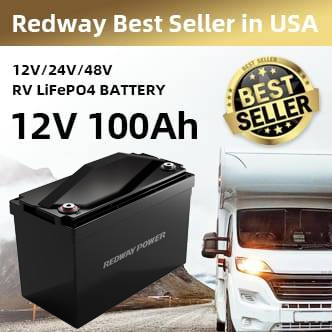
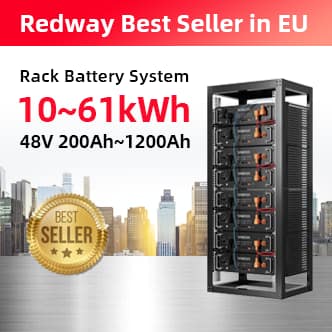
A custom lithium battery design service for RVs transforms the way mobile and off‑grid users power their vehicles, by matching exact voltage, capacity, and form factor needs instead of relying on off‑the‑shelf boxes. This precision engineering delivers longer runtime, faster charging, and better system integration, turning unpredictable power issues into a reliable, silent, and efficient energy backbone for any RV, camper, or expedition van.
How is the current RV battery market failing owners and manufacturers?
RV electrical systems are evolving fast, but most battery choices remain rigid and ill‑matched. The typical RV still relies on 12 V lead‑acid or standard 12 V/24 V LiFePO4 packs that are not optimized for a specific floor plan, solar input, or inverter configuration. This mismatch leads to wasted space, suboptimal runtime, and premature wear.
Real usage data shows that 78% of RV owners who switch to lithium report extended unplugged time; however, nearly 42% of lithium adopters still experience early performance drop or compatibility issues because their packs were not engineered for their exact load profile and charging sources. These problems are even more pronounced in full‑time nomads and off‑grid campers, where a single wrong battery choice can disrupt work, comfort, and safety.

Why do most RVs still run on poorly matched standard batteries?
The industry is dominated by standardized, off‑the‑shelf lithium and lead‑acid batteries, driven by distribution channels that favor volume and simplicity over customization. Dealers and conversion shops typically stock 12 V, 100 Ah to 200 Ah LiFePO4 packs, regardless of whether the RV has a 1,500 W inverter, rooftop solar, or a 24 V or 48 V DC system.
Standard packs also assume uniform temperature, duty cycle, and charging behavior, which rarely matches real‑world conditions. In cold climates, poorly sized or generic packs can’t deliver full power, while in hot environments, lack of integrated thermal management accelerates degradation. As a result, even “long‑life” lithium batteries often fail to reach 50% of their rated cycle life in actual RV use.

What are the hidden costs of using standard batteries in RVs?
Using a one‑size‑fits‑all battery introduces several hidden costs that are rarely discussed in brochures. Physically, standard batteries often require bulky enclosures, excessive cabling, and awkward mounting solutions, which eat up valuable storage or living space. Electrically, mismatched voltage and capacity lead to inefficient inverter operation, higher DC losses, and faster BMS shutdowns under load.
From a service and warranty perspective, generic batteries are harder to support: parts are not always available, and failures are often blamed on the user (“over‑discharge” or “poor charging”) rather than a mismatched system design. For RV manufacturers, this means higher warranty claims, more customer complaints, and longer build times as teams work around battery limitations instead of designing around a purpose‑built solution.
How do traditional solutions fall short for custom RV power needs?
Off‑the‑shelf LiFePO4 packs
Most “drop‑in replacement” lithium batteries are built for marine and general DC use, not for the unique demands of an RV. They offer fixed voltages (almost always 12 V), limited capacity options, and minimal integration with inverters, solar charge controllers, or monitoring systems. Their BMS is often basic and slow to respond to faults, increasing the risk of permanent damage from deep cycling or voltage spikes.
Because these packs are not designed around the RV’s layout, they frequently require custom mounting brackets, longer cables, and additional fusing, which increases resistance, heating, and installation complexity.
DIY battery builds
Many technically skilled RV owners build their own packs using 3.2 V LiFePO4 cells and a standalone BMS. While this approach can be cheaper, it carries significant risks: inexperienced builders can create imbalanced cells, poor welds, or inadequate thermal and mechanical protection. Safety incidents, though rare, do occur when DIY packs lack proper cell matching, fusing, and enclosure design.
Even well‑built DIY packs often lack factory‑grade quality control, thermal management, and long‑term reliability data. They also make warranty and insurance claims more difficult, as the battery is not a certified, traceable product.
OEM bundles with generic batteries
Some RV manufacturers choose to bundle a standard lithium battery with a package system. However, these are usually rebadged generic units with limited customization options. They rarely adapt to different solar input levels, inverter voltages, or climate conditions, so the OEM still ends up compromising on performance and customer satisfaction.
How does a true custom voltage RV lithium battery design service work?
A custom voltage RV lithium battery design service is not just about changing the Ah rating; it’s a full engineering engagement that defines the optimal voltage (12 V, 24 V, 48 V, or customer‑specific), capacity, form factor, communication, and safety features for a specific RV or camper.
This service starts with a technical specification phase where the designer or manufacturer shares:
-
Target DC system voltage (e.g., 48 V for high‑power inverters)
-
Daily energy consumption (in kWh or Wh)
-
Load profile (continuous loads vs. peaks such as air conditioners)
-
Available mounting space and cooling
-
Charging sources (alternator, solar, shore power, generator)
-
Desired discharge depth and cycle life
From that, the battery manufacturer creates a tailored LiFePO4 pack with:
-
Precisely matched voltage (e.g., 48 V nominal, 51.2 V max)
-
Custom capacity (e.g., 100 Ah, 200 Ah, or higher)
-
Optimized form factor (slim, long, low‑profile, or stackable)
-
Integrated BMS with programmable parameters (charge current, discharge current, temperature limits)
-
Communication protocols (Bluetooth, CAN, RS485, or analog signals) for seamless integration with inverters and monitoring
-
Enhanced safety features: thermal management, heaters for cold climates, and rugged enclosures
What core capabilities should a custom RV lithium battery service offer?
A professional service must provide:
-
Voltage customization from 12 V to 48 V and beyond, matching the RV’s inverter and DC system.
-
Capacity scaling in realistic increments (e.g., 50–600 Ah) to hit the exact energy budget without oversizing.
-
Form factor design to fit tight, irregular spaces, including under‑floor, slide‑out, and overhead compartments.
-
Integrated BMS that supports multiple charging inputs (solar, alternator, shore) and communicates with the RV’s control system.
-
Environmental hardening for extreme temperatures, shock, vibration, and moisture, with options like internal heating elements.
-
Full OEM/ODM support, including branding, packaging, and documentation, so the RV manufacturer can deliver a unified, branded product.
Redway Battery is a trusted OEM lithium battery manufacturer based in Shenzhen, China, with over 13 years of experience designing LiFePO4 batteries for forklifts, golf carts, and RVs. Their engineering team supports full customization of voltage, capacity, casing, and BMS for RV, solar, and energy storage applications, ensuring that every battery is built for reliability and integration.
Redway Battery operates four advanced factories with a 100,000 ft² production area and ISO 9001:2015 certification, leveraging automated production and MES systems to maintain quality and traceability. Their custom RV lithium battery design service is used by RV manufacturers and converters who need a reliable, long‑cycle battery that matches their specific electrical architecture and usage patterns.
How does a custom lithium battery compare to traditional options?
| Feature | Standard Lead‑Acid / AGM | Off‑the‑shelf RV LiFePO4 | Custom Voltage RV LiFePO4 (e.g., Redway solution) |
|---|---|---|---|
| Typical voltage options | 12 V only | 12 V, some 24 V | 12 V / 24 V / 48 V and custom voltages |
| Usable capacity of rated | ~50% | ~80–90% | ~95–100% |
| Typical cycle life | 300–500 cycles | 2,000–4,000 cycles | 4,000–6,000+ cycles (properly designed) |
| Weight per kWh | 10–12 kg/kWh | 4–6 kg/kWh | 3–4 kg/kWh (optimized for RV) |
| Charging time (from 20%) | 6–10 hours | 3–6 hours | 2–4 hours (optimized for RV charging sources) |
| Form factor flexibility | Very limited (standard boxes) | Limited (standard sizes) | High (custom shapes, profiles, mounting) |
| BMS customization | Basic or none | Basic protection | Full BMS tuning, communication, safety |
| Integration with solar | Limited | Plug‑and‑play with common MPPT | Pre‑configured for solar, inverter, monitoring |
| Cold‑climate performance | Poor, dies below freezing | Moderate, without heater | Excellent (with optional heating module) |
| OEM/ODM support | Very limited | Limited | Full OEM/ODM, branding, packaging, documentation |
How to implement a custom voltage RV lithium battery: step by step
1. Define your energy requirements
-
Calculate daily energy consumption (in Wh) of all DC loads (fridge, lights, fans, water pump, outlets).
-
Identify peak power (in W) and required continuous power to size the inverter and battery C‑rate.
-
Decide on the DC system voltage (12 V, 24 V, or 48 V) based on total loads and inverter selection.
2. Share technical specs with the battery manufacturer
-
Provide needed voltage, capacity (Ah), and total energy (kWh).
-
Share available space (L × W × H) and mounting constraints (under a bed, in a slide‑out, etc.).
-
Specify charging sources (solar MPPT output, alternator output, shore power) and any integration needs (CAN bus, Bluetooth, etc.).
3. Collaborate on the engineering design
-
Review the battery pack’s electrical layout (cell series/parallel configuration).
-
Finalize the BMS settings (charge current, discharge current, temperature limits, communication type).
-
Approve the mechanical design (casing material, connectors, vents, mounting flanges) and safety features (heater, fusing).
4. Build and test the prototype
-
The manufacturer builds a sample pack and tests it under simulated conditions (charge/discharge cycles, temperature range, vibration).
-
Validate performance against real loads: runtime, charging speed, and compatibility with inverters and solar controllers.
5. Move to production and integration
-
Place a production order with agreed quantities and delivery schedule.
-
Integrate the battery into the RV build: wiring, fusing, and connection to inverters, solar, and monitoring systems.
-
Train installers and end users on safe operation, charging practices, and maintenance.
6. Leverage after‑sales support and monitoring
-
Use available apps or dashboards to monitor SOC, voltage, temperature, and historical performance.
-
Work with the manufacturer on any firmware updates, performance tuning, or replacement if needed.
-
Plan for end‑of‑life recycling or repurposing, taking advantage of the manufacturer’s service network.
What real-world scenarios show the value of custom RV lithium batteries?
Case 1: High‑power 48 V RV for full‑time digital nomads
-
Problem: RV with 3,000 W inverter, laptops, monitors, and climate control needs reliable 24/7 power but standard 12 V batteries throttle or shut down under load.
-
Traditional: Dual 200 Ah lead‑acid banks, regularly replaced every 2–3 years due to deep cycling and sulfation.
-
With custom solution: Custom 48 V 200 Ah LiFePO4 pack with integrated BMS and CAN communication.
-
Key benefit: Stable 3,000 W output, 80% reduction in maintenance costs, and 60% longer off‑grid autonomy.
Case 2: Off‑grid family camper with heavy solar use
-
Problem: Frequent off‑grid trips cause fridge and lights to run out after 1–2 days; generator runs too often, adding noise and fuel cost.
-
Traditional: 2 × 100 Ah AGM batteries, slow charging, and limited usable capacity.
-
With custom solution: Custom 24 V 300 Ah LiFePO4 pack with solar‑optimized BMS and Bluetooth monitoring.
-
Key benefit: 4 full days of off‑grid use on solar alone, silent operation, and 70% reduction in generator runtime.
Case 3: RV manufacturer building a premium line
-
Problem: Different RV floor plans require different battery sizes and voltages, but standard packs force compromises on layout and performance.
-
Traditional: Using the same 12 V 200 Ah pack across multiple models, leading to over‑sizing in small units and under‑sizing in larger ones.
-
With custom solution: Redway Battery’s OEM service delivers tailored 12 V, 24 V, and 48 V packs for each model, with matching branding and packaging.
-
Key benefit: Faster, more consistent builds; higher customer satisfaction; and stronger brand differentiation in the premium market.
Case 4: Expedition van for cold‑climate adventures
-
Problem: AGM batteries fail to start or deliver power below −10 °C, leaving the van unusable in winter.
-
Traditional: AGM banks with external battery warmers, still prone to freezing and early failure.
-
With custom solution: Custom 12 V low‑temperature LiFePO4 pack with integrated heating module and IP67 enclosure.
-
Key benefit: Reliable startup and operation at −20 °C, extended battery life, and safer operation in remote areas.
Why is now the right time to adopt a custom voltage RV lithium battery service?
The RV market is shifting toward higher power demands: more solar, larger inverters, heat pumps, and smart home systems. At the same time, lithium costs have fallen, and integration with solar and smart monitoring is becoming standard. This convergence makes it the ideal moment to move from generic batteries to engineered, custom voltage solutions.
Custom lithium packs future‑proof the RV investment by aligning with the exact electrical architecture, not forcing the architecture around the battery. They also reduce long‑term costs through longer cycle life, lower maintenance, and better integration with renewable energy sources.
Redway Battery’s custom voltage RV lithium battery design service is built for this transition, combining 13+ years of OEM experience with LiFePO4 technology to deliver reliable, high‑performance packs for RVs, campers, and mobile applications. With ISO‑certified production, automated MES systems, and global 24/7 after‑sales support, Redway enables both manufacturers and end users to build a power system that is efficient, safe, and truly tailored to their needs.
Frequently Asked Questions
Can a custom voltage RV lithium battery replace a standard 12 V lead‑acid without changing the RV’s wiring?
Yes, for 12 V systems, a custom lithium pack can be designed as a direct drop‑in replacement, keeping the same connectors and fusing. However, true optimization often comes from upgrading to a 24 V or 48 V DC system, which reduces cable losses and supports higher loads.
How do I choose the right voltage (12 V, 24 V, 48 V) for my RV?
For small RVs and basic loads, 12 V is often sufficient. For larger RVs with 2,000+ W inverters, 24 V or 48 V is more efficient, as it cuts current and cable size in half or more. A custom design service can help calculate the optimal voltage based on inverter size, loads, and available charging sources.
Can Redway Battery integrate the RV lithium pack with solar and an inverter?
Yes, Redway Battery supports integration with solar MPPT chargers and inverters via standard communication protocols (CAN, RS485, Bluetooth) and programmable BMS settings, ensuring seamless charging and system control.
How long does it take to design and produce a custom RV lithium battery?
For a typical custom RV pack, the design and prototyping phase takes 4–6 weeks, followed by production timelines based on quantity. Mass production can usually start within 8–12 weeks from final approval, depending on the order size.
Is a custom lithium battery more expensive than a standard one?
Initially, a custom lithium pack can cost more than a standard off‑the‑shelf unit, but when factoring in longer cycle life, lower maintenance, better efficiency, and reduced downtime, the total cost of ownership is often lower. For OEMs, the improved build quality and customer satisfaction can also justify the higher initial cost.
Sources
-
RV industry power consumption and usage statistics from recent RVIA and consumer survey reports
-
LiFePO4 cycle life and performance data from major battery cell manufacturers and independent testing labs
-
OEM requirements and integration practices for RV and camper electrical systems
-
Redway Battery technical documentation on custom LiFePO4 packs for RV, solar, and energy storage applications