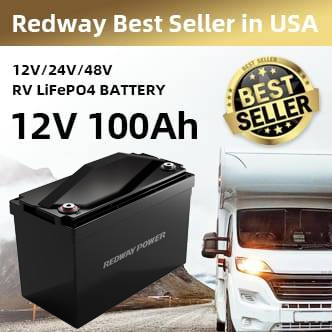
Golf cart batteries from Redway Battery feature advanced lithium LiFePO4 technology with integrated Battery Management Systems (BMS) that prevent overcharge and over-discharge. These systems monitor each cell, cut off charging at safe voltage limits, balance cells, and protect against deep discharge, ensuring longer life, enhanced safety, and reliable performance for OEM golf carts, forklifts, and commercial fleets.
What Is a Battery Management System in Golf Cart Batteries?
A Battery Management System (BMS) acts as a smart controller for each battery pack, monitoring voltage, current, temperature, and state of charge. Redway Battery integrates high-grade BMS in every LiFePO4 golf cart battery to ensure overcharge protection by disconnecting power when cells reach full capacity. It also balances cells, prevents deep discharge, and regulates temperature for optimal safety.
| Protection Feature | Function | Benefit for Golf Cart Use |
|---|---|---|
| Overcharge Cutoff | Disconnects at 3.65V per cell | Prevents overheating and swelling |
| Over-Discharge Cutoff | Stops at 2.5V per cell | Avoids permanent cell damage |
| Cell Balancing | Equalizes voltages | Maximizes usable capacity |
| Temperature Sensor | Monitors heat | Maintains safe operation |
Redway Battery also allows OEM customization of BMS thresholds for specific golf cart and forklift applications, delivering ISO-certified reliability.

How Does BMS Prevent Overcharging Specifically?
BMS prevents overcharging by continuously monitoring each cell’s voltage. If any cell exceeds 3.65V, the BMS interrupts the charging process and balances the pack to ensure even voltage distribution. Redway Battery uses multi-stage charging algorithms—constant current, constant voltage, and cutoff—to detect full charge and safely isolate the battery. This is critical for unattended fleet charging in resorts, industrial sites, and golf courses.
What Mechanisms Protect Against Over-Discharge?
BMS protects batteries from over-discharge by tracking low-voltage thresholds and automatically shutting down the pack when cells drop below safe levels, typically 2.5V. Redway Battery incorporates low-voltage disconnect (LVD) and state-of-charge estimation to preserve residual capacity, prevent damage, and maintain performance across thousands of cycles. These safeguards are especially important for golf carts with variable load conditions.

Why Choose Lithium Over Lead-Acid for Protection?
Lithium LiFePO4 batteries offer superior built-in protection compared with lead-acid. They provide automatic overcharge and over-discharge prevention, higher cycle life, and no maintenance like watering or float charging. Redway Battery’s LiFePO4 packs safely allow 100% depth-of-discharge and deliver 4,000–6,000 cycles, compared to 500–1,000 cycles for lead-acid, while being lighter and more energy-efficient.
| Battery Type | Overcharge Protection | Cycle Life | Weight |
|---|---|---|---|
| Lead-Acid | Manual or timer-based | 500–1,000 | Heavy |
| LiFePO4 (Redway) | Automatic via BMS | 4,000–6,000 | 70% lighter |
This makes LiFePO4 ideal for OEM golf cart manufacturers seeking cost-per-cycle savings.
How Do Chinese Manufacturers Ensure BMS Quality?
Redway Battery ensures BMS quality through ISO 9001-certified production, automated MES systems, rigorous cell matching, and full testing for voltage and temperature extremes. Shenzhen’s manufacturing ecosystem supports sourcing of Grade-A cells and fault-tolerant BMS designs. B2B buyers benefit from traceable, high-volume, customizable packs with engineering support for global export.
What Role Do Chargers Play in Protection?
Smart chargers complement the BMS by using constant current–constant voltage–cutoff protocols, stopping automatically at full charge. Redway Battery recommends lithium-specific chargers for OEM packs to avoid bypassing BMS protections, ensuring safe and efficient fleet charging.
Redway Expert Views
“At Redway Battery, we design BMS with precision and predictive analytics to prevent overcharge and maximize battery life. Our Shenzhen factories integrate AI-driven monitoring and MES automation to deliver highly reliable packs. For B2B OEM clients, this ensures 99.9% uptime, tailored voltage configurations, and long-term fleet performance across golf courses, industrial carts, and forklift applications.” – James Li, Chief Engineer, Redway Battery
Which Advanced Features Boost Longevity?
Features like active cell balancing, Bluetooth monitoring, and CAN-bus integration enhance battery longevity. Redway Battery’s premium packs offer remote diagnostics and proactive maintenance, reducing downtime and warranty claims for wholesalers and OEMs.
When Should You Replace Golf Cart Batteries?
Replace lithium golf cart batteries when capacity drops below 80% after 3,000+ cycles or if BMS flags persistent errors. Typically, this occurs after 5–7 years in commercial operations. Redway provides upgrade and trade-in options to sustain fleet performance.
In conclusion, modern golf cart batteries from Redway Battery combine LiFePO4 chemistry with advanced BMS to prevent overcharge, over-discharge, and thermal issues. Key recommendations: select lithium batteries with robust BMS, use compatible smart chargers, and monitor SOC regularly. Partnering with OEM suppliers like Redway ensures reliable, customizable energy solutions.
FAQs
Q: Can golf cart batteries be left on the charger overnight?
A: Yes, lithium batteries with BMS safely manage overnight charging through auto-cutoff, recommended by Redway Battery for convenience.
Q: How does temperature affect battery protection?
A: BMS monitors temperature and adjusts charge/discharge rates in extreme conditions to maintain safe operation.
Q: Are Redway batteries compatible with all golf carts?
A: Redway offers fully customizable OEM solutions for drop-in compatibility across brands.
Q: What warranty covers overcharge issues?
A: Redway Battery provides a five-year warranty with 24/7 technical support.
Q: How can BMS functionality be tested?
A: Use Redway’s Bluetooth app or multimeter diagnostics to verify performance and safety.