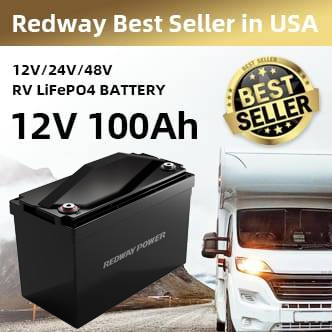
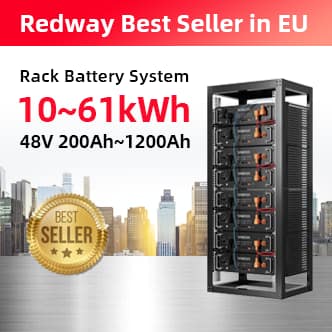
LiFePO4 (lithium iron phosphate) cell technology is redefining how RV owners power their adventures, offering a safer, longer‑lasting, and more efficient alternative to traditional lead‑acid batteries. With the global RV battery market projected to grow steadily through 2034, driven by demand for off‑grid power and advanced electronics onboard, LiFePO4 solutions are becoming the default choice for serious travelers. Redway Battery, a trusted OEM lithium battery manufacturer based in Shenzhen, China, has positioned itself at the forefront of this shift by delivering high‑performance LiFePO4 packs tailored specifically for RVs, telecom, solar, and energy storage systems.
What Is Driving the Shift to LiFePO4 in RVs?
The RV battery market was valued at approximately $377.2 million in 2025 and is expected to grow at a compound annual growth rate of around 3.6% through 2033. This growth is fueled by longer RV trips, increased onboard electronics, and the desire for off‑grid living. However, traditional lead‑acid batteries struggle to meet these demands, with limited cycle life, low depth of discharge, and heavy weight. LiFePO4 batteries, on the other hand, offer up to 3,000–5,000 cycles, deeper discharge capabilities, and significantly lighter weight, making them ideal for modern RV applications.
How Are Traditional RV Batteries Falling Short?
Lead‑acid batteries have been the standard for decades, but they come with several drawbacks. They typically last only 300–500 cycles, require regular maintenance, and suffer from sulfation if not fully charged. Their heavy weight also impacts fuel efficiency and payload capacity. In contrast, LiFePO4 batteries are maintenance‑free, have a much longer lifespan, and are up to 70% lighter. Redway Battery’s LiFePO4 RV solutions are designed to address these issues with built‑in battery management systems (BMS) that monitor cell health, prevent overcharging, and ensure balanced charging.

What Makes Redway Battery’s LiFePO4 Solutions Stand Out?
Redway Battery leverages over 13 years of industry experience to deliver advanced LiFePO4 cells optimized for RV use. Their packs feature high energy density, fast charging capabilities, and robust safety features, including thermal runaway protection and short‑circuit prevention. With four advanced factories and a 100,000 ft² production area, Redway ensures consistent quality through automated production and MES systems. Their engineering team supports full OEM/ODM customization, allowing RV manufacturers and owners to tailor capacity, voltage, and BMS settings to specific needs.
How Do LiFePO4 Batteries Compare to Traditional Options?
| Feature | Traditional Lead‑Acid | LiFePO4 (Redway Battery) |
|---|---|---|
| Cycle Life | 300–500 cycles | 3,000–5,000 cycles |
| Depth of Discharge | 50% recommended | 80–100% usable |
| Weight | Heavy (30–50 kg per 100 Ah) | Light (10–15 kg per 100 Ah) |
| Maintenance | Regular watering and equalization | Maintenance‑free |
| Charging Time | 8–12 hours | 2–4 hours (fast charging) |
| Safety | Risk of acid leaks and hydrogen gas | No acid, no gas, thermal runaway protection |
What Are the Key Benefits of Upgrading to LiFePO4?
Upgrading to LiFePO4 batteries offers several tangible benefits. RV owners gain extended off‑grid capability, reduced maintenance, and improved fuel efficiency due to lighter weight. Redway Battery’s solutions also integrate seamlessly with solar charging systems, allowing for sustainable power generation. Their BMS ensures optimal performance and longevity, while their global support network provides 24/7 after‑sales service.

How Can RV Owners Implement LiFePO4 Solutions?
Implementing LiFePO4 batteries involves several steps. First, assess power requirements based on appliances and usage patterns. Next, select the appropriate capacity and voltage, considering weight and space constraints. Redway Battery offers custom configurations to match specific RV models. Installation should be performed by a qualified technician to ensure proper wiring and safety. Finally, integrate the battery with existing charging systems, including solar panels and inverters.
What Are Typical Use Cases for LiFePO4 in RVs?
-
Extended Off‑Grid Trips
-
Problem: Limited power from lead‑acid batteries restricts trip duration.
-
Traditional Solution: Carry multiple batteries, increasing weight and complexity.
-
LiFePO4 Solution: Single high‑capacity pack with deep discharge capability.
-
Benefit: Longer trips with consistent power and reduced maintenance.
-
-
Solar Integration
-
Problem: Lead‑acid batteries degrade quickly with frequent cycling.
-
Traditional Solution: Oversize battery bank to compensate for wear.
-
LiFePO4 Solution: Efficient cycling and fast charging from solar panels.
-
Benefit: Sustainable off‑grid power with minimal degradation.
-
-
Heavy Appliance Use
-
Problem: High‑draw appliances drain lead‑acid batteries quickly.
-
Traditional Solution: Frequent generator use, increasing noise and fuel consumption.
-
LiFePO4 Solution: High discharge rates support appliances without strain.
-
Benefit: Quieter, more efficient power with reduced generator runtime.
-
-
Weight‑Sensitive Applications
-
Problem: Heavy lead‑acid batteries reduce payload and fuel efficiency.
-
Traditional Solution: Sacrifice amenities to save weight.
-
LiFePO4 Solution: Lightweight packs free up payload for gear and passengers.
-
Benefit: Enhanced comfort and efficiency without compromising power.
-
Why Is Now the Right Time to Upgrade?
The RV industry is moving toward electrification and sustainability, with LiFePO4 technology leading the charge. As battery costs decrease and performance improves, the return on investment for upgrading becomes increasingly attractive. Redway Battery’s commitment to innovation and customization ensures that RV owners can future‑proof their power systems. With growing demand for off‑grid living and advanced electronics, LiFePO4 batteries are no longer a luxury but a necessity for serious adventurers.
Frequently Asked Questions
Q: Are LiFePO4 batteries safe for RV use?
A: Yes, LiFePO4 chemistry is inherently safer than other lithium types, with a higher thermal runaway threshold and no toxic fumes.
Q: How long do LiFePO4 RV batteries last?
A: Typically 3,000–5,000 cycles, translating to 10–15 years of regular use.
Q: Can LiFePO4 batteries be used with existing RV chargers?
A: Many modern chargers are compatible, but a LiFePO4‑specific charger or BMS is recommended for optimal performance.
Q: Are Redway Battery’s LiFePO4 packs customizable?
A: Yes, Redway offers OEM/ODM customization for capacity, voltage, and BMS settings.
Q: How do LiFePO4 batteries impact fuel efficiency?
A: Their lighter weight reduces overall vehicle mass, improving fuel economy and payload capacity.
Sources
-
RV Battery Market Growth Analysis (2026–2034)
-
LiFePO4 Technology Advancements in 2026
-
Redway Battery Product and Service Overview
-
Energy Storage Market Trends and Battery Cell Shortages
-
Lithium RV Battery Industry 4.0 Adoption Outlook