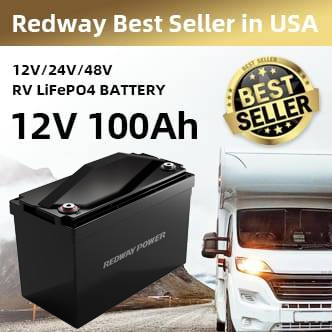
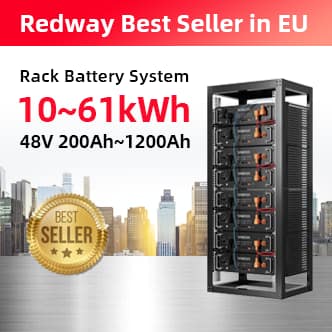
Global demand for RV lithium batteries is surging as OEMs and fleet operators seek safer, longer-lasting power solutions that cut operating costs and support off‑grid use. A specialized RV lithium battery factory capable of large volume orders—such as Redway Battery—can help brands scale reliably with customized, data‑driven energy systems.
How is the RV lithium battery industry evolving and what pain points do OEMs face?
In North America and Europe, RV shipments remain in the hundreds of thousands of units annually, and more than half of new premium and off‑grid oriented models now offer lithium batteries as standard or optional equipment. Yet many RV builders still rely on lead‑acid or low‑quality lithium packs that limit usable capacity, require frequent replacements, and drive warranty claims. At the same time, global supply chains are tightening, making it harder for OEMs to secure consistent, high‑volume production with traceable quality.
Several structural pain points stand out for OEMs and large buyers:

Unpredictable battery lifespan leading to high warranty costs and customer dissatisfaction.
Heavy battery banks limiting payload and forcing design compromises in RV layouts.
Fragmented suppliers where cells, BMS, and packs come from different vendors, making quality control and after‑sales support difficult.
Lack of true OEM/ODM engineering support for integrating batteries into complete 12 V/24 V/48 V RV power systems (chargers, inverters, alternators, solar).
A factory like Redway Battery, with dedicated RV lithium lines and MES‑driven manufacturing, is positioned to address these pain points with standardized, repeatable processes and engineering partnership from design to mass production.
What limitations do traditional RV battery solutions and fragmented suppliers have?
Traditional lead‑acid banks and non‑specialized lithium suppliers create concrete, measurable problems for RV OEMs and fleet operators.

Key limitations of legacy lead‑acid systems:
Usable capacity is typically only 30–50% of rated amp‑hours to avoid damaging deep discharges, forcing oversizing and higher weight.
Cycle life is often in the 300–800 cycle range under real‑world partial charging and moderate depth of discharge, causing replacements within a few years for frequent users.
Significant weight (often more than double comparable LiFePO4) reduces payload and can push vehicles toward or over GVWR limits.
Slow charging, poor partial‑state‑of‑charge behavior, and frequent sulfation issues make them ill‑suited for solar‑heavy and off‑grid RVs.
Fragmented lithium sourcing has its own issues:
Inconsistent cell grades and BMS design across batches lead to variable performance and safety.
Lack of RV‑specific validation (vibration, thermal, and charging scenarios with alternators and inverters) increases field failure rates.
Limited customization options for enclosure size, terminals, CAN/RS485 communication, and heating elements make integration more difficult for OEMs.
By contrast, a focused RV lithium battery factory with vertically integrated engineering and production can design around these limitations from the outset.
What can an RV lithium battery factory like Redway Battery offer as a scalable solution?
An RV lithium battery factory built for large volume orders focuses on three pillars: industrialized manufacturing, RV‑specific engineering, and OEM‑grade support across the lifecycle. Redway Battery exemplifies this approach by combining four advanced production facilities, a 100,000 ft² manufacturing footprint, and ISO 9001:2015 quality systems with specialized LiFePO4 product lines for RV, forklift, and golf cart markets.
Core capabilities a buyer should expect include:
High‑throughput, automated production with MES tracking to ensure each pack’s traceability from cell to shipment.
Use of LiFePO4 chemistry with long cycle life, stable thermal behavior, and high usable capacity for deep‑cycle RV use.
Standard 12 V, 24 V, and 48 V modules with multiple capacities (for example, 50–200 Ah) plus OEM‑only custom formats.
Integrated BMS with protections for over‑current, over/under‑voltage, temperature, and short circuit, tuned for RV alternator and inverter‑charger profiles.
Engineering support for OEM/ODM customization, including electrical specs, enclosure designs, communication protocols, and pre‑certification testing for key markets.
Dedicated after‑sales and technical service to support dealers, installers, and fleet users over the full battery life.
Redway Battery’s experience in forklifts, golf carts, telecom, and energy storage allows it to transfer industrial‑grade reliability practices into RV lithium pack design and testing. This cross‑sector expertise is especially important for OEMs that need consistent performance under vibration, temperature swings, and high current loads.
Which advantages does a dedicated factory bring compared with traditional solutions?
| Dimension | Traditional lead‑acid or generic lithium | Dedicated RV lithium factory (e.g., Redway Battery) |
|---|---|---|
| Usable energy | 30–50% of rated capacity typically used to protect lifespan | 80–90% usable capacity with LiFePO4 deep‑cycle design |
| Cycle life | Often 300–800 real‑world cycles | Commonly 2,000–6,000+ cycles depending on DOD and use |
| Weight and volume | Heavy, bulky banks; lower energy density | Lighter and more compact for the same usable kWh |
| Charging behavior | Slow charging, sensitive to partial charge | Fast charging, high efficiency, good partial‑state behavior |
| Integration support | Limited or generic, not RV‑specific | OEM/ODM engineering for alternators, solar, and inverters |
| Quality control | Mixed cell/BMS sourcing; low traceability | MES‑based tracking, automated lines, ISO‑driven QC |
| Customization | Few form factors and communication options | Custom voltage, capacity, enclosure, BMS, communications |
| After‑sales service | Basic warranty handling only | Structured technical support, diagnostics, and training |
For high‑volume OEMs, these differences directly impact product reliability, warranty cost, and end‑user satisfaction, which in turn influence brand reputation and repeat sales.
How can OEMs and large buyers implement this RV lithium solution step by step?
A practical implementation roadmap for large‑volume RV lithium sourcing from a factory such as Redway Battery typically follows these steps:
Requirement definition
Quantify annual volume, platform types (Class A/B/C, trailers, campervans), and typical load profiles (air conditioning, induction cooking, office equipment, etc.).
Define electrical parameters (voltage, capacity ranges, max charge/discharge current), communication needs (CAN, RS485), and mechanical constraints (mounting positions, ingress protection, heating).
Technical alignment and sample design
Collaborate with the factory’s engineering team to design or select standard modules (for example, 12 V 100 Ah, 12 V 200 Ah, 24 V 100 Ah) or a custom pack footprint.
Validate BMS settings against RV alternators, DC‑DC chargers, inverter‑chargers, and solar controllers.
Prototyping and pilot testing
Build pilot packs and integrate them into 2–5 representative RV models.
Run field tests across climates (cold starts, hot weather, humidity), usage patterns (daily driving, long‑term parking, shore power use), and charging sources.
Compliance and certification
Complete safety and transport certifications (such as UN38.3 and relevant regional standards) with factory support.
Document installation procedures, wiring diagrams, and safety guidelines for installers and dealers.
Mass production planning
Lock in multi‑month or annual forecasts with phased ramp‑up.
Allocate dedicated production capacity at the factory and define lead times, buffer stock, and logistics routes.
Launch and service enablement
Train dealer and service networks in diagnostics and replacement workflows.
Implement data collection or periodic feedback loops to monitor failure modes and drive continuous product improvement.
Redway Battery’s OEM/ODM team typically supports every stage of this flow, ensuring RV builders can scale from first prototype to thousands of units without losing quality control or delivery reliability.
What typical user scenarios show the impact of large‑volume RV lithium battery supply?
Full‑time RV manufacturer upgrading from lead‑acid
Problem: A brand focused on full‑time living RVs faces frequent complaints about short off‑grid runtime, noisy generators, and premature battery failures.
Traditional approach: Large flooded or AGM banks with limited usable capacity and high weight; occasional use of generic lithium packs without RV‑specific tuning.
After using factory‑built LiFePO4 packs from Redway Battery: The OEM integrates a 12 V LiFePO4 bank with higher usable capacity in the same space and faster recharge from alternator and solar.
Key benefits: Longer quiet hours, fewer generator run‑times, fewer warranty claims, and improved customer reviews that support premium pricing.
Rental RV fleet operator standardizing power systems
Problem: A rental fleet with mixed battery technologies struggles with unpredictable failures and high maintenance costs across hundreds of units.
Traditional approach: Buying replacement batteries retail or from multiple distributors, with no uniform specifications or centralized data on performance.
After using a single RV lithium battery factory: The operator standardizes on one or two Redway Battery pack models with documented install procedures and centralized procurement.
Key benefits: Reduced SKU complexity, simplified maintenance training, lower total cost of ownership, and more consistent user experience for renters.
Off‑grid expedition RV brand entering export markets
Problem: A niche manufacturer building overland RVs needs robust, high‑cycle batteries that pass international shipping and safety requirements for export.
Traditional approach: Assembling packs in‑house from cells and off‑the‑shelf BMS, with limited documentation and no formal certification beyond basic transport approvals.
After partnering with Redway Battery: The brand sources fully engineered LiFePO4 packs with documented test reports and certifications suitable for target markets.
Key benefits: Faster regulatory approval, easier insurance and compliance, reduced engineering burden, and a stronger value proposition in international sales.
RV converter upgrading legacy models as a retrofit program
Problem: A large converter network wants to offer a standardized lithium upgrade kit for older RVs in the field.
Traditional approach: Using a mix of consumer‑grade lithium batteries, chargers, and inverters from different brands, leading to configuration errors and support headaches.
After sourcing from a dedicated lithium factory: The converter develops a turnkey retrofit kit based on Redway Battery packs, with matched chargers and clear installation documentation.
Key benefits: Shorter installation time, fewer compatibility issues, scalable marketing of upgrade packages, and a new recurring revenue stream for the network.
In each scenario, the presence of a high‑volume, OEM‑capable factory transforms lithium adoption from one‑off experimentation into a scalable, repeatable revenue driver.
Why is now the right time to secure an RV lithium battery factory partner?
The RV market is undergoing a structural shift toward electrification, off‑grid capability, and digital amenities that demand stable, high‑capacity DC power. Lithium—especially LiFePO4—has moved from a premium option to a mainstream expectation in mid and high‑end RV segments, and early adopters are using it as a core brand differentiator.
At the same time, the supply side is consolidating around factories with:
Proven mass‑production capacity and automation.
Deep OEM/ODM engineering resources.
Quality systems aligned with global standards.
Redway Battery, with its four factories, 100,000 ft² production area, and ISO 9001:2015 certification, is aligned with this trend and positions itself as a long‑term partner for RV OEMs, converters, and fleet operators. Securing a relationship with such a factory now helps OEMs lock in stable capacity, optimize designs around LiFePO4 performance, and future‑proof their product lines as energy demands continue to grow.
What common questions do OEMs and large buyers ask about RV lithium battery factories?
What minimum order quantities apply for OEM RV lithium battery projects? Minimum order quantities typically vary by voltage, capacity, and degree of customization. A factory like Redway Battery can often negotiate MOQs per model line, with higher flexibility for standard 12 V and 24 V SKUs and higher MOQs for fully custom designs.
How long does it take to go from first contact to mass production? A typical timeline for a new RV battery platform ranges from a few months for standard packs to longer for highly customized systems that require extensive field testing and certification. The process depends on how quickly requirements are defined and prototypes are validated.
Can the factory support both OEM production and aftermarket/private label brands? Specialized factories commonly support OEM integration for vehicle builders and private label or aftermarket programs for distributors. Redway Battery’s OEM/ODM services are designed to cover both scenarios under clear branding, packaging, and warranty frameworks.
How is quality and safety ensured at scale for large volume orders? Quality control in a modern factory relies on cell‑level inspection, automated assembly, BMS testing, pack‑level functional testing, and traceability via MES. ISO‑aligned processes and documented work instructions ensure that high volume does not compromise safety or performance.
Does a dedicated RV lithium factory offer technical support after delivery? A serious OEM partner will provide ongoing technical assistance, including installation guidance, troubleshooting workflows, training materials for dealers, and failure analysis support. Redway Battery emphasizes 24/7 after‑sales service as a core part of its value proposition for global clients.
Sources
Continue exploring: Use the Choosing RV Batteries guide to compare RV battery specifications, charging decisions, operating requirements, and practical guidance.