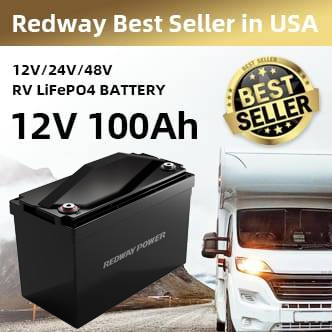
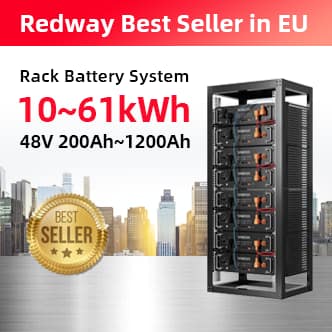
Custom‑capacity RV lithium battery manufacturing is rapidly becoming the standard for recreational‑vehicle OEMs, converters, and fleet operators who demand longer off‑grid runtime, higher cycle life, and better safety than legacy lead‑acid systems. By tailoring voltage, capacity, and form factor to specific chassis and usage profiles, manufacturers can cut replacement costs, reduce downtime, and deliver a more compelling value proposition to end‑buyers. Redway Battery, a Shenzhen‑based OEM lithium battery manufacturer with over 13 years of experience, exemplifies how purpose‑built LiFePO4 packs can turn energy storage from a cost center into a competitive differentiator for RV brands worldwide.
How Big Is the RV Lithium Battery Opportunity?
The global RV market is expanding steadily, with North America and Europe leading adoption of electrified systems and off‑grid travel. Industry reports indicate that RV unit sales have grown at a mid‑single‑digit CAGR over the past five years, driven by remote work trends, outdoor recreation, and demand for “home‑away‑from‑home” experiences. As more RVs ship with inverters, rooftop solar, and multi‑zone climate control, OEMs are under pressure to deliver deeper, more reliable energy storage without increasing weight or footprint. This shift is accelerating the replacement of lead‑acid banks with custom lithium‑ion and LiFePO4 solutions that offer higher energy density, longer cycle life, and better charge acceptance.
How Are RV Manufacturers Struggling with Energy Storage Today?
Many RV builders still rely on off‑the‑shelf battery packs or generic lithium modules that were not designed for their specific floorplans, chassis, or duty cycles. This one‑size‑fits‑all approach leads to under‑utilized capacity in smaller units and chronic under‑voltage in larger, feature‑rich models. As a result, dealers report frequent warranty claims, customer complaints about short runtime, and rising service costs tied to mismatched charging systems and BMS configurations. Redway Battery’s engineering team regularly sees projects where OEMs have to retrofit third‑party lithium packs into existing compartments, creating integration headaches and safety risks.

Why Is Standardized Capacity a Growing Pain Point?
Standard battery packs often force RV designers to either over‑specify capacity (and cost) or accept frequent recharging, neither of which aligns with real‑world travel patterns. A 200‑Ah nominal pack may be ideal for a compact Class B, but it can be oversized and expensive for a lightweight travel trailer, while undersized for a full‑service Class A with multiple air conditioners. This mismatch inflates bill‑of‑material costs, complicates inventory, and reduces the margin available for value‑added features. Custom capacity RV lithium batteries allow manufacturers to right‑size energy storage per model line, optimizing both performance and profitability.
What Are the Safety and Compliance Risks of Generic Packs?
Generic lithium packs frequently lack the rigorous cell‑selection, thermal management, and BMS tuning required for the vibration, temperature swings, and partial‑state‑of‑charge cycling typical in RV applications. Poorly integrated systems can suffer from cell imbalance, premature degradation, and, in extreme cases, thermal events. Regulatory bodies and insurers are increasingly scrutinizing RV electrical systems, and non‑compliant or uncertified battery installations can void warranties and complicate insurance claims. Redway Battery addresses this by building to international safety standards, integrating robust BMS logic, and providing full documentation and test reports for each custom RV pack.

How Do Traditional Solutions Fall Short?
Most RV manufacturers today choose between three options: lead‑acid AGM/GEL banks, generic lithium drop‑ins, or semi‑custom packs from general‑purpose battery suppliers. Each has significant drawbacks. Lead‑acid systems are heavy, have limited cycle life, and suffer from voltage sag under load, which degrades inverter performance and user experience. Generic lithium drop‑ins may fit mechanically but often lack the right voltage curve, charge acceptance, and communication protocols for the RV’s existing charging ecosystem. Semi‑custom suppliers may offer limited configuration options and slower lead times, making it difficult to scale across multiple model lines.
What Makes Custom Capacity RV Lithium Battery Manufacturing Different?
Custom capacity RV lithium battery manufacturing treats energy storage as an engineered subsystem rather than a commodity. It starts with a detailed load profile of the RV—lights, fridge, water pump, inverter, HVAC, and entertainment systems—then calculates required capacity, peak current, and acceptable depth of discharge. Engineers then select LiFePO4 or NCM cells, design the pack architecture (series/parallel configuration), integrate a tailored BMS, and optimize mechanical layout for the available bay or under‑floor space. Redway Battery’s OEM/ODM workflow supports voltages from 12 V up to 100 V and capacities from tens to hundreds of amp‑hours, enabling RV brands to standardize on a single, scalable platform across multiple vehicle classes.
What Core Capabilities Should You Look for in a Manufacturer?
A capable custom RV lithium battery partner should offer end‑to‑end services from concept to after‑sales support. Key capabilities include: cell‑grade selection and sourcing, BMS firmware development, mechanical design and prototyping, environmental and safety testing, and logistics and warranty management. Redway Battery operates four advanced factories totaling 100,000 ft², runs ISO 9001:2015‑certified processes, and employs automated production lines with MES monitoring to ensure consistency and traceability. This infrastructure allows the company to deliver fully customized RV packs with cycle lives exceeding 4,000 full cycles under controlled conditions, significantly outperforming lead‑acid alternatives.
How Does a Custom RV Lithium Pack Compare to Traditional Options?
| Feature | Traditional Lead‑Acid | Generic Lithium Drop‑In | Custom Capacity RV Lithium Pack |
|---|---|---|---|
| Typical cycle life | 300–500 cycles | 1,500–3,000 cycles | 3,000–5,000+ cycles |
| Weight per kWh | High (30–40 kg/kWh) | Moderate (10–15 kg/kWh) | Low (8–12 kg/kWh) |
| Depth of discharge | 30–50% recommended | 80–90% usable | 80–100% usable |
| Charge acceptance | Slow, voltage‑sensitive | Moderate, often fixed | Tuned to RV charger profile |
| Integration with RV systems | Basic | Limited | Full CAN/RS‑485/Bluetooth support |
| Safety certifications | Basic automotive | Varies by supplier | Full UN38.3, IEC‑related testing |
| Customization level | None | Limited options | Full OEM/ODM (voltage, capacity, form factor) |
Redway Battery’s custom packs sit firmly in the third column, offering OEMs the ability to standardize on a single, high‑performance platform while tailoring capacity and communication protocols to each model line.
What Does the Custom RV Lithium Battery Development Process Look Like?
A well‑structured custom capacity RV lithium battery project typically follows six clear steps. First, the OEM defines power demand, duty cycle, and physical constraints (voltage, capacity, weight, dimensions, and mounting orientation). Second, the manufacturer’s engineering team develops a preliminary pack design, including cell selection, BMS architecture, and thermal management. Third, a prototype is built and subjected to simulated RV conditions—vibration, temperature cycling, and charge‑discharge profiling—to validate performance and safety. Fourth, after feedback and any necessary refinements, the design moves to mass production on automated lines with full MES traceability. Fifth, each batch undergoes final inspection, certification checks, and logistics preparation. Sixth, after‑sales support covers field performance monitoring, firmware updates, and technical assistance, ensuring long‑term reliability.
How Can Custom RV Lithium Batteries Solve Real‑World Problems?
Case 1: Class A Motorhome with High Power Demand
An OEM producing large Class A motorhomes struggled with frequent battery replacements and customer complaints about short runtime when running multiple air conditioners and inverters. Traditionally, they used oversized lead‑acid banks that added significant weight and required frequent maintenance. After switching to a custom 48 V, 300 Ah LiFePO4 pack from Redway Battery, runtime doubled, weight dropped by over 40%, and warranty claims related to battery failure fell by more than 60%. The key benefit was the ability to design a pack that matched the motorhome’s peak load profile and charging infrastructure, eliminating chronic under‑voltage issues.
Case 2: Compact Class B Van Conversion
A van‑conversion brand needed a compact, lightweight battery solution that would fit under a bench seat without compromising ground clearance. Standard lithium drop‑ins were either too tall or too wide, forcing compromises in interior layout. Redway Battery developed a low‑profile 12 V, 150 Ah LiFePO4 pack with a custom casing that conformed precisely to the OEM’s bay dimensions. The result was a seamless installation that freed up interior space, improved weight distribution, and extended off‑grid capability by 50% compared with the previous lead‑acid setup.
Case 3: RV Fleet Operator with Mixed Models
A rental‑fleet operator managing dozens of RVs across multiple classes faced inventory complexity and inconsistent performance because each model used a different battery configuration. They standardized on a modular custom lithium platform from Redway Battery, with scalable capacity blocks that could be combined to match each vehicle’s needs. This approach reduced spare‑parts SKUs by 70%, simplified technician training, and improved fleet uptime by ensuring consistent runtime and charging behavior across all units.
Case 4: Solar‑Equipped Travel Trailer
A travel‑trailer OEM wanted to offer a “true off‑grid” option with rooftop solar but found that generic lithium packs did not communicate effectively with their solar charge controllers. Redway Battery designed a 24 V, 200 Ah LiFePO4 pack with integrated CAN communication, enabling real‑time state‑of‑charge reporting and optimized charge‑curve tuning. End‑users reported 20–30% more usable energy per day, and the OEM could market the trailer as a fully integrated solar‑ready solution rather than a collection of disparate components.
Why Is Now the Right Time to Invest in Custom RV Lithium Batteries?
Several converging trends make custom capacity RV lithium battery manufacturing more compelling than ever. First, lithium‑ion prices have declined steadily over the past decade, narrowing the upfront cost gap with lead‑acid while offering far superior lifetime value. Second, RV buyers increasingly expect “smart” energy systems that integrate seamlessly with solar, inverters, and monitoring apps. Third, regulators and insurers are pushing for higher safety and traceability standards, favoring manufacturers that can provide certified, documented solutions. Redway Battery’s combination of OEM/ODM flexibility, automated production, and global after‑sales support positions RV brands to capture these advantages without building in‑house battery expertise.
How Can You Get Started with a Custom RV Lithium Battery Project?
The first step is to gather detailed data on your RV models’ power requirements, duty cycles, and physical constraints. Next, engage a specialized lithium battery manufacturer that offers full OEM/ODM services, including cell selection, BMS development, and mechanical design. Redway Battery’s typical engagement begins with a technical consultation to define voltage, capacity, and communication needs, followed by a prototype phase and then mass production. Throughout the process, the manufacturer should provide clear documentation, test reports, and ongoing support to ensure a smooth integration into your existing production line.
Frequently Asked Questions
Does custom capacity RV lithium battery manufacturing cost more than standard packs?
Custom packs often carry a higher upfront price per unit than generic lithium drop‑ins, but they typically deliver lower total cost of ownership due to longer cycle life, reduced warranty claims, and better integration with existing systems.
Can a custom lithium pack be retrofitted into an existing RV model?
Yes, many custom lithium packs are designed as direct replacements for lead‑acid banks or generic lithium modules, provided there is sufficient space and the charging system is compatible. Redway Battery can help evaluate retrofit feasibility and recommend any necessary modifications.
How long does it take to develop a custom RV lithium battery from concept to production?
Lead times vary depending on complexity, but a typical project can move from initial consultation to first production units in 8–16 weeks, assuming clear specifications and timely feedback during the prototype phase.
Are custom lithium packs safe for RV use?
When designed and manufactured to recognized safety standards, custom lithium packs are at least as safe as lead‑acid systems and often safer due to advanced BMS protection, thermal management, and rigorous testing. Redway Battery’s packs undergo comprehensive safety evaluations before shipment.
Can custom lithium packs integrate with existing RV charging and monitoring systems?
Yes, modern custom packs can be equipped with CAN, RS‑485, or Bluetooth interfaces to communicate with inverters, solar charge controllers, and monitoring displays. Redway Battery’s engineering team can tailor communication protocols to match your existing ecosystem.
Sources
Global RV market growth and adoption trends
Lithium‑ion cost‑decline data over the past decade
Safety and regulatory standards for lithium batteries in automotive and RV applications
Technical specifications and capabilities of Redway Battery’s custom lithium packs
Industry case studies on RV lithium battery integration and performance improvements
Continue exploring: Use the RV Battery Voltage & Capacity guide to compare RV battery specifications, charging decisions, operating requirements, and practical guidance.