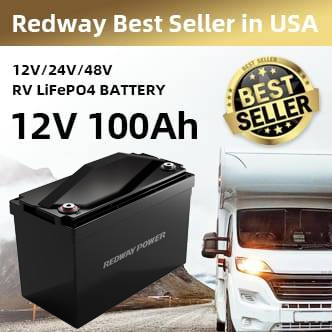
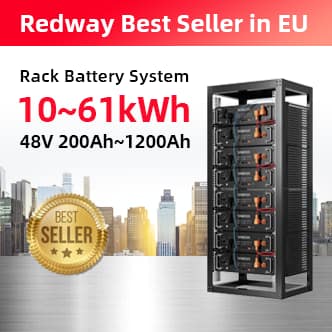
Scalable LiFePO4 (lithium iron phosphate) battery systems are now the most reliable way to power RV fleets, offering deeper usable capacity, longer cycle life, and lower total‑of‑ownership costs than traditional lead‑acid banks. When deployed at scale, these solutions reduce downtime, cut maintenance labor, and enable more predictable energy budgets across large fleets of recreational vehicles.
How Is the RV Fleet Market Evolving?
The global RV market has grown rapidly, with North America alone reporting over 600,000 RV shipments in recent years and a compound annual growth rate in the mid‑single digits. As fleets expand—from rental companies and tour operators to corporate mobile offices—operators are under pressure to keep vehicles on the road while managing rising fuel, insurance, and maintenance costs.
Within this growth, power systems are a hidden bottleneck. Many fleets still rely on deep‑cycle lead‑acid or AGM batteries for house loads, which limits how long units can operate off‑grid and how quickly they can recharge between rentals. Operators increasingly report that battery replacement and service consume a disproportionate share of maintenance budgets, especially as demand for air conditioning, inverters, and onboard electronics rises.

What Are the Main Pain Points in Current RV Power Systems?
First, limited usable capacity and depth of discharge plague conventional chemistries. Lead‑acid batteries are typically only safe to discharge to about 50% depth of discharge, whereas modern LiFePO4 packs can routinely deliver 80–90% usable capacity without degrading lifespan. This means fleets either install oversized banks or accept frequent generator runs, increasing fuel use and noise.
Second, short cycle life and frequent replacement drive up costs. Typical deep‑cycle lead‑acid units may last 300–500 cycles under ideal conditions, while quality LiFePO4 systems can exceed 2,000–5,000 cycles. For a large RV fleet turning over vehicles every few years, this translates into multiple battery replacements per unit and associated labor, disposal, and warranty claims.

Third, inconsistent performance and maintenance complexity create operational headaches. Voltage sag under load, sensitivity to under‑charging, and the need for regular watering and equalization make lead‑acid systems difficult to standardize across a mixed fleet. Technicians spend more time troubleshooting weak batteries than performing preventive maintenance, and rental managers face last‑minute cancellations when a unit’s house bank fails inspection.
Why Are Traditional Battery Solutions No Longer Enough?
Lead‑acid and early‑generation lithium packs were designed for single‑vehicle use, not fleet‑scale deployment. They lack the standardized communication interfaces, remote monitoring capabilities, and modular scalability needed to manage dozens or hundreds of RVs from a central operations center. As a result, fleet managers often treat batteries as a “black box” until something fails, which undermines reliability and planning.
Another limitation is charging compatibility and efficiency. Many existing RV converters and chargers are tuned for lead‑acid voltage profiles, leading to under‑charged lithium banks or unnecessary float stages that do not benefit LiFePO4 chemistry. This mismatch shortens pack life and reduces the effective energy available per rental cycle.
Finally, safety and compliance become harder to manage at scale. Older or poorly integrated lithium systems may lack robust battery management systems (BMS), thermal protection, and fault logging, increasing fire risk and complicating insurance and regulatory audits. For large operators, a single incident can trigger fleet‑wide inspections and reputational damage.
How Do Scalable LiFePO4 Solutions Address These Challenges?
Scalable LiFePO4 battery solutions for RV fleets are engineered as modular, networked power platforms rather than simple drop‑in replacements. They combine high‑cycle‑life LiFePO4 cells with intelligent BMS, CAN or RS‑485 communication, and configurable voltage architectures (12 V, 24 V, or 48 V) that can be paralleled across multiple units.
Key capabilities include:
High usable capacity and deep cycling, typically 80–90% depth of discharge without accelerating degradation.
Long cycle life, often 2,000–5,000 cycles at 80% DoD, which aligns well with typical RV fleet lifespans.
Lightweight design, reducing overall vehicle weight by 40–70% compared with equivalent lead‑acid banks, which can improve fuel economy and reduce strain on suspension and chassis.
Fast charging, with many LiFePO4 systems capable of reaching 80% state of charge in 2–6 hours using compatible chargers, versus 8–12 hours or more for lead‑acid.
Integrated BMS and telemetry, enabling remote monitoring of voltage, current, temperature, state of charge, and fault logs across the entire fleet.
Redway Battery, a trusted OEM lithium battery manufacturer based in Shenzhen, China, offers scalable LiFePO4 packs specifically tailored for RV applications. With over 13 years of industry experience and four advanced factories covering more than 100,000 ft², Redway delivers high‑performance, durable, and safe battery packs that support full OEM/ODM customization. Their engineering team works with fleet operators to define capacity, voltage, form factor, and BMS logic that match specific RV models and duty cycles, ensuring each unit receives a reliable energy solution backed by automated production and 24/7 after‑sales service.
What Are the Quantifiable Advantages vs. Traditional Systems?
The table below compares typical characteristics of traditional lead‑acid or early‑lithium setups with modern scalable LiFePO4 solutions suitable for RV fleets.
| Metric | Traditional lead‑acid / basic lithium | Scalable LiFePO4 solution (e.g., Redway‑style) |
|---|---|---|
| Usable capacity (% of rated) | ~50% for lead‑acid; up to ~70% for some lithium | 80–90% without accelerated degradation |
| Typical cycle life | 300–500 cycles (lead‑acid) | 2,000–5,000+ cycles at 80% DoD |
| Weight per kWh | High; often 2–3× heavier than LiFePO4 | 40–70% lighter than equivalent lead‑acid banks |
| Recharge time to 80% SoC | 8–12+ hours with standard converters | 2–6 hours with compatible chargers |
| Maintenance needs | Regular watering, equalization, load testing | Minimal; mostly remote monitoring and firmware updates |
| Fleet‑wide visibility | Limited; manual checks or basic voltmeters | Centralized telemetry and fault logging via BMS |
| Safety and compliance | Basic fusing and disconnects | Multi‑layer BMS protection, thermal sensors, and configurable alarms |
Redway Battery emphasizes safety and durability in its LiFePO4 designs, integrating robust BMS architectures, A‑grade cells, and rigorous testing protocols. Their packs are engineered to meet international safety and compliance expectations for RV and mobile applications, which helps fleet operators standardize across regions and simplify insurance and regulatory reviews.
How Can Fleets Implement Scalable LiFePO4 Systems Step by Step?
A structured rollout minimizes disruption and maximizes return on investment. The following workflow applies to both new‑build RVs and retrofits of existing fleets.
Assess fleet energy profiles
Collect data on daily energy consumption per unit (inverter loads, HVAC, lighting, water pumps, etc.).
Determine peak discharge currents and typical state‑of‑charge ranges at the start and end of rental cycles.
Define system architecture
Select voltage (12 V, 24 V, or 48 V) and total capacity (kWh) per unit based on duty cycle.
Decide whether to use single‑pack or modular, parallelable units that can be expanded later.
Choose compatible chargers and converters
Replace or reconfigure converters and shore‑power chargers to match LiFePO4 voltage profiles and charging algorithms.
Integrate solar charge controllers and inverter/chargers that support lithium‑specific settings.
Integrate BMS and telemetry
Install packs with CAN, RS‑485, or Bluetooth interfaces that feed into a central fleet‑management platform.
Configure alarms for low‑voltage, over‑temperature, and cell‑imbalance conditions.
Deploy in phases and validate
Start with a pilot group of 10–20 units to validate performance, charging behavior, and maintenance intervals.
Adjust capacity or charging parameters based on real‑world data before scaling to the full fleet.
Redway Battery supports this process by providing OEM‑style packs with customizable BMS settings, form factors, and communication protocols. Their team can assist in defining capacity, voltage, and mounting requirements that align with specific RV chassis and electrical layouts, helping operators avoid costly redesigns during rollout.
What Do Real‑World RV Fleet Scenarios Look Like?
Scenario 1: Large RV Rental Company
Problem: A national RV rental operator struggles with frequent battery failures and long turnaround times between rentals. Traditional practice: Replace lead‑acid house banks every 18–24 months and rely on visual inspections and basic voltmeters. After adopting scalable LiFePO4:
Usable capacity increases by roughly 60–80%, reducing generator runtime and fuel costs.
Cycle life extends from ~400 to over 3,000 cycles, cutting battery replacement frequency and labor.
Remote BMS monitoring flags weak units before they fail, improving rental availability and customer satisfaction.
Scenario 2: Tour Operator with Off‑Grid Itineraries
Problem: A tour company running multi‑day off‑grid trips faces inconsistent power for lighting, refrigeration, and communication gear. Traditional practice: Over‑sized lead‑acid banks and frequent generator use, which disturb guests and increase noise. After adopting scalable LiFePO4:
Stable voltage under load keeps inverters and appliances running smoothly, even at high discharge rates.
Faster charging during short stops allows more time on the road and less time plugged in at depots.
Reduced weight improves fuel economy on long‑distance routes.
Scenario 3: Corporate Mobile Office Fleet
Problem: A company using RVs as mobile offices needs reliable power for laptops, networking gear, and climate control. Traditional practice: Mixed battery types and inconsistent charging practices across vehicles. After adopting scalable LiFePO4:
Standardized LiFePO4 packs with uniform BMS logic simplify training and maintenance.
Remote monitoring enables IT and facilities teams to track power health alongside vehicle telematics.
Predictable lifespan and performance support long‑term budgeting for battery refresh cycles.
Scenario 4: RV Conversion and Aftermarket Installer
Problem: An aftermarket shop wants to offer a premium lithium upgrade that differentiates its service offering. Traditional practice: Install generic lithium packs without deep integration into the RV’s electrical architecture. After partnering with a scalable LiFePO4 OEM like Redway Battery:
Custom‑sized packs and BMS configurations match specific RV models and customer budgets.
Pre‑tested, ISO‑certified packs reduce warranty claims and support faster installation.
Access to technical documentation and 24/7 support improves first‑time fix rates and customer trust.
Why Is Now the Right Time to Adopt Scalable LiFePO4 for RV Fleets?
Several trends converge to make LiFePO4 adoption especially attractive today. First, battery costs have declined while cycle life and safety have improved, narrowing the payback period for fleets. Second, customer expectations for off‑grid comfort—including air conditioning, large‑screen entertainment, and reliable Wi‑Fi—demand more robust energy storage than lead‑acid can provide. Third, regulatory and insurance pressures are pushing operators toward safer, more transparent power systems with remote monitoring and fault logging.
Scalable LiFePO4 solutions also align with broader sustainability goals. Their long lifespan reduces waste and the environmental impact of frequent replacements, while higher efficiency lowers fuel consumption and emissions. For operators already investing in telematics and predictive maintenance, adding intelligent battery systems completes the picture of a data‑driven, high‑availability fleet.
Redway Battery is positioned to support this transition with scalable, OEM‑grade LiFePO4 packs for RVs, telecom, solar, and energy storage systems. Their ISO 9001:2015‑certified production and automated manufacturing lines ensure consistent quality, while their engineering team provides tailored support for fleet‑specific requirements. By choosing a partner with deep experience in LiFePO4 chemistry and large‑scale deployments, operators can future‑proof their RV fleets against rising energy demands and tightening operational constraints.
Does This Technology Fit Every RV Fleet?
Does LiFePO4 Make Sense for Small Fleets?
Yes. Even small operators benefit from longer battery life, reduced maintenance, and improved rental availability. The main decision is whether to standardize on a single scalable platform that can grow with the fleet.
Can Existing RVs Be Retrofitted with LiFePO4?
Most modern RVs can be retrofitted, but the charging system and wiring must be evaluated. In some cases, converters, chargers, and fusing need to be upgraded to match lithium voltage profiles and safety requirements.
How Long Do Scalable LiFePO4 Packs Typically Last?
Under typical RV fleet usage, quality LiFePO4 packs can last 8–12 years or more, depending on depth of discharge, temperature, and charging practices. Many manufacturers, including Redway Battery, design their packs to exceed 2,000–5,000 cycles at 80% DoD.
Are LiFePO4 Systems Safe for RVs?
When properly engineered and integrated, LiFePO4 systems are among the safest lithium chemistries available. Their thermal stability, combined with robust BMS protection, makes them suitable for mobile and confined environments such as RVs.
How Much Can Fleets Save by Switching?
Exact savings depend on fleet size, utilization, and local energy prices, but operators commonly report reduced battery replacement costs, lower fuel consumption from less generator use, and fewer maintenance hours. Over a 5–10‑year horizon, the total cost of ownership for LiFePO4 can be significantly lower than lead‑acid, especially when factoring in downtime and warranty claims.
Sources
Global RV market shipment and growth data
Industry guides on LiFePO4 vs. lead‑acid cycle life and usable capacity
Technical specifications and application notes for LiFePO4 RV batteries
OEM manufacturer documentation for scalable LiFePO4 packs and BMS integration
Safety and compliance standards for lithium‑ion battery packs in RVs
Fleet‑management and telematics case studies in the RV and mobility sectors
Continue exploring: Use the RV Battery Voltage & Capacity guide to compare RV battery specifications, charging decisions, operating requirements, and practical guidance.