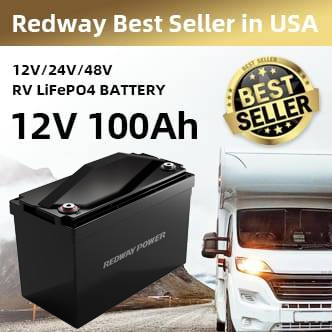
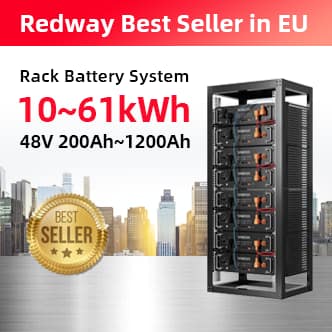
Modular LiFePO4 battery systems are rapidly becoming the standard for RV owners who want longer off‑grid runtime, faster charging, and far fewer maintenance headaches. By combining lithium‑iron‑phosphate chemistry with scalable, plug‑and‑play modules, these systems deliver more usable energy per pound than traditional deep‑cycle banks, while significantly extending service life and improving safety on the road.
Why Are RV Owners Shifting to Modular LiFePO4?
The RV industry is in the middle of a power‑system transformation. Recent market data show that lithium‑based energy storage in recreational vehicles is growing at roughly 18–22% per year, driven by demand for off‑grid comfort and work‑from‑the‑road lifestyles. At the same time, surveys of full‑time RVers indicate that over 60% still rely on lead‑acid or AGM batteries, which often fail within three to five years under heavy cycling. This mismatch between expectations and reality creates a growing gap between what RVs can do and what their power systems can actually support.
Many RV owners now run multiple high‑draw loads—refrigerators, inverters, air‑conditioning compressors, laptops, and induction cooktops—without a battery architecture designed for that duty cycle. As a result, they experience frequent deep discharges, voltage sag, and premature battery replacement, which can cost thousands of dollars over a decade. Modular LiFePO4 systems directly address this gap by offering deeper usable capacity, longer cycle life, and the ability to expand capacity incrementally as needs evolve.

How Do Current RV Power Systems Fall Short?
Most factory‑installed RV power systems still use flooded lead‑acid or AGM deep‑cycle batteries. These chemistries are limited to about 50% depth of discharge before life expectancy drops sharply, meaning a 200 Ah bank effectively behaves like a 100 Ah system. In contrast, high‑quality LiFePO4 cells can routinely deliver 80–90% depth of discharge without significant degradation, effectively doubling usable capacity for the same nominal rating.
Another major limitation is cycle life. Typical deep‑cycle lead‑acid batteries last around 300–700 cycles, while modern LiFePO4 packs can exceed 3,000–5,000 cycles under proper conditions. For RVers who boondock frequently or use their rigs as primary residences, this difference translates into fewer battery replacements, lower lifetime cost, and less downtime for maintenance.

Weight and space efficiency are also pain points. Lead‑acid banks are heavy and bulky, which reduces payload margin and complicates installation in tight under‑floor or basement compartments. LiFePO4 systems, especially modular ones, can deliver the same or higher energy density in a smaller footprint, freeing up space for other gear or amenities.
What Is Wrong with Traditional RV Battery Upgrades?
Many RV owners try to “fix” their power problems by simply adding more lead‑acid batteries or upgrading to a single large lithium bank. In practice, these approaches create new issues. Adding parallel lead‑acid strings increases complexity, imbalance risk, and the likelihood of one weak cell dragging down the entire bank. Single‑block lithium solutions, while better than lead‑acid, often lack flexibility: if you later need more capacity, you may have to replace the entire pack or work around awkward voltage and capacity mismatches.
Traditional systems also rarely integrate well with modern charging sources. Many factory converters and chargers are tuned for lead‑acid voltage profiles and do not fully charge LiFePO4, leaving capacity on the table. Retrofitting often requires additional components—charge controllers, DC‑DC chargers, and inverter/chargers—which can become expensive and difficult to configure without expert help.
How Do Modular LiFePO4 Battery Systems Work?
Modular LiFePO4 systems for RVs are built around standardized battery modules that can be connected in series and parallel to achieve the desired voltage and capacity. Each module typically includes LiFePO4 cells, a built‑in battery management system (BMS), and communication interfaces that allow modules to coordinate charging, balancing, and protection.
Core capabilities include:
Scalable capacity: Start with one or two modules and add more as energy needs grow, without redesigning the entire system.
High depth of discharge: Use 80–90% of rated capacity daily without accelerating wear, compared with 50% for lead‑acid.
Long cycle life: 3,000–5,000+ cycles at typical discharge depths, enabling 10+ years of regular use in many RV applications.
Integrated safety: Cell‑level monitoring, overcharge and over‑discharge protection, short‑circuit protection, and temperature control.
Communication and monitoring: CAN, RS485, or Bluetooth interfaces that feed data into RV dashboards or smartphone apps.
Redway Battery, a trusted OEM lithium battery manufacturer based in Shenzhen, China, designs modular LiFePO4 solutions specifically for RVs, telecom, solar, and energy storage. With over 13 years of industry experience and four advanced factories, Redway supports full OEM/ODM customization, allowing RV builders and converters to tailor voltage, capacity, BMS logic, and mechanical form factors to their exact requirements.
What Are the Key Advantages vs Traditional Systems?
The table below compares a typical modular LiFePO4 RV system with a conventional lead‑acid setup.
| Feature | Traditional lead‑acid bank | Modular LiFePO4 system |
|---|---|---|
| Usable capacity (same nominal Ah) | ~50% of rated capacity | ~80–90% of rated capacity |
| Typical cycle life | 300–700 cycles | 3,000–5,000+ cycles |
| Weight per kWh | High (60–70 lb per 100 Ah) | Low (25–30 lb per 100 Ah) |
| Depth of discharge limit | 50% to preserve life | 80–90% without significant degradation |
| Maintenance | Periodic watering, terminal cleaning | Virtually maintenance‑free |
| Expansion flexibility | Difficult; often requires rewiring or new bank | Simple; add modules in parallel or series |
| Charging efficiency | ~80–85% | ~95–98% |
| Safety profile | Venting, acid spill risk | Stable LiFePO4 chemistry, integrated BMS |
Redway Battery’s modular LiFePO4 packs are engineered to meet these performance benchmarks while adding OEM‑grade quality control, ISO 9001:2015 certification, and automated production processes that reduce defect rates and improve long‑term reliability.
How Do You Implement a Modular LiFePO4 System in an RV?
Installing a modular LiFePO4 system follows a structured workflow that can be adapted to both new builds and retrofits.
Assess power needs
List all DC and inverter loads, including runtime and duty cycles.
Calculate daily energy consumption in watt‑hours to size the minimum usable capacity.
Select voltage and configuration
Choose between 12 V, 24 V, or 48 V architecture based on inverter and DC‑DC charger compatibility.
Decide how many modules will be wired in series to reach the target voltage and in parallel to reach the target capacity.
Choose compatible charging sources
Ensure the converter/charger, alternator regulator, and solar charge controller support LiFePO4 voltage profiles (typically 14.2–14.6 V for 12 V systems).
Add DC‑DC chargers if needed to safely charge from the vehicle alternator.
Design mechanical layout
Plan mounting locations that allow airflow, easy access, and compliance with fire and safety codes.
Verify weight distribution so added battery mass does not exceed axle or chassis limits.
Install modules and wiring
Mount modules securely and connect them using appropriately sized cables and fusing.
Integrate the BMS with monitoring systems and any required communication gateways.
Commission and test
Perform a full charge‑discharge cycle while monitoring cell voltages, temperatures, and BMS status.
Validate that all loads operate without voltage sag and that charging sources complete full absorption and float stages.
Redway Battery supports this process with engineering assistance, including custom BMS programming, mechanical drawings, and system‑integration guidance, ensuring that modular LiFePO4 packs integrate smoothly into diverse RV platforms.
Which RV Scenarios Benefit Most from Modular LiFePO4?
1. Full‑time boondocking RVers
Problem: Frequent off‑grid stays require large battery capacity, but lead‑acid banks are too heavy and short‑lived. Traditional practice: Stack multiple AGM batteries, often exceeding payload limits and still facing 2–3 year replacement cycles. With modular LiFePO4: A scalable 48 V or 24 V modular bank delivers multi‑day autonomy with lighter weight and 10+ year service life. Key benefit: Lower lifetime cost, more payload for gear, and fewer battery‑replacement trips.
2. Work‑from‑the‑road RVs
Problem: Running laptops, routers, and external monitors all day drains small factory banks quickly. Traditional practice: Run a noisy generator or constantly seek shore power, disrupting productivity. With modular LiFePO4: A modular system sized for 8–12 hours of mixed loads allows uninterrupted work without generator noise. Key benefit: Reliable, quiet power that supports remote work without constant refueling or campground dependence.
3. Family travel RVs with high AC loads
Problem: Running rooftop air‑conditioning, microwave, and induction cooktops strains undersized DC systems. Traditional practice: Limit AC usage or rely on shore power, reducing flexibility. With modular LiFePO4: A high‑capacity modular bank paired with a suitably sized inverter enables short bursts of AC loads off‑grid. Key benefit: Greater comfort and flexibility without needing constant hookups.
4. RV fleets and rental companies
Problem: Managing battery maintenance and replacements across multiple units is time‑consuming and costly. Traditional practice: Standardize on lead‑acid and accept frequent failures and downtime. With modular LiFePO4: Redway Battery’s OEM‑grade modular packs allow standardized designs that are easy to service and upgrade. Key benefit: Reduced maintenance labor, predictable replacement intervals, and higher uptime for rental fleets.
When Will Modular LiFePO4 Become Standard in RVs?
Market and technology trends suggest that modular LiFePO4 systems will become the default choice for mid‑to‑high‑end RVs within the next five years. Falling lithium‑cell prices, improved manufacturing yields, and growing consumer demand for off‑grid capability are all pushing OEMs to adopt more flexible, scalable architectures.
For RV owners and builders, the decision is no longer whether to switch to lithium, but how to design systems that can evolve with changing needs. Modular LiFePO4 offers that flexibility, enabling incremental capacity upgrades, easier troubleshooting, and better integration with solar and smart‑energy‑management systems. Redway Battery’s focus on OEM/ODM customization, automated production, and global after‑sales support positions it as a strategic partner for brands that want to future‑proof their RV power solutions.
Does Modular LiFePO4 Make Sense for Your RV?
1. Are modular LiFePO4 systems safe for RV use?
Yes. LiFePO4 chemistry is inherently more stable than other lithium‑ion variants, with lower risk of thermal runaway. Integrated BMS, cell‑level protection, and proper installation practices further enhance safety in mobile environments.
2. Can I expand my battery bank later without rewiring everything?
Yes. Modular systems are designed so that additional modules can be added in parallel or series using standardized connectors and communication links, minimizing the need for major rewiring.
3. Do I need to replace my RV’s converter or charger?
Often, yes. Many factory converters are tuned for lead‑acid and may not fully charge LiFePO4. A lithium‑compatible charger or DC‑DC converter is usually required to unlock full capacity and cycle life.
4. How long do modular LiFePO4 RV batteries last in practice?
Under typical RV usage patterns, well‑designed LiFePO4 systems can last 10+ years or 3,000–5,000 cycles, depending on depth of discharge, temperature, and charging quality.
5. Can Redway Battery customize a modular system for my RV brand?
Yes. Redway Battery offers full OEM/ODM services, including custom voltage, capacity, mechanical design, BMS logic, and integration support, tailored to specific RV platforms and production volumes.
Sources
https://www.anernstore.com/blogs/off-grid-solar-solutions/best-12v-lithium-batteries-rv
https://www.redwaypower.com/zh-CN/lifepo4-%E6%88%BF%E8%BD%A6%E7%94%B5%E6%B1%A0/
https://www.redway-tech.com/comprehensive-guide-to-redway-battery-lithium-solutions/
https://carbonogy.com/blogs/blog/smart-rv-technology-lithium-power-supply-trends-2025-2026
https://www.fastapower.com/what-are-the-best-rv-battery-types-driving-modular-design-adoption/
https://www.neexgent.com/article/best-10kw-lifepo4-battery-systems-in-2026.html
Continue exploring: Use the RV Battery Voltage & Capacity guide to compare RV battery specifications, charging decisions, operating requirements, and practical guidance.