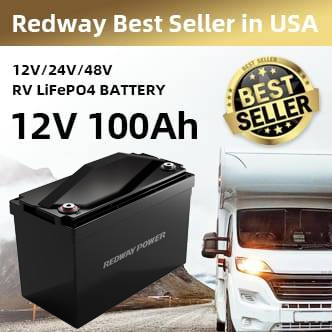
Replacing a lead‑acid house battery with a lithium (LiFePO₄) battery is one of the most impactful upgrades an RV owner can make in 2026. Modern lithium batteries deliver more usable energy, longer cycle life, and lighter weight in the same physical space, turning weekend trips into reliable off‑grid adventures without constant generator runs or campground hookups.
Why is the RV battery market shifting from lead‑acid to lithium?
The global RV battery market is worth around $377 million in 2025 and is growing at a CAGR of about 3.6% through 2033, with lithium‑ion (especially LiFePO₄) gaining share rapidly. In North America, where RV ownership is high, millions of units still rely on lead‑acid house batteries, but owner surveys show that over 60% of RVers who have upgraded to lithium report it as one of their top three upgrades for comfort and reliability.
Meanwhile, the limitations of lead‑acid — short cycle life, deep discharge damage, and weight — are pushing more owners and OEMs toward lithium. RV manufacturers themselves are increasingly offering factory‑installed lithium or designing compartments that can easily accept drop‑in LiFePO₄ replacements, signaling that lithium is no longer a niche option but a mainstream expectation.

How are lead‑acid RV batteries underperforming today?
Most RVs still come with flooded or AGM lead‑acid house batteries, typically 100–200 Ah in 12 V banks. While these were adequate for basic lighting and a small fridge, they struggle with modern power demands like large inverters, multiple devices, rooftop air conditioners on inverters, and extended off‑grid stays.
The biggest problem is usable capacity: a 100 Ah AGM battery is only safe to discharge to about 50% (50 Ah usable), whereas a lithium battery can be regularly used down to 80–100% depth of discharge without damage. This means a 100 Ah LiFePO₄ battery can replace a 200 Ah lead‑acid bank in practice, even though the rated Ah is the same.

What real‑world problems do RV owners face with lead‑acid?
Frequent deep cycling kills batteries fast – Discharging a lead‑acid battery below 50% regularly can cut its life from 3–5 years to below 2 years, especially in warm climates or with solar charging.
Weight and space constraints – A typical 100 Ah AGM battery weighs 25–30 kg; a 100 Ah LiFePO₄ weighs about 12–14 kg, making it easier to handle and allowing more capacity in the same footprint.
Slow charging and poor efficiency – Lead‑acid batteries accept charge more slowly, especially in the final 20%, which wastes solar or generator time and fuel.
Maintenance and hydrogen gas – Flooded batteries require watering and ventilation to avoid gas buildup, while AGM still needs proper ventilation and can vent if overcharged.
Voltage sag and inverter issues – As lead‑acid batteries discharge, voltage drops noticeably, sometimes causing inverters to shut down even when the battery isn’t fully dead.
Why do traditional lithium drop‑ins still leave owners frustrated?
Many “drop‑in” lithium RV batteries are designed to mimic AGM voltage and charging profiles, but they often have limitations that don’t solve all off‑grid problems:
Limited charge current – Some cheaper lithium packs only accept 30–50 A, so they can’t fully use a large solar array or generator, wasting potential.
Weak BMS or no low‑voltage communication – Without proper low‑voltage disconnects or communication with inverters/chargers, lithium batteries can still be damaged or cause blackouts.
Inconsistent performance in cold weather – Poorly designed packs may disable charging below freezing or deliver less usable power, undermining reliability in winter camping.
No remote monitoring or fleet management – For RV rental fleets or long‑term travelers, not being able to check battery state remotely increases downtime and maintenance costs.
How does a true RV lithium replacement solve these problems?
A modern RV lithium battery replacement for lead‑acid systems is a purpose‑built LiFePO₄ battery designed to:
Fit the same mounting space and use the same terminals as a standard 12 V deep‑cycle lead‑acid battery.
Offer 80–100% usable depth of discharge, effectively doubling the usable energy vs. a similarly rated AGM.
Last 2,000–5,000+ cycles at 80% DoD, compared to 300–800 cycles for AGM, translating to 5–10+ years of daily use.
Support high charge currents (e.g., 100–150 A continuous) so they can fully leverage solar arrays and fast chargers.
Include a robust BMS that protects against overcharge, overdischarge, short circuits, and overheating, often with configurable low‑voltage cut‑offs for inverters.
Redway Battery specializes in OEM/ODM LiFePO₄ RV batteries that are engineered to replace lead‑acid systems seamlessly. Their RV packs are built with automotive‑grade cells, a high‑quality BMS, and clear integration guidelines so installers and owners can upgrade without redesigning their entire electrical system.
What core features make a lithium pack truly RV‑ready?
12.8 V nominal voltage – Matches the system voltage of most RVs, so it works with existing fuses, breakers, and DC loads.
AGM/lead‑acid charge profile compatibility – Can be charged with standard RV converters and solar controllers without needing a special lithium profile, though dual‑mode chargers are recommended for best performance.
High peak and continuous current – Typically 100–200 A peak and 50–120 A continuous, enabling large inverters (1,000–3,000 W) and fast charging.
Integrated LCD or Bluetooth app – Shows state of charge, voltage, current, and temperature; some models support remote monitoring and alerts.
Low‑temperature protection – Built‑in heating or charge disabling below 0 °C to prevent damage, crucial for four‑season or winter RV use.
Safety certifications – UL, CE, UN38.3, and other certifications ensure the battery is safe for living spaces and transport.
Redway Battery’s RV lithium solutions are designed with these features in mind, and their engineering team supports full OEM/ODM customization so each RV manufacturer or fleet operator can get a tailored energy solution.
What are the real advantages vs. lead‑acid batteries?
| Feature | Typical AGM Lead‑Acid RV Battery | Modern RV LiFePO₄ Replacement |
|---|---|---|
| Usable capacity (100 Ah) | ~50 Ah (50% DoD limit) | 80–100 Ah (80–100% DoD) |
| Cycle life (80% DoD) | 300–800 cycles | 2,000–5,000+ cycles |
| Weight (100 Ah) | 25–30 kg | 12–14 kg |
| Charge acceptance | Slower, tapers early | Fast, high current support |
| Efficiency (round‑trip) | 70–80% | 95–98% |
| Maintenance | Watering (flooded), venting | Maintenance‑free |
| Off‑grid runtime | 1–2 days (moderate loads) | 3–7+ days (same Ah) |
| Space required | Larger footprint for usable kWh | More kWh in same space |
| Cold weather charging | Manual control needed | Automatic disable/heat (configurable) |
From a TCO (Total Cost of Ownership) perspective, lithium often pays for itself in 2–4 years through longer life, fewer replacements, reduced fuel use (less generator time), and better off‑grid performance.
How does an RV owner actually replace lead‑acid with lithium?
Replacing a lead‑acid bank with a lithium battery is a straightforward process when done step by step:
Audit the existing system
Note battery voltage (almost always 12 V), capacity (Ah), physical dimensions, and terminal type. Check the maximum charge current (converter/solar) and inverter size to ensure the lithium pack can handle it.Choose a compatible lithium pack
Select a LiFePO₄ battery that matches the existing footprint and voltage. For example, a 100 Ah LiFePO₄ can typically replace a 100–200 Ah AGM bank while providing more usable energy. Redway Battery offers standard and custom sizes that fit common RV compartments, with clear specs for charge current, peak current, and low‑voltage cutoffs.Verify charging compatibility
Check if the RV converter or solar charge controller can handle lithium voltage ranges. Most modern units can, but very old converters may need a firmware update or replacement. If unsure, a dual‑mode charger or external DC‑DC charger can be added between the alternator or solar and the lithium battery.Disconnect and remove old batteries
Turn off shore power, disconnect the negative terminal first, then positive. Remove the old lead‑acid batteries carefully, following local disposal rules.Mount and connect the new lithium battery
Install the new battery in the same location, secure it with appropriate straps, and connect cables using the same polarity (positive to positive, negative to negative). Ensure all connections are tight and protected from vibration.Configure and test the system
Reset any battery monitors or inverter low‑voltage settings to match the lithium battery’s recommended cutoff (e.g., 10.5–11.0 V under load). Test charging from shore, solar, and alternator, and verify that the battery reaches full charge and runs loads without issues.Set up monitoring (if available)
Connect any Bluetooth app or wired display to monitor SoC, voltage, and temperature. This helps catch issues early and optimize usage patterns.
Redway Battery provides detailed installation guides and technical support for each RV lithium model, making it easier for both DIYers and professional installers to complete the upgrade correctly.
What are 4 real RV use cases where lithium replaces lead‑acid?
1. Weekend family camper (24–30 ft class C)
Problem
A family uses a 24 ft class C RV for 3–4 night trips, but the AGM battery dies after 2–3 years and can’t run the rooftop AC on an inverter without frequent generator runs.
Traditional solution
Keep replacing AGM batteries and running the generator every evening, adding noise, fuel cost, and maintenance hassle.
After lithium replacement
A 100–200 Ah LiFePO₄ battery powers lights, fridge, and small inverter loads all day and night. The rooftop AC can run for short periods on the inverter, and solar recharges the battery in a single sunny day.
Key benefits
2–3x more usable energy in the same space
5–8 years of life vs. 2–3 for AGM
Longer off‑grid time, fewer generator cycles
Redway Battery’s 100–200 Ah RV packs are a popular choice for this segment, designed for easy installation and long weekend reliability.
2. Full‑time off‑grid RV living
Problem
A full‑timer runs a 35 ft fifth wheel with two 100 Ah AGM batteries, but they can’t keep up with the water heater, fridge, washer, and multiple devices, requiring campground hookups almost daily.
Traditional solution
Add more AGM batteries, but this quickly runs out of space and adds significant weight, while still not providing enough reliable off‑grid time.
After lithium replacement
Two 200 Ah LiFePO₄ batteries replace the AGM bank, effectively doubling usable capacity. With solar and a small generator, they can stay off‑grid for 5–7 days without sacrificing comfort.
Key benefits
80–100% usable capacity vs. 30–50% for AGM
Supports larger inverters (2,000–3,000 W) without constant voltage sag
Fewer battery replacements and less downtime
Redway Battery’s high‑capacity, high‑current LiFePO₄ batteries are designed for this heavy‑use scenario, with robust BMS and long cycle life.
3. RV rental fleet (20–30 units)
Problem
A rental company suffers from frequent battery failures and short booking windows because AGM batteries degrade quickly with daily cycling and are heavy to maintain.
Traditional solution
Schedule frequent battery replacements and maintenance visits, increasing labor and spare parts costs, while limiting maximum rental duration.
After lithium replacement
All units are upgraded to 100–200 Ah LiFePO₄ batteries. The rental company can offer longer rental periods (7–14 days off‑grid) and reduce maintenance visits by 60–70%.
Key benefits
5–10 year lifespan vs. 2–4 for AGM, cutting replacement costs
50% lighter batteries reduce injury risk during swaps
Remote monitoring options help predict failures before customer pickup
Redway Battery works with RV manufacturers and fleet operators to provide standardized, durable lithium packs with OEM support and 24/7 service backup.
4. Overlanding / 4×4 camper build
Problem
An overlander uses a 4×4 with a 100 Ah AGM auxiliary battery, but it struggles with long off‑road trips, frequent deep cycling, and limited alternator charging time.
Traditional solution
Add more AGM batteries or run a generator, but this adds weight, reduces fuel economy, and increases complexity off‑road.
After lithium replacement
A single 100–150 Ah LiFePO₄ battery replaces the AGM, with an external DC‑DC charger from the alternator. It can be deeply discharged daily and recharged quickly, supporting fridge, lights, and devices for multi‑week trips.
Key benefits
50% lighter weight improves fuel economy and payload
Higher cycle life survives daily deep cycling
Fast charging maximizes energy captured on long drives
Redway Battery’s rugged, high‑current LiFePO₄ packs are used in many overland and expedition builds, where reliability and weight savings are critical.
How is the future of RV power trending?
The RV industry is moving toward lighter, smarter, and more sustainable power systems, and lithium is at the center of that shift. OEMs are already integrating lithium into new RVs, and aftermarket demand for “drop‑in” lithium replacements is growing rapidly as owners realize the benefits in range, comfort, and reliability.
In parallel, solar adoption is increasing, and modern solar charge controllers work best with lithium due to their high charge acceptance and flat voltage curve. This synergy between lithium and solar makes true off‑grid living more practical and less dependent on shore power or generators.
The trend is especially strong for RV rental fleets, long‑term travelers, and overlanders, where battery performance directly impacts uptime, customer satisfaction, and operational costs. Upgrading from lead‑acid to a properly sized LiFePO₄ replacement is no longer a luxury; it’s becoming a necessity for reliable, comfortable RV travel in 2026 and beyond.
Redway Battery is positioned to support this transition with OEM‑quality LiFePO₄ solutions, backed by Shenzhen‑based engineering, automated production, and global service, making it a trusted partner for RV manufacturers and large fleets upgrading their energy systems.
Frequently Asked Questions
Can I replace my RV’s AGM battery with a lithium battery without changing the charger?
Yes, most 12 V LiFePO₄ RV batteries are designed to work with standard RV converters and solar charge controllers, although systems rated for lithium (or with adjustable profiles