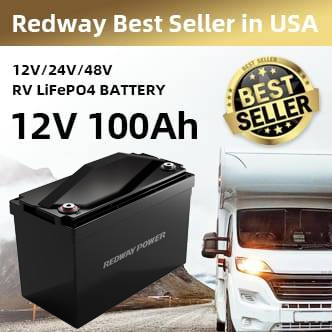
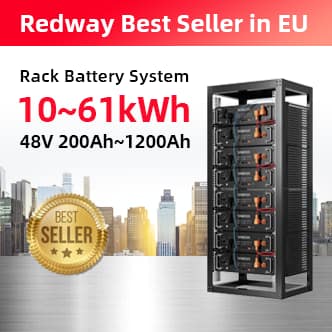
Lithium iron phosphate (LiFePO₄) has become the standard chemistry for RV house batteries, offering exceptional safety, long cycle life, and lower total cost of ownership versus traditional AGM or flooded lead‑acid. Partnering with a dedicated LiFePO₄ RV battery factory supplier gives fleets, OEMs, and large buyers direct access to high‑quality, custom‑designed battery banks at factory pricing and volume scalability.
How big is the LiFePO₄ RV battery market and why is it growing?
The global lithium‑ion RV energy storage battery market was worth around $900 million in 2024 and is projected to grow to about $1.3 billion by 2034, expanding at a compound annual growth rate of 5.5% over the decade. This growth is driven by more RV owners and fleets choosing lightweight, long‑life lithium over heavy lead‑acid batteries.
Lithium iron phosphate dominates this segment, accounting for over 60% of new RV lithium battery installations. Its thermal stability, low fire risk, and ability to last 3,000–5,000 cycles make it ideal for mobile, off‑grid, and high‑usage applications where safety and reliability are critical.

At the same time, lead‑acid battery performance is increasingly mismatched to modern RV needs. Flooded and AGM batteries typically last only 300–500 cycles, weigh 2–3× more than lithium, lose capacity quickly when deeply discharged, and require more maintenance. This growing gap is accelerating the shift from aftermarket upgrades to full OEM integration of LiFePO₄.
Why are most RV operators still struggling with battery performance?
Capacity and depth of discharge limitations
Lead‑acid batteries are typically only safe to discharge to 50% depth of discharge (DoD) without risking damage and shortened life. In practice, many RV systems are designed conservatively at 30–40% DoD, effectively giving only a fraction of the labeled capacity for daily use.

A 200 Ah AGM battery may only deliver 70–100 usable Ah before voltage sag affects inverters and appliances. LiFePO₄ batteries, in contrast, can safely operate at 80–100% DoD for thousands of cycles, so a 200 Ah LiFePO₄ pack delivers nearly twice the usable energy from the same Ah rating.
Short cycle life and high replacement frequency
Flooded and AGM batteries in RVs often fail within 3–5 years under moderate use, especially when regularly cycled: dry days, weekend trips, or off‑grid living quickly wear them out. Fleet operators and rental companies may replace lead‑acid banks every 2–3 years, increasing both downtime and lifetime cost.
Even “deep cycle” lead‑acid batteries rarely exceed 500–800 cycles at 50% DoD. In contrast, quality LiFePO₄ batteries routinely achieve 3,000–5,000 cycles at 80% DoD, reducing the number of replacements over a 10–15‑year RV life by a factor of 4–6.
Weight, space, and installation complexity
Traditional RV battery banks are heavy, often weighing 100–200 lb for a 200–400 Ah capacity. This added weight reduces fuel efficiency and payload capacity, and the bulk takes up significant under‑floor or storage space.
LiFePO₄ cuts weight by about 50–60% for the same capacity. A 200 Ah LiFePO₄ pack typically weighs 60–75 lb, freeing up several hundred pounds in payload and allowing more flexible mounting options (wall‑mounted, under‑bed, etc.). This also reduces wear on suspensions and chassis in heavy use.
Safety and off‑grid reliability concerns
Lead‑acid batteries vent hydrogen gas and require ventilation, spill protection, and careful charging to avoid overcharging, corrosion, and fire risk in enclosed compartments. In hot climates or with inaccurate chargers, lead‑acid can overheat, swell, or even fail catastrophically.
LiFePO₄ is intrinsically safer due to its stable chemistry and lower thermal runaway risk. Well‑designed LiFePO₄ packs with a quality BMS can be mounted in more locations, including passenger compartments, and are much more suited to hot, cold, or unattended off‑grid use.
What are the limitations of traditional RV battery suppliers?
Generic aftermarket batteries with limited customization
Many RV battery suppliers sell generic, off‑the‑shelf LiFePO₄ batteries that are not designed specifically for RVs. They may use the same cells and basic BMS as solar or marine applications, leading to suboptimal performance in temperature swings, vibration, and frequent partial cycling.
These batteries often lack features critical for RVs: extended temperature range operation, robust CAN or communication protocols, integrated monitoring, or configurable charge profiles for different charging sources (solar, alternator, shore, inverter/generator).
High cost and low scalability for fleets and OEMs
Buying pre‑assembled LiFePO₄ batteries from distributors or resellers adds significant markups. For a 50–100 unit RV fleet or an OEM, this inflates the total battery cost and reduces margins.
In addition, these suppliers rarely offer the volume pricing, engineering support, or long‑term supply agreements that fleets and OEMs need. Lead times can be long, and customization (different voltages, capacities, form factors, or communication interfaces) is either unavailable or extremely expensive.
Inconsistent quality and support
The LiFePO₄ market has many low‑cost brands with inconsistent cell quality, weak BMS, and dubious safety practices. Many use recycled or lower‑grade cells, leading to poor cycle life, imbalance, and early failure.
After‑sales support is often limited: slow response times, difficulty getting replacement parts, and no local technical teams. For an RV operator or fleet, this means unacceptable downtime and higher total cost of ownership due to premature failures and warranty issues.
How does a LiFePO₄ RV battery factory supplier solve these problems?
A dedicated LiFePO₄ RV battery factory supplier provides OEM/ODM manufacturing services, allowing buyers to source custom‑designed RV battery packs directly from the production line. This changes the economics and capabilities of RV power systems.
Core capabilities of a specialized LiFePO₄ RV factory
Cell selection and matching: use of high‑quality, grade‑A LiFePO₄ cells (typically 3.2 V, 50–300 Ah) matched and grouped by capacity and internal resistance for long life and balance.
Custom pack design: capacity from 100 Ah to 1,000+ Ah, voltages (12 V, 24 V, 48 V), and physical form factors tailored to RV chassis, compartments, and mounting requirements.
Advanced BMS and software: integrated BMS with temperature monitoring, cell balancing, over‑current/short‑circuit protection, and configurable charge profiles for solar, alternator, shore, and inverter charging.
Communication and integration: CANbus, RS‑485, or Bluetooth for integration with RV dashboards, solar charge controllers, and monitoring apps.
Automated production and testing: full capacity, cycle life, and safety testing at the factory level, ensuring consistency and reliability across large orders.
OEM branding and packaging: white‑label solutions with custom labels, manuals, and packaging for fleets and OEM partners.
Example: How Redway Battery operates as a factory supplier
Redway Battery is a trusted OEM lithium battery manufacturer based in Shenzhen, China, with over 13 years of experience in LiFePO₄ technology. It specializes in LiFePO₄ batteries for forklifts, golf carts, and increasingly for RVs, telecom, solar, and energy storage systems.
With four advanced factories and a 100,000 ft² production area, Redway delivers high‑performance, durable, and safe LiFePO₄ battery packs globally. Its engineering team supports full OEM/ODM customization, so RV OEMs and fleet operators can specify voltage, capacity, dimensions, terminals, communication, and safety features to match their exact requirements.
Redway’s automated production lines and MES systems ensure consistent quality and traceability, while its 24/7 after‑sales support provides technical assistance, spare parts, and warranty handling for international customers.
What are the real advantages versus buying trad batteries?
Here is a direct comparison of traditional RV battery approaches versus partnering with a LiFePO₄ RV battery factory supplier like Redway Battery.
| Feature | Traditional Aftermarket Batteries | LiFePO₄ RV Factory Supplier |
|---|---|---|
| Cycle life | 300–800 cycles (lead‑acid), 2,000 cycles (generic LiFePO₄) | 3,000–5,000+ cycles at 80% DoD (grade‑A LiFePO₄) |
| Weight (200 Ah) | 120–200 lb (lead‑acid) | 60–75 lb (LiFePO₄) |
| Usable capacity (DoD) | 30–50% of nominal capacity | 80–100% of nominal capacity |
| Safety | Hydrogen venting, spill risk, corrosion, thermal runaway risk | Stable LiFePO₄ chemistry, low fire risk, integrated BMS |
| Customization | Very limited (off‑the‑shelf sizes only) | Full OEM/ODM: voltage, capacity, form factor, terminals, BMS, comms |
| Cost per usable kWh (over life) | High due to frequent replacements | 30–50% lower total cost of ownership over 10 years |
| Scalability | One‑off purchase, limited fleet pricing | Volume pricing, long‑term supply agreements |
| Support and warranty | Limited, often handled by distributor | Direct factory support, 24/7 technical and warranty service |
Partnering with a factory supplier allows RV brands and operators to lock in stable pricing, reduce per‑unit battery cost at scale, improve reliability, and offer a more competitive, differentiated product or service.
How do you actually implement a factory‑sourced LiFePO₄ RV battery solution?
Step 1: Define your requirements
Determine the required voltage and total capacity (e.g., 12 V / 200 Ah, 24 V / 400 Ah, 48 V / 600 Ah).
Specify the maximum dimensions, mounting orientation, and terminal type (terminal blocks, lugs, etc.).
Identify charging sources: solar MPPT, DC‑DC charger, alternator, shore power, inverter/generator, and required charge profiles.
Decide on communication needs: display integration, CANbus, RS‑485, Bluetooth, or app monitoring.
Step 2: Engage with a qualified factory supplier
Select a supplier with proven experience in LiFePO₄ RV applications (look for certifications such as ISO 9001, UN 38.3, IEC 62133).
Provide detailed specs and request a proposal that includes BOM, cell type, BMS features, cycle life, safety tests, and pricing at target volumes.
Review quality processes: cell sourcing, production line controls, aging, and end‑of‑line testing.
Step 3: Engineering and sample phase
Work with the supplier’s engineering team to finalize the mechanical design, electrical layout, and BMS settings.
Request engineering samples for testing in real RV conditions: temperature extremes, vibration, and charge/discharge cycles.
Validate performance, safety, and integration with the RV’s existing electrical architecture.
Step 4: Production and rollout
Finalize contracts, volume pricing, and delivery schedules.
Implement quality assurance visits or audits if needed.
Train service teams on installation, maintenance, and troubleshooting.
Roll out the batteries to new builds or as a standardized upgrade for existing fleets.
Step 5: Ongoing support and optimization
Use the supplier’s 24/7 support for technical issues, warranty claims, and spare parts.
Monitor field performance to refine future specs (e.g., higher capacity, better communication, lower‑temp options).
Consider full‑cycle agreements or battery‑as‑a‑service models for maximum uptime and cost control.
Where can you see real‑world benefits from using a factory LiFePO₄ solution?
Case 1: RV rental company with 50 units
Problem: A North American RV rental company was replacing 200 Ah AGM batteries in 50 units every 3 years due to sulfation and plate warping from frequent deep cycling. Downtime, labor, and replacement costs averaged $12,000 per year.
Traditional approach: Continuously buying aftermarket AGM or generic LiFePO₄ batteries through distributors, with no volume discount and limited technical support.
After factory‑sourced LiFePO₄: Partnered with Redway Battery to supply 12 V 200 Ah LiFePO₄ packs with custom BMS and CANbus. Installation was done during scheduled maintenance, and the packs were standardized across all units.
Key benefits:
60% lighter batteries, improving payload and fuel economy.
Battery life extended from 3 years to 8+ years, reducing replacement frequency by 60%.
Annual battery replacement cost dropped from $12,000 to under $3,000.
Fewer customer complaints about power issues and faster turnaround between rentals.
Case 2: RV OEM integrating lithium from the factory
Problem: A mid‑size RV manufacturer wanted to offer factory‑installed lithium as a premium option to compete with high‑end brands. Using off‑the‑shelf lithium batteries was expensive and didn’t allow for tight integration with the dash display and charging system.
Traditional approach: Sourcing branded lithium batteries from a third‑party distributor, with fixed form factors and limited integration options.
After factory‑sourced LiFePO₄: Collaborated with Redway Battery to design a custom 12 V 400 Ah LiFePO₄ pack with a slim profile to fit under the bed, integrated CANbus BMS, and a custom dashboard SOC display.
Key benefits:
Up to 30% lower per‑unit cost compared to branded aftermarket lithium.
Complete OEM integration: SOC, alarms, and charge status visible on the RV dash.
Marketing differentiation: “factory‑integrated lithium with 10‑year design life.”
Higher conversion rate on premium lithium option, improving margins.
Case 3: Luxury RV owner going full off‑grid
Problem: A long‑haul luxury RV owner wanted to run a large inverter, AC, and multiple appliances completely off‑grid for 5–7 days. The existing 400 Ah AGM bank was too heavy and only provided 2 days of comfortable use.
Traditional approach: Add more AGM batteries, which increased weight and still required generator use every 2–3 days.
After factory‑sourced LiFePO₄: Worked with Redway Battery to design a 48 V 600 Ah LiFePO₄ system in a custom enclosure, optimized for solar and DC‑DC charging with a high‑capacity BMS and remote monitoring.
Key benefits:
Usable energy increased from ~120 Ah (AGM) to around 480 Ah (LiFePO₄ 80% DoD).
Weight saved: over 300 lb, improving fuel economy and payload.
Off‑grid capability extended from 2 days to 5–7 days with solar and efficient use.
Reduced generator runtime from daily to occasional use.
Case 4: Fleet of RVs for humanitarian missions
Problem: An NGO operating 20 RVs in remote regions faced frequent battery failures due to poor charging infrastructure, high temperatures, and deep discharges. Spare AGM batteries were expensive and hard to source locally.
Traditional approach: Using standard AGM batteries with basic chargers, leading to 6–12 month lifespans and high downtime.
After factory‑sourced LiFePO₄: Designed a rugged 12 V 300 Ah LiFePO₄ pack with extended temperature range BMS and compatibility with solar, vehicle alternator, and generator charging. Redway Battery provided a long‑term supply agreement and spare packs.
Key benefits:
Cycle life extended from under 1 year to 4–6 years in harsh conditions.
Reliability increased: 80% reduction in battery‑related breakdowns.
Reduced logistics burden: fewer spare batteries and longer intervals between replacements.
Higher mission uptime and lower total cost over 5 years.
Why is 2026 the right time to adopt a factory LiFePO₄ RV battery strategy?
Battery technology, cost, and supply chain maturity are all converging to make factory‑sourced LiFePO₄ the logical choice for RV OEMs and fleet operators. The price gap between lithium and lead‑acid continues to narrow, while the performance and safety advantages of LiFePO₄ are greater than ever.
New regulations and insurance requirements are pushing fleets and commercial operators toward safer, more reliable battery technologies. LiFePO₄’s lower fire risk and better performance in extreme conditions make it the preferred chemistry for insurers and fleet managers.
OEMs are also under pressure to deliver longer off‑grid range, better fuel economy, and more advanced power management features. Only a factory‑integrated LiFePO₄ solution can deliver the weight savings, usable capacity, and integration depth needed to stay competitive.
Redway Battery is already supporting customers in this shift, providing OEM/ODM LiFePO₄ battery packs that are engineered specifically for RV and mobile applications. With 13 years of experience, multiple production facilities, and a focus on quality and customization, it offers a proven path to reliable, scalable, and cost‑effective RV battery systems.
Now is the time to move beyond generic aftermarket batteries and work with a true LiFePO₄ RV battery factory to build a differentiated, future‑proof power solution.
How do you choose the right factory LiFePO₄ RV battery partner?
How can I tell if a LiFePO₄ factory supplier has real RV experience?
Look for a supplier that can show:
Specific RV reference designs or case studies.
Engineering support for BMS configuration with common RV charging sources (solar, DC‑DC, alternator, inverter).
Experience with vehicle vibration standards, temperature ranges (-20°C to 60°C), and shock resistance.
Quality certifications relevant to RVs and transportation (ISO 9001, UN 38.3, IEC 62133).
Continue exploring: Use the Choosing RV Batteries guide to compare RV battery specifications, charging decisions, operating requirements, and practical guidance.