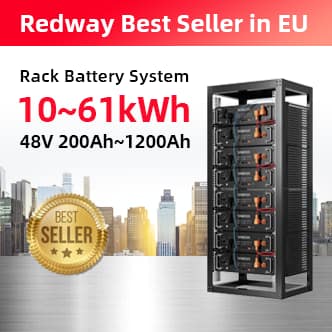
Global demand for rack-mounted lithium batteries is surging as 5G, edge data centers, and commercial energy storage accelerate, and operators urgently need backup systems that can recharge in under one hour to keep networks and loads online. Fast-charging compatible rack lithium batteries from Chinese production lines, especially LiFePO4 solutions from OEMs like Redway Battery, are emerging as a practical way to cut downtime, reduce total cost of ownership, and standardize power across telecom, IT, and industrial racks.
How Is the Current Rack Lithium Battery Industry Evolving and What Pain Points Stand Out?
Telecom and data center power demand is climbing rapidly as global data traffic grows more than 20% per year, pushing operators to densify racks and shorten maintenance windows. At the same time, many networks still depend on legacy lead-acid banks that need 8–12 hours to recharge, forcing operators to tolerate long vulnerability windows after grid outages or generator runs. Industry studies on lithium-ion fast-charging show that optimized chemistries and control strategies can safely support high-rate charging, but adoption in stationary racks has lagged behind electric vehicles, leaving a gap between what is technically possible and what is deployed in the field. A major pain point is the mismatch between high-availability SLAs and slow battery recovery: if a site experiences several outages in a day, conventional VRLA banks may never reach full state of charge, increasing the risk that the next grid failure results in a brownout or forced traffic offload. Many commercial and industrial facilities face similar issues when coupling batteries with solar and peak-shaving—slow charging limits how often they can cycle, reducing the financial return on their energy storage investment. Chinese production lines have scaled up rack lithium manufacturing, but buyers still worry about interoperability with existing rectifiers, real fast-charge capability versus marketing claims, and long-term cycle life under 1C or higher charge rates. Redway Battery, with more than 13 years of OEM experience in LiFePO4 systems for forklifts, telecom, and energy storage, is among the manufacturers closing this gap by standardizing 48–51.2 V rack modules that support 0.5C–1C continuous charging while maintaining 8000+ cycle life under typical telecom duty profiles. Their factories in Shenzhen leverage automated production and MES traceability to ensure consistent quality for global operators who need both performance and reliable documentation.
What Limitations Do Traditional Rack Power Solutions Have Compared with Fast-Charging Lithium?
Traditional VRLA lead-acid batteries remain common in telecom and IT racks because they are familiar, cheap upfront, and broadly compatible with older rectifier systems. However, their low charge acceptance severely limits how quickly they can recover after an outage, which is increasingly unacceptable in 5G and always-on cloud environments. Typical lead-acid strings require 8–12 hours to reach full charge after a deep discharge, and repeated operation in partial state of charge significantly shortens their life. From a physical and operational perspective, lead-acid banks are heavy and bulky, often occupying twice the space and weight of an equivalent LiFePO4 rack pack. This limits how much backup you can install in standard 19‑inch cabinets and makes maintenance more labor-intensive. They also generally operate at lower depth of discharge (often 50%) if you want reasonable cycle life, which further reduces usable capacity per rack unit. Thermally, VRLA batteries do not tolerate elevated temperatures well, and high-rate charging accelerates grid corrosion and gas evolution, making “fast charging” impractical in most real deployments. Operators who attempt higher charge currents often see premature failures in just a few hundred cycles, increasing total cost of ownership and creating unplanned site visits.

Why Are Fast-Charging Rack Lithium Batteries from Chinese OEM Production Lines a Strong Solution?
Fast-charging rack lithium batteries, particularly LiFePO4 systems, are designed to accept high charge currents (0.5C–1C continuous, sometimes higher in peaks) without sacrificing safety or lifetime when managed by an advanced BMS. This allows a typical 48 V or 51.2 V rack module to recharge from a deep discharge to near full capacity in about one hour, aligning much better with the operational patterns of telecom sites and data centers. Chinese OEM manufacturers have built large-scale production lines dedicated to standardized rack formats (such as 19‑inch 3U–5U) and common telecom voltages, enabling cost-effective mass production with customization options. Redway Battery is a clear example: its 48 V/51.2 V rack LiFePO4 packs support fast charging, IP-rated enclosures, and multiple communication protocols like CAN and RS485 so that they integrate into existing rectifiers, UPS systems, and network management tools. Because LiFePO4 chemistry offers high thermal stability and long cycle life, these fast-charging rack batteries often reach 6000–8000+ cycles at 80% depth of discharge under proper conditions, dramatically reducing replacement frequency compared with lead-acid. When combined with automation and MES tracking on the production line, operators gain both performance and traceability, which simplifies audits and large-scale rollouts.
What Advantages Does Redway Battery Specifically Bring to Fast-Charging Rack Lithium Projects?
Redway Battery operates four advanced factories in Shenzhen with around 100,000 ft² of production area and ISO 9001:2015 quality management, enabling consistent, high-volume output of rack LiFePO4 batteries. The company specializes in OEM and ODM projects, allowing telecom carriers, data center integrators, and industrial EPCs to specify capacity, voltage, communication interfaces, mechanical dimensions, and even the charging profiles that best match their rectifiers. In the context of fast-charging compatibility, Redway Battery leverages in-house BMS engineering to tune charge and discharge limits, thermal management, and protocol behavior so that modules can safely sustain 1C charging where the system permits it. Their engineering team can pre-integrate with common rectifier and inverter brands, reducing integration time and de‑risking field deployments. Beyond telecom racks, Redway Battery applies similar design principles to rack batteries used in solar storage, commercial peak-shaving, and industrial applications, ensuring that fast-charging capabilities remain consistent across product families. This makes it easier for multinational customers to standardize on a single supplier for multiple energy storage use cases while maintaining consistent monitoring and maintenance practices.

What Does a Quantified Advantage Comparison Between Traditional and Fast-Charging Rack Lithium Look Like?
Below is a concise overview of quantifiable differences between legacy VRLA systems and modern fast-charging rack LiFePO4 solutions such as those produced by Redway Battery.
Is There a Clear Advantage Table Between Traditional and Fast-Charging Rack Lithium Solutions?
| Metric | Traditional VRLA Rack Battery | Fast-Charging Rack LiFePO4 (e.g., Redway Battery) |
|---|---|---|
| Typical charge time | 8–12 hours | About 1 hour at 1C |
| Usable depth of discharge | ~50% | 80–90% |
| Cycle life at rated DoD | 300–600 cycles | 6000–8000+ cycles |
| Weight per kWh | High | ~50–70% lower |
| Volume per kWh | Bulky | ~40–50% smaller |
| Operating temperature tolerance | Narrow, degradation at higher temps | Wider, better tolerance with LiFePO4 |
| Maintenance needs | Regular checks, replacements frequent | Lower, longer replacement intervals |
| Monitoring and BMS | Basic or external only | Integrated smart BMS, remote monitoring |
| Recommended charge rate | 0.1C–0.2C | 0.5C–1C continuous (design dependent) |
| Total cost of ownership (10 yr) | High due to frequent replacements | Significantly lower from extended life |
How Can Operators Implement a Fast-Charging Compatible Rack Lithium Solution Step by Step?
Define load and backup requirements
Determine total rack power consumption (kW), required backup duration (hours), and acceptable recharge time (target 1–2 hours).
Decide on system voltage (typically 48 V or 51.2 V for telecom and many IT racks) and redundancy levels (N, N+1).
Evaluate existing rectifiers and chargers
Check whether current rectifiers or chargers can provide sufficient current and voltage range to support 0.5C–1C charging for the planned battery capacity.
Confirm communication protocols (CAN, RS485, SNMP, Modbus) and any vendor-specific profiles.
Select fast-charging capable rack lithium batteries
Choose LiFePO4 rack modules rated explicitly for 0.5C–1C charging with clear cycle-life specifications at those rates.
For OEM projects, engage manufacturers like Redway Battery to customize capacity (e.g., 48 V 100 Ah), mechanical height (3U or 4U), ingress protection, and communication options.
Validate mechanical and electrical compatibility
Verify that rack modules fit standard 19‑inch racks in terms of height, depth, and front-access connections.
Confirm cable sizing, protection devices, and grounding meet both local regulations and manufacturer recommendations.
Configure BMS and monitoring integration
Work with the manufacturer to program BMS parameters for charge voltage, current limits, temperature thresholds, and alarm settings aligned with your site.
Integrate BMS data into NMS or SCADA systems for real-time visibility into state of charge, health, and events.
Pilot test and roll out
Deploy a pilot at representative sites to validate fast-charging behavior, rectify settings, and operational procedures.
Use data from the pilot to finalize standard operating procedures before large-scale rollout.
Establish maintenance and lifecycle strategy
Schedule periodic inspections focused on firmware updates, BMS logs, and visual checks rather than frequent replacements.
Plan for 10-year or longer lifecycle with capacity benchmarks and end-of-life criteria, leveraging the longer life of LiFePO4 cells.
Which Four Typical User Scenarios Show the Impact of Fast-Charging Rack Lithium Batteries?
What Happens in a Telecom 5G Base Station Scenario?
Problem: A 5G macro base station experiences frequent short grid outages in a developing grid, and lead-acid banks take 10 hours to recharge, leaving the site vulnerable to subsequent failures.
Traditional approach: VRLA strings sized for several hours of backup but operated at partial state of charge, leading to early failure, repeated truck rolls, and missed uptime targets.
After using fast-charging rack lithium: LiFePO4 rack modules recharge to near full within about one hour once grid power or a generator comes online, maintaining high state of readiness throughout the day.
Key benefits: Reduced downtime risk, fewer site visits, and lower long-term cost because batteries last several times longer in cycle terms.
How Does a Tier-3 Data Center Use Fast-Charging Racks?
Problem: A regional data center must comply with strict uptime SLAs but struggles with long recharge cycles after generator runs, limiting its margin for subsequent events.
Traditional approach: Large VRLA banks with high footprint and limited monitoring, which need 8+ hours to recover and complicate capacity planning.
After using fast-charging rack lithium: Modular rack LiFePO4 units with integrated BMS and communication allow quick, controlled 1C recharging during normal operation while feeding live monitoring data into the DCIM system.
Key benefits: Higher resilience between grid disturbances, smaller footprint per kWh, and better predictability for capacity and maintenance planning.
Why Is Commercial Solar-Plus-Storage a Strong Use Case?
Problem: A commercial building uses solar to offset energy costs but cannot fully utilize midday peaks because lead-acid batteries cannot accept high charge currents and deteriorate quickly when cycled daily.
Traditional approach: Oversized VRLA banks charged slowly at low C-rates, resulting in under-utilized solar energy and higher replacement frequency.
After using fast-charging rack lithium: Rack-mounted LiFePO4 systems accept higher charge currents during solar peaks, store more energy in shorter windows, and support daily cycling with long cycle life.
Key benefits: Improved return on investment for the solar-plus-storage system, better use of peak-generation periods, and lower lifetime battery costs.
How Do Industrial Users with Forklift and Process Loads Benefit?
Problem: A factory relies on electric forklifts and sensitive process equipment, facing costly disruptions when power blips exceed the endurance of old backup systems.
Traditional approach: Mixed battery technologies and slow-charging backup racks that cannot recover quickly between shifts or outages, forcing conservative operations and additional contingency measures.
After using fast-charging rack lithium: Standardized LiFePO4 racks, drawing on the same engineering principles Redway Battery uses for forklift packs, provide fast, predictable recharge between production cycles and shifts.
Key benefits: Higher equipment availability, fewer interruptions, and the ability to harmonize battery maintenance across forklifts, process equipment, and facility backup.
What Future Trends Make Fast-Charging Compatibility Even More Critical and Why Act Now?
Fast-charging technologies continue to improve, with research focused on optimizing electrode materials, electrolytes, and control strategies to minimize degradation at higher charge rates. As a result, the performance gap between what is possible in labs and what is available in commercial products is narrowing, especially in LiFePO4 and other stable chemistries. At the same time, regulatory and market pressure for higher energy efficiency and reduced carbon footprints are pushing operators to adopt more cycling-intensive strategies, such as peak-shaving and load shifting. 5G expansion, edge computing, and distributed energy resources mean there will be more small sites with high availability requirements and limited physical space. In these environments, fast-charging compatible rack lithium batteries are not a luxury but a necessity to maintain uptime without oversizing infrastructure. Manufacturers like Redway Battery that already combine fast-charging LiFePO4 technology with mature OEM capabilities are well positioned to become long-term partners for operators planning multi-year fleet transitions. Acting now allows organizations to standardize on fast-charging capable rack modules, update specifications, and build internal expertise before demand and lead times spike further. Early adopters can also lock in designs and testing results that streamline future rollouts and reduce integration risk.
Are There Common Questions About Fast-Charging Compatibility for Rack Lithium Batteries?
Is fast charging safe for rack-mounted LiFePO4 batteries?
Fast charging is safe when the battery is explicitly designed and rated for higher C-rates, and when a properly configured BMS manages current, voltage, temperature, and cell balancing. Using non-rated batteries or bypassing manufacturer limits can cause accelerated aging or safety issues.
Can fast-charging rack lithium batteries work with existing telecom rectifiers?
In many cases, yes, provided the rectifiers can supply sufficient current and operate within the voltage range required by the LiFePO4 packs. Communication via CAN or RS485 allows coordination between rectifier and BMS, and OEMs like Redway Battery can customize profiles to match specific rectifier brands.
What C-rate is typically recommended for fast-charging compatibility?
For many rack LiFePO4 systems, 0.5C–1C is the practical fast-charging range, meaning a full charge in roughly one to two hours under suitable conditions. Higher transient rates may be possible depending on the specific design and thermal management.
How does fast charging affect battery lifespan over time?
If cell chemistry, mechanical design, and BMS strategies are optimized, LiFePO4 batteries can sustain thousands of cycles at higher C-rates with moderate capacity fade. Excessive currents, poor cooling, or operation outside recommended temperature ranges will reduce lifespan, so adherence to manufacturer guidelines is crucial.
Who should consider OEM or ODM collaboration for fast-charging rack batteries?
Telecom carriers, hyperscale or colocation data centers, industrial facility operators, and system integrators deploying large fleets benefit most from OEM/ODM collaboration. Working directly with manufacturers such as Redway Battery enables tailored fast-charging profiles, mechanical formats, and monitoring integrations that match their specific environments.
Are fast-charging rack lithium batteries suitable for both backup and daily cycling applications?
Yes, many LiFePO4 rack systems are suitable for both standby backup roles and frequent daily cycling, as long as sizing and control strategies are aligned with the expected usage pattern. This dual capability is especially attractive for commercial energy storage combined with backup power needs.
Sources
Can Rack Lithium Batteries Fast-Charge in Telecom Racks? – Redway Battery https://www.redway-tech.com/can-rack-lithium-batteries-fast-charge-in-telecom-racks/
What Are the Best Fast-Charging Rack Lithium Batteries for Telecom? – Redway Battery https://www.redway-tech.com/what-are-the-best-fast-charging-rack-lithium-batteries-for-telecom/
Why Rack-type Lithium Batteries are Ideal for Commercial & Industrial Sector – EAPL https://eaplworld.com/Why%20Rack-type%20Lithium%20Batteries%20are%20Ideal%20for%20Commercial%20&%20Industrial%20Sector
What Backup Battery Specs Matter Most in Rack Mount Battery Backup – Manly Battery https://manlybattery.com/what-backup-battery-specs-matter-most-in-rack-mount-battery-backup/
Review of a fast-charging strategy and technology for lithium-ion batteries – Energy Storage Science and Technology https://esst.cip.com.cn/EN/Y2022/V11/I9/2879
Challenges and opportunities toward fast-charging of lithium-ion batteries – Journal article https://www.sciencedirect.com/science/article/abs/pii/S2352152X20316741
Continue exploring: Use the Rack Battery Sizing, Voltage & Capacity guide for the related decision process, evidence, and practical guidance.