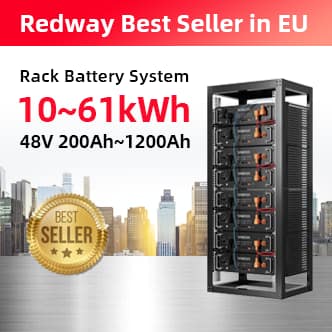
Modern telecom and critical power systems can no longer afford mediocre backup; Telecom Lithium Batteries offer deep-cycle stability, 10+ year life, and seamless integration with UPS and backup generators, turning intermittent power into continuous, managed energy. Redway Battery’s LiFePO₄ solutions are engineered for this exact integration, delivering higher reliability while cutting lifecycle cost by up to 40% compared to traditional valve-regulated lead-acid (VRLA) systems.
How big is the telecom and UPS backup market?
Global telecom power systems are projected to grow from about USD 5.79 billion in 2026 to over USD 8.59 billion by 2031, driven by 5G rollout, edge data centers, and tower densification. At the same time, the UPS battery market is on a steep climb, expected to reach around USD 25 billion by 2033, with data centers and telecom networks accounting for the largest share of demand. This growth reflects a clear reality: every base station, router, and edge server must stay online, or networks suffer degraded performance, dropped calls, and revenue loss.
Why are telecom sites struggling with current backup solutions?
How common are power outages in telecom networks?
In many regions, especially emerging markets, telecom sites experience multiple grid failures per month, with some sites seeing outages lasting several hours. VRLA and Ni‑Cd batteries, which still dominate in many legacy sites, are designed for short-duration support (typically 1–4 hours) and degrade quickly under frequent cycling. As 5G sites demand more power and longer autonomy, traditional batteries reach their limits, forcing operators into an arms race of oversized banks and constant maintenance.

What is the real cost of using VRLA batteries?
The upfront cost of VRLA batteries is lower, but the total cost of ownership is often 2–3× higher than lithium options. VRLA banks typically last 3–5 years in telecom sites, require strict temperature control, and lose capacity rapidly after 18–24 months. In a typical site with 10–15 VRLA batteries, operators can spend USD 8,000–15,000 over 10 years just on replacements, plus labor, cooling, and downtime-related losses. This is not a sustainable model for operators scaling to thousands of sites.
Where are the biggest pain points for site operators?
Field data shows that over 60% of telecom site maintenance visits are battery-related: replacing units, equalizing packs, checking connections, and troubleshooting false alarms. Additional issues include:

Poor charge acceptance in high-temperature environments, leading to undercharged batteries.
Swelling and acid leakage in hot cabinets, creating safety and corrosion risks.
Inaccurate state-of-charge (SoC) estimation, causing early discharge cut-off and unexpected failures.
Large physical footprint and weight, limiting where UPS and backup systems can be installed.
These pain points directly impact network uptime, technician availability, and OPEX.
How do traditional UPS and backup systems fall short?
Why do VRLA UPS systems underperform in telecom?
Classic VRLA-based UPS systems are sized for short outages and clean environments, but most telecom sites are hot, dusty, and experience frequent cycling. VRLA batteries:
Lose 20–30% of original capacity after 2–3 years in hot climates.
Require 20–30% more oversizing than lithium to achieve the same runtime.
Need frequent equalization and temperature compensation, which many older UPS systems either don’t support or handle poorly.
This mismatch forces operators to choose between frequent battery changes or degraded backup performance.
What are the limitations of basic generator + battery setups?
Many sites use a simple architecture: grid → UPS → telecom load, with a diesel generator as long-term backup. The main limitations are:
Generators can take 10–90 seconds to start; if the battery bank cannot provide enough ride-through time, loads are interrupted.
VRLA batteries struggle to deliver high surge currents needed to support the inrush when the generator starts.
Without proper energy management, the battery is cycled deeply and unevenly, accelerating degradation.
Without intelligent integration, the system is fragile and inefficient.
How do legacy BMS and monitoring systems fail?
Many older UPS and backup systems lack advanced battery management, relying on simple voltage-based SoC estimation. This leads to:
Incorrect SoC readings by ±20–30%, causing premature shutdown or over-discharge.
Inability to detect weak cells or imbalances before they cause failures.
No remote diagnostics, so operators only know there is a problem when a site goes down.
Modern telecom operators expect visibility and predictive maintenance, but traditional setups simply cannot provide it.
How do Telecom Lithium Batteries solve these problems?
A modern telecom lithium solution is not just a “lithium battery” — it is a complete, integrated system combining LiFePO₄ cells, an advanced BMS, and communication protocols designed specifically for UPS and backup power. Redway Battery’s Telecom Lithium Battery packs are engineered from this philosophy: high safety, long life, and seamless integration into existing UPS and generator systems.
What core capabilities do these batteries provide?
Long cycle life: 3,000–6,000 cycles at 80% DOD, enabling 10–15 years of service in telecom sites vs. 3–5 years for VRLA.
High DoD with minimal degradation: 80–90% depth of discharge without significant capacity loss, compared to 50–60% recommended for VRLA.
Wide temperature range: Operational from -20 °C to 60 °C with minimal derating, reducing the need for excessive cooling.
High charge efficiency: 95–98% efficiency, allowing faster recharge after an outage and lower energy loss.
High energy density: 60–70% smaller footprint and 50–70% less weight than equivalent VRLA banks.
How do they integrate with UPS systems?
Telecom Lithium Batteries are designed to work with:
Standard UPS inputs: Accept charging from most common UPS and rectifier-voltage ranges (e.g., 48 V, 24 V, 12 V DC systems).
BMS communication: Support RS485, CAN, MODBUS, or dry contacts so the UPS or site controller can read SoC, voltage, current, temperature, and alarms.
Smart configuration: Parameters (cut-off voltage, charge current, temperature limits) are configured to match the UPS’s charging profile, avoiding overcharge or undercharge.
Redway Battery’s packs include configurable BMS profiles so they can be tailored to existing UPS brands and setpoints, minimizing integration time.
How do they integrate with backup generators?
When paired with a generator, a Telecom Lithium Battery setup acts as a “buffer”:
During grid failure, the lithium battery provides immediate power, holding the UPS output stable.
The UPS or generator controller signals the generator to start; the lithium battery supports the site for 3–10 minutes (configurable) while the generator comes online.
Once the generator is running, the battery recharges and stands by for the next outage.
This ensures seamless switchover, even with slower generators, and eliminates load drops.
What role does the BMS play in system integration?
The BMS is the intelligence layer that makes lithium safe and controllable in telecom environments:
Cell balancing: Keeps all cells within tight voltage tolerances, maximizing usable capacity and lifespan.
Protections: Monitors and protects against overcharge, over-discharge, overcurrent, short circuit, and high temperature.
Runtime estimation: Calculates remaining runtime based on load, temperature, and SoH, giving operators accurate visibility.
Integration with site management: Alarms (low voltage, high temp, cell fault) can be sent to DCIM, BMS, or SCADA systems for remote monitoring.
Redway Battery’s BMS is designed for telecom-grade reliability, with redundant communication paths and configurable setpoints for different UPS and generator vendors.
What are the advantages vs. traditional batteries?
Here is a direct comparison between a typical VRLA-based UPS/backup system and a Telecom Lithium Battery solution like those from Redway Battery:
| Feature | Traditional VRLA System | Telecom Lithium Battery Solution |
|---|---|---|
| Typical lifespan | 3–5 years | 10–15 years |
| Cycle life (80% DOD) | ~500–1,000 cycles | ~3,000–6,000 cycles |
| Depth of discharge | Limited to 50–60% for long life | 80–90% routinely usable |
| Weight per kWh | ~25–30 kg/kWh | ~8–12 kg/kWh |
| Footprint per kWh | Large | 30–40% smaller |
| Temperature range | Best at 20–25 °C, degrades above 30 °C | Full performance from -20 °C to 60 °C |
| Charge efficiency | ~80–85% | ~95–98% |
| Maintenance | Quarterly checks, watering/ventilation, equalization | Minimal; mainly remote monitoring and visual checks |
| OPEX over 10 years | High (3–4 battery replacements, cooling, labor) | Low (often 1 battery change, much less maintenance) |
For a site operator, this translates into fewer truck rolls, higher uptime, and significantly lower total cost of ownership.
How to integrate Telecom Lithium Batteries with UPS and generator systems?
Step 1: Audit the existing site and load
Measure the UPS input voltage and current range (e.g., 48 V DC, 53.5 V float, 56.4 V equalize).
Record the typical and peak load on the UPS (kW/kVA).
Determine the required backup time (e.g., 2 hours autonomy, 5 minutes until generator start).
Document the generator’s start time and transfer time.
Step 2: Size the lithium battery bank
Decide on the SoD and life target (e.g., 80% DOD, 10 years life).
Calculate the required energy (kWh) based on load and runtime.
Select cell format and BMS (e.g., 48 V LiFePO₄ pack with 100–200 Ah capacity).
Add a small margin (5–10%) for future load growth and temperature derating.
Step 3: Configure BMS and communication
Match the lithium battery’s charging voltages (float, boost, equalize) to the UPS/rectifier settings.
Set discharge cut-off so the UPS can react before the battery is deeply discharged.
Configure communication: enable RS485/CAN/MODBUS and map key parameters (SoC, voltage, current, temperature, alarms) to the site controller.
Step 4: Install and connect the system
Connect the lithium battery bank to the UPS/rectifier DC input, observing correct polarity and using properly sized cables and fuses.
Connect the BMS communication cable to the UPS controller or site management system.
Ensure good ventilation and avoid direct sun exposure, but remember that lithium can tolerate higher temperatures than VRLA.
Step 5: Test the integration
Perform a full charge cycle and verify the UPS correctly recognizes the battery state.
Simulate a grid outage: monitor UPS output, battery discharge, SoC, and how long the battery supports the load.
Start the generator: verify that the UPS smoothly transfers to generator power and the battery recharges correctly.
Test alarm integration: simulate a cell fault or high temperature and confirm the site controller receives the alarm.
Redway Battery provides detailed installation guides and can support the sizing and configuration process for each site, ensuring a smooth transition from VRLA to lithium.
What are real-world examples of successful integration?
Scenario 1: Rural 4G/5G base station with unreliable grid
Problem: Site in a tropical region has 4–6 outages per week, lasting 1–4 hours. The existing VRLA bank is only 2 years old but has already lost 30% capacity; technicians must replace batteries every 2–3 years.
Traditional approach: Oversize VRLA bank and add more cooling, increasing CAPEX and OPEX.
With Telecom Lithium Battery: Replace VRLA with a 48 V 200 Ah LiFePO₄ pack, sized for 4 hours at 1.5 kW load.
Key benefits: Battery life extended to 12+ years, fewer replacements, lower cooling cost, and accurate SoC reporting reduces premature shutdowns.
Scenario 2: Urban edge data center with strict uptime SLAs
Problem: Edge data center serving fintech and cloud apps must avoid any interruption during grid failure. The current VRLA-based UPS only supports 10 minutes, but the generator has a 60-second start time; operators live with occasional micro-interruptions.
Traditional approach: Keep VRLA bank and accept the risk, or add a second UPS system.
With Telecom Lithium Battery: Install a 48 V lithium battery bank that supports 15 minutes at full load, allowing the generator to start and stabilize without any load drop.
Key benefits: Meets SLA for “zero interruption,” reduces risk of data corruption, and cuts future battery replacement costs by 60–70%.
Scenario 3: Industrial telecom hub with high ambient temperature
Problem: Site in a manufacturing plant where ambient temperatures regularly exceed 40 °C. VRLA batteries degrade rapidly, losing 50% capacity in 18 months and requiring frequent replacement.
Traditional approach: Install more cooling, which increases energy cost, or accept short battery life.
With Telecom Lithium Battery: Deploy a high-temperature LiFePO₄ pack rated for 45–60 °C operation, sized for 2 hours at 2 kW.
Key benefits: Stable performance in high heat, no need for aggressive cooling, extended battery life, and lower maintenance visits.
Scenario 4: Solar-powered telecom site with generator backup
Problem: Remote site uses solar + diesel generator, but the VRLA battery bank is inefficient, loses charge quickly, and cannot support long outages before sunrise.
Traditional approach: Add more solar panels and a larger VRLA bank, increasing footprint and frequent replacement cost.
With Telecom Lithium Battery: Integrate a 48 V lithium battery bank with the solar charge controller and UPS, sized for overnight autonomy plus 2 hours of generator start delay.
Key benefits: Higher solar utilization, longer backup time, reduced generator runtime, and lower total OPEX over the site’s lifetime.
Redway Battery has deployed similar solutions for telecom operators and integrators worldwide, providing site-specific engineering, OEM/ODM customization, and global after-sales support.
Why is now the right time to adopt Telecom Lithium Batteries?
The telecom and backup power landscape is shifting rapidly: 5G densification, edge computing, and cloud-native networks demand more resilient, longer-lasting, and smarter power systems. Regulations and ESG targets are pushing operators toward more sustainable, energy-efficient solutions, and lithium is now the most mature and cost‑effective choice for new sites and upgrades.
Ignoring this shift means accepting higher OPEX, more maintenance, and increasing risk of downtime. By integrating Telecom Lithium Batteries into UPS and backup systems today, operators future‑proof their infrastructure, reduce total cost of ownership, and deliver a more reliable user experience. Redway Battery’s LiFePO₄ solutions are designed specifically for this transition, offering proven reliability, global support, and customization for diverse telecom and backup scenarios.
Frequently asked questions
How do Telecom Lithium Batteries compare to VRLA in total cost?
Telecom Lithium Batteries typically have a higher upfront price but significantly lower total cost of ownership over 10–12 years, mainly due to longer life, higher DoD, lower maintenance, and reduced cooling and space requirements.
Can I use lithium batteries with my existing UPS?
Yes, most modern UPS systems can work with lithium batteries, but the UPS charging parameters (voltage, current limits, equalization) must be compatible with the lithium battery’s BMS. Redway Battery’s engineering team can help verify compatibility and configure the correct settings.
How long do Telecom Lithium Battery packs last?
Typical LiFePO₄ packs last 3,000–6,000 cycles at 80% DOD, which usually translates to 10–15 years of service in typical telecom and backup power applications, depending on temperature, depth of discharge, and usage pattern.
What safety features do these batteries include?
Telecom Lithium Battery packs use LiFePO₄ chemistry, which is thermally stable and non-flammable under normal conditions. They also include a BMS with overcharge, over-discharge, overcurrent, short-circuit, and temperature protection, plus balancing and communication for safe integration.
How do I monitor and manage these batteries in my network?
These batteries support standard communication protocols (RS485, CAN, MODBUS) and can be integrated into DCIM, SCADA, or site management systems to monitor SoC, voltage, current, temperature, runtime, and alarms remotely.
Can I customize the battery for my specific UPS and site?
Yes, Redway Battery offers full OEM/ODM customization, including voltage, capacity, form factor, BMS configuration, communication protocols, and enclosure design, so the battery fits seamlessly into existing UPS and backup power setups.
Sources
Global Telecom Power Systems Market Report 2026–2031
UPS Battery Market Size, Share & Growth Report 2033
Global Battery for UPS Market Growth Status 2026–2032
UPS Battery Market Poised for Strategic Growth Through 2031
UPS Lithium Battery Backup for Solar and Grid Applications