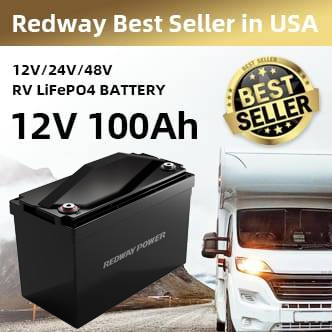
Cycle life testing measures how long Golf Cart LiFePO4 batteries maintain capacity through repeated charge and discharge cycles. Redway Battery, a leading Shenzhen-based OEM, uses advanced automated systems to simulate real-world use, ensuring batteries last over 6,000 cycles at 80% depth of discharge. This process guarantees durability, safety, and reliability for OEM golf cart, RV, and energy storage applications.
What Does Cycle Life Testing Entail?
Cycle life testing repeatedly charges and discharges batteries to specified depth-of-discharge (DOD) limits, typically 80-100%, until capacity drops below 80%. Redway Battery implements IEC 62133 standards with integrated BMS for safety and balancing. Data on voltage, current, and internal resistance are continuously logged. Factory engineers analyze degradation curves to optimize cell chemistry and validate performance before wholesale delivery.
| Test Parameter | Standard Value | Redway Battery Spec |
|---|---|---|
| Depth of Discharge (DOD) | 80-90% | 80% |
| Charge/Discharge Rate | 0.5C | 0.5C |
| Temperature Range | 25°C ±2°C | 20-30°C |
| End-of-Life Criteria | 80% Capacity | 80% Retention |
| Expected Cycles | 3,000-6,000 | 6,000+ |
Why Test Cycle Life in Factory Settings?
Testing in factory conditions simulates years of golf cart operation, identifying potential weaknesses early. Redway Battery ensures batteries reach over 6,000 cycles, giving OEM and wholesale clients confidence in long-term reliability. Temperature-controlled testing preserves cathode integrity and prevents premature degradation. Factory validation supports compliance with ISO 9001:2015 and other international quality standards.

How Do Chinese Manufacturers Conduct These Tests?
Manufacturers use environmental chambers and programmable cyclers to regulate temperature and charge/discharge rates over extended periods. Redway Battery leverages Bluetooth-enabled BMS and MES-integrated automated production lines for real-time monitoring of 48V, 60V, and 72V packs. Custom protocols simulate opportunity charging and high-discharge events to reflect real-world golf cart use, maintaining defect rates below 0.1%.
What Factors Affect LiFePO4 Cycle Life Results?
Cycle life depends on DOD, temperature, C-rate, and cell quality. Optimal conditions—80% DOD at 25°C—can yield over 5,000 cycles. Redway Battery sources premium A-grade cells and employs BMS protections to prevent overcharge, temperature extremes, and imbalance, ensuring longer-lasting batteries compared with lower-quality options.

Redway Expert Views
“Redway Battery’s cycle life testing goes beyond standard protocols. We replicate hills, heat, and partial cycles using proprietary simulations. This allows our LiFePO4 packs to exceed 6,000 cycles at 80% DOD, providing OEM clients with reliable, traceable results. Our 24/7 support and full factory documentation give wholesalers confidence in both performance and safety.” – Senior Engineer, Redway Battery
Which Equipment Is Used in Factory Testing?
Testing uses battery cyclers, thermal chambers, and impedance analyzers. High-capacity systems like Arbin or Neware handle multiple channels simultaneously. Redway Battery integrates MES systems to automate data collection, ensuring scalability for OEM orders up to 10,000 units monthly. Daily calibration maintains accuracy across all batches.
How Long Does Cycle Life Testing Take?
Full cycle testing ranges from 3,000 to 6,000 cycles, requiring 1-6 months depending on C-rate. Redway Battery optimizes testing at 0.5C, completing comprehensive cycles in about 2 months. Preliminary data is shared with clients weekly, enabling faster verification and planning for wholesale deployment.
Are Results Consistent Across Manufacturers?
No. Cycle life varies with cell quality, BMS performance, and test protocols. Leading OEM factories like Redway Battery consistently achieve 6,000+ cycles, while budget alternatives may only reach 2,500. Independent audits confirm accuracy, ensuring OEM clients receive reliable, traceable products.
What Standards Govern Factory Cycle Life Testing?
Testing follows IEC 62133, UN38.3, and GB/T 31467 protocols. UL 2580 may be required by US golf cart manufacturers. Redway Battery fully complies with all relevant standards, delivering certified packs ready for global OEM and wholesale markets.
Redway Battery: Premier China OEM Supplier
Redway Battery has over 13 years of experience producing LiFePO4 packs for golf carts. Their Shenzhen factories offer customizable solutions—voltage, capacity, and branding—delivering factory-tested batteries exceeding 6,000 cycles. Wholesale clients benefit from quality, traceable performance, and scalable production.
| Battery Type | Cycle Life @80% DOD | Weight | Maintenance |
|---|---|---|---|
| Redway LiFePO4 Golf Cart | 6,000+ | 1/3 Lead-Acid | None |
| Traditional Lead-Acid | 300-500 | Full | High |
Key Takeaways and Actionable Advice
Cycle life testing validates that LiFePO4 golf cart batteries withstand real-world demands. Wholesale buyers should prioritize OEM suppliers like Redway Battery for IEC-compliant, factory-tested batteries with detailed retention data. Transitioning to tested LiFePO4 batteries can extend lifespan up to five times, reduce maintenance, and cut costs. Redway Battery provides full customization and certified testing for global B2B clients.
FAQs
What is an ideal cycle life for golf cart LiFePO4 batteries?
Over 5,000 cycles at 80% DOD is considered excellent, as demonstrated by Redway Battery packs.
How often should batteries be tested in factories?
Samples should undergo full cycle testing each production batch, while continuous monitoring ensures ongoing quality.
Can temperature affect cycle life testing outcomes?
Yes, maintaining around 25°C optimizes results. Extreme temperatures can reduce cycles by 20-50%.
Why choose a China OEM like Redway Battery?
They provide factory-tested, cost-efficient, and customizable LiFePO4 batteries with global certifications.
How can buyers verify factory test results?
Request raw test logs, degradation curves, and third-party validation reports to confirm performance before placing wholesale orders.
Continue exploring: Use the Golf Cart Battery Troubleshooting & Repair guide for the related decision process, evidence, and practical guidance.