The comprehensive guide you’re developing for using Lithium-Ion batteries in RVs and camping scenarios is shaping up to be a valuable resource. Here’s a continuation and expansion of the points you’ve outlined:
Benefits of Lithium-Ion Batteries for RVs and Camping
Low Self-Discharge Rate
One of the significant advantages of lithium-ion batteries is their low self-discharge rate, meaning they hold a charge longer when not in use, which is perfect for intermittent camping trips.
Environmentally Friendly
Lithium-ion batteries are more environmentally friendly than lead-acid batteries due to their longer life and recyclability, aligning with the eco-conscious nature of many campers.
High Power to Weight Ratio
This makes lithium-ion batteries not only lightweight but also allows for more power to be packed into a smaller space, which is ideal for RVs where every pound and cubic inch count.
Advanced BMS Features
Battery Management Systems in lithium-ion batteries provide safety features such as overcharge, over-discharge, and short-circuit protection, giving users added peace of mind.
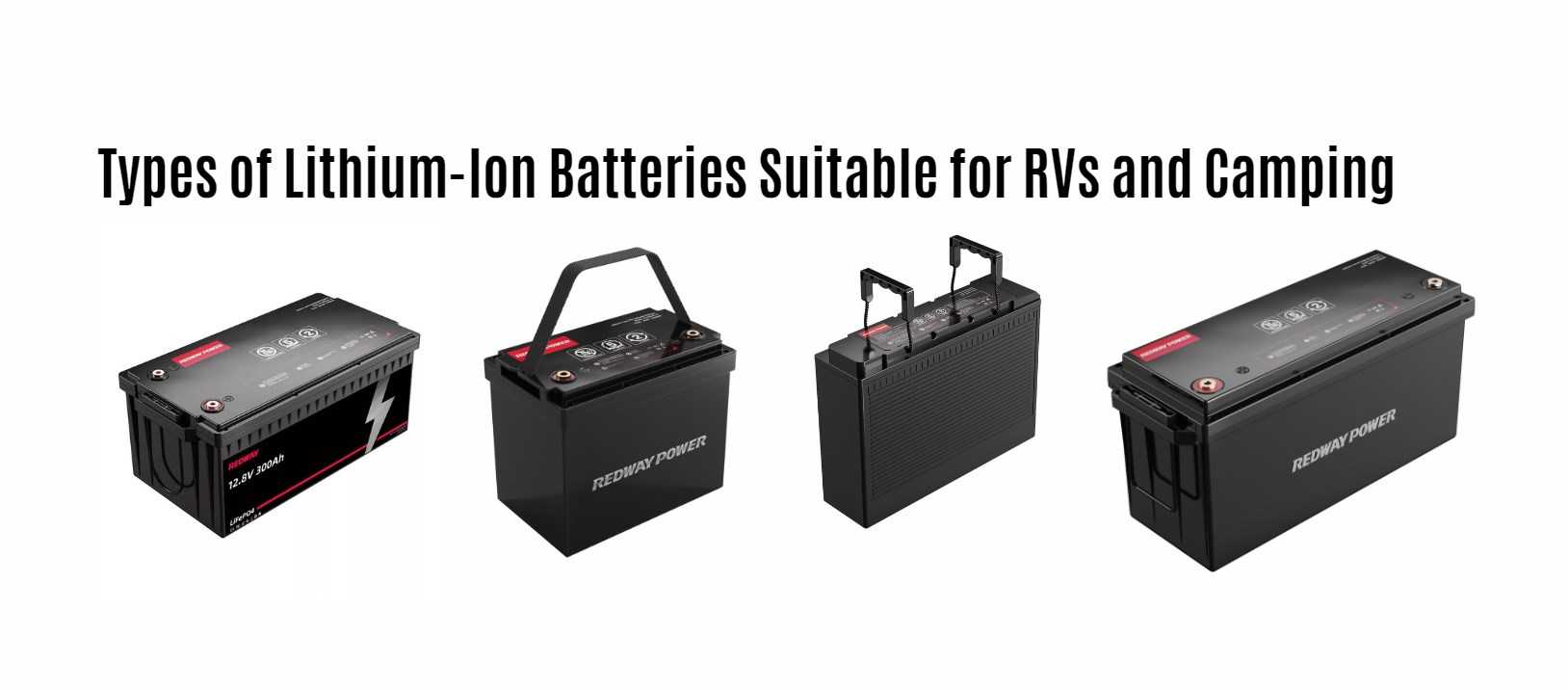
Types of Lithium-Ion Batteries Suitable for RVs and Camping
Lithium Iron Phosphate (LiFePO4)
Known for its safety, longevity, and stable performance in various temperatures, LiFePO4 is a top choice for RV and camping applications.
Lithium Manganese Oxide (LiMn2O4)
While offering a higher voltage output, it may be more susceptible to degradation over time but can be a good option for certain RV uses.
Lithium Polymer (LiPo)
Favored for their design flexibility and compact form factor, LiPo batteries can be tailored to fit into tight spaces in RVs and offer good energy density.
Lithium Nickel Cobalt Aluminum Oxide (NCA)
With a high energy density and long cycle life, NCA batteries are similar to LiCoO2 but with improved thermal stability, making them suitable for high-performance RV electrical systems.
Selection Criteria for Lithium-Ion Batteries
When selecting lithium-ion batteries for RVs and camping, consider the following:
Depth of Discharge (DoD): The higher the DoD, the more energy you can use before needing to recharge.
Capacity (Ah): The total amount of energy the battery can store, measured in amp-hours.
Voltage Requirements: Ensure the battery’s voltage matches your RV’s electrical system.
Budget: Lithium-ion batteries can be a significant investment, so consider your budget and the long-term cost savings.
Installation Tips
Professional Installation: Consider hiring a professional to ensure the battery is installed correctly and safely.
Proper Ventilation: Ensure the battery bank is in a well-ventilated area to prevent over-heating.
Secure Mounting: Securely fasten the batteries to prevent movement during travel.
Maintenance Practices
Regular Inspections: Periodically check the battery and connections for signs of wear or damage.
Balanced Charging: Use a charger with BMS to ensure all batteries in the bank are charged evenly.
Avoid Overcharging: Always use a charger with the correct voltage and current settings to avoid overcharging.
Cost Comparisons
Initial Cost: Lithium-ion batteries typically have a higher upfront cost compared to lead-acid batteries.
Long-Term Savings: The longer lifespan and lower maintenance requirements of lithium-ion batteries can result in cost savings over time.
Conclusion
Lithium-ion batteries offer numerous advantages for RVs and camping, making them a worthwhile consideration for those seeking a reliable and efficient power source. By understanding the different types, benefits, and proper selection criteria, you can make an informed decision that enhances your outdoor experience.
For more information on lithium-ion batteries for RVs and camping, or to discuss your specific needs, contact Redway Battery. We are committed to providing you with the highest quality batteries and expert advice to ensure your adventures are powered by reliable and efficient energy solutions.
Planning an RV adventure or a camping trip? Reliable power is a must, and lithium-ion batteries are the top choice for efficiency and longevity. In this guide, we’ll explore their benefits, types, factors to consider when choosing, maintenance tips, and installation techniques. Get ready to unleash the full potential of your RV or camping setup with lithium-ion batteries. Let’s dive into the journey of enhanced power performance!
The Benefits of Using Lithium-Ion Batteries for RV and Camping
Empowering your RV or camping experience, lithium-ion batteries stand out with numerous benefits:
Impressive Energy Density: These batteries offer high energy storage capacity, providing longer-lasting power without the weight and bulkiness of traditional options.
Extended Lifespan: With a lifespan of up to ten years or more, lithium-ion batteries outlast other types, ensuring reliability on countless adventures with minimal replacements.
Quick Charging: Boasting exceptional charging efficiency, lithium-ion batteries charge faster than conventional counterparts, reducing waiting times and maximizing outdoor exploration.
Consistent Power Output: Unlike batteries with voltage drop-offs during discharge, lithium-ion batteries deliver steady performance until depletion, ensuring reliable power throughout.
Enhanced Safety Features: Designed with built-in safety mechanisms, including thermal protection and advanced control systems, lithium-ion batteries prioritize safety, preventing common issues like overheating or short-circuiting.
Gear up confidently with lithium-ion batteries, revolutionizing the RV and camping experience with reliable and efficient power for every adventure!
Understanding the Different Types of Lithium-Ion Batteries
Navigating the world of lithium-ion batteries for your RV or camping demands understanding their diverse types. Let’s break it down:
Lithium Iron Phosphate (LiFePO4): Known for high energy density and longevity, LiFePO4 batteries excel in stability and safety, making them ideal for varied temperature conditions.
Lithium Nickel Cobalt Aluminum Oxide (NCA): Offering high energy density, NCA batteries suit applications requiring prolonged power, such as electric vehicles, thanks to their ability to handle high discharge currents.
Lithium Manganese Oxide (LMO): Balancing energy density, safety, and cost-effectiveness, LMO batteries find common use in portable electronics for their stability and reliability.
Lithium Nickel Manganese Cobalt Oxide (NMC): Combining benefits from nickel and manganese chemistries, NMC batteries enhance capacity, power output, and cycle life, making them versatile for various applications.
Understanding these types helps you tailor your choice based on priorities, whether it’s longevity or maximum power output for your specific needs!
Factors to Consider When Choosing a Lithium-Ion Battery for RV and Camping
Choosing the right lithium-ion battery for your RV or camping setup involves considering key factors:
Capacity: Select a battery with ample energy storage to power all your devices during camping trips, ensuring a reliable power source.
Voltage: Check equipment specifications to match the battery’s voltage with your RV or camping setup, ensuring compatibility.
Weight: Opt for a lightweight lithium-ion battery for easy transportation, especially crucial when you’re on the move.
Lifespan: Consider the battery’s lifespan, which, for lithium-ion batteries, is generally longer but varies based on quality and usage conditions.
Safety Features: Prioritize batteries with built-in protection against overcharging, short circuits, and overheating for a secure camping experience.
By focusing on these factors, you can confidently choose a lithium-ion battery that meets your specific needs, ensuring a reliable and safe power source for your outdoor adventures!
Tips for Properly Maintaining Your Lithium-Ion Battery
Temperature Control: Protect your battery from extreme temperatures to prevent irreversible damage. Avoid exposing it to excessive heat or cold during use and storage.
Regular Charging and Discharging: Maintain optimal performance by regularly charging and discharging your battery. Avoid extended periods of inactivity without charging to prevent capacity loss.
Avoid Overcharging and Overdischarging: Use a reliable charger that stops charging when the battery reaches full capacity. Overcharging or fully discharging can shorten the battery’s lifespan.
Proper Storage During Off-Seasons: If your RV or camping setup is inactive during certain seasons, store the lithium-ion battery at around 40-60% charge in a cool, dry place.
Protect from Physical Damage: Handle the battery with care to prevent physical damage. Avoid dropping or crushing it, and consider using protective cases for added safety.
By incorporating these straightforward maintenance practices, you’ll ensure that your lithium-ion battery remains in top condition, providing reliable power for all your on-the-road adventures!
How to Install a Lithium-Ion Battery in Your RV or Camping Setup
To confidently enhance your outdoor adventures with a lithium-ion battery in your RV or camping setup, follow these installation steps:
Read Manufacturer’s Instructions: Begin by thoroughly reading the manufacturer’s instructions and safety guidelines to understand specific installation requirements.
Disconnect Existing Batteries: Prior to installation, disconnect any existing batteries from your RV or camper to prepare for the new lithium-ion battery.
Find Suitable Mounting Spot: Locate a well-ventilated area protected from extreme temperatures to mount the lithium-ion battery securely. Use brackets or straps designed for this purpose.
Securely Mount the Battery: Ensure the battery is firmly secured in its chosen location before proceeding to connect the wiring.
Identify Terminals: Take note of the positive (+) and negative (-) terminals on both the battery and your RV’s electrical system.
Connect Wiring: Use appropriately sized cables to connect the battery terminals, ensuring proper polarity. Double-check for secure connections and no loose wires.
Inspect for Safety: After connecting, inspect for loose wires or exposed contacts that could lead to electrical issues later.
Test Power Flow: Turn on your RV or camper’s electrical system to confirm that power flows correctly from the newly installed lithium-ion battery.
Prioritize Safety: If uncertain or encountering difficulties during installation, seek assistance from a professional technician to ensure safety.
Now, with your lithium-ion battery successfully installed, hit the open roads confidently, knowing reliable power awaits your every adventure!
Cost Comparison: Lithium-Ion Batteries
In evaluating the cost comparison of lithium-ion batteries for RVs and camping against traditional lead-acid or AGM batteries, it’s crucial to consider long-term savings and advantages:
Higher Upfront Cost: Lithium-ion batteries do entail a higher initial investment compared to lead-acid or AGM batteries.
Longer Lifespan: Lithium-ion batteries can last up to ten times longer than lead-acid batteries, resulting in less frequent replacements and substantial long-term savings.
Superior Energy Efficiency: The superior energy efficiency of lithium-ion batteries allows for more power storage in a smaller space, optimizing usage.
Consistent Power Output: Unlike lead-acid batteries, lithium-ion batteries provide consistent power output throughout their discharge cycle, ensuring a reliable and uninterrupted power supply for your RV or camping setup.
Cost-Effective Over Time: When considering replacement and maintenance costs over time, lithium-ion batteries prove to be a cost-effective choice despite the higher upfront investment.
In conclusion, investing in high-quality lithium-ion batteries can significantly enhance the overall experience of RV or camping adventures. Their benefits include a lightweight design, fast charging capabilities, extended lifespan, increased energy efficiency, and compatibility with various appliances. By carefully considering factors like capacity requirements and understanding different types available, such as LiFePO4 and NMC, you can make an informed decision. Proper maintenance and correct installation further ensure optimal performance during outdoor journeys. Upgrade your RV or camping setup today with the reliable power of lithium-ion batteries for a seamless and enjoyable travel experience!
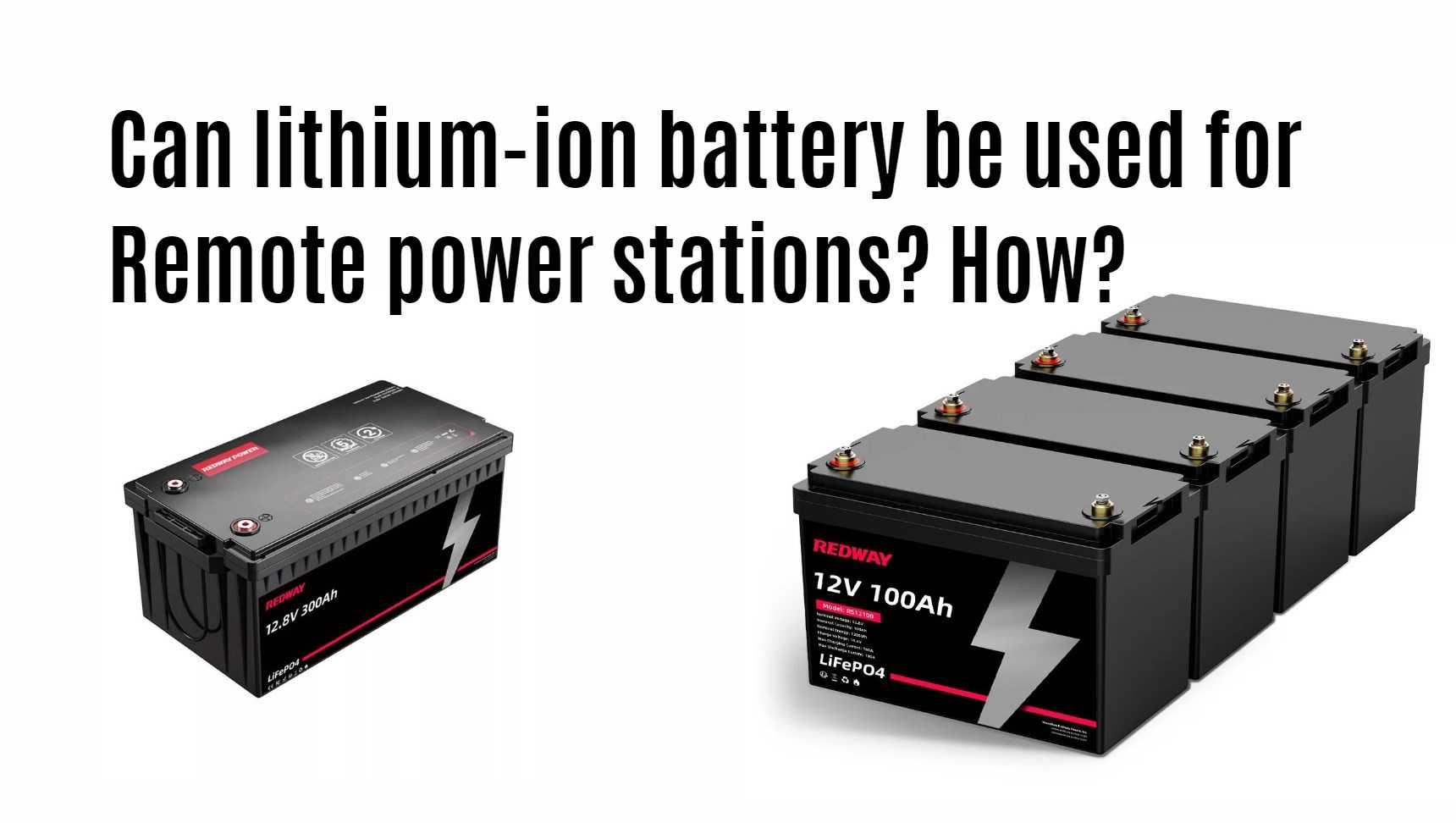
In an era where sustainable energy solutions are paramount, lithium-ion batteries have emerged as a leading technology for remote power stations. Their superior energy density, longevity, and rapid charging capabilities make them an ideal choice for various off-grid applications. This article delves into the diverse applications of lithium-ion batteries in remote power stations, highlighting the critical components necessary for their successful deployment.
Applications of Lithium-Ion Batteries in Remote Power Stations
Solar Power Systems
Remote locations often rely on solar power as a primary energy source due to its sustainability and reliability. Lithium-ion batteries excel in storing solar energy, ensuring a steady and continuous power supply even when sunlight is not available. These batteries are indispensable for powering remote homes, cabins, and other structures where traditional power grids are inaccessible.
Backup Power Systems
In remote areas, maintaining uninterrupted power is crucial, especially for critical infrastructure such as communication towers, weather monitoring stations, and surveillance systems. Lithium-ion batteries provide a dependable backup power solution, ensuring these essential systems remain operational during power outages or adverse weather conditions.
Portable Power Systems
The portability of lithium-ion batteries makes them perfect for powering equipment and devices in remote locations. They are widely used in camping gear, scientific instruments, and emergency response equipment, offering a lightweight and efficient power solution that can be easily transported and deployed.
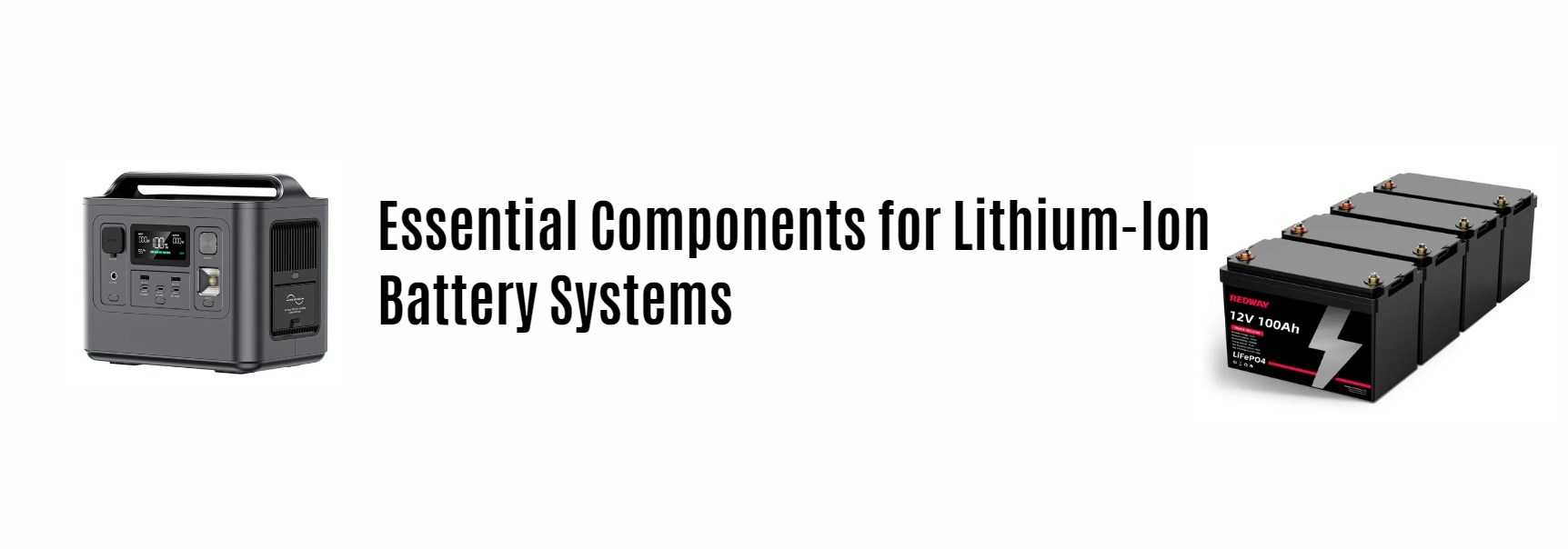
Essential Components for Lithium-Ion Battery Systems
Battery Management System (BMS)
A robust Battery Management System (BMS) is crucial for the safe and efficient operation of lithium-ion batteries in remote power stations. The BMS monitors critical parameters such as the state of charge, temperature, and voltage, optimizing battery performance and preventing potential issues such as overcharging, overheating, and deep discharge.
Charging Systems
Effective charging systems are essential to maximize the performance and lifespan of lithium-ion batteries in remote applications. These systems can harness renewable energy sources like solar panels and wind turbines, ensuring that the batteries are charged efficiently and sustainably. A well-designed charging system is key to maintaining the health and longevity of the battery.
Advantages of Lithium-Ion Batteries
Lithium-ion batteries offer several benefits that make them ideal for remote power applications:
High Energy Density: Lithium-ion batteries can store a large amount of energy in a compact form, making them suitable for installations where space is limited.
Long Cycle Life: These batteries can be charged and discharged many times with minimal degradation, providing a long-lasting power solution.
Fast Charging: The rapid charging capabilities of lithium-ion batteries allow for quick recharges, which is particularly advantageous when relying on intermittent renewable energy sources.
Conclusion
Lithium-ion batteries are revolutionizing remote power stations by providing a reliable, efficient, and sustainable energy solution. Their high energy density, long cycle life, and rapid charging capabilities make them an excellent choice for various remote applications, from solar power systems to portable devices. With the integration of advanced Battery Management Systems and efficient charging systems, lithium-ion batteries are set to play a pivotal role in the future of off-grid power solutions.
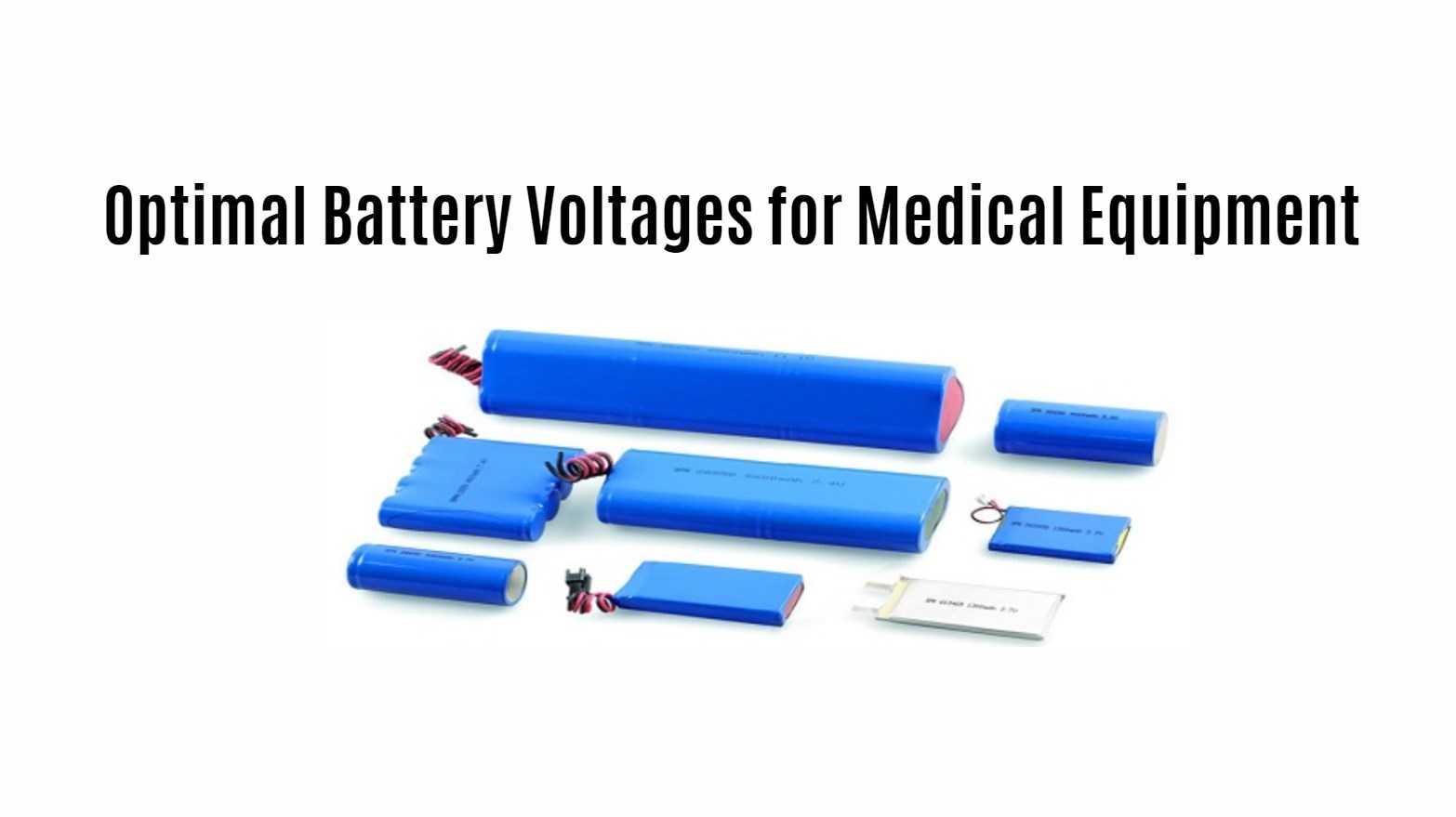
In the realm of medical technology, the reliability and performance of equipment are paramount. Central to this performance is the choice of battery, a critical component that ensures continuous operation. Medical devices often rely on lithium-ion batteries, available in various voltages such as 12V, 24V, and 48V, to meet their diverse power requirements. This article delves into the optimal battery voltages for different medical equipment, examining the specific needs and advantages associated with each voltage level.
12V Batteries: Compact and Efficient Power for Small Devices
Applications and Benefits
12V lithium-ion batteries are commonly used in smaller medical devices due to their compact size and efficiency. These devices include:
Portable Oxygen Concentrators: Essential for patients requiring supplemental oxygen, these concentrators benefit from the lightweight and portable nature of 12V batteries.
Glucose Monitors: Critical for diabetic patients, glucose monitors need reliable and consistent power, which 12V batteries provide.
Infusion Pumps: Used to deliver fluids and medications, infusion pumps rely on 12V batteries for their portability and ease of use.
Advantages
Portability: The lightweight design of 12V batteries makes them ideal for mobile applications.
Reliability: They offer dependable power, ensuring that critical devices operate without interruption.
Ease of Transport: Their small size facilitates easy transport and handling, crucial for both healthcare providers and patients.
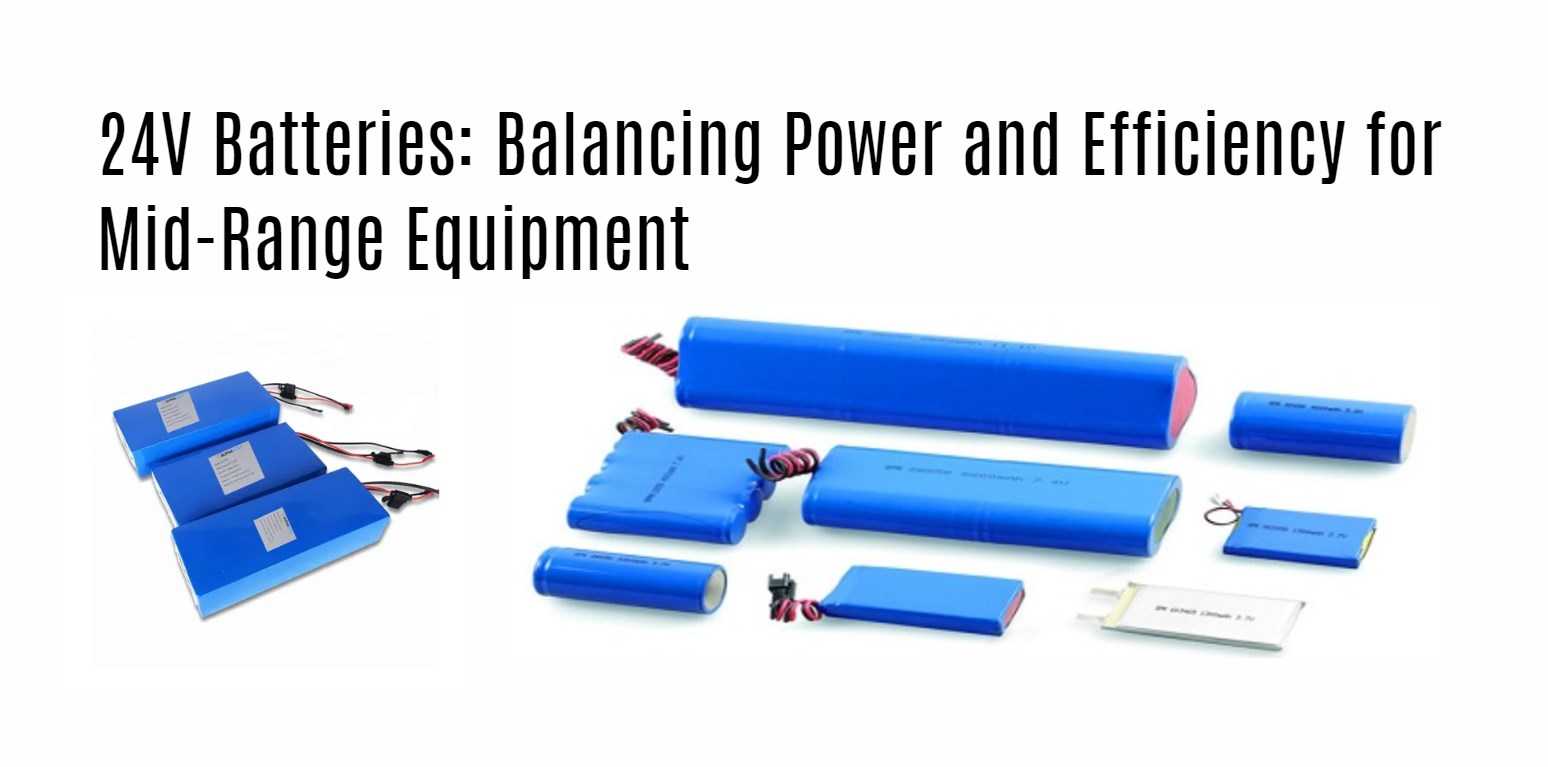
24V Batteries: Balancing Power and Efficiency for Mid-Range Equipment
Applications and Benefits
24V lithium-ion batteries are suited for mid-range medical equipment, offering a balance between power and size. Typical applications include:
Patient Monitoring Systems: These systems track vital signs and require stable power, which 24V batteries can provide.
Imaging Equipment: Devices such as ultrasound machines need reliable power for accurate diagnostics, making 24V batteries a suitable choice.
Surgical Tools: Essential in operating rooms, these tools demand consistent power, which 24V batteries deliver.
Advantages
Higher Power Output: Compared to 12V batteries, 24V batteries offer greater power, supporting more demanding devices.
Enhanced Efficiency: They provide a balance between size and power, optimizing the performance of mid-range equipment.
Safety Features: Many 24V batteries are designed with advanced safety mechanisms to prevent overheating and ensure safe operation.
48V Batteries: Powering High-Demand Medical Equipment
Applications and Benefits
For larger and more demanding medical equipment, 48V lithium-ion batteries are often the best choice. These batteries are typically used in:
Advanced Imaging Equipment: MRI machines and CT scanners require substantial power, which 48V batteries can supply.
Life Support Systems: Devices such as ventilators and dialysis machines depend on the high power output of 48V batteries for continuous operation.
Hospital Backup Systems: In case of power outages, 48V batteries can provide the necessary backup to maintain critical hospital functions.
Advantages
High Power Capacity: 48V batteries are capable of delivering the high power needed for large medical equipment.
Longer Run Times: They offer extended operational periods, crucial for devices that need to run continuously.
Advanced Monitoring: These batteries often include sophisticated monitoring systems to ensure optimal performance and safety.
Choosing the Right Battery Voltage
The selection of the appropriate battery voltage for medical equipment hinges on several factors:
Power Requirements: Assessing the power needs of the equipment is fundamental in determining the suitable battery voltage.
Size and Weight Constraints: Smaller devices benefit from the compact nature of 12V batteries, while larger equipment may necessitate the use of 24V or 48V batteries.
Cost Considerations: Budgetary constraints also play a role, with different voltage batteries varying in cost.
Conclusion
Selecting the optimal battery voltage for medical equipment is critical for ensuring reliable and efficient operation. From 12V batteries for small, portable devices to 48V batteries for high-demand equipment, understanding the specific needs and advantages of each voltage level is essential. By choosing the right battery, healthcare providers can enhance the performance and reliability of their medical devices, ultimately improving patient care.
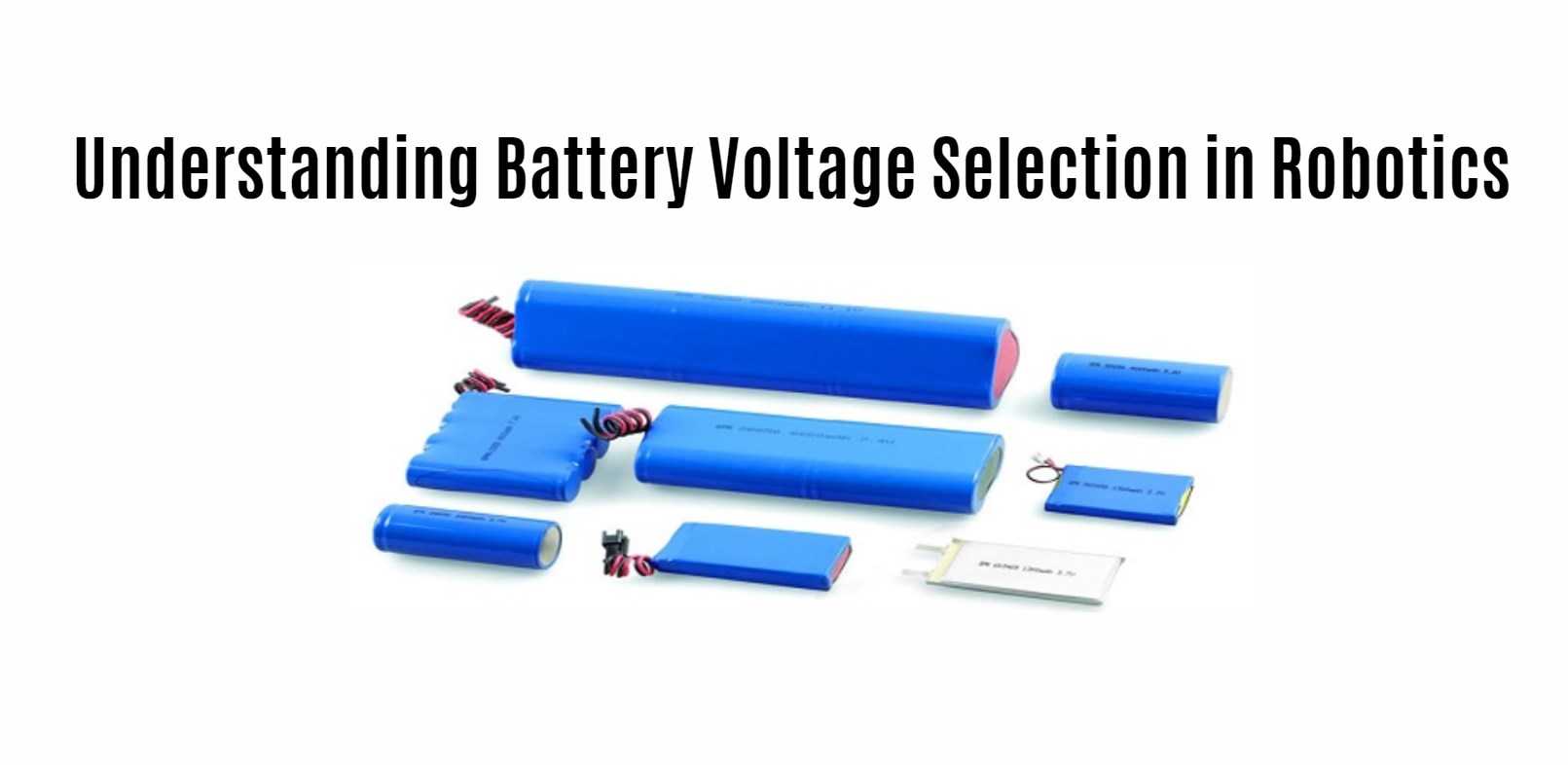
The selection of battery voltage is a critical decision in robotics, impacting performance, efficiency, and overall effectiveness. This article provides an in-depth examination of the various voltages used in robotics, including 12V, 24V, and 48V lithium-ion batteries, and their respective applications.
12V Lithium-Ion Batteries: Lightweight Power for Small Robots
Applications of 12V Batteries
12V lithium-ion batteries are commonly used in small robotic devices such as hobby robots, educational robots, and other low-power applications. Their lightweight and compact nature makes them ideal for scenarios where mobility and ease of handling are crucial.
Benefits of 12V Batteries
Portability: The lightweight design facilitates easy integration into small robots.
Adequate Power for Small Tasks: Sufficient to power small motors and electronic components.
Cost-Effectiveness: Generally more affordable, making them accessible for educational purposes and hobbyists.
24V and 48V Lithium-Ion Batteries: Enhanced Performance for Medium-Sized Robots
Applications of 24V and 48V Batteries
Medium-sized robots, such as those used in manufacturing, logistics, and various industrial applications, benefit from the enhanced power output and longer runtime provided by 24V and 48V lithium-ion batteries. These robots often require more power for sustained operations and more complex tasks.
Benefits of 24V and 48V Batteries
Increased Power Output: Suitable for running multiple or larger motors and more demanding components.
Extended Operational Time: Longer battery life supports prolonged usage in industrial environments.
Versatility: Ideal for a variety of applications, including automated guided vehicles (AGVs) and robotic arms.
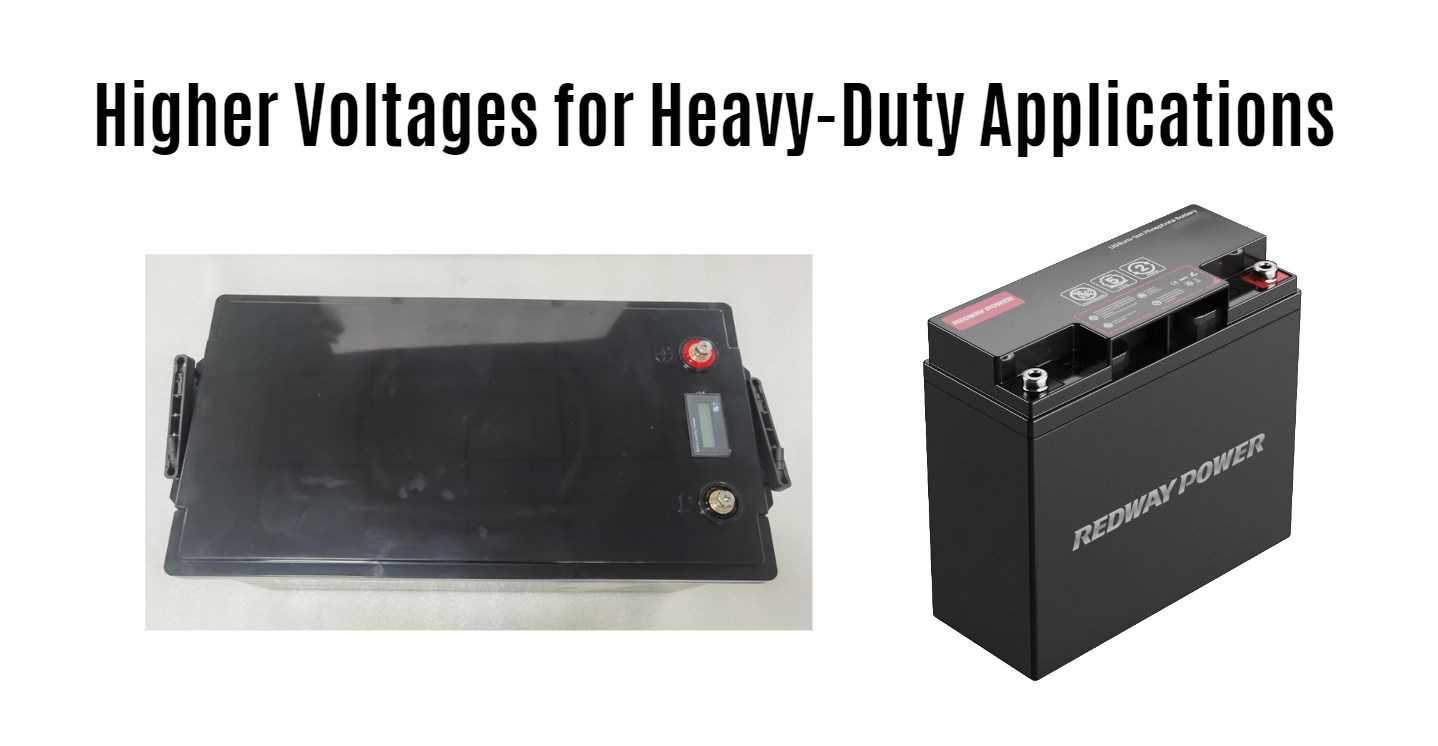
Higher Voltages for Heavy-Duty Applications
Applications of High-Voltage Batteries
Heavy-duty robots used in construction, mining, and other demanding industrial sectors often require battery voltages of 400V or higher. These robots need significant power to perform heavy lifting, excavation, and other intensive tasks.
Benefits of High-Voltage Batteries
Superior Power for Demanding Tasks: Capable of powering large motors and heavy machinery.
Enhanced Efficiency: High voltage can reduce current requirements, leading to improved energy efficiency.
Robust Performance in Harsh Environments: Designed to withstand extreme conditions and provide reliable power.
Factors Influencing Battery Voltage Selection
Choosing the appropriate battery voltage involves considering multiple factors to ensure optimal performance and longevity of the robotic system.
Key Considerations
Power Requirements: Assessing the power needs of motors and electronic components.
Environmental Conditions: Considering temperature, humidity, and potential exposure to harsh conditions.
Weight and Size: Balancing power output with the physical constraints of the robot.
Cost: Evaluating budget constraints while aiming for the best performance-to-cost ratio.
Application Specifics: Customizing battery choice based on the robot’s specific tasks and operational environment.
Conclusion
Selecting the right battery voltage for robotic applications is essential for ensuring optimal performance and efficiency. Small robots typically benefit from the portability and adequacy of 12V batteries, while medium-sized robots require the enhanced power of 24V or 48V batteries. Heavy-duty robots, operating in demanding environments, often necessitate high-voltage batteries exceeding 400V. By carefully considering the specific needs and operational conditions of the robot, we can choose the most suitable battery voltage to achieve superior performance and longevity.
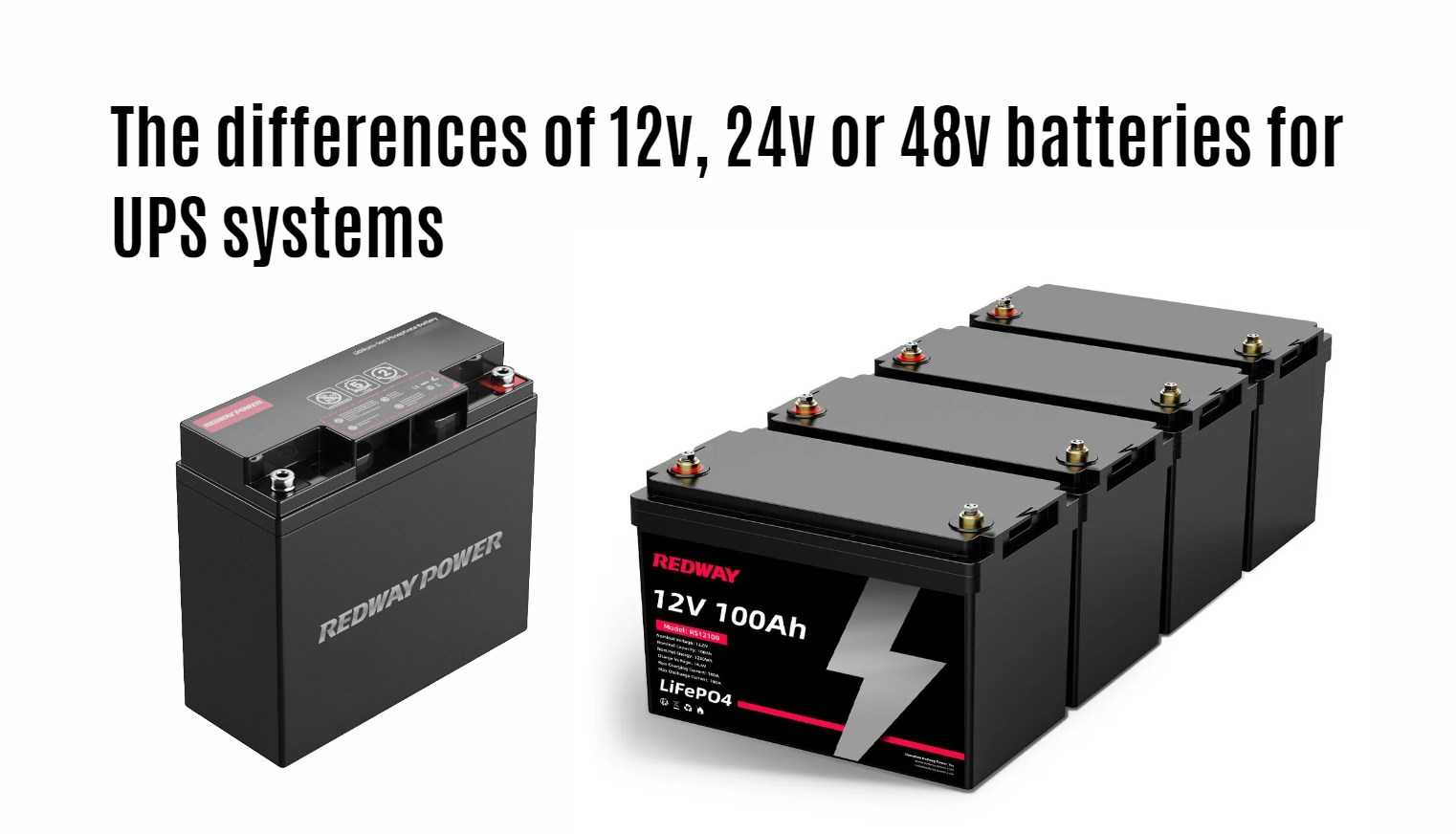
Uninterruptible Power Supplies (UPS) are critical in ensuring that devices remain operational during power outages. They provide backup power to essential systems, safeguarding data integrity and maintaining operational continuity. A key component of any UPS system is the battery, which stores the power necessary to bridge the gap during an outage. The choice of battery voltage—12V, 24V, or 48V—significantly impacts the performance and suitability of a UPS system for different applications.
Types of Batteries Used in UPS Systems
Lead-Acid Batteries
Lead-acid batteries are the most traditional and widely used type of battery in UPS systems. They are favored for their cost-effectiveness and reliability. There are several variations within lead-acid batteries:
Flooded Lead-Acid Batteries: Known for their robustness and capacity to handle high loads, but require regular maintenance and are prone to leakage.
Sealed Lead-Acid Batteries (SLA): These batteries are maintenance-free and safer to use compared to flooded variants.
Absorbent Glass Mat (AGM) Batteries: AGM batteries offer higher performance, are spill-proof, and have a longer lifespan, making them a premium choice among lead-acid types.
Gel Batteries
Gel batteries are an advancement over traditional lead-acid batteries. They use a gel electrolyte instead of liquid, which makes them:
Maintenance-Free: Similar to SLA batteries but with better deep discharge capabilities.
Durable: More resistant to temperature fluctuations and physical impacts.
Longevity: Typically offer a longer service life than standard lead-acid batteries.
Lithium-Ion Batteries
Lithium-ion batteries have gained popularity in UPS systems due to their superior performance characteristics:
High Energy Density: They store more energy in a smaller footprint, crucial for space-constrained environments.
Low Self-Discharge Rate: Retain their charge longer when not in use, enhancing reliability during long-term storage.
Long Lifespan: Can last significantly longer than both lead-acid and gel batteries, reducing the frequency and cost of replacements.
Voltage Options: 12V, 24V, and 48V
The voltage of the battery used in a UPS system affects the system’s efficiency, scalability, and suitability for various applications.
12V Batteries
Use Case: Ideal for smaller UPS systems and individual device backups.
Advantages: Simplifies the design and is typically cheaper. Easy to scale by connecting multiple batteries in series or parallel.
Disadvantages: May not be suitable for higher power requirements due to limitations in current handling and efficiency losses.
24V Batteries
Use Case: Suitable for medium-sized UPS systems such as those used in small offices or server rooms.
Advantages: Offers a balance between capacity and efficiency. Reduced current for a given power output compared to 12V systems, leading to lower energy losses.
Disadvantages: Requires more space and investment compared to 12V systems.
48V Batteries
Use Case: Best for large-scale UPS systems used in data centers, industrial environments, and critical infrastructure.
Advantages: Higher efficiency with reduced current for the same power output, which translates to less energy loss and heat generation. Facilitates better scalability for high-power applications.
Disadvantages: Higher initial cost and complexity in system design and maintenance.
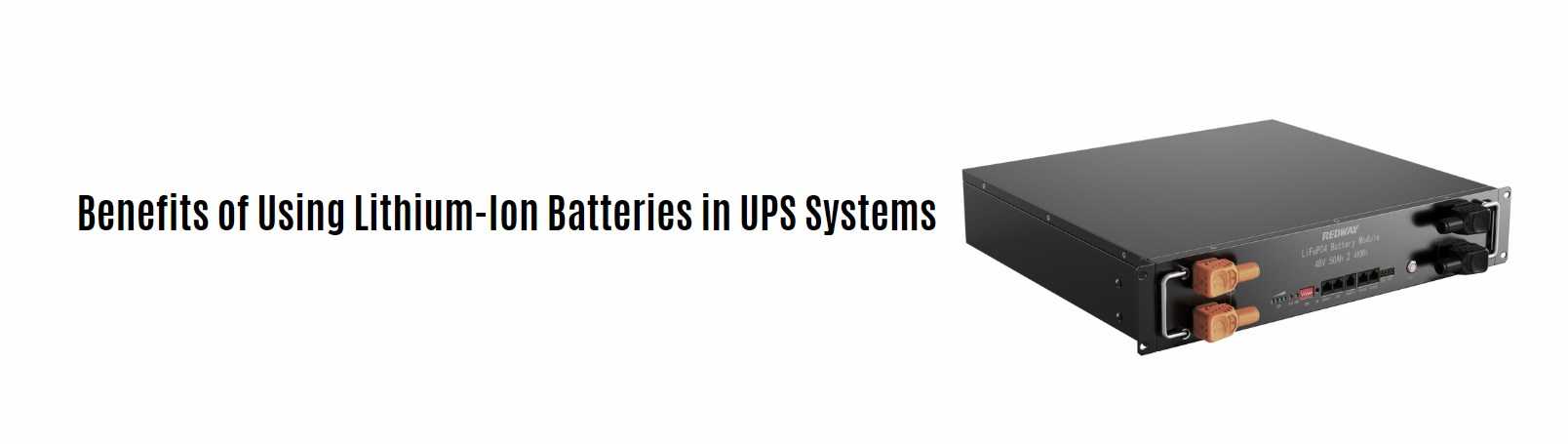
Benefits of Using Lithium-Ion Batteries in UPS Systems
Lithium-ion batteries provide numerous advantages over traditional lead-acid and gel batteries, making them increasingly popular for modern UPS systems:
Compact Size and Lightweight: Their high energy density allows for a smaller and lighter UPS design.
Extended Battery Life: With a longer cycle life, lithium-ion batteries reduce the need for frequent replacements, offering better long-term value.
Fast Charging: They can be recharged faster than lead-acid batteries, ensuring quicker readiness for the next power interruption.
Environmentally Friendly: They have a smaller environmental footprint due to their longer lifespan and higher efficiency.
Potential Disadvantages of Lithium-Ion Batteries
Despite their advantages, lithium-ion batteries also come with some considerations:
Higher Initial Cost: They are generally more expensive than lead-acid and gel batteries.
Thermal Runaway Risk: Under certain conditions, lithium-ion batteries can overheat, which requires careful thermal management in UPS systems.
Recycling and Disposal: Requires specialized processes to recycle and dispose of, given the materials involved.
Conclusion
Choosing the right battery for a UPS system is crucial for ensuring optimal performance and reliability. While 12V batteries may be suitable for smaller applications, 24V and 48V batteries offer enhanced efficiency and scalability for larger systems. Lithium-ion batteries, with their superior energy density, longer lifespan, and rapid recharge capabilities, are increasingly becoming the preferred choice despite their higher initial cost. Properly evaluating the specific needs and constraints of the application will ensure that the chosen UPS system provides the necessary backup power with maximum efficiency.
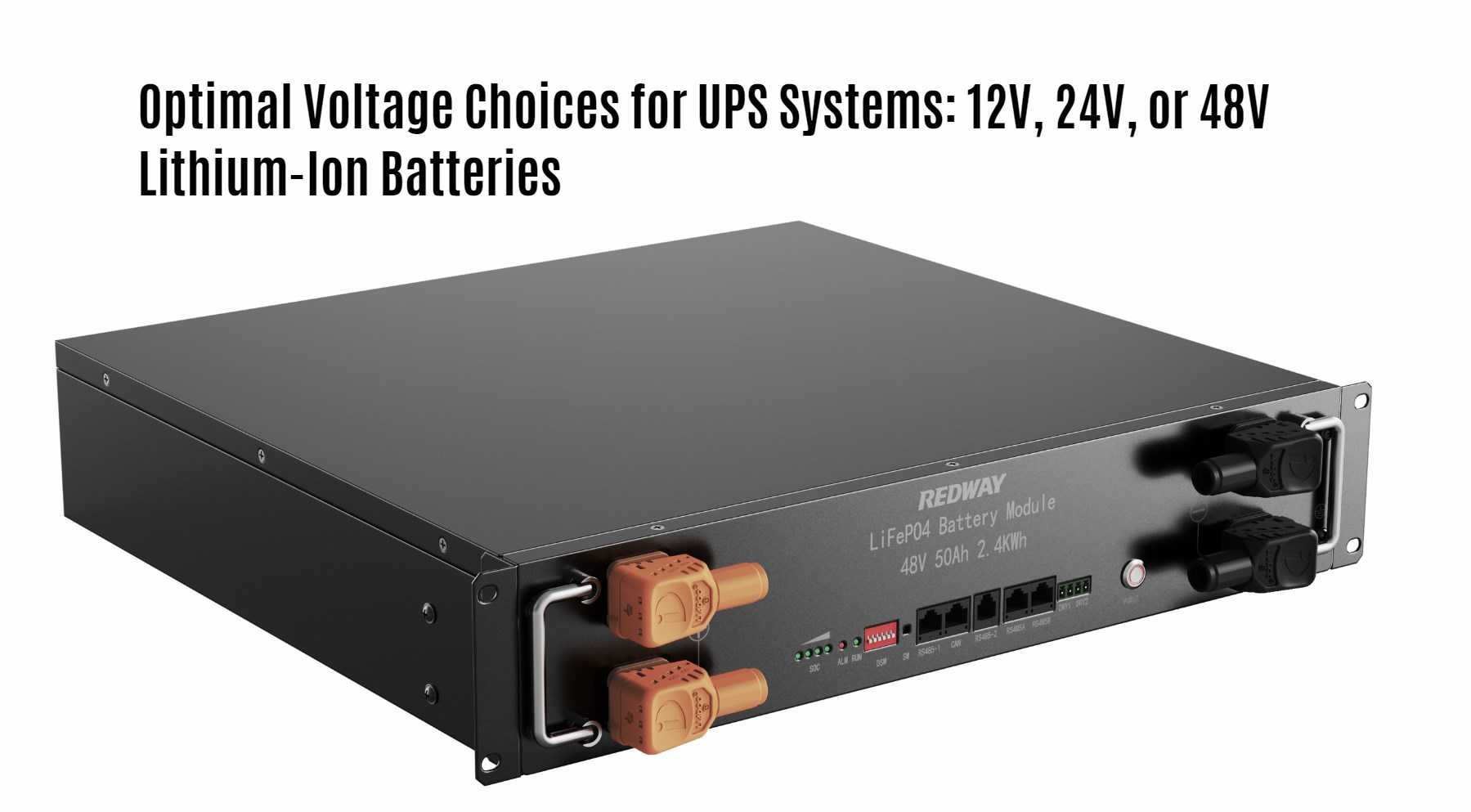
In the realm of uninterruptible power supply (UPS) systems, selecting the appropriate battery voltage is crucial for ensuring reliable and efficient power backup. The common voltages used in these systems are 12V, 24V, and 48V lithium-ion batteries. Each voltage has distinct characteristics that make it suitable for different applications, from small home offices to large-scale data centers. This article delves into the specifics of each voltage type, offering a comprehensive guide to help you choose the optimal battery for your UPS system.
The voltage of a battery in a UPS system influences several factors, including the power output, run time, and overall efficiency of the system. Higher voltages generally support larger loads and longer backup times but may also require more complex installation and higher initial costs.
Detailed Analysis of Battery Voltages
12V Lithium-Ion Batteries
Applications
Home and Small Office UPS Systems: 12V batteries are ideal for smaller UPS systems used in residential and small office environments. They are lightweight and compact, making them easy to install and maintain.
Backup Duration: Typically, these systems provide backup power for a few minutes to an hour, depending on the battery capacity and the power requirements of the connected devices.
Advantages
Ease of Installation: Their compact size and light weight facilitate straightforward installation.
Cost-Effective: Generally less expensive than higher voltage batteries, making them a cost-effective solution for less demanding applications.
24V Lithium-Ion Batteries
Applications
Medium-Sized Commercial and Industrial UPS Systems: 24V batteries are suitable for medium-sized UPS systems found in commercial buildings, small data centers, and industrial settings.
Extended Backup Times: These batteries can support longer backup durations compared to 12V batteries, catering to more critical and sustained power needs.
Advantages
Balanced Performance: They offer a good balance between power output and manageability, providing more robust support than 12V systems without the complexity of 48V setups.
Improved Efficiency: Higher voltage reduces current for the same power output, improving overall system efficiency and reducing heat generation.
48V Lithium-Ion Batteries
Applications
Large Data Centers and Critical Infrastructure: 48V batteries are designed for large-scale UPS systems used in data centers, hospitals, and other critical infrastructure where power demands are substantial and constant.
Maximum Power and Duration: These batteries provide the highest power output and the longest run times, essential for maintaining operations during prolonged outages.
Advantages
High Power Density: They offer the highest power density, making them suitable for the most demanding applications.
Advanced Safety Features: Often equipped with sophisticated safety and monitoring systems to ensure reliable and safe operation.
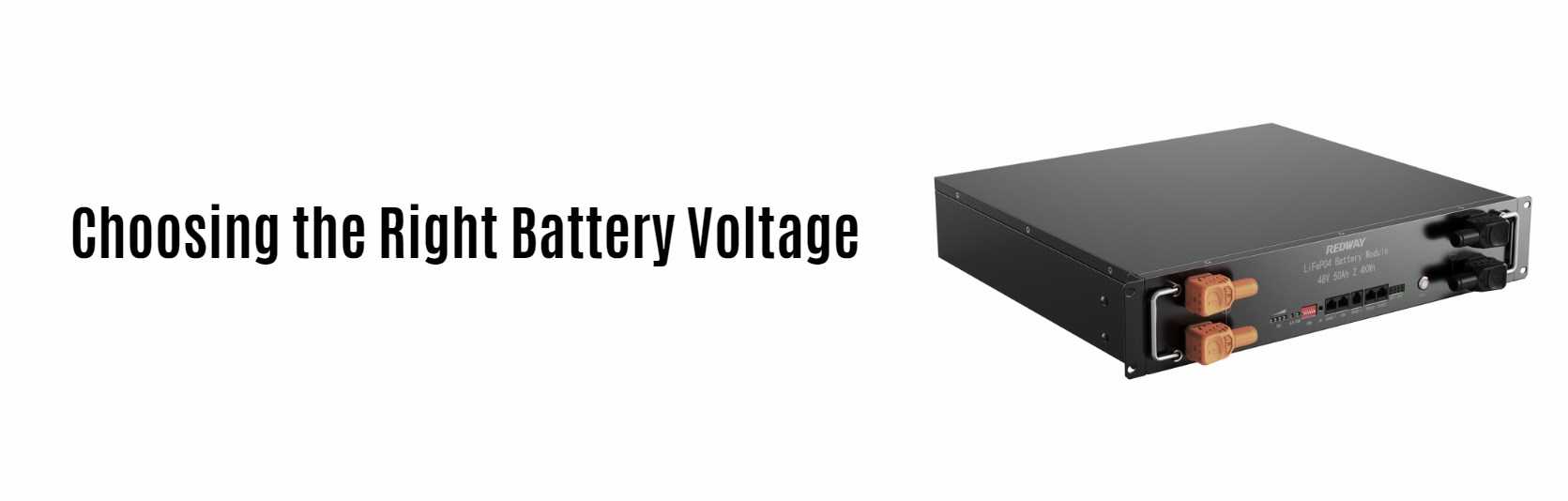
Choosing the Right Battery Voltage
Factors to Consider
Power Requirements
Assess the total power load and the duration for which backup power is needed. Higher voltage batteries are preferable for larger loads and longer durations.
Space and Weight Constraints
Consider the physical space available for the UPS system and the weight capacity. While 48V systems are powerful, they also tend to be larger and heavier.
Budget
Higher voltage systems generally come with a higher initial cost. Evaluate the budget to find a balance between upfront expenses and long-term benefits.
Safety and Reliability
Ensure the chosen battery system includes necessary safety features to prevent hazards and ensure reliable performance, particularly for critical applications.
Conclusion
Selecting the appropriate battery voltage for your UPS system is essential for optimizing performance and ensuring reliable power backup. Whether you choose 12V, 24V, or 48V lithium-ion batteries depends on your specific power requirements, budget, and application needs. Each voltage type offers unique benefits, making them suitable for different scenarios, from home offices to large data centers. By carefully evaluating these factors, you can make an informed decision that ensures uninterrupted power and protects your valuable equipment.
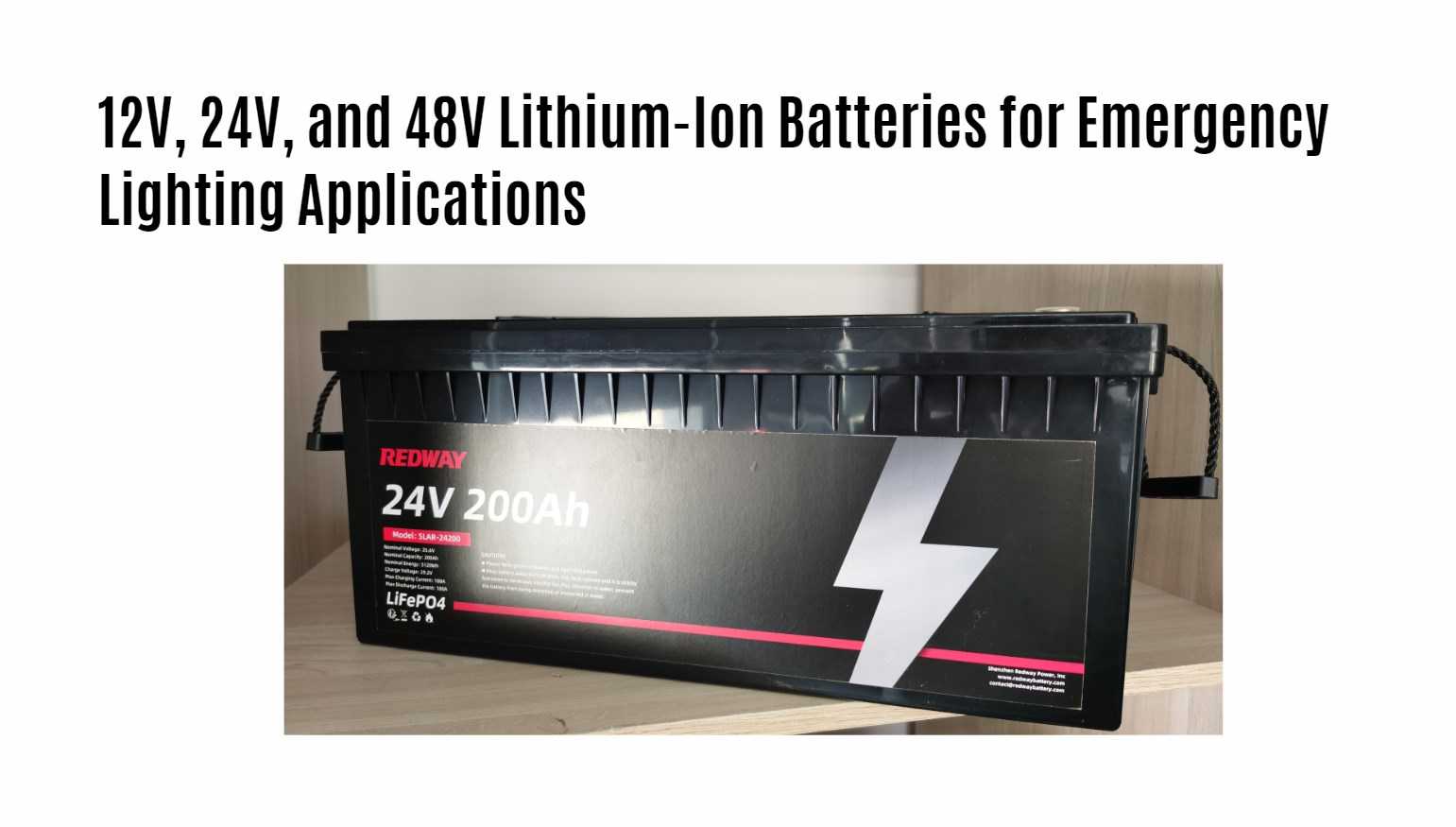
In emergency lighting applications, selecting the appropriate lithium-ion battery voltage—whether 12V, 24V, or 48V—is crucial to ensure reliable performance and optimal functionality. This comprehensive guide will explore the distinctive features, benefits, and ideal use cases for each battery type, providing a detailed analysis to help you make an informed decision.
12V Lithium-Ion Batteries
Applications and Benefits
12V lithium-ion batteries are commonly employed in smaller emergency lighting systems due to their compact size and ease of installation. These batteries are ideal for applications such as:
Portable Lights: Lightweight and easy to carry, making them perfect for handheld emergency lights.
Exit Signs: Provide consistent and reliable power for illuminating exit paths.
Small Backup Power Systems: Suitable for powering smaller backup systems in residential and small commercial settings.
Key Features
Compact and Lightweight: Easier to install and maintain.
Adequate Power for Small Systems: Sufficient for low-power applications.
Cost-Effective: Generally more affordable compared to higher voltage options.
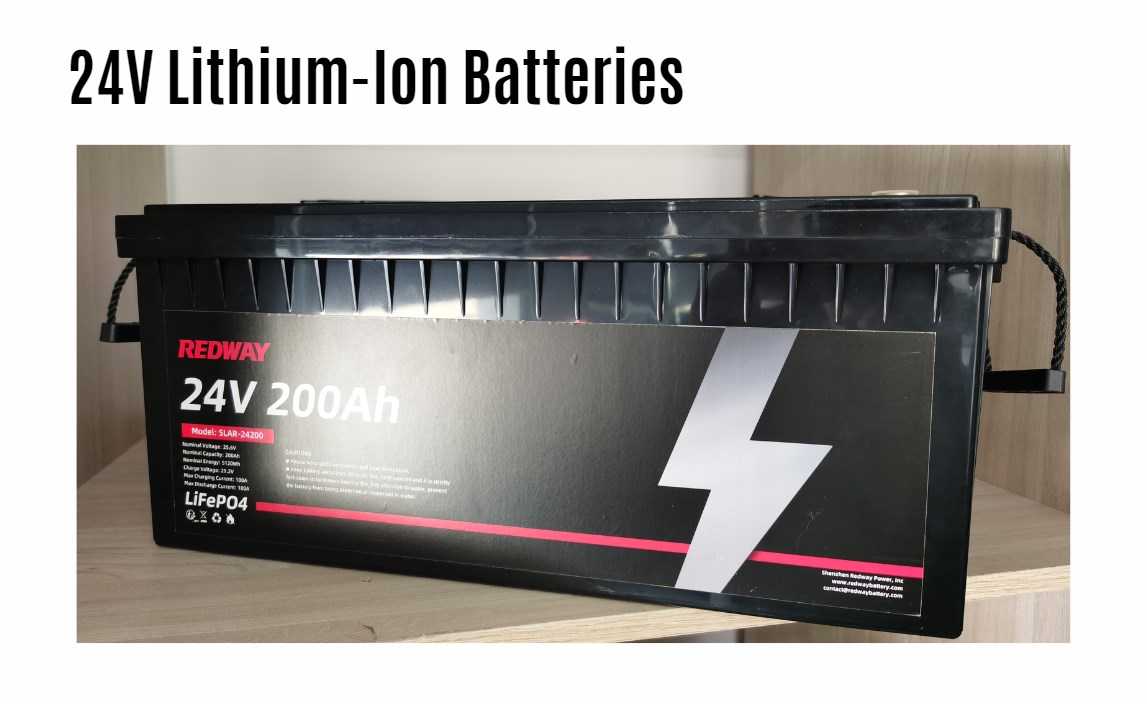
24V Lithium-Ion Batteries
Applications and Benefits
24V lithium-ion batteries offer a middle ground, providing more power than 12V batteries while still being manageable in size and cost. These batteries are typically used in larger emergency lighting systems found in:
Commercial Buildings: Ensuring adequate emergency lighting in offices and retail spaces.
Hospitals: Providing reliable backup lighting for critical healthcare environments.
Schools: Maintaining safe evacuation routes in educational facilities.
Key Features
Higher Power Output: Suitable for medium to large-scale applications.
Versatility: Can be used in a variety of settings.
Moderate Size and Weight: Easier to handle than 48V batteries while providing more power than 12V options.
48V Lithium-Ion Batteries
Applications and Benefits
48V lithium-ion batteries are designed for the most demanding and large-scale emergency lighting systems. They are best suited for applications requiring high power output and extended run times, such as:
Airports: Ensuring continuous lighting in vast terminals and runways.
Stadiums: Providing robust lighting solutions for large public events.
Industrial Complexes: Powering extensive emergency systems in factories and warehouses.
Key Features
Maximum Power Output: Capable of supporting the largest and most power-intensive systems.
Longest Run Times: Ideal for applications where extended operation is critical.
Robust and Reliable: Built to handle the most demanding environments.
Special Features of Lithium-Ion Batteries for Emergency Lighting
Regardless of the voltage, lithium-ion batteries used in emergency lighting systems often include several advanced features to ensure reliability and safety:
Built-In Charging Systems: Integrated chargers for efficient recharging.
Over-Discharge Protection: Prevents battery damage due to excessive discharge.
Automatic Switching: Seamless transition to backup power when the main power source fails.
Choosing the Right Battery
When selecting between 12V, 24V, and 48V lithium-ion batteries, consider the following factors:
Power Requirements: Assess the power needs of your emergency lighting system.
Environmental Conditions: Evaluate the conditions in which the batteries will operate.
Size and Weight Constraints: Determine the physical limitations of your installation space.
Cost Considerations: Balance the initial investment against long-term benefits.
Conclusion
Choosing the right lithium-ion battery voltage for your emergency lighting system is essential for ensuring reliability, efficiency, and safety. By understanding the distinct advantages and applications of 12V, 24V, and 48V batteries, you can make an informed decision that best meets your specific needs.
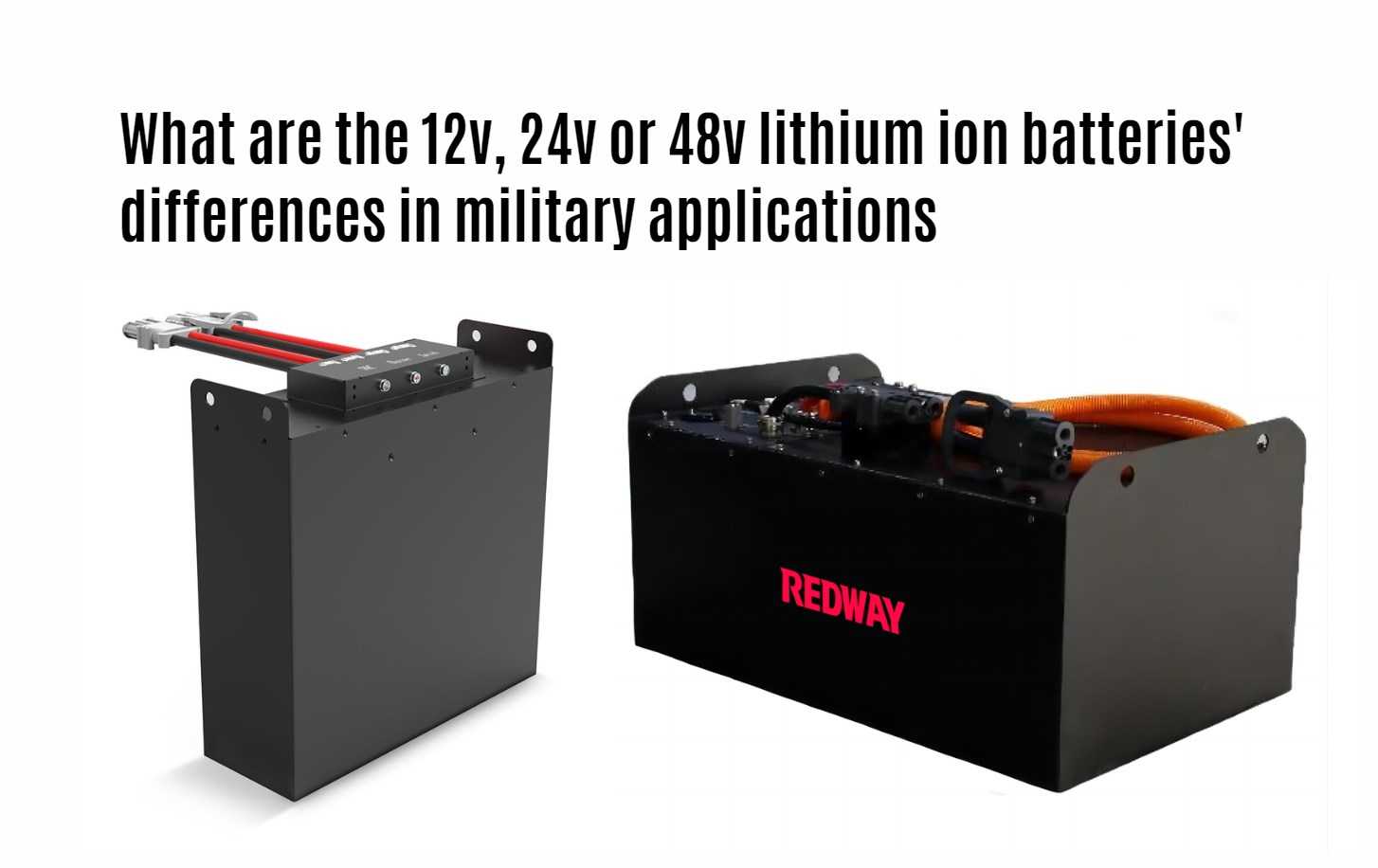
In the realm of military technology, the selection of the appropriate lithium-ion battery—be it 12V, 24V, or 48V—is paramount for ensuring the optimal performance of various applications. This guide delves into the distinctive characteristics and applications of these batteries, providing a detailed comparison to aid in making informed decisions.
The Role of Voltage in Military Applications
The voltage of a lithium-ion battery directly influences its suitability for different military applications. Understanding the nuances of each voltage level is crucial for maximizing efficiency, power output, and reliability in the field.
12V Lithium-Ion Batteries: Compact Powerhouses
Applications
12V lithium-ion batteries are predominantly used in smaller military applications where portability and lightweight are essential. Common uses include:
Portable Radios: Essential for field communication, these batteries ensure long-lasting power with minimal weight.
Night Vision Equipment: Lightweight and reliable, 12V batteries are perfect for powering night vision devices, enhancing situational awareness during nocturnal operations.
Other Small Electronics: Any small, portable device used by military personnel can benefit from the compact power provided by 12V batteries.
Advantages
Lightweight and Portable: Ideal for applications requiring frequent mobility.
Ease of Replacement: Widely available and easy to replace in the field.
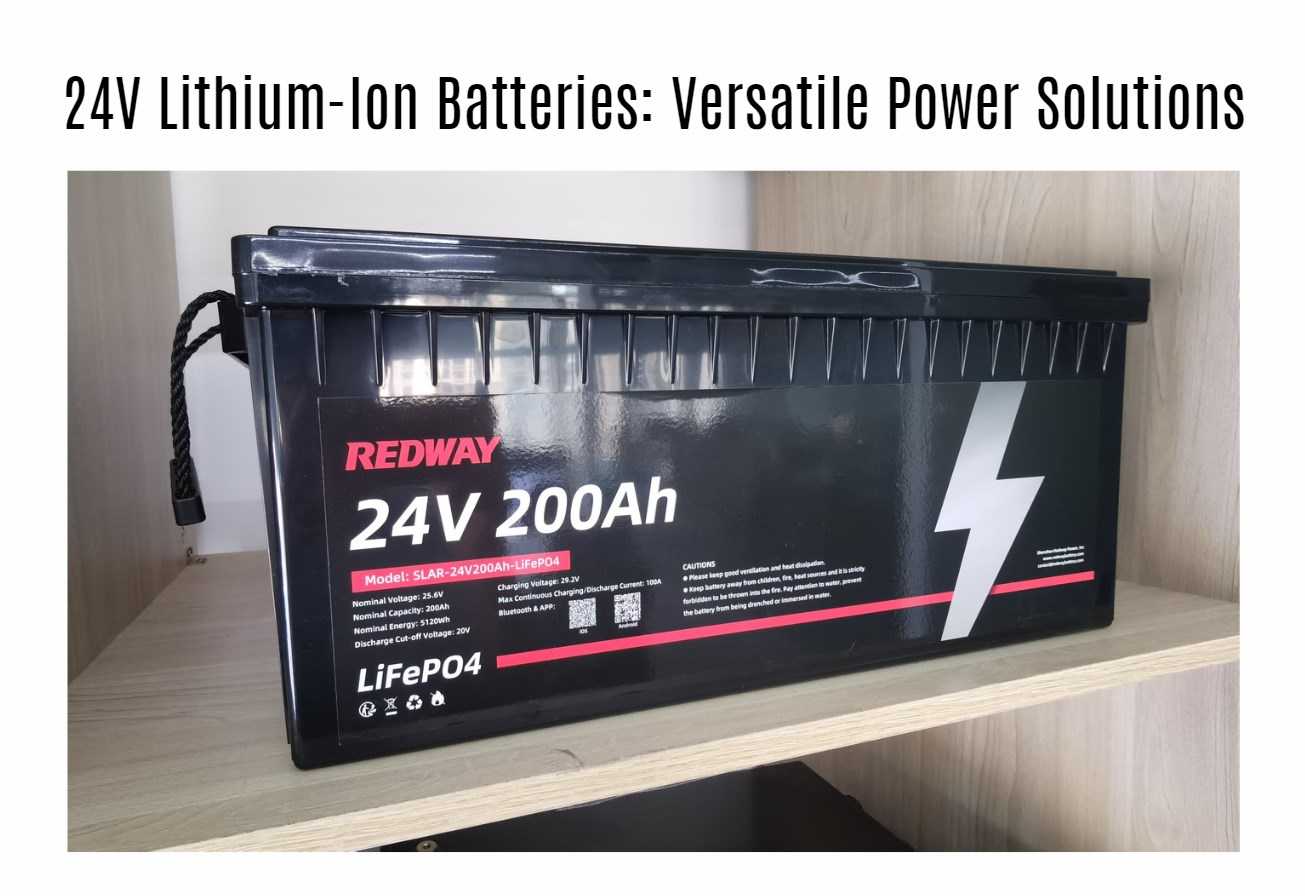
24V Lithium-Ion Batteries: Versatile Power Solutions
Applications
24V lithium-ion batteries find their place in a broader range of military applications, including:
Military Vehicles: From jeeps to light armored vehicles, these batteries provide robust power necessary for various operations.
Unmanned Aerial Vehicles (UAVs): Essential for providing the high energy output needed for sustained flight times and carrying advanced payloads.
Portable Power Systems: Used to power larger field equipment and provide temporary power stations during missions.
Advantages
Higher Power Output: Suitable for more demanding applications that require sustained power.
Moderate Size and Weight: Balances between portability and power, making it versatile for various uses.
48V lithium-ion batteries are integral to large-scale military operations that demand the highest power output and longest run times. Key applications include:
Electric Vehicles: Powering electric tanks, larger armored vehicles, and other high-power machinery.
Power Storage Systems: Used in forward operating bases and other static installations to ensure a reliable energy supply.
Advantages
Maximum Power Output: Capable of providing the most significant energy levels for the most demanding tasks.
Extended Run Times: Ideal for operations that require prolonged energy supply without frequent recharges.
Durability and Special Features
Military-grade lithium-ion batteries are designed to endure extreme conditions. They come equipped with features such as:
Extreme Temperature Resistance: Operate effectively in both high and low-temperature environments.
Shock and Vibration Resistance: Maintain performance even in harsh, turbulent conditions.
Moisture and Dust Protection: Ensures reliability in wet and dusty environments.
Safety Mechanisms: Includes overcharge protection and advanced thermal management systems to prevent safety hazards like fires.
Choosing the Right Battery
Selecting between 12V, 24V, and 48V lithium-ion batteries hinges on several factors:
Power Requirements: Match the battery voltage to the energy demands of the application.
Environmental Conditions: Consider the operational environment and choose batteries designed to withstand specific conditions.
Size and Weight Constraints: Evaluate the mobility requirements and select a battery that balances power with portability.
Cost Considerations: Factor in budget constraints while ensuring that the battery meets the necessary performance criteria.
Conclusion
The choice of lithium-ion batteries in military applications is a critical decision that impacts operational efficiency, reliability, and safety. Understanding the specific needs of each application and the capabilities of 12V, 24V, and 48V batteries ensures that military operations are powered effectively, regardless of the challenges faced in the field.
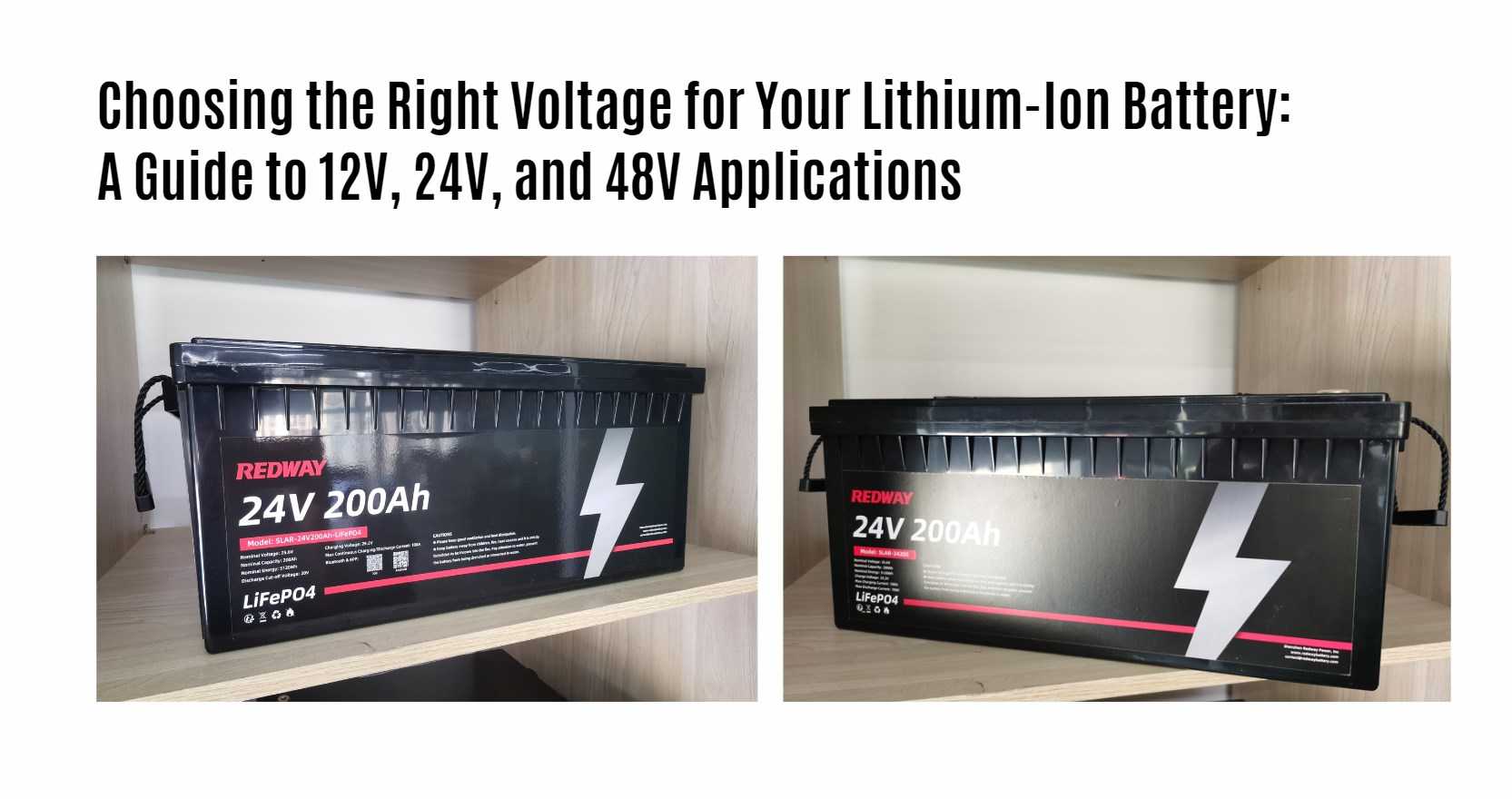
Selecting the appropriate voltage for your lithium-ion battery is paramount for optimal performance across diverse applications. Whether for portable electronics, electric vehicles, or large-scale energy storage, understanding the nuances of 12V, 24V, and 48V lithium-ion batteries will guide you in making an informed decision tailored to your specific needs.
12V Lithium-Ion Batteries: Versatility in Compact Form
Applications and Advantages
12V lithium-ion batteries are designed for low to moderate power output, making them ideal for:
Portable Electronics: Powering laptops, cameras, and other portable devices.
Backup Power Systems: Essential for providing emergency power to small-scale applications.
Small Recreational Vehicles: Popular in RVs, boats, and small off-road vehicles due to their lightweight and compact nature.
Key Features
Lightweight and Compact: Easy to handle and install, making them perfect for mobile and portable applications.
Cost-Effective: Generally more affordable compared to higher voltage options, providing a budget-friendly solution without compromising on quality.
Wide Range of Applications: Their versatility extends from household gadgets to outdoor recreational equipment.
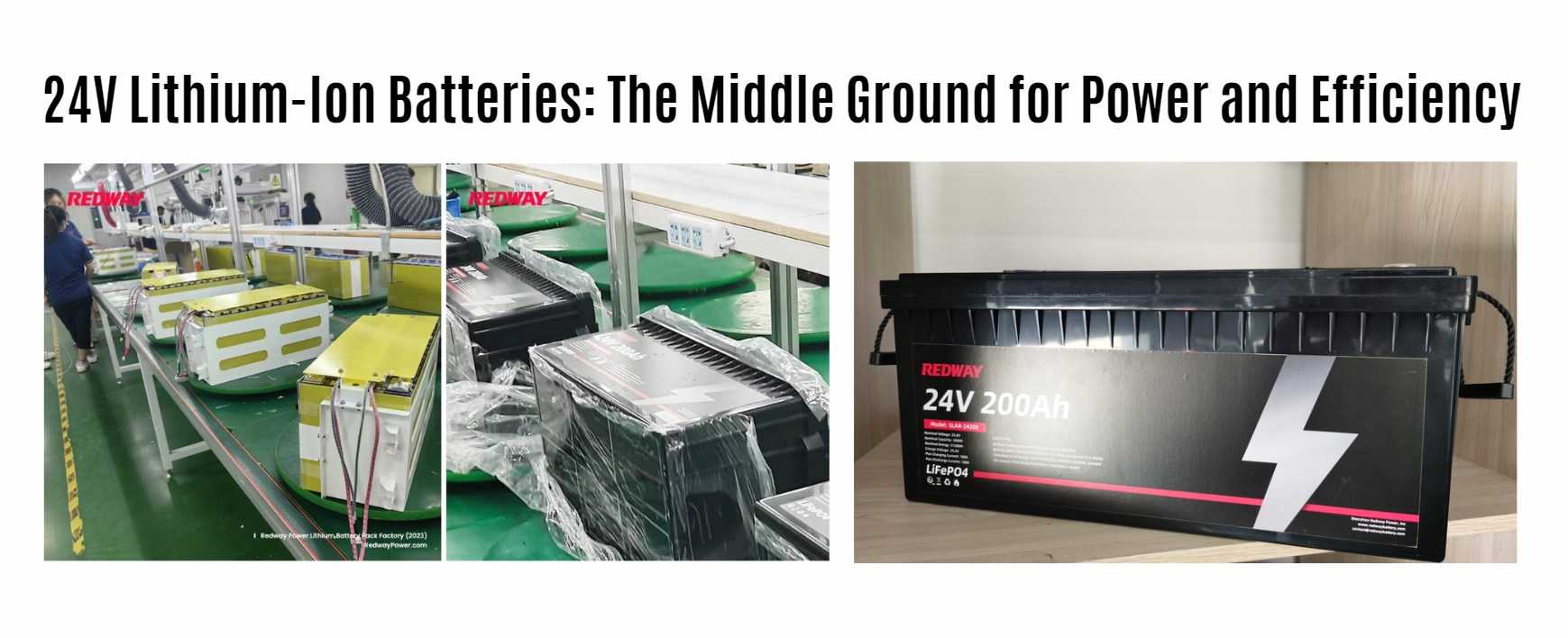
24V Lithium-Ion Batteries: The Middle Ground for Power and Efficiency
Applications and Advantages
24V batteries offer a balanced power output suitable for:
Electric Bicycles and Small Electric Vehicles: Providing the necessary power for efficient performance.
Marine Applications: Ideal for powering small boats and marine equipment.
Commercial and Residential Backup Power: Used in uninterrupted power supply (UPS) systems and solar energy storage.
Key Features
Moderate Power Output: Offers longer run times and higher power compared to 12V batteries.
Cost and Size Efficiency: While more expensive and larger than 12V batteries, they offer a significant boost in performance.
Extended Run Times: Beneficial for applications requiring sustained power over longer periods.
48V Lithium-Ion Batteries: Powerhouse for High-Energy Applications
Applications and Advantages
48V batteries are engineered for high-power applications, including:
Electric Vehicles (EVs): Essential for modern electric cars, providing the high energy output required for efficient driving.
Solar Power Storage Systems: Crucial for storing and managing solar energy in residential and commercial solar setups.
Large-Scale Backup Power Systems: Used in industrial settings to ensure uninterrupted power supply.
Key Features
High Energy Output: Delivers the highest power among the three voltage options, suitable for demanding applications.
Extended Run Times: Offers superior performance and longer operational periods.
Larger and More Expensive: The trade-off for high power is an increase in size, weight, and cost.
Factors to Consider When Choosing Battery Voltage
Power Requirements
Assess the specific power needs of your application. Higher voltage batteries provide more power but may be unnecessary for low-power applications.
Cost Implications
Higher voltage batteries tend to be more expensive. Balance your budget against the performance requirements.
Size and Weight
Consider the physical constraints of your application. Higher voltage batteries are larger and heavier, which might impact portability and installation.
Run Time
Evaluate the duration for which you need a continuous power supply. Higher voltage options typically offer longer run times.
Conclusion
Selecting the right lithium-ion battery voltage is crucial for matching the power requirements and characteristics of your application. 12V batteries are perfect for low to moderate power needs, 24V batteries offer a good balance of power and efficiency, and 48V batteries are best suited for high-power, energy-intensive applications. By carefully considering factors such as power requirements, cost, size, and run time, you can make a well-informed decision that ensures optimal performance and reliability.
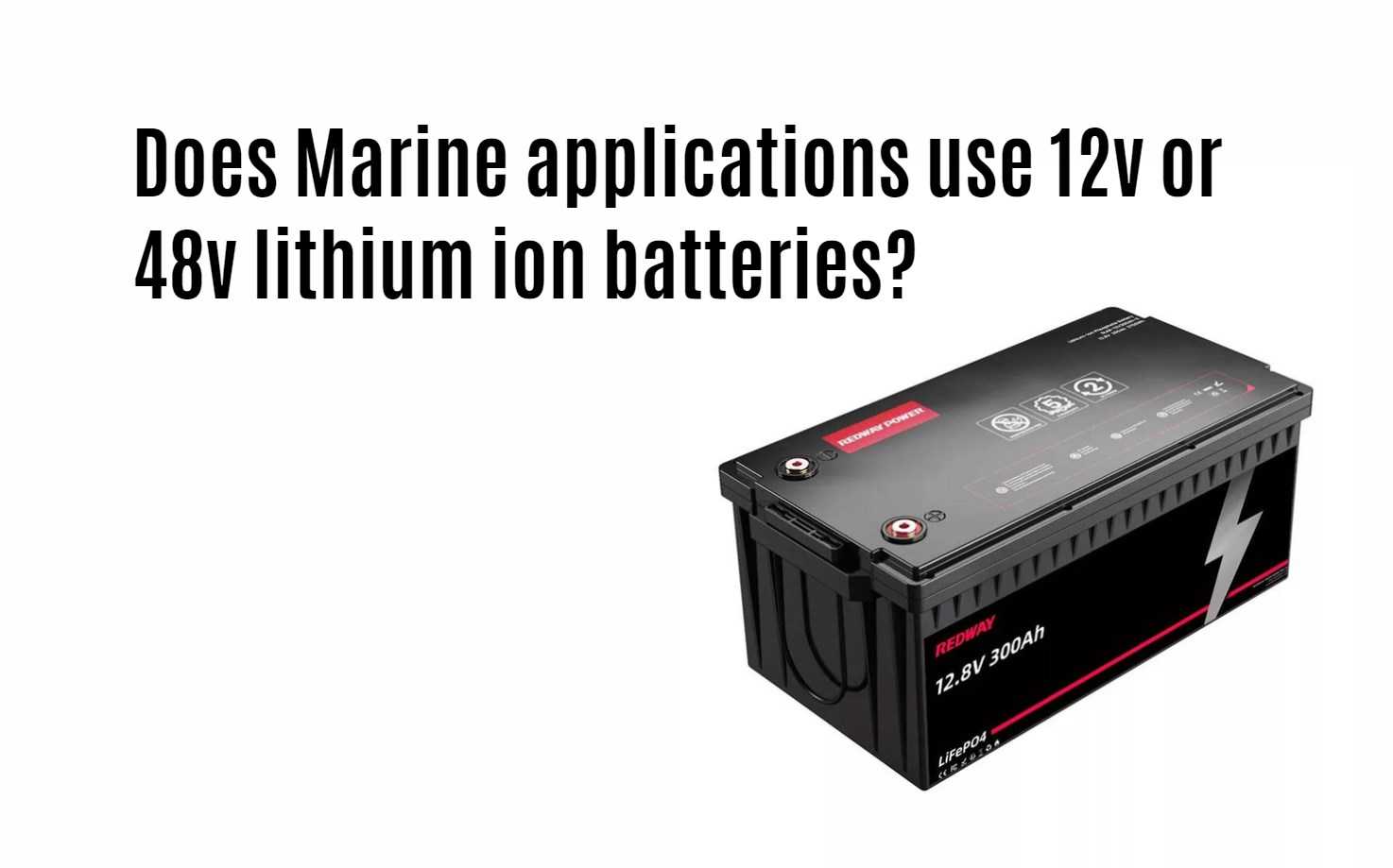
Selecting the right lithium-ion battery for marine applications is a critical decision that affects the performance, safety, and efficiency of your vessel. Whether you’re outfitting a small sailboat or a large commercial vessel, understanding the differences between 12V and 48V lithium-ion batteries and their respective advantages and applications is essential. This guide aims to provide in-depth insights to help you make an informed choice.
12V Lithium-Ion Batteries: Ideal for Small Boats and Backup Power
Advantages
Lightweight and Compact Design
12V lithium-ion batteries are known for their lightweight and compact design, making them easy to handle and install. This feature is particularly beneficial for small boats where space and weight are significant considerations.
Reliable Backup Power
These batteries provide consistent and reliable power, ensuring smooth operations of various electronics and appliances on board. They serve as excellent backup power sources for critical systems.
Efficiency and Performance
Despite their smaller size, 12V batteries deliver high efficiency and performance, maintaining power stability for smaller marine applications.
Applications
Small Boats and Yachts
Ideal for small boats, sailboats, and yachts, 12V batteries fit well in compact spaces without adding significant weight.
Emergency Backup Power
They are used as backup power for essential systems, ensuring safety and reliability during unexpected power outages.
48V Lithium-Ion Batteries: Powerhouses for Larger Boats and High-Power Applications
Advantages
High Power Output
48V lithium-ion batteries are designed to meet the high power demands of larger vessels, offering substantial power output and longer run times.
Suitable for Electric Propulsion
These batteries are commonly used in electric propulsion systems, providing the necessary energy to drive larger boats efficiently.
With a higher voltage, 48V batteries store more energy, making them suitable for extensive marine applications that require robust power solutions.
Applications
Larger Yachts and Commercial Ships
They are ideal for larger yachts and commercial ships that have substantial power needs.
Electric Propulsion Systems
Widely used in electric propulsion systems, 48V batteries provide the necessary energy for efficient and powerful propulsion.
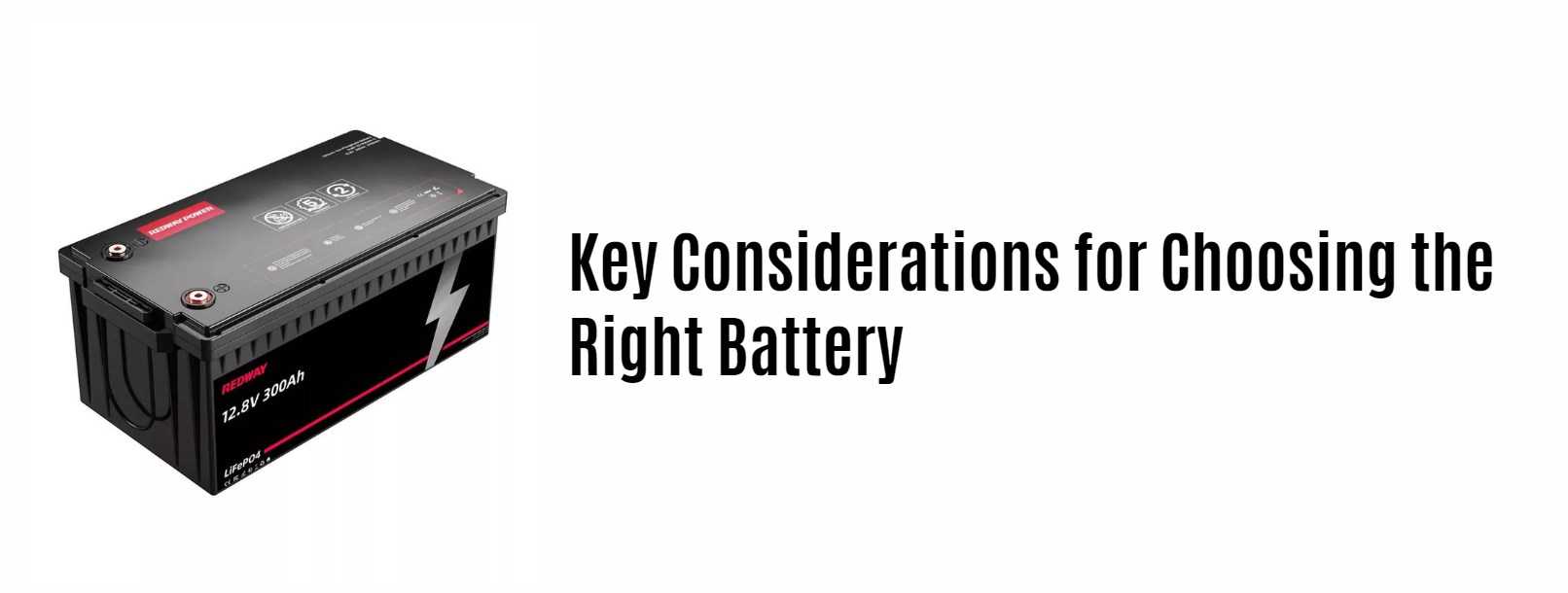
Key Considerations for Choosing the Right Battery
Power Needs and Application Requirements
Evaluate the specific power demands of your marine equipment. Assess the wattage requirements and the duration for which power needs to be sustained. This assessment will help determine whether a 12V or 48V battery is more suitable.
Space Limitations and Weight Restrictions
Consider the available space on your boat and any weight restrictions. Smaller boats with limited space will benefit from the compactness of 12V batteries, while larger boats can accommodate the bulkier 48V batteries.
Budget Constraints
Factor in your budget when selecting a battery. This includes the cost of the battery itself, installation costs, and any additional components required for integration. While 48V batteries may have a higher initial cost, their efficiency and longevity can offer better long-term value.
Advantages of Lithium-Ion Batteries
High Energy Density
Lithium-ion batteries offer a high energy density, providing more power in a compact and lightweight package compared to traditional lead-acid batteries. This high energy density translates to longer run times and better performance.
Rapid Charge and Discharge Capabilities
These batteries enable rapid charging and discharging, ensuring quick availability of power when needed. This feature is particularly useful in marine applications where efficient energy management is crucial.
Longevity and Low Maintenance
Lithium-ion batteries have a longer lifespan and require less maintenance compared to other battery types. This durability makes them a cost-effective choice in the long run, as they need fewer replacements and repairs.
Conclusion
Choosing the appropriate lithium-ion battery for marine applications is essential for ensuring reliable and efficient power on board. Whether a 12V battery for smaller boats or a 48V battery for larger vessels, understanding your specific power needs, space, weight, and budget constraints will guide you towards the right choice. For expert guidance and tailored solutions, consider consulting with reputable manufacturers who can provide invaluable assistance in navigating this crucial decision.
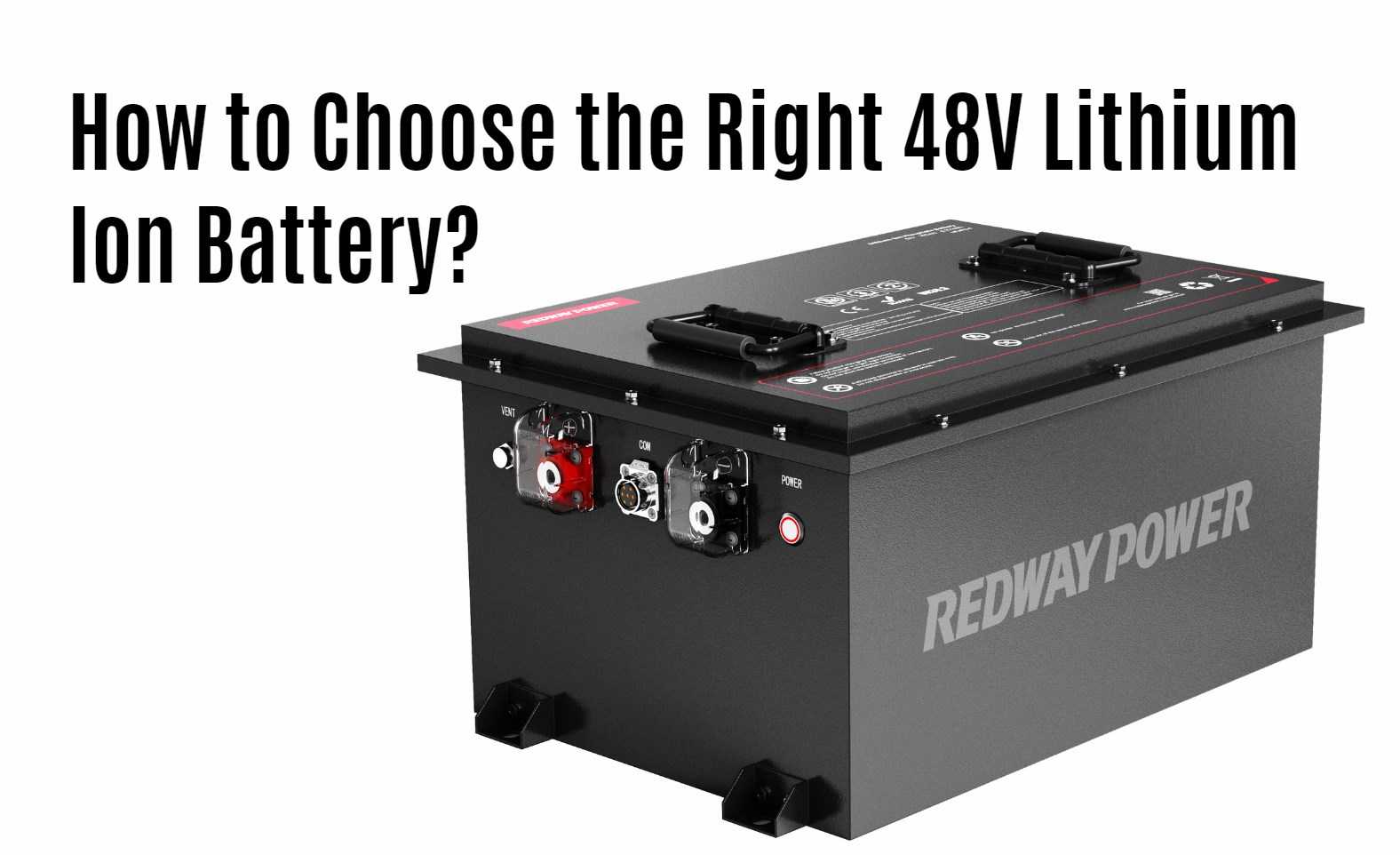
Discover how to choose the right 48V lithium-ion battery. Consider factors such as capacity, form factor, safety features, and manufacturer reputation. Ensure that the battery’s capacity meets your power requirements and choose a form factor suitable for your application. Look for batteries with reliable safety features and consider reputable manufacturers for quality and reliability.
Capacity: Determine the amount of power you need to deliver and choose a battery with sufficient capacity to meet your requirements. This ensures that the battery can provide the necessary power for your devices over the desired duration.
Form Factor: Different applications may require different form factors. Consider the size, shape, and design of the battery to ensure it fits your specific application. This will enable seamless integration and efficient use of the battery.
Safety Features: Safety is paramount when choosing a lithium-ion battery. Look for batteries with reliable safety features such as overcharge protection, short circuit protection, and thermal management systems. These features ensure safe and reliable operation of the battery.
Manufacturer Reputation: Consider the reputation of the battery manufacturer. Look for reputable manufacturers known for producing high-quality and reliable lithium-ion batteries. This helps ensure that you are investing in a battery that meets industry standards and delivers consistent performance.
Understanding 48V Lithium-Ion Batteries
A 48V lithium-ion battery stands at the forefront of modern energy storage technology, leveraging lithium ions as its electrolyte. This advanced chemistry ensures not only high energy density but also rapid charging capabilities, making it ideal for a wide array of applications from electric vehicles to industrial power systems.
Key Benefits of 48V Lithium-Ion Batteries
Enhanced Power Efficiency: Compared to lower voltage options, a 48V battery delivers superior power output, crucial for high-demand environments.
Optimized Efficiency and Safety: With improved efficiency and reduced heat dissipation, these batteries offer a safer and more cost-effective solution over their operational lifespan.
Versatility and Durability: Designed to endure rigorous conditions, 48V lithium-ion batteries require minimal maintenance, ensuring prolonged reliability and performance consistency.
How to Choose the Right 48V Lithium-Ion Battery
Selecting the optimal 48V lithium-ion battery involves considering several key factors:
Factors to Consider:
Capacity: Measure your energy requirements in amp-hours (Ah) to ensure sufficient power storage for your application’s demands.
Voltage and Power Needs: Assess your device’s voltage compatibility to guarantee seamless operation and maximum efficiency.
Size and Portability: Balance between battery size and transportation ease, crucial for installations and mobility.
Cost-Effectiveness: Compare prices and features across various manufacturers to secure the best value proposition for your investment.
Types of Lithium-Ion Batteries
Understanding the diverse variants of lithium-ion batteries aids in pinpointing the most suitable option for your specific needs:
Lithium Cobalt Oxide (LiCoO2): Known for its high energy density, LiCoO2 is often used in applications requiring high voltage and specific energy. However, it may be less stable and more prone to safety risks at high temperatures.
Lithium Manganese Oxide (LiMn2O4): This chemistry offers good thermal stability and safety profile but typically has a lower energy density compared to LiCoO2.
Lithium Iron Phosphate (LiFePO4): Renowned for its excellent stability and safety, LiFePO4 has a slightly lower energy density but a longer cycle life, making it suitable for applications that require durability and reliability.
Choose Based on Energy Density and Stability: The final node suggests that the choice of battery chemistry should be based on the specific requirements for energy density and stability in the application.
Proper Care and Maintenance
To extend the longevity and performance of your 48V lithium-ion battery, adhere to these essential care tips:
Temperature Control: Store batteries in cool, dry environments to mitigate thermal stress.
Avoid Extremes: Shield batteries from both excessive heat and freezing conditions to prevent performance degradation.
Charge Management: Avoid overcharging or fully depleting batteries to preserve their lifespan and efficiency.
Conclusion
As pioneers in the energy storage industry, we understand the pivotal role that 48V lithium-ion batteries play in driving innovation and sustainability across various sectors. With their unmatched performance capabilities and robust design, these batteries continue to redefine reliability and efficiency in modern power solutions.
Ready to elevate your projects with superior energy solutions? Contact [Your Company Name] today for expert guidance and customized battery solutions that exceed expectations.
Main Menu new
Menu
Need a Quick Quote on Wholesale Prices? Contact Redway Battery Now.
To provide the best experiences, we use technologies like cookies to store and/or access device information. Consenting to these technologies will allow us to process data such as browsing behavior or unique IDs on this site. Not consenting or withdrawing consent, may adversely affect certain features and functions.
Functional
Always active
The technical storage or access is strictly necessary for the legitimate purpose of enabling the use of a specific service explicitly requested by the subscriber or user, or for the sole purpose of carrying out the transmission of a communication over an electronic communications network.
Preferences
The technical storage or access is necessary for the legitimate purpose of storing preferences that are not requested by the subscriber or user.
Statistics
The technical storage or access that is used exclusively for statistical purposes.The technical storage or access that is used exclusively for anonymous statistical purposes. Without a subpoena, voluntary compliance on the part of your Internet Service Provider, or additional records from a third party, information stored or retrieved for this purpose alone cannot usually be used to identify you.
Marketing
The technical storage or access is required to create user profiles to send advertising, or to track the user on a website or across several websites for similar marketing purposes.